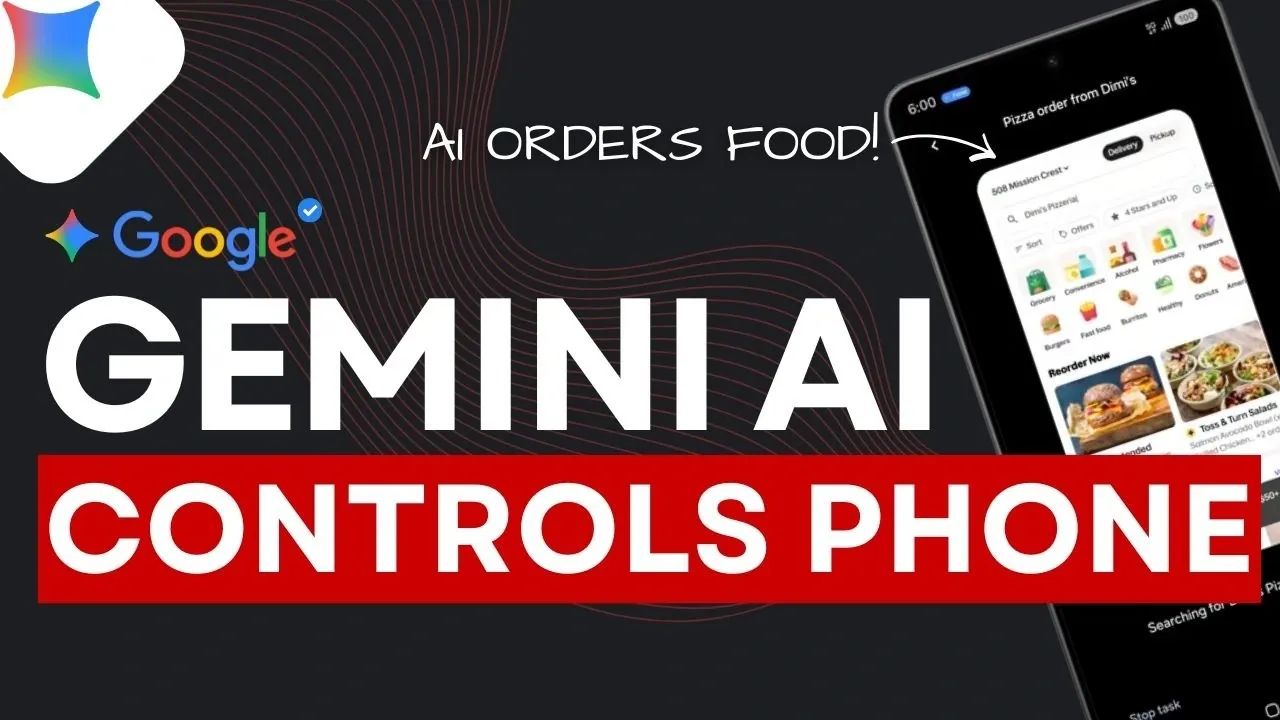
Google’s Gemini will soon introduce a new level of smartphone automation by handling routine tasks like ordering food and booking rides, as detailed by Universe of AI. Launching in beta on March 11th for Pixel 10 and Galaxy S26 devices, Gemini will operate within a secure sandbox environment to prioritize user privacy and data transparency. This new AI-powered feature has been designed to simplify daily interactions by reducing the need for manual app navigation, offering a glimpse into how smartphones are evolving into more capable assistants.
On your mobile Gemini automates specific tasks like food delivery and rideshare bookings, minimizing manual effort. You’ll also see how its secure sandbox design ensures sensitive data remains protected while maintaining transparency in automated actions. Additionally, this analysis explores the initial limitations of Gemini’s functionality and how Google plans to expand its capabilities to support more complex workflows in the future.
How Gemini Redefines Smartphone Interactions
TL;DR Key Takeaways :
- Google’s Gemini is an AI-powered feature designed to automate routine smartphone tasks, enhancing convenience and efficiency for users.
- Launching in beta on March 11th for Pixel 10 and Galaxy S26 devices in the U.S. and Korea, Gemini operates in a secure sandbox to ensure user privacy and data transparency.
- Gemini initially supports food delivery, rideshare and grocery services, with plans to expand to more complex workflows like scheduling and reminders.
- Miniax’s Max Claw offers cross-platform AI automation, showcasing the potential of open source frameworks for task management beyond smartphones.
- The rise of AI-driven applications is reshaping hardware and infrastructure, driving innovation in processing power, memory optimization and cloud scalability.
Gemini introduces a new way of interacting with your smartphone by automating repetitive tasks that typically require manual input. Instead of navigating through multiple apps, Gemini allows you to delegate actions like ordering groceries or scheduling a ride with minimal effort. This feature is designed to save time and reduce the cognitive load associated with managing daily tasks. Key features of Gemini include:
- Automation of routine tasks, minimizing manual effort and improving efficiency.
- Secure sandbox operation to protect sensitive user data.
- Transparency and user control, making sure you remain informed about all automated actions.
Initially, Gemini will support a limited range of applications, focusing on food delivery, rideshare and grocery services. However, Google plans to expand its functionality to handle more complex workflows, such as scheduling meetings, managing reminders and even coordinating multi-step tasks. This gradual rollout reflects Google’s commitment to refining the feature while maintaining user trust and data security.
The Growing Role of AI in Smartphones
Gemini’s launch highlights a broader trend in the tech industry: the increasing reliance on AI to enhance smartphone functionality. By automating basic interactions, AI is transforming smartphones from simple communication tools into intelligent assistants capable of managing various aspects of your life. Analysts predict that AI-driven features will soon extend beyond basic automation to handle more sophisticated tasks, such as personalized recommendations and predictive scheduling.
Other tech giants are also advancing in this space. For example, Apple is reportedly enhancing Siri’s capabilities to compete with Google’s AI initiatives. These developments underscore the growing importance of AI in shaping the future of mobile technology. As AI continues to evolve, it promises to make devices more intuitive, efficient and capable of seamlessly integrating into your daily routines.
Gemini Mobile App Automations Explained

Learn more about Gemini AI by reading our previous articles, guides and features :
- How to Use Google Gemini AI for Free
- Gemini AI Guide for Writing, Studying, File Analysis & More
- Chrome AI Automation by Gemini: Behind Logins, Forms, and Emails
- AI News : DeepSeek V4 Aims at Long Code & February Launch
- Google’s Secret Gemini 3 Pro GA Models Leaked
- Apple’s Bold Move: Siri Gets Smarter with Google’s Gemini AI
- Apple Integrates Google Gemini AI to Revolutionize Siri
- Apple’s Strategic Use of Google’s Gemini AI Explained
- Google Gemini 3 Tips : Tone Presets & Added Files for Faster Tasks
Miniax’s Max Claw: Expanding AI Beyond Smartphones
While Google focuses on smartphone-based AI, Miniax is pushing the boundaries of automation with its Max Claw platform. Powered by the advanced M2.5 model and the open source OpenClaw framework, Max Claw offers 24/7 autonomous task management across multiple platforms, including Telegram, Slack, WhatsApp and Discord. This cross-platform capability positions Max Claw as a versatile solution for users seeking automation beyond mobile devices.
Key highlights of Max Claw include:
- Seamless cross-platform task automation for enhanced user convenience.
- Elimination of infrastructure management, making it accessible to a wider audience.
- Cost-efficient performance, using the advanced capabilities of the M2.5 AI model.
By using open source frameworks, Miniax demonstrates the potential of collaborative innovation in advancing AI automation. This approach not only reduces development costs but also fosters a community-driven ecosystem that accelerates technological progress. Max Claw’s success illustrates how AI can extend beyond smartphones to transform workflows across various platforms and industries.
AI’s Impact on Hardware and Infrastructure
The rise of AI-driven applications like Gemini and Max Claw is reshaping the hardware and infrastructure landscape. As these applications become more sophisticated, they demand higher processing power and optimized memory capabilities. For instance, Apple has ramped up production of high-memory Mac Mini devices at its Houston facility to meet the growing demand for AI workloads. This trend highlights the interdependence between AI advancements and hardware innovation.
In addition to hardware, cloud infrastructure is also evolving to support the increasing complexity of AI applications. Companies are investing in scalable, high-performance systems to ensure seamless operation and user experiences. This symbiotic relationship between AI software and hardware development is driving innovation across the tech industry, paving the way for more powerful and efficient devices.
Competitive Landscape and Industry Trends
The rapid adoption of AI for task automation has intensified competition among tech giants. Companies like Google, Apple and Miniax are using their unique strengths to capture market share in this evolving space. Open source initiatives, such as OpenClaw, are inspiring new productized solutions like Max Claw, showcasing the potential of collaborative frameworks to accelerate innovation.
This competitive environment is fostering the development of more seamless, efficient and autonomous user experiences. As AI continues to advance, it is expected to play a central role in shaping the future of technology, from smartphones to cross-platform solutions. The race to deliver the most intuitive and capable AI-driven tools is driving rapid progress, benefiting users with increasingly sophisticated and accessible automation options.
Media Credit: Universe of AI
Disclosure: Some of our articles include affiliate links. If you buy something through one of these links, Geeky Gadgets may earn an affiliate commission. Learn about our Disclosure Policy.
