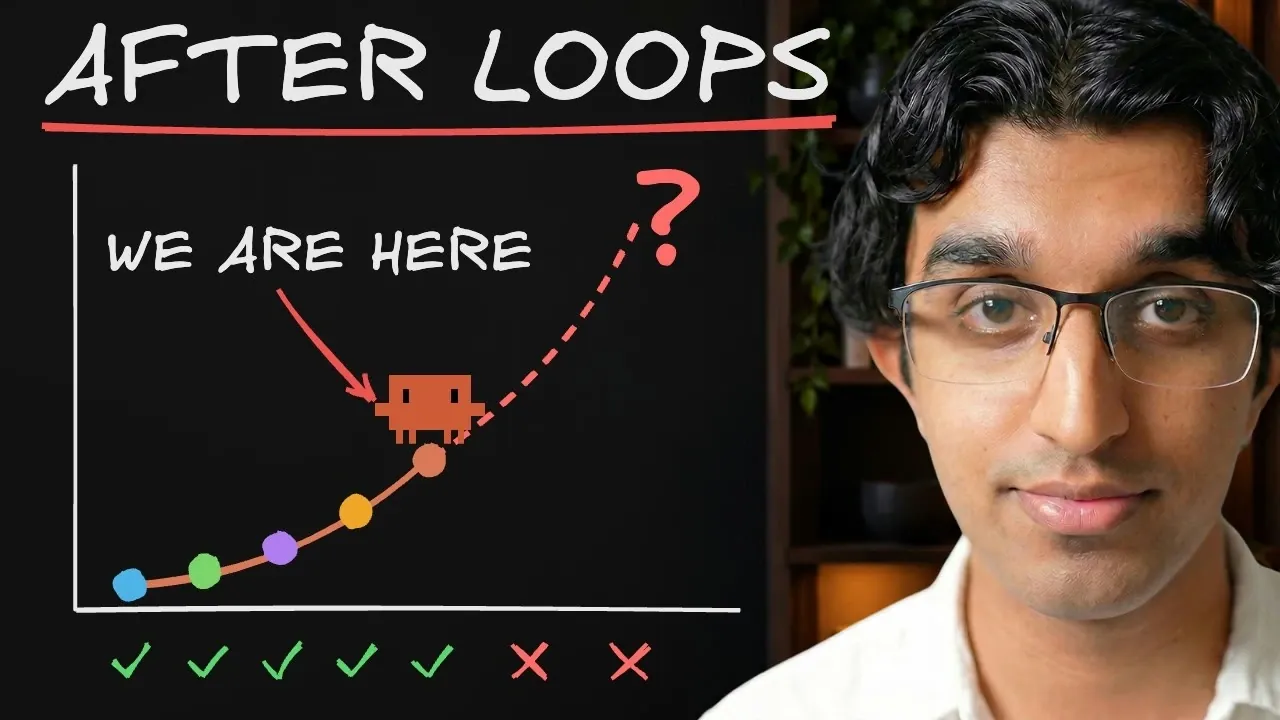
OpenAI has introduced its vision for advancing artificial intelligence by moving beyond single-agent loops to dynamic multi-agent systems. At a recent event in Tokyo, the organization presented “The Ladder,” a structured framework that maps the evolution of AI collaboration from isolated agents to coordinated “agent swarms” working toward shared objectives. According to Ray Amjad, this approach allows AI agents to autonomously coordinate, delegate tasks and adapt to complex scenarios that previously required extensive human intervention.
Explore how multi-agent systems allocate tasks based on complexity, refine processes through iterative feedback and maintain focus on long-term objectives with persistent agents. Gain insight into the operational challenges these systems face, such as managing interdependent goals and minimizing inefficiencies in task distribution. This revelation provides a clear understanding of how AI is adapting to meet the demands of increasingly intricate workflows.
The Evolution of AI Agent Behavior
TL;DR Key Takeaways :
- OpenAI is transitioning from single-agent AI models to dynamic multi-agent systems, allowing collaboration, scalability and autonomous operation for complex tasks.
- The “Ladder” framework outlines stages of multi-agent system development, from single agents to large-scale agent swarms, emphasizing coordination and task delegation.
- Challenges in multi-agent systems include achieving effective peer collaboration, avoiding inefficiencies like duplicated efforts and managing interdependent workflows.
- Current applications of multi-agent systems excel in independent tasks like bug detection but face limitations in handling open-ended or highly complex goals.
- Future advancements aim to enhance coordination mechanisms, simplify system management and transform industries by allowing AI agents to tackle ambitious, interdependent projects autonomously.
AI agents have progressed significantly over the years, evolving from basic tools that required explicit human instructions to autonomous systems capable of achieving defined objectives with minimal intervention. Early AI models were limited in scope, relying on step-by-step commands to complete tasks. These systems lacked the ability to adapt or innovate, confining their utility to narrowly defined operations.
Modern AI agents, however, have transcended these limitations. They can now independently analyze objectives, select the most effective tools and execute plans to achieve desired outcomes. This transformation has laid the foundation for multi-agent systems, where collaboration and coordination are central to success. Instead of working in isolation, agents now engage in iterative problem-solving and adaptive learning, allowing them to address more sophisticated challenges. These advancements are reshaping the landscape of AI, shifting the focus from individual performance to the collective intelligence of interconnected systems.
A Framework for Agent Collaboration
OpenAI has introduced a structured framework, often referred to as “The Ladder,” to illustrate the stages of development in multi-agent systems. This framework outlines a progression of capabilities, each building on the previous stage to enhance collaboration and scalability:
- Single Agent: A single agent operates independently, focusing on specific, well-defined goals while employing self-checking mechanisms to ensure accuracy.
- Fan-Out: Tasks are divided among multiple sub-agents, each working independently to achieve distinct objectives, enhancing efficiency through parallel processing.
- Effort Scaling: Tasks are distributed based on their complexity, with more capable or cost-efficient agents assigned to handle higher-effort requirements.
- Pairs: Two agents collaborate by exchanging iterative feedback, refining their outputs to achieve improved results through mutual reinforcement.
- Manager Thread: A central agent oversees the activities of multiple agents, making sure alignment with overarching goals and coordinating efforts effectively.
- Long-Lived Leads: Persistent agents assume specialized roles, managing sub-agents over extended periods to maintain continuity and focus on complex objectives.
- Agent Swarms: Hundreds or even thousands of agents collaborate on a shared goal, demonstrating large-scale coordination and problem-solving capabilities.
This framework demonstrates how AI systems are evolving to handle increasingly complex and interdependent tasks. By allowing agents to work together seamlessly, OpenAI is paving the way for scalable, autonomous solutions that can address challenges across a wide range of industries.

Deep dive into the latest in AI Agents by exploring our other resources and articles.
- How to build a stockbroker AI in LangGraph.js with Human in the Loop (HITL) confirmation
- Anthropic Research Reveals AI Agents Sabotage Peers for Gain
- Buzz Delivers a Slack-Style Workspace for AI Agent Teams
- Docker Desktop V4.63 Adds Docker Agent for Custom AI Agents
- New Grok Bot Deploys a Custom AI Agent Fleet in 20 Minutes or Less
- Anthropic Launches Observer Agents to Halt Unethical AI
- OpenAI Dots Hands-on: 24 Hours Testing the New AI Agent
- How to Build AI Agents with n8n : No-Code 2025 Guide
- 7 Best AI Automation Platforms for Businesses and Individuals in 2025
- OpenAI Agent SDK : A New AI Developer’s Toolkit for Simplifying AI Workflows
Challenges in Multi-Agent Systems
While multi-agent systems hold immense potential, they also face significant challenges. One of the primary obstacles is the difficulty of achieving effective peer-like collaboration. Current models excel at treating other agents as tools, delegating tasks efficiently. However, they often struggle to coordinate on interdependent goals that require seamless integration and shared decision-making.
Another challenge lies in the over-reliance on sub-agents or overly complex role definitions. This can lead to inefficiencies, such as duplicated efforts or misaligned outputs, which waste valuable resources and time. For tasks requiring high levels of interdependence and precision, these coordination issues must be addressed to unlock the full potential of multi-agent systems.
Applications and Current Limitations
Multi-agent systems have already proven their value in specific domains. For instance, they excel in tasks such as bug hunting, vulnerability detection and other independent problem-solving scenarios. These applications benefit from the agents’ ability to work autonomously and in parallel, significantly reducing the time and effort required to achieve results.
However, the limitations of current models become apparent when tackling open-ended or highly complex goals. Tasks such as building intricate applications or simulating large-scale systems often expose inefficiencies in coordination and task management. These challenges highlight the need for more advanced collaboration mechanisms to enable agents to handle entangled workflows and achieve greater levels of autonomy.
Future Directions for Multi-Agent Systems
OpenAI envisions a future where AI agents become even more capable of tackling ambitious projects with minimal human intervention. Enhanced coordination mechanisms will be crucial in allowing agents to collaborate effectively on complex, interdependent tasks. By simplifying the setup and management of multi-agent systems, OpenAI aims to make these technologies more accessible and practical for a wide range of applications.
One particularly promising application is the potential for multi-agent systems to transform traditional software development processes. Autonomous agent swarms could streamline workflows, reduce reliance on human oversight and deliver value directly, transforming industries and redefining productivity. These advancements could lead to a future where AI systems not only assist humans but also take on roles traditionally reserved for human teams, driving innovation and efficiency across various sectors.
Key Insights from Research and Experiments
OpenAI’s research into multi-agent systems has yielded valuable insights into their potential and limitations. For example, team-based strategies have been shown to reduce duplicate work and improve overall efficiency. Stress testing assumptions about model capabilities is essential for identifying areas of improvement and making sure that agents can adapt to evolving demands.
Current agent swarms are highly effective for independent tasks but require further refinement to handle more entangled workflows. Addressing these challenges is critical for unlocking the full potential of multi-agent systems and achieving scalable, autonomous solutions. OpenAI’s ongoing research aims to bridge these gaps, paving the way for more sophisticated and capable AI systems.
The Path Forward
OpenAI’s exploration of multi-agent systems represents a significant advancement in the field of artificial intelligence. By addressing challenges related to task delegation, coordination and scalability, these developments are laying the groundwork for more autonomous and collaborative AI solutions. As research continues, the potential for AI agents to tackle complex problems and transform industries becomes increasingly tangible. The future of AI lies in its ability to work collectively, achieving shared goals through seamless collaboration and advanced coordination.
Media Credit: Ray Amjad
Disclosure: Some of our articles include affiliate links. If you buy something through one of these links, Geeky Gadgets may earn an affiliate commission. Learn about our Disclosure Policy.
