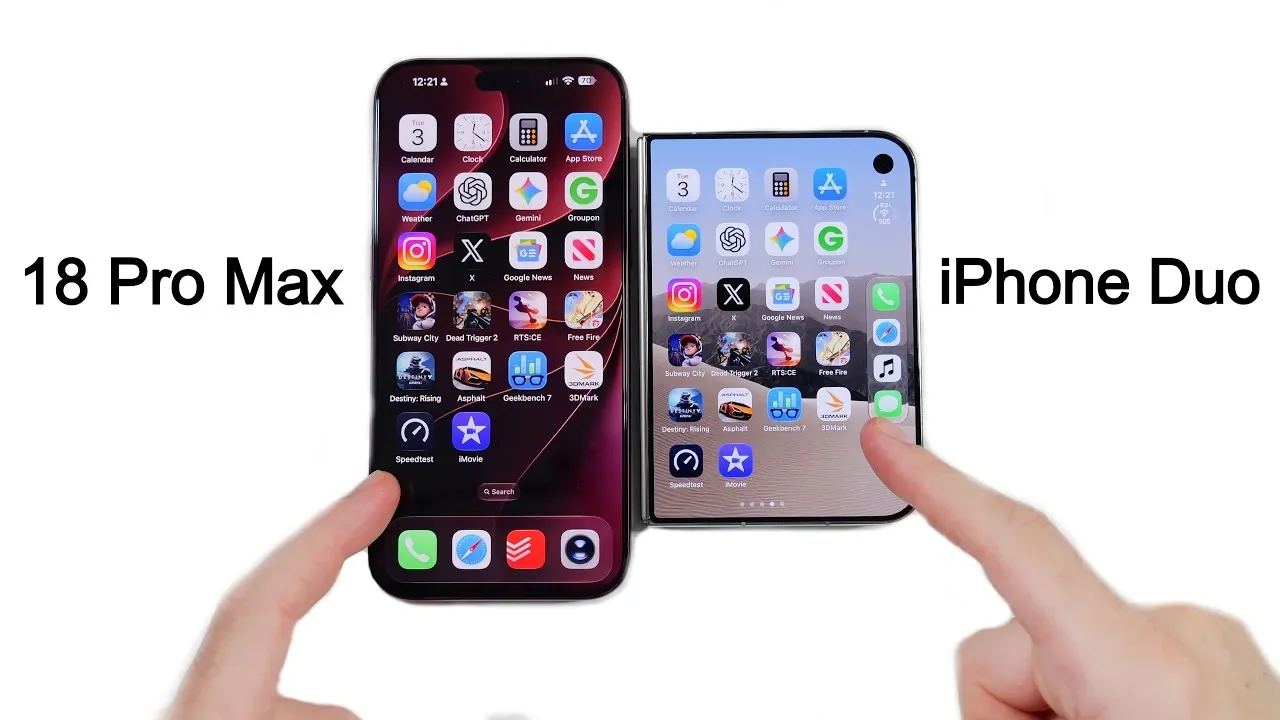
When comparing Apple’s bold new iPhone Duo and the powerhouse iPhone 18 Pro Max, the focus naturally shifts to performance, design, and innovation. While the 18 Pro Max delivers polished, reliable performance, the Duo’s foldable design introduces exciting possibilities—alongside a few generation-one growing pains. Here is how they stack up.
- Performance & Thermals: The iPhone 18 Pro Max dominates in Geekbench/3D Mark benchmarks, thermal management, and sustained gaming comfort.
- Biometrics & Security: The Pro Max features fast, low-light-friendly Face ID, whereas the Duo relies on traditional Touch ID.
- Display & App Scaling: The Duo offers an expansive foldable screen for multitasking, though some third-party apps struggle with layout scaling.
- Connectivity & Speed: Interestingly, the iPhone Duo edges out a minor win in Wi-Fi download speed tests over the Pro Max.

Boot-Up Speed: A Minor Edge for the Duo
For users who prioritize quick start times, the iPhone Duo holds a slight advantage. Its efficient boot-up capabilities allow it to power on marginally faster than the iPhone 18 Pro Max. However, the difference is minimal and in daily use, this advantage is unlikely to significantly impact the overall experience.
Unlocking Mechanism: Face ID vs Touch ID
The iPhone 18 Pro Max takes the lead in biometric unlocking with its advanced Face ID technology. This feature is faster, more seamless and performs exceptionally well in low-light conditions or when your hands are occupied. In contrast, the iPhone Duo relies on Touch ID, which, while reliable, feels less modern and convenient. For users seeking the latest in biometric security, the Pro Max offers a more advanced solution.
Everyday Performance: Consistency vs Adaptability
Both devices excel in multitasking, app launches and smooth navigation. However, the iPhone 18 Pro Max delivers a more consistent and reliable experience. The iPhone Duo, while innovative, occasionally struggles with app optimization due to its foldable display. Some apps fail to adapt to the unique screen dimensions, leading to stretched layouts or inefficient use of space. This inconsistency can detract from the Duo’s otherwise forward-thinking design.
Display and Usability: Foldable Innovation Meets Practicality
The iPhone Duo’s foldable design offers a larger, more versatile display, making it ideal for multitasking or immersive content consumption. Users can run multiple apps side by side or enjoy a more expansive viewing experience. However, the lack of widespread app optimization limits its potential. Many apps are not yet designed to fully use the Duo’s unique screen, which can hinder usability.
The iPhone 18 Pro Max, with its traditional design, avoids these issues entirely. Its polished and practical display ensures a seamless experience across all apps, making it the more straightforward option for users who value reliability over experimentation.
Gaming Performance: Thermal Efficiency Matters
Both devices deliver smooth frame rates and responsive controls during gaming sessions. However, the iPhone 18 Pro Max outperforms the Duo in thermal efficiency. It remains cooler during extended gameplay, making sure consistent performance and greater comfort. The iPhone Duo, while capable of handling demanding games, heats up more quickly, which can affect both performance and user experience over time.
Benchmark Scores: The Pro Max Advantage
In benchmark tests, the iPhone 18 Pro Max emerges as the stronger performer. It achieves higher scores in Geekbench and 3D Mark tests, thanks to superior optimization and thermal management. These results highlight its ability to handle demanding workloads with ease, making it the preferred choice for power users who require top-tier performance.
Wi-Fi Performance: A Surprising Win for the Duo
Both devices deliver excellent Wi-Fi performance, making sure fast and stable connections. Interestingly, the iPhone Duo edges out the 18 Pro Max in download speed tests, showcasing its ability to handle high-speed networks efficiently. While this advantage is notable, it is unlikely to be a deciding factor for most users, as both devices perform exceptionally well in real-world scenarios.
Camera Performance: Pro Max Leads the Way
For photography enthusiasts, the iPhone 18 Pro Max is the clear winner. Its advanced camera sensors capture sharper, more detailed images and the camera app launches faster compared to the iPhone Duo. While the Duo’s camera is competent, it lacks the versatility and reliability of the 18 Pro Max, particularly in challenging lighting conditions. The Pro Max’s superior camera performance makes it the better choice for users who prioritize photography.
Thermal Efficiency: A Key Differentiator
Thermal management is another area where the iPhone 18 Pro Max outshines the Duo. Whether gaming, multitasking, or editing videos, the Pro Max remains cooler under heavy use, making sure consistent performance. The iPhone Duo’s foldable design, while innovative, contributes to higher heat retention, which can impact performance during prolonged use. For users who frequently push their devices to the limit, the Pro Max offers a more reliable experience.
Final Thoughts: Polished Performance vs Bold Innovation
The iPhone 18 Pro Max stands out as the better-performing device overall. Its superior optimization, thermal efficiency and consistent performance make it a reliable choice for most users. Features like Face ID, advanced camera quality and seamless usability further solidify its position as a top-tier smartphone.
On the other hand, the iPhone Duo introduces exciting possibilities with its foldable design and larger display. However, its potential is hindered by app optimization challenges and thermal inefficiencies. While the Duo represents a bold step forward in innovation, it requires further refinement to match the performance and usability of the iPhone 18 Pro Max. For now, the Pro Max remains the more practical and polished option for most users.
Uncover more insights about iPhone Duo foldable design in previous articles we have written.
Source & Image Credit: Nick Ackerman
Disclosure: Some of our articles include affiliate links. If you buy something through one of these links, Geeky Gadgets may earn an affiliate commission. Learn about our Disclosure Policy.
