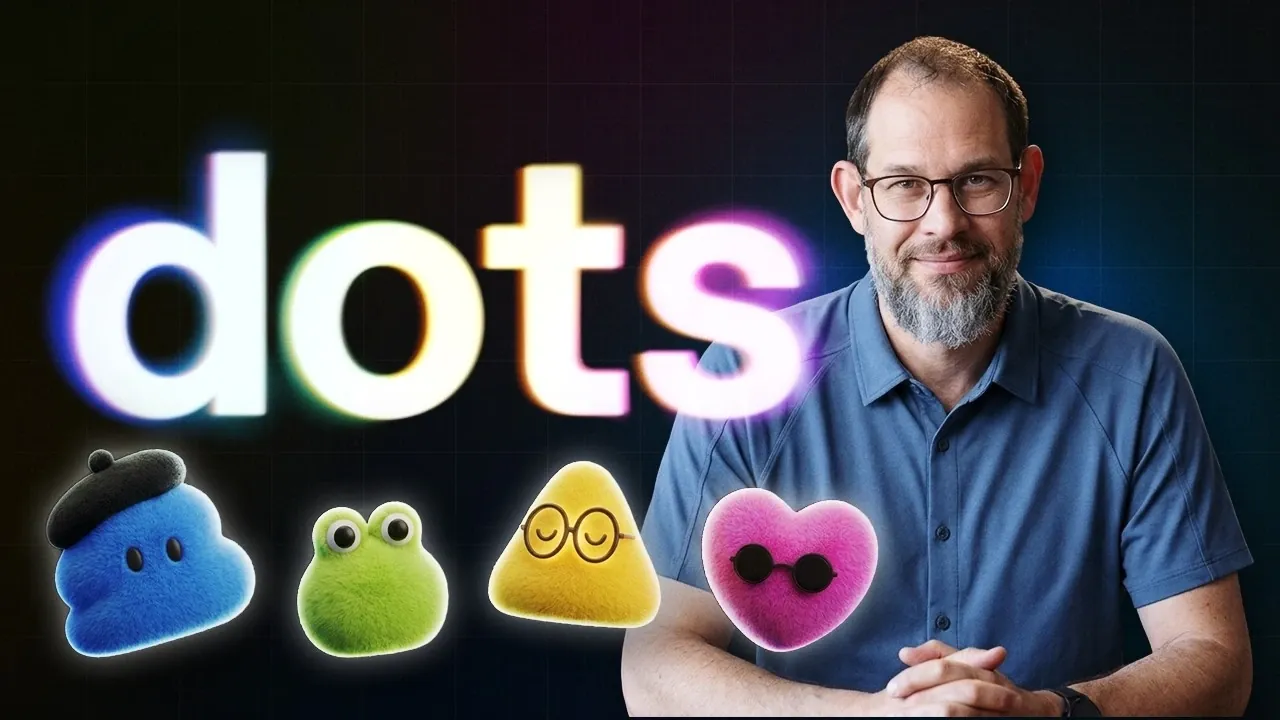
OpenAI’s Dots and Meta’s Muse represent two distinct approaches to AI-powered task management, each catering to different user needs. Dots, priced at $100 per month, is built around the GPT-6 Astra model and offers advanced features like context-aware AI agents and customizable workflows through plugin extensions. Its focus on professional and enterprise users positions it as a premium option for those managing complex operations. In contrast, Meta’s Muse provides a free, simplified alternative aimed at personal users, excelling in everyday task automation like scheduling and email organization. Nate Jones explores whether Dots’ high cost delivers sufficient value compared to Muse’s accessible, no-cost model.
This overview highlights key differences between the two platforms, helping you understand their respective strengths and limitations. You’ll gain insight into how Dots integrates with OpenAI’s broader ecosystem to support scalable, high-performance workflows, as well as how Muse prioritizes ease of use for non-technical users. Additionally, the analysis examines the economic trade-offs of paying for advanced features versus opting for a free, streamlined solution.
Dots vs Muse
TL;DR Key Takeaways :
- OpenAI’s Dots targets professionals and enterprises with advanced features like context-aware AI agents, customizable workflows and seamless integration into OpenAI’s ecosystem, priced at $100 per month.
- Meta’s Muse offers a free, simplified AI solution for personal users, focusing on everyday task automation and accessibility with a user-friendly interface.
- The key difference lies in their target audiences: Dots is designed for complex, professional use cases, while Muse caters to basic, personal task management.
- Economic considerations play a significant role, with Dots requiring a clear return on investment for its premium cost, while Muse provides a no-cost alternative with limited functionality.
- The competition between Dots and Muse reflects broader trends in AI, emphasizing tailored solutions for distinct user groups and the growing demand for collaborative, context-aware AI tools.
OpenAI Dots: Advanced Features for Professionals
OpenAI Dots is purpose-built for professionals and organizations seeking to use innovative AI to optimize workflows and achieve operational efficiency. Powered by the GPT-6 Astra model, Dots excels in handling complex, multi-step tasks and integrates seamlessly into OpenAI’s broader ecosystem of tools.
Key features of Dots include:
- Context-aware AI agents: These agents retain memory, allowing them to execute tasks with a deeper understanding of context.
- Integration with OpenAI tools: Seamless collaboration through tools like Spaces and Pages enhances team productivity.
- Customizable workflows: Plugin extensions and the Decisions API allow businesses to tailor processes to their unique needs.
- Scalable cloud computing: High-performance operations are supported by robust cloud infrastructure.
Dots positions itself as a premium solution for businesses aiming to achieve ambitious goals. However, its $100 monthly subscription fee may be a barrier for smaller teams or individual users, raising questions about its accessibility for those with limited budgets.
Meta Muse: A Free, Simplified Option
Meta’s Muse takes a different approach, focusing on simplicity and accessibility for personal users. Designed to handle low-complexity tasks, Muse is ideal for managing daily activities such as scheduling, email organization and basic life administration. While it lacks the advanced capabilities of Dots, its zero-cost model makes it an appealing choice for cost-conscious users.
Muse’s features include:
- Personal task automation: Simplifies everyday activities like shopping, making calls and organizing schedules.
- User-friendly interface: Designed with non-technical users in mind, making sure ease of use.
- Completely free access: Removes financial barriers, making AI tools accessible to a broader audience.
Muse is best suited for individuals who prioritize convenience and simplicity over advanced functionality. Its free model makes it a practical choice for users seeking basic task management without incurring additional costs.

Take a look at other insightful guides from our broad collection that might capture your interest in OpenAI Dots.
- OpenAI Dots Hands-on: 24 Hours Testing the New AI Agent
- OpenAI Dots Autonomous Agents Powered by ChatGPT 6 Astra
Key Differences Between Dots and Muse
The fundamental difference between Dots and Muse lies in their target audiences and the scope of their capabilities. Dots is tailored for professionals and enterprises, offering sophisticated tools for workplace productivity and complex task management. Muse, on the other hand, caters to personal users with its focus on simplicity and everyday task automation.
Here’s a comparison of their core attributes:
- Dots: High subscription cost, advanced features and a focus on professional and enterprise use cases.
- Muse: Free access, basic capabilities and a focus on personal and everyday tasks.
While both platforms share some overlapping functionalities, such as task automation and scheduling, their pricing models and intended use cases highlight their distinct purposes. This divergence reflects broader trends in the AI market, where tools are increasingly specialized to meet the needs of specific user groups.
OpenAI’s Expanding Ecosystem
OpenAI continues to expand its ecosystem, offering a suite of tools designed to address diverse user needs. Platforms like Spaces and Pages assist collaborative projects, while the GPT-6.1 Soul model delivers cost-efficient AI capabilities for demanding tasks. Codex, another integral component, provides reusable cloud environments that streamline software development for technical teams.
Additional features, such as plugin extensions and the Decisions API, empower businesses to customize and automate workflows, enhancing the overall utility of OpenAI’s offerings. These tools position Dots as a comprehensive solution for organizations looking to integrate AI into their operations and achieve measurable outcomes.
Challenges and Opportunities
The adoption of AI agents like Dots and Muse hinges on their ability to deliver tangible value to users. For Dots, its appeal lies in advanced features such as privacy controls and multi-agent ecosystems, which are particularly attractive to enterprise users managing sensitive data or complex operations. Muse, however, faces the challenge of distinguishing itself in a crowded market of free AI tools while maintaining its simplicity and ease of use.
The rise of multi-agent ecosystems, including competitors like Anthropic AI, underscores the growing demand for collaborative, context-aware AI solutions. For small teams, entrepreneurs and individuals, these tools present an opportunity to achieve significant productivity gains without substantial upfront investment.
Economic Considerations
For many users, the decision between Dots and Muse ultimately comes down to cost. Dots’ $100 monthly subscription requires a clear return on investment, particularly for businesses that need to justify the expense in terms of productivity gains or operational efficiency. Muse, with its free model, offers a risk-free alternative but may lack the advanced features necessary for professional-grade applications.
As the market for AI agents continues to evolve, users must carefully assess whether premium plans like Dots align with their specific needs and budget constraints. The availability of free options like Muse provides a valuable alternative, but the trade-offs in functionality and scalability must be considered.
The Future of AI-Powered Agents
AI-powered agents are rapidly advancing, moving beyond simple task automation to deliver outcome-driven value. Platforms like Dots and Muse are at the forefront of this transformation, catering to distinct user segments with tailored features and pricing models. Collaborative tools such as Spaces and Pages are poised to redefine workplace productivity, while privacy considerations and multi-agent ecosystems will shape the next generation of AI applications.
For users like you, the choice between Dots and Muse depends on your specific requirements, use cases and willingness to invest in premium AI capabilities. As competition between OpenAI and Meta intensifies, the future of AI-powered agents promises continued innovation, offering tools that are increasingly aligned with the diverse needs of their users.
Media Credit: AI News & Strategy Daily | Nate B Jones
Disclosure: Some of our articles include affiliate links. If you buy something through one of these links, Geeky Gadgets may earn an affiliate commission. Learn about our Disclosure Policy.
