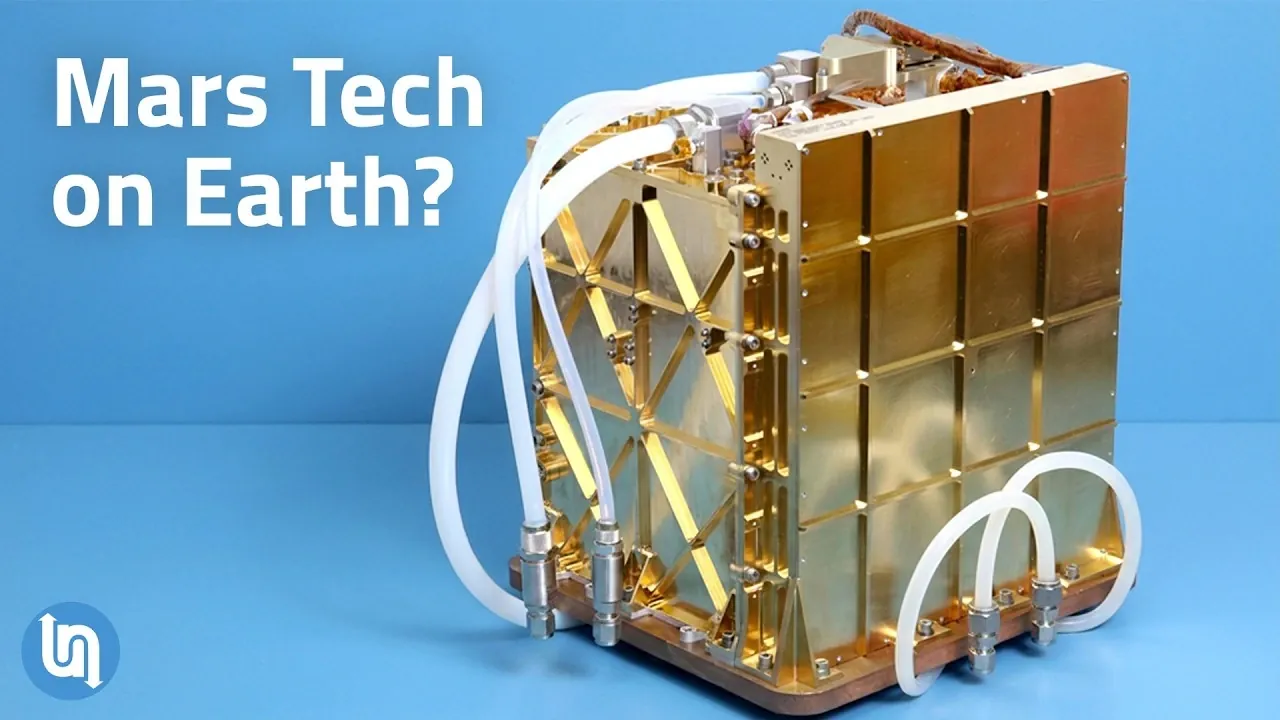
NASA’s Mars exploration efforts have inspired a breakthrough in energy storage, as highlighted by Undecided with Matt Ferrell. Noon Energy, a California-based startup, has developed a system capable of storing energy for over 100 hours, far surpassing the 2–10 hour range of conventional lithium-ion batteries. Drawing from the Mars Oxygen In-Situ Resource Utilization Experiment (MOXIE), the technology mimics photosynthesis by splitting carbon dioxide into solid carbon and oxygen. This approach not only reduces reliance on critical materials like lithium and cobalt but also offers a scalable, cost-effective solution to one of renewable energy’s biggest challenges: long-duration storage.
In this deep dive, you’ll explore how Noon Energy’s system addresses the limitations of existing batteries while maintaining a carbon-neutral footprint. Gain insight into its compact design, which supports grid-scale applications and its target cost of $0.05 per kilowatt-hour. You’ll also learn about the efficiency trade-offs compared to lithium-ion batteries and the ongoing development hurdles that must be overcome. By the end, you’ll have a clearer understanding of how this Mars-inspired innovation could reshape renewable energy storage and support a more sustainable future.
The Limitations of Current Energy Storage Systems
TL;DR Key Takeaways :
- Noon Energy has developed a new energy storage solution capable of storing energy for over 100 hours, inspired by NASA’s MOXIE technology.
- The system uses a photosynthesis-like process to split CO2 into solid carbon and oxygen, offering a scalable, cost-effective and reliable alternative to lithium-ion batteries.
- Key advantages include reduced reliance on critical materials like lithium and cobalt, a target cost of $0.05/kWh and a compact, scalable design suitable for grid-scale applications.
- While the system operates with 60%-80% efficiency, comparable to pumped hydro storage, it is still in early development and requires further testing and validation.
- With support from NASA, NSF and the California Energy Commission, the technology has the potential to transform renewable energy storage, allowing a carbon-neutral and sustainable energy future.
Modern energy storage systems, particularly lithium-ion batteries, are constrained by their limited storage duration, typically ranging from 2 to 10 hours. This limitation poses a significant challenge for renewable energy sources like solar and wind, which are inherently intermittent. Without the ability to store energy for extended periods, renewable energy cannot fully replace fossil fuels, leaving energy grids vulnerable to fluctuations in supply and demand. Overcoming this limitation is critical for achieving a sustainable and carbon-neutral energy future.
Noon Energy’s Innovative Approach
Noon Energy’s solution extends energy storage capacity to over 100 hours, far exceeding the capabilities of current battery technologies. Drawing inspiration from NASA’s MOXIE, which was designed to generate oxygen on Mars by splitting CO2, the system captures CO2 and separates it into solid carbon and oxygen. The solid carbon acts as the energy storage medium, while the oxygen is released back into the atmosphere. This process not only enables long-duration storage but also reduces dependence on critical materials like lithium and cobalt, which are essential for traditional batteries.
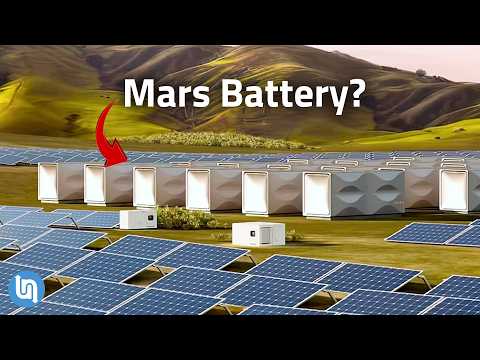
Here are more detailed guides and articles that you may find helpful on energy technologies.
- Solar Energy S 40,000 mAh retractable solar panel and power bank
- Primary Energy Fallacy Explained: Why Useful Energy Shows Faster Renewable Progress
- The Island is Shrinking: iPhone 18 Pro Max Leaks Confirm Apple’s Cleanest Display Ever
- The Best Camera Ever: Why the iPhone 18 Pro’s Variable Aperture is the Real Star of 2026
- Ultimate Apple Watch Accessory: EnergyLink Charging Watch Band
- Why NASA’s Mechanical Battery Could Be the Future of Energy Storage
- iPhone 18 Pro: What Apple Isn’t Telling You Yet
- Best Phone Battery Life 2025: OnePlus 15, vivo X300 Pro, & iPhone 17 Pro Max
- Airnergy Havester Battery Charges From Thin Air
- What Donut Labs Data Shows on Solid-State Battery Energy Density
Advantages Over Conventional Batteries
Noon Energy’s technology offers several key advantages when compared to lithium-ion batteries:
- Reduced reliance on critical materials: The system uses less than 1% of the lithium and cobalt required for conventional batteries, mitigating supply chain vulnerabilities.
- Cost-effectiveness: With a target energy storage cost of $0.05 per kilowatt-hour (kWh), it is significantly more affordable than the $1.20/kWh cost of lithium-ion systems.
- Compact and scalable design: Its smaller physical footprint makes it well-suited for grid-scale applications, allowing efficient deployment in various settings.
These features position Noon Energy’s technology as a complementary solution to existing battery systems, particularly for applications requiring long-duration energy storage.
Efficiency and Development Challenges
The system operates with an efficiency range of 60% to 80%, which is slightly lower than the 85% to 95% efficiency of lithium-ion batteries. However, this performance is comparable to pumped hydro storage, a widely used long-duration storage method. Despite its promise, the technology faces several challenges:
- Early-stage development: Additional testing and validation are required to confirm its performance, scalability and long-term reliability.
- Carbon-neutral operation: While the system does not actively remove CO2 from the atmosphere, it operates without introducing new emissions, maintaining a carbon-neutral footprint.
These challenges underscore the need for continued research, investment and collaboration to fully unlock the technology’s potential.
Scalability and Future Potential
Noon Energy’s innovation has garnered support from prominent organizations such as NASA, the National Science Foundation (NSF), and the California Energy Commission. This backing highlights its potential to transform energy storage on a large scale. If successfully scaled, the technology could enable cost-effective, grid-scale storage, making renewable energy more reliable and accessible. However, achieving this vision will require significant investment in production scaling, rigorous testing and refinement to ensure durability and efficiency over time.
Environmental Impact and Broader Implications
One of the most compelling aspects of Noon Energy’s technology is its environmental impact. By operating with no net carbon emissions, it provides a cleaner alternative to fossil fuel-based systems. Although it does not actively remove CO2 from the atmosphere, its carbon-neutral operation aligns with global efforts to transition to sustainable energy sources. This positions the technology as a valuable tool in combating climate change, reducing dependence on non-renewable resources and supporting the global shift toward renewable energy.
The Path Forward for Energy Storage
Noon Energy’s innovative approach to energy storage represents a significant advancement in addressing the limitations of current technologies. Inspired by NASA’s Mars exploration efforts, the system combines long-duration storage, cost-effectiveness and environmental sustainability. While challenges remain in scaling and testing, the potential to transform energy storage and accelerate the transition to a carbon-neutral future is evident. If successfully developed and implemented, this technology could play a pivotal role in making renewable energy more reliable, accessible and sustainable for future generations.
Media Credit: Undecided with Matt Ferrell
Disclosure: Some of our articles include affiliate links. If you buy something through one of these links, Geeky Gadgets may earn an affiliate commission. Learn about our Disclosure Policy.
