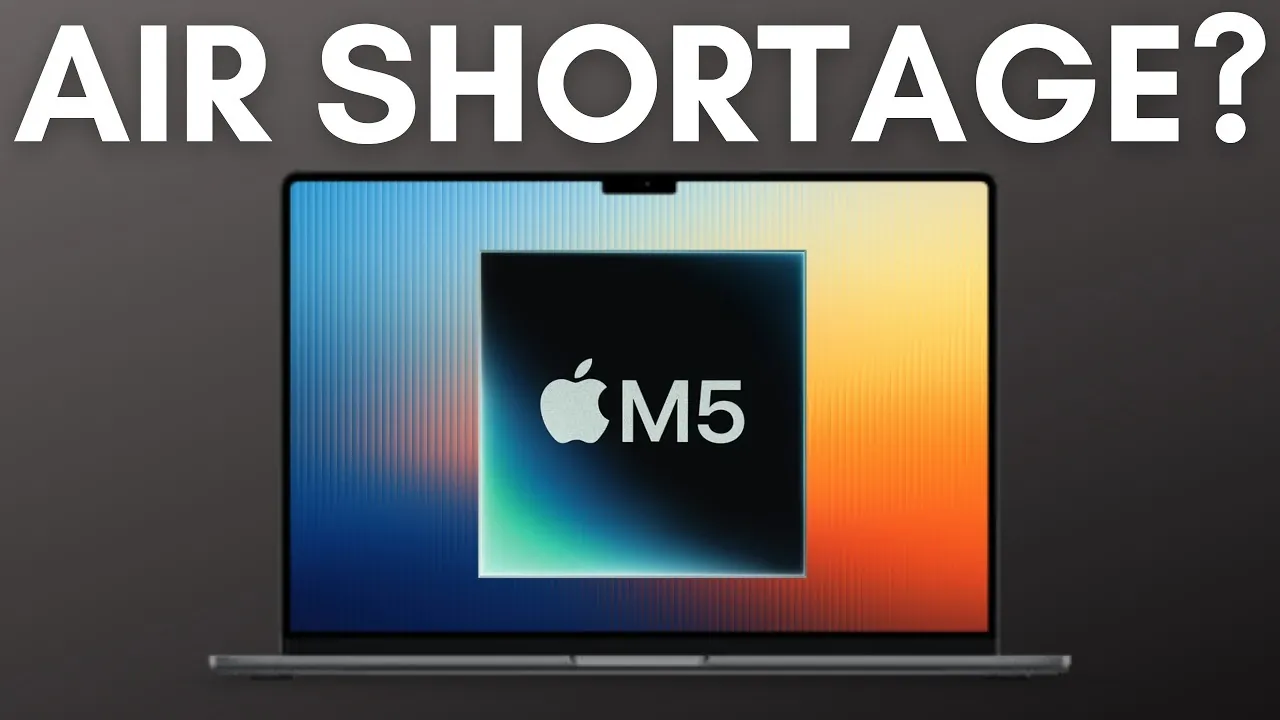
Apple is currently facing significant delays in delivering the MacBook Air, one of its most sought-after laptops. These delays, caused by global shortages of memory and silicon, have extended delivery times into September, leaving many customers waiting longer than anticipated. This situation underscores the ongoing challenges in global supply chains while also shedding light on Apple’s strategic approach to managing these disruptions effectively. The video below from SaranByte gives us more details on the delays.

What’s Behind the Delays?
The root cause of these delays lies in the shortage of two critical components: silicon and memory. Silicon, the foundation of Apple’s M-series chips, is in high demand as the global semiconductor industry struggles to keep pace with surging demand across various sectors. Simultaneously, memory shortages have further strained production capacity, creating a bottleneck in the manufacturing process. These combined challenges have forced Apple to allocate resources strategically, prioritizing certain product lines over others to maintain a balance between supply and demand.
Apple’s Strategic Response
In response to these shortages, Apple appears to be subtly guiding customers toward its higher-priced MacBook Pro lineup. By emphasizing the availability and advanced features of the Pro models, Apple is likely using this situation to increase its average selling price. This approach aligns with the company’s broader strategy of encouraging customers to opt for premium products, particularly when entry-level options like the MacBook Air are harder to obtain. While this may frustrate some consumers, it reflects Apple’s ability to adapt its business model to external challenges while maintaining profitability.
How Customers Are Adapting
Faced with limited availability, many customers are choosing to upgrade to the MacBook Pro rather than wait for the MacBook Air to restock. This shift benefits Apple by driving revenue growth even during supply chain disruptions. The MacBook Pro, with its superior performance, advanced features and immediate availability, becomes an attractive alternative for those who need a laptop without delay. However, the enduring popularity of the MacBook Air suggests that many consumers are still willing to wait for its unique combination of performance, portability and affordability.
Why the MacBook Air Remains a Top Choice
Despite the delays, the MacBook Air continues to be a favorite among students, professionals and casual users. Its lightweight design, long battery life and reliable performance make it a versatile option for a wide range of needs. Additionally, its seamless integration into Apple’s ecosystem enhances its appeal. Features like AirDrop and Handoff allow users to share files effortlessly and transition tasks between devices, reinforcing the MacBook Air’s position as a cornerstone of Apple’s interconnected product lineup.
The Role of Apple’s Ecosystem
Apple’s ecosystem plays a pivotal role in retaining customer loyalty, even during periods of product shortages. If you already own an iPhone, iPad, or Apple Watch, the MacBook Air offers seamless connectivity that enhances your overall experience. For example:
- AirDrop: Instantly share files between Apple devices without the need for external apps or cables.
- Handoff: Start a task on one device, such as drafting an email and continue it seamlessly on another.
This level of integration makes switching to non-Apple products less appealing, even when delays in availability create temporary inconveniences.
Exploring Refurbished Alternatives
For those unwilling to wait for new stock, Apple’s refurbished MacBook options offer a practical and cost-effective alternative. Refurbished models, including older versions of the MacBook Air, provide strong performance at reduced prices. These devices undergo rigorous testing, come with a warranty and meet Apple’s stringent quality standards. Opting for a refurbished MacBook allows you to access Apple’s ecosystem without compromising on reliability or performance, making it an excellent choice for budget-conscious consumers.
Apple’s Supply Chain Management
Apple’s ability to navigate supply chain challenges is a testament to its operational resilience. The company is likely reallocating inventory to meet demand in key markets, making sure that its most popular products remain accessible to as many customers as possible. Additionally, Apple must carefully balance production between the MacBook Air and MacBook Pro models to maintain competitiveness across its product lineup. This strategic allocation of resources highlights Apple’s commitment to meeting customer expectations while addressing production limitations.
What This Means for You
The ongoing MacBook Air shortages reflect the broader challenges of global supply chain disruptions and the strategic decisions companies must make to adapt. Whether you choose to wait for the MacBook Air, upgrade to a MacBook Pro, or explore refurbished options, Apple’s dedication to performance, integration and quality remains evident. By understanding these dynamics, you can make informed purchasing decisions that align with your needs and preferences, making sure you get the most value from your investment in Apple’s ecosystem.
Find more information on MacBook Air by browsing our extensive range of articles, guides and tutorials.
- Early M6 MacBook Air Leaks Reveal What May Be Arriving
- Apple’s 4 Leaked MacBooks: Is It Game Over for Windows Laptops?
- Following Recent Price Hikes, Should You Buy the M5 MacBook Air or Pro?
- Why Apple Might Release the M6 Macs Much Earlier Than Expected
- MacBook Air M5: Is the 15-inch Really Worth the Extra $200?
- Steve Jobs Said No, but macOS 27 Says Yes: The Touchscreen Mac Finally Arrives in 2027
Source & Image Credit: SaranByte
Disclosure: Some of our articles include affiliate links. If you buy something through one of these links, Geeky Gadgets may earn an affiliate commission. Learn about our Disclosure Policy.
