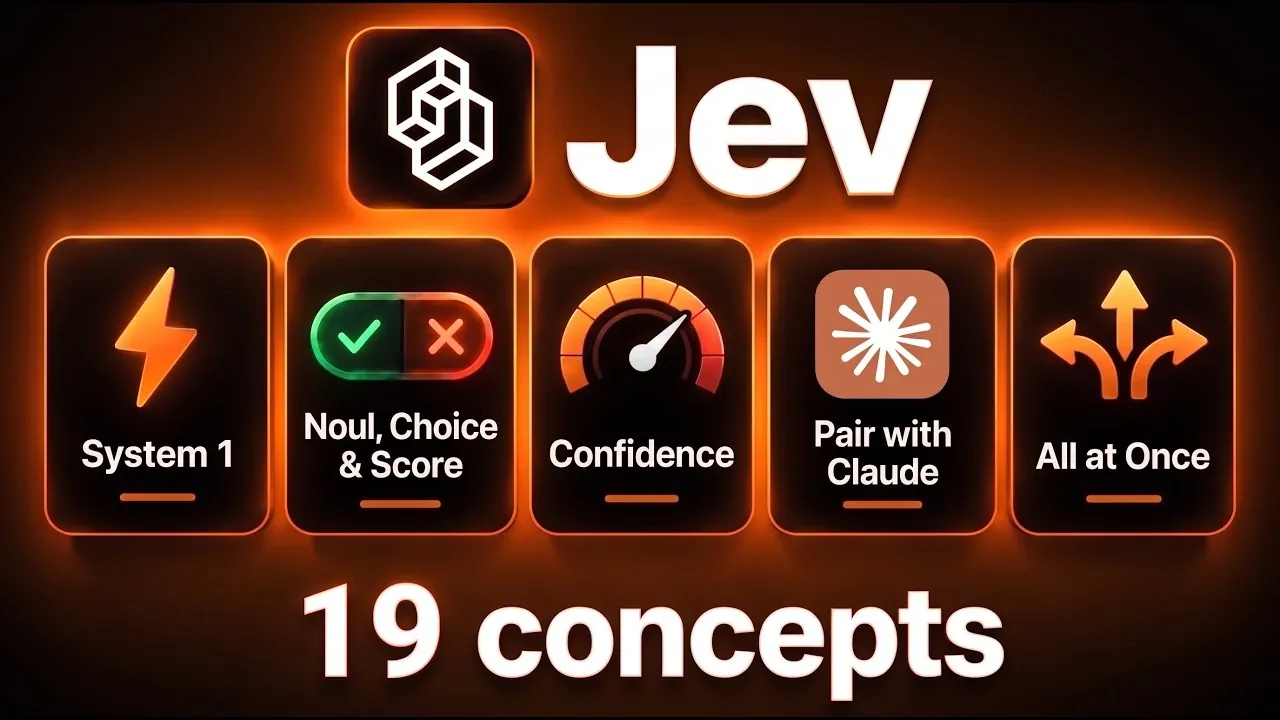
Jev is a specialized AI model designed for deterministic decision-making, offering a distinct approach compared to conversational models like Claude. As highlighted by Simon Scrapes, Jev excels in tasks requiring structured input and precise outputs, such as scoring, categorization and binary decisions. For example, it can assign numerical scores to prioritize sales leads or categorize customer inquiries based on urgency. Its deterministic nature ensures consistent and repeatable results, making it particularly effective for high-volume workflows where speed and cost efficiency are critical.
In this overview, you’ll explore how Jev and Claude can work together to optimize AI-driven processes. Gain insight into Jev’s ability to pre-screen inputs before passing them to Claude for deeper analysis, as well as its role in validating outputs to ensure they meet predefined criteria. You’ll also learn about Jev’s operational patterns, such as confidence thresholds and weighted scoring, which enhance its reliability in complex workflows. These insights will help you understand how to integrate Jev into your systems to improve efficiency and decision-making.
How Jev Works
TL;DR Key Takeaways :
- Jev is a specialized AI model designed for deterministic decision-making, excelling in structured input/output processing and probabilistic judgments, making it ideal for bulk processing tasks.
- Key advantages of Jev include its speed (20-400 times faster than LLMs), cost efficiency (40-1,000 times cheaper), and consistency, with no risk of generating hallucinated outputs.
- Jev handles tasks like binary decisions, choice selection and scoring, producing reliable numerical outputs for high-volume workflows with precision and scalability.
- Jev complements LLMs like Claude by managing deterministic workflows, such as pre-screening inputs or verifying outputs, while LLMs handle reasoning and creative tasks.
- Applications of Jev span industries, including customer support triage, bulk data processing and voice-controlled systems, enhancing operational efficiency and reducing costs.
Jev operates by processing structured inputs to produce outputs such as probabilities, categories, or scores based on predefined criteria. It is designed to handle three main types of questions:
- Yes/No (null): Binary decisions determined by specific thresholds, making sure clarity and precision.
- Choice: Selecting the most appropriate option from a predefined set of possibilities.
- Score: Assigning numerical values to inputs, allowing further processing or prioritization.
The model’s outputs are numerical, allowing software systems to act based on confidence thresholds or weighted scoring mechanisms. This deterministic approach ensures repeatable, reliable results, making Jev ideal for tasks that demand precision and consistency. Its ability to process structured data efficiently positions it as a critical tool for organizations managing high-volume workflows.
Key Advantages of Jev
Jev offers several distinct advantages over traditional LLMs, particularly for deterministic and high-volume tasks:
- Speed and Cost Efficiency: Jev is 20-400 times faster and 40-1,000 times cheaper than LLMs, making it highly scalable for bulk operations.
- Consistency: Its deterministic nature ensures minimal variability, delivering reliable outputs every time.
- Elimination of Hallucinations: Unlike LLMs, Jev avoids generating incorrect or irrelevant outputs by strictly adhering to predefined criteria and options.
These features make Jev a practical and efficient choice for organizations seeking to optimize their workflows while maintaining cost-effectiveness and reliability.

Enhance your knowledge on AI workflows by exploring a selection of articles and guides on the subject.
- How Google Flow’s AI Agent Automates Your Creative Process
- Build AI Automation Agents in Minutes Without Coding Using n8n & Claude
- Build Smart AI Automations in n8n Without Writing Code
- AI Workflow Automation with n8n : A Beginner-Friendly Guide
- How Obsidian AI Tools Are Changing Knowledge & Research
- Google Workspace Gemini Flows : Makes Creating AI Agents Easy Using a Single Prompt
- Building AI-First Automations with Trigger.dev, Modal, and Supabase
- Zapier AI Tutorial for Beginners : Automate Workflows with ChatGPT, Claude & Gemini
- Google AI Studio & Antigravity Integration Reduces Tool Switching
- How to Create Any AI Automation With ChatGPT and Make
Practical Use Cases
Jev’s capabilities make it suitable for a wide range of applications across industries. Its ability to process structured data with precision and speed allows it to streamline operations in various scenarios:
- Task Sorting and Prioritization: Automatically categorizing and routing customer support emails based on urgency and topic, making sure faster response times.
- Bulk Decision-Making: Scoring sales leads, identifying suspicious transactions, or processing large datasets to extract actionable insights.
- Pre- and Post-Processing: Filtering inputs before they are sent to an LLM like Claude or verifying outputs generated by the LLM to ensure they meet specific criteria.
These use cases highlight Jev’s ability to enhance operational efficiency, reduce manual intervention and improve decision-making processes across various domains.
How Jev and Claude Work Together
Jev and Claude are designed to complement each other by addressing distinct types of tasks. Jev specializes in deterministic processes such as classification, scoring and routing, while Claude excels in reasoning, writing and conversational tasks. Together, they create a balanced AI-driven workflow that uses the strengths of both models. For example:
- Pre-Screening Inputs: Jev can filter and categorize data before sending it to Claude for deeper analysis or creative processing.
- Output Verification: Jev can validate Claude’s outputs to ensure they meet specific thresholds or predefined criteria, adding an extra layer of reliability.
This integration allows organizations to optimize performance by combining deterministic precision with probabilistic reasoning, making sure a seamless and efficient workflow.
Operational Patterns for Efficiency
Jev employs several operational patterns to maximize its efficiency and reliability in handling complex workflows:
- Parallel Processing: Processes multiple questions in a single request, reducing latency and improving throughput for high-volume tasks.
- Confidence Thresholds: Ensures actions are based only on reliable outputs by gating decisions with confidence levels, minimizing errors.
- Weighted Scoring: Combines multiple criteria to deliver nuanced, data-driven decisions tailored to specific needs.
- Intent Routing: Directs tasks to the most appropriate handler, whether it’s software, an LLM, or a human operator, making sure optimal resource allocation.
These patterns enable Jev to handle complex workflows with precision, speed and scalability, making it a valuable tool for organizations with demanding operational requirements.
Applications Across Industries
Jev’s versatility makes it applicable across a wide range of industries and scenarios, offering tailored solutions for specific operational challenges:
- Customer Support Triage: Categorizing, prioritizing and routing support emails to the appropriate teams, improving response times and customer satisfaction.
- Voice-Controlled Systems: Processing voice commands with deterministic logic to ensure consistent and accurate responses, enhancing user experience.
- Bulk Data Processing: Sorting and tagging large datasets quickly and affordably for analytics, reporting, or operational purposes.
These applications demonstrate Jev’s ability to enhance productivity, reduce operational costs and streamline workflows in diverse environments.
Limitations of Jev
While Jev is a powerful and efficient tool, it is not a replacement for LLMs. Its performance depends on well-defined questions and criteria, making it less suitable for tasks requiring open-ended reasoning, creativity, or conversational capabilities. Instead, Jev serves as a complementary tool, excelling in deterministic workflows while leaving broader, more nuanced applications to LLMs. This division of labor ensures that each model is used to its fullest potential.
Getting Started with Jev
Jev integrates seamlessly with platforms like Claude through APIs or plugins, making it easy to incorporate into existing workflows. To use Jev effectively, you need to define structured inputs, questions, and routing rules. This setup ensures that Jev processes data efficiently and delivers actionable outputs tailored to your specific needs. By using Jev’s capabilities, organizations can achieve greater efficiency and precision in their operations.
Media Credit: Simon Scrapes
Disclosure: Some of our articles include affiliate links. If you buy something through one of these links, Geeky Gadgets may earn an affiliate commission. Learn about our Disclosure Policy.
