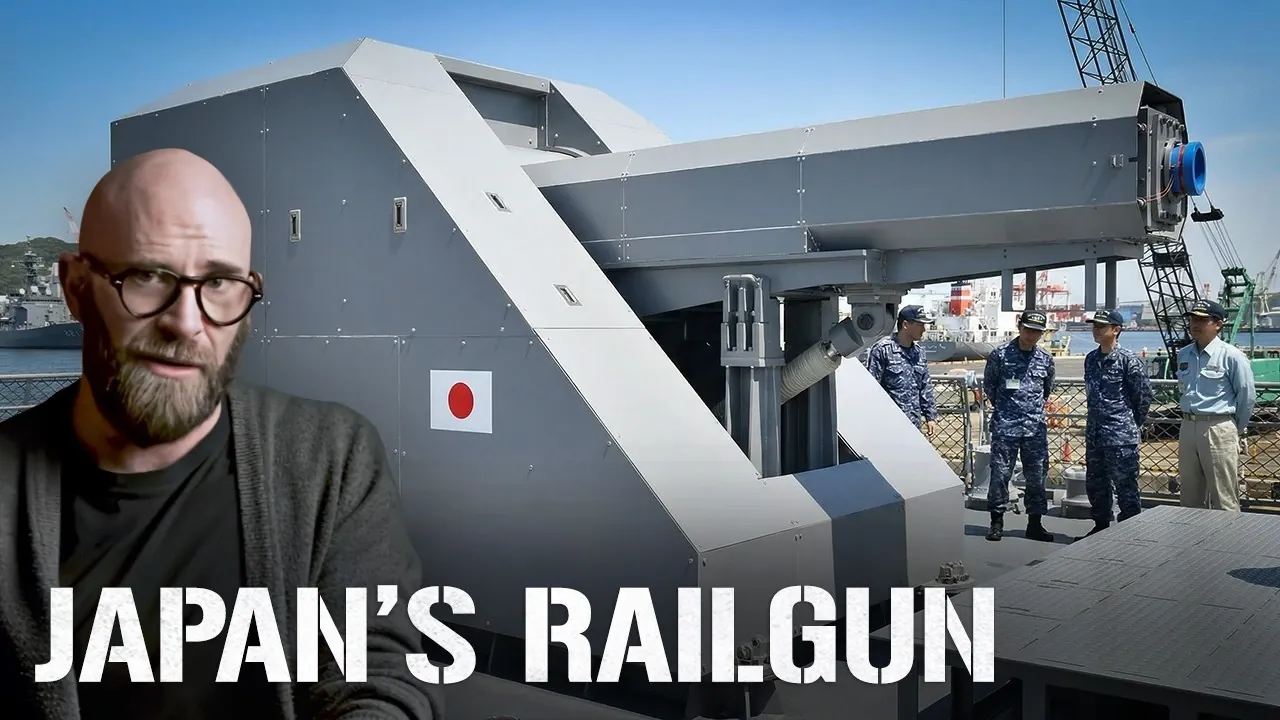
Japan has achieved a new milestone in naval defense with the successful shipboard testing of an electromagnetic railgun aboard the JS Asuka. As detailed by Megaprojects, this marks the first time a railgun has been fired at sea, showcasing its ability to launch projectiles at velocities of 2,000–2,300 meters per second. This capability is designed to intercept fast-moving threats, such as hypersonic missiles, while addressing challenges like barrel durability, withstanding over 120 consecutive firings without significant wear. These advancements highlight Japan’s focus on creating durable and cost-efficient systems for air and missile defense.
In this breakdown, you’ll learn about the miniaturized power systems that make shipboard deployment feasible, the engineering innovations behind the railgun’s enhanced barrel longevity, and how these features compare to similar programs in other nations. You’ll also explore the strategic advantages of railguns, such as their ability to counter missile saturation attacks with rapid, low-cost firing. By understanding these developments, you can better appreciate how Japan’s methodical approach is shaping the future of naval defense and addressing modern military challenges.
Japan’s Railgun Breakthrough
TL;DR Key Takeaways :
- Japan successfully conducted the first-ever shipboard firing of an electromagnetic railgun aboard the JS Asuka, marking a historic milestone in naval defense and military innovation.
- Key technological advancements include projectile velocities of 2,000–2,300 meters per second and breakthroughs in barrel durability, allowing over 120 consecutive firings without significant wear.
- Engineering innovations, such as miniaturized power systems and enhanced barrel materials, have addressed challenges that hindered similar programs in other nations, like the U.S. Navy’s canceled railgun project.
- The railgun offers strategic advantages, including cost-effective interception of multiple threats, countering missile saturation attacks, and versatility for deployment on various platforms.
- Japan’s collaborative approach with international partners has accelerated development, but challenges like unguided projectile accuracy and further miniaturization remain critical for future deployment by 2028.
Key Technological Breakthroughs
The Japan Railgun program has achieved several notable milestones since its inception, showcasing its potential to redefine naval defense capabilities. In 2023, the JS Asuka conducted the first shipboard firing of a railgun, marking a historic moment in military innovation. By 2025, subsequent trials demonstrated the system’s ability to engage targets with precision, solidifying its operational viability.
Key advancements include:
- Projectile velocities consistently reaching 2,000–2,300 meters per second, allowing the interception of fast-moving threats such as hypersonic missiles.
- Breakthroughs in barrel durability, withstanding over 120 consecutive firings without significant wear, an issue that has hindered similar programs globally.
These achievements enhance the system’s reliability and position Japan as a leader in the development of electromagnetic weaponry. The ability to sustain high-performance operations over extended periods is a critical factor in making sure the railgun’s effectiveness in real-world scenarios.
Engineering Innovations Driving Success
Japan’s railgun program stands out due to its focus on practical engineering solutions that address challenges faced by earlier efforts. Among the most significant innovations are:
- Miniaturized power systems: Using advanced materials such as ceramic film capacitors and gallium oxide components, Japan has developed compact and efficient energy storage solutions suitable for shipboard deployment.
- Enhanced barrel durability: Advanced materials and design improvements ensure the railgun can sustain repeated firings without performance degradation, overcoming a major obstacle that plagued earlier programs.
These engineering breakthroughs have allowed Japan to overcome limitations that led to the abandonment of other railgun programs, such as the U.S. Navy’s efforts in the early 2000s. By focusing on compact, efficient designs, Japan has created a system that is both practical and scalable for future applications.
Japan Railgun Testing

- The Nuclear Fusion Breakthrough Once Dismissed as Impossible
- Z Pinch Fusion Costs Drop, Compact Reactor Skips Magnets & Lasers
- Kesterite Solar Cells vs Perovskite: Efficiency and Stability
- Solar Energy S 40,000 mAh retractable solar panel and power bank
- EnergyLink’s Magnetic Wireless Charger Apple Watch Band
- Donut Lab Solid State Battery Claims, 400 Wh/kg and Fast Charge
- Samsung Galaxy Watch 7: Must-Know Tips & Tricks
- Donut Lab Solid State Battery or Pseudo-Capacitor, Experts Weigh In
- CATL Sodium-Ion Battery Uses Water-Based Lines for Cheaper Cells
- Atmos Zero Heat Pump Cuts Process Heat Costs Versus Electric Boilers
Strategic Applications and Advantages
The Japan Railgun program is strategically designed to address modern defense challenges, particularly in air and missile defense. Unlike traditional guided missile systems, which are expensive and limited in supply, railguns offer a cost-effective and versatile alternative. The system’s ability to fire unguided projectiles at extremely high velocities provides several key advantages:
- Intercepting multiple threats: Railguns can engage multiple incoming threats, including hypersonic missiles, in rapid succession.
- Countering missile saturation attacks: The high rate of fire and low cost per shot make railguns an effective solution against large-scale missile attacks.
The compact design of the railgun also allows for deployment on a variety of platforms, including future destroyers, land-based installations, and potentially even mobile vehicles. This versatility enhances its strategic utility, making it a valuable asset in diverse defense scenarios.
Comparison with Other Nations’ Programs
Japan’s methodical and focused approach to railgun development sets it apart from similar programs in other countries. For example:
- The U.S. Navy’s railgun program, initiated in the early 2000s, faced significant challenges such as excessive barrel wear, oversized power systems, and impractical rates of fire. These issues ultimately led to the program’s cancellation in 2021.
- China’s railgun initiatives, while ambitious, have yet to demonstrate operational reliability or consistent performance in real-world conditions.
In contrast, Japan has prioritized smaller, more achievable goals, such as developing a 40mm-caliber system for medium-range defense rather than pursuing large-scale designs for long-range bombardment. This measured approach has allowed Japan to make steady progress while avoiding the pitfalls that have stalled other programs.
Collaborative Efforts and Knowledge Sharing
International collaboration has been a cornerstone of Japan’s railgun program. By partnering with countries such as France and Germany, Japan has gained access to shared expertise and insights from U.S. and European research into electromagnetic weapons. These partnerships have enabled Japan to refine its designs and address technical challenges more effectively, making sure the program remains at the forefront of railgun technology.
The exchange of knowledge and resources has also accelerated the development process, allowing Japan to incorporate the latest advancements in materials science, energy storage, and fire control systems. This collaborative approach underscores the importance of global cooperation in advancing military technology.
Challenges and Future Goals
Despite its successes, the Japan Railgun program faces several challenges that must be addressed to achieve full operational deployment:
- Unguided projectiles: The current reliance on unguided projectiles requires highly precise fire control systems to ensure accuracy, particularly against fast-moving or maneuvering targets.
- Miniaturization and integration: Further advancements in miniaturization are needed to fully integrate the railgun into operational platforms, including ships and land-based systems.
Looking ahead, Japan plans to deploy small-caliber prototypes by 2027 and medium-caliber systems by 2028. However, skepticism remains regarding the practicality of railguns compared to alternative technologies such as hypersonic missiles and high-energy lasers, which offer unique advantages in specific scenarios. Addressing these concerns will be critical to the program’s long-term success.
Shaping the Future of Naval Defense
Japan’s railgun program exemplifies a pragmatic and innovative approach to overcoming the technical and strategic challenges of electromagnetic weaponry. By focusing on achievable goals, such as medium-caliber systems for air and missile defense, Japan has positioned itself as a leader in this emerging field. The program’s successes to date suggest that railguns could play a pivotal role in future naval defense strategies.
Offering a cost-effective and reliable solution to the growing threat of missile saturation attacks, Japan’s railgun program is poised to shape the future of naval warfare. As the technology continues to evolve, it has the potential to set a new standard for electromagnetic weapon systems, making sure Japan remains at the forefront of military innovation.
Media Credit: Megaprojects
Disclosure: Some of our articles include affiliate links. If you buy something through one of these links, Geeky Gadgets may earn an affiliate commission. Learn about our Disclosure Policy.
