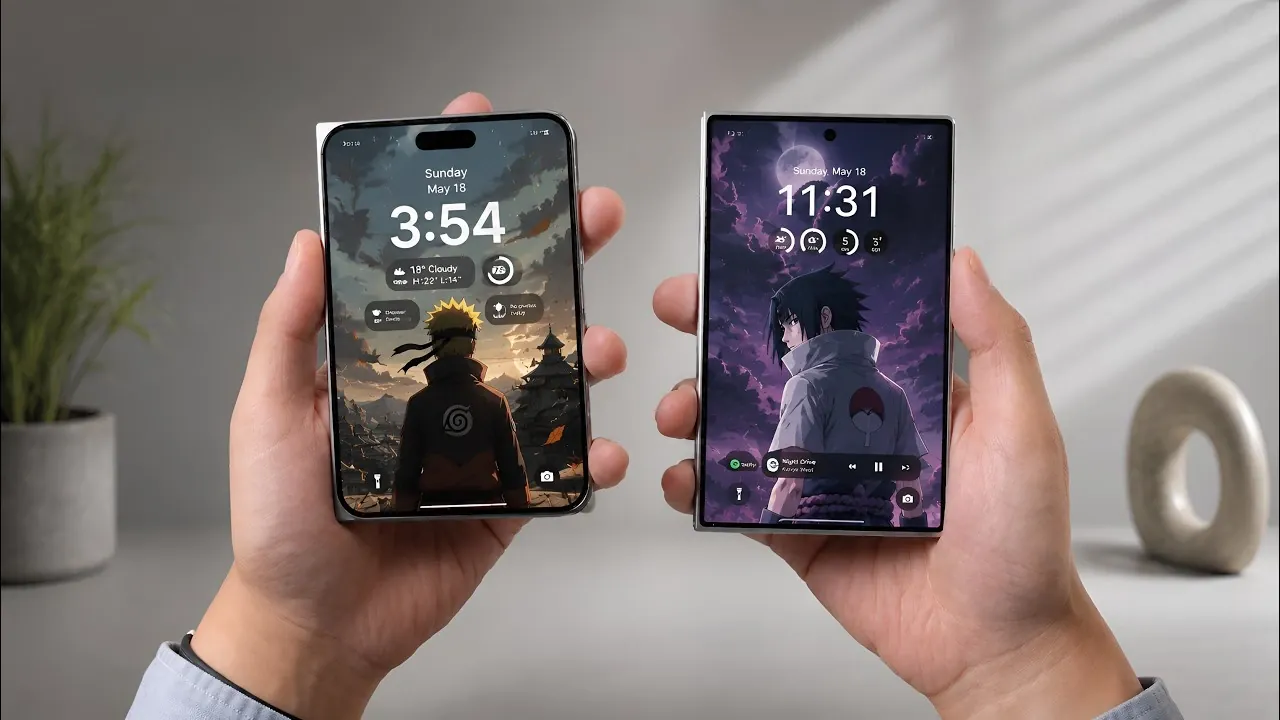
The foldable smartphone market has reached a new milestone with Apple’s entry through the iPhone Duo. Competing directly with Samsung’s Galaxy Z Fold 8, this matchup highlights two distinct approaches to foldable technology. Apple brings its renowned hardware-software integration and fresh innovations, while Samsung uses its extensive experience in foldable devices. Both models cater to different user needs, and understanding their unique features can help you make the right choice.

Design and Build: Premium Materials, Distinct Philosophies
The design and build quality of foldable smartphones are critical factors, and both devices showcase premium craftsmanship with unique approaches.
- iPhone Duo: Crafted from Grade 5 titanium, it is the thinnest iPhone to date. It features a 7.6-inch inner display and a 5.4-inch outer display, offering a compact yet highly functional design. The titanium build enhances durability and portability.
- Galaxy Z Fold 8: Continues Samsung’s established foldable design language with a 7.6-inch inner display and a slightly larger 5.5-inch outer display. Its hinge mechanism, refined over eight generations, ensures durability and smooth folding.
Both devices support a 120 Hz refresh rate for fluid scrolling and responsiveness. However, the iPhone Duo’s titanium construction gives it a slight edge in terms of portability and resilience, appealing to users who prioritize lightweight durability.
Performance: Innovative Processors in Action
Performance is a cornerstone of any premium smartphone, and both devices deliver exceptional capabilities powered by advanced processors.
- iPhone Duo: Runs on Apple’s A20 Pro chip, which integrates vapor chamber cooling for sustained performance. The tight integration between hardware and software ensures smooth multitasking and optimized real-world performance.
- Galaxy Z Fold 8: Powered by the Snapdragon 8 Elite Gen 5 processor, a leader in the Android ecosystem. It excels in speed and efficiency, particularly for multitasking and demanding applications.
While both processors are highly capable, the iPhone Duo’s hardware-software synergy provides a slight advantage in delivering consistent and seamless performance for everyday tasks.
Display Features: Nano-Texture Innovation vs AMOLED Refinement
The display is a defining feature of foldable smartphones, and both devices bring unique strengths to the table.
- iPhone Duo: Features a nano-texture display that reduces glare and reflections, enhancing visibility in various lighting conditions. This innovation makes it particularly suitable for outdoor use.
- Galaxy Z Fold 8: Offers vibrant AMOLED displays, benefiting from Samsung’s years of refinement in foldable screen technology. However, it lacks the glare-reducing nano-texture feature found in the iPhone Duo.
For users who frequently use their devices in bright environments, the iPhone Duo’s nano-texture display provides a distinct advantage, while the Galaxy Z Fold 8’s AMOLED technology ensures vivid and immersive visuals.
Software Experience: Ecosystem vs Versatility
The software experience is a critical factor in foldable devices, as it determines how well the hardware is utilized.
- iPhone Duo: Offers a seamless interface with apps that adapt effortlessly to foldable screens. Features like flex and tent modes enhance productivity and media consumption, making it a strong choice for creative and professional users.
- Galaxy Z Fold 8: Provides robust multitasking capabilities, allowing users to run multiple apps simultaneously. However, occasional app scaling issues on Android can detract from the overall experience.
Apple’s polished ecosystem ensures a more cohesive and intuitive experience, while Samsung’s device appeals to power users who value multitasking and customization.
Camera Systems: Innovation Meets Expertise
Photography is a key consideration for many smartphone users and both devices excel in this area with distinct approaches.
- iPhone Duo: Equipped with two 48 MP cameras (main and ultrawide), a 12 MP front camera and an under-display camera for a seamless look. Computational photography enhances telephoto shots and introduces unique features like kids mode.
- Galaxy Z Fold 8: Features two 50 MP cameras (main and ultrawide) and 10 MP selfie cameras on both displays. While it lacks an under-display camera, its image quality remains competitive, benefiting from Samsung’s expertise in camera technology.
The iPhone Duo’s under-display camera adds a layer of innovation, while the Galaxy Z Fold 8’s camera system reflects years of refinement, offering reliable and high-quality results.
Stylus Support: A Notable Difference
For users who value stylus functionality, the two devices take different approaches.
- iPhone Duo: Supports the Apple Pencil, which is expected to launch later this year, making it a versatile tool for note-taking, drawing and productivity tasks.
- Galaxy Z Fold 8: Surprisingly omits S Pen support, a notable absence given Samsung’s history with stylus-enabled devices.
If stylus functionality is a priority, the iPhone Duo emerges as the clear winner, offering greater versatility for creative and professional users.
Battery and Charging: Efficiency and Speed
Battery life and charging speeds are essential for foldable devices, given their demanding displays and multitasking capabilities.
- iPhone Duo: Promises up to 31 hours of video playback and supports 50% charging in just 20 minutes with a 60W adapter (sold separately). This makes it ideal for users who need quick top-ups throughout the day.
- Galaxy Z Fold 8: While specific battery specs remain undisclosed, Samsung’s track record suggests competitive performance, with reliable battery life and fast charging capabilities.
The iPhone Duo’s fast-charging feature may appeal to users who prioritize efficiency and minimal downtime.
Pricing: Value and Affordability
Pricing is a major factor for many buyers and both devices are positioned as premium offerings.
- iPhone Duo: Starts at $1,999, with pre-orders beginning October 16 and availability on October 23.
- Galaxy Z Fold 8: Priced slightly lower at $1,899, with frequent promotional discounts that make it a more budget-friendly option.
For those seeking a more cost-effective choice, the Galaxy Z Fold 8 offers better affordability, while the iPhone Duo justifies its higher price with innovative features and Apple’s ecosystem.
Making the Right Choice
Deciding between the iPhone Duo and Galaxy Z Fold 8 ultimately depends on your priorities and preferences.
- iPhone Duo: Stands out with its hardware-software integration, nano-texture display, and stylus support, making it an excellent choice for users invested in Apple’s ecosystem or seeking innovative features.
- Galaxy Z Fold 8: Offers a mature and versatile foldable experience, refined over eight generations, and is ideal for Android users who value multitasking and customization.
Both devices represent significant advancements in foldable technology, showcasing the unique strengths of Apple and Samsung. Whether you prioritize innovation or refinement, either option delivers a premium experience tailored to modern mobile needs.
Enhance your knowledge on iPhone Duo by exploring a selection of articles and guides on the subject.
- See the First Hands-on Video of the iPhone Fold Ultra
- iPhone Ultra Fold Launch Date Reportedly Confirmed by Leak
- Apple iPhone Fold Ultra Release Date Surfaces in New Leak
- Reported iPhone Fold Ultra: All the Pre-Launch Details
- Apple iPhone Fold Ultra Leak Reveals Design & Key Specs
Source & Image Credit: Demon’s Tech
Disclosure: Some of our articles include affiliate links. If you buy something through one of these links, Geeky Gadgets may earn an affiliate commission. Learn about our Disclosure Policy.
