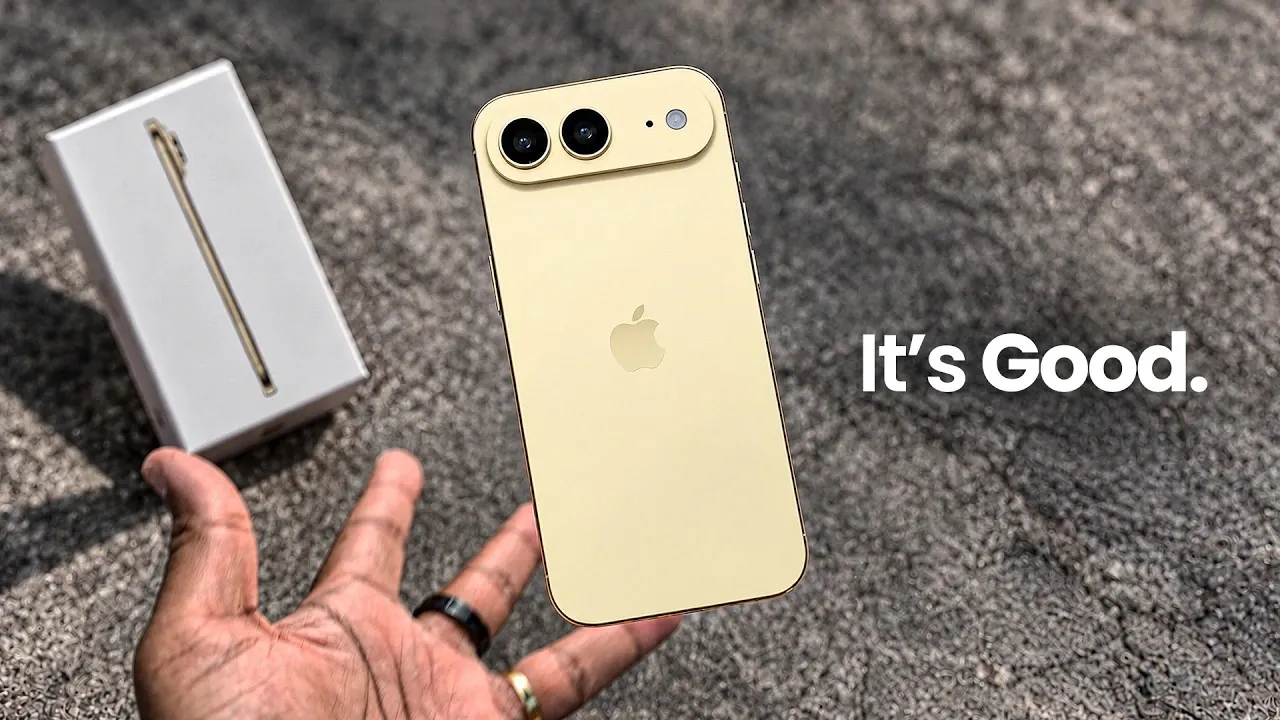
The iPhone Air 2 represents Apple’s effort to refine its mid-tier lineup by addressing key shortcomings of its predecessor while introducing notable upgrades. With advancements in camera technology, battery life, and performance, the Air 2 positions itself as a capable option for users seeking a balance between affordability and functionality. However, persistent challenges, such as thermal management and pricing, may hinder its appeal, especially when compared to the Pro models that dominate Apple’s premium segment. The video below gives us more details.

Camera Upgrade: A Notable Improvement
The iPhone Air 2 introduces a 48-megapixel ultrawide sensor, a significant improvement over the single rear camera of the original Air. This upgrade enhances the device’s versatility, allowing users to capture wide-angle shots with greater clarity and detail. The improved sensor is particularly beneficial for landscape photography and group shots, offering a more dynamic range and sharper results. However, the Air 2 still lacks the triple-camera systems found in the Pro models, which include telephoto and LiDAR capabilities. For photography enthusiasts, this omission may feel like a compromise, as the Air 2 caters more to casual users than professionals seeking advanced imaging features.
Battery Life and Design: A Double-Edged Sword
Apple has equipped the Air 2 with higher-density battery cells, increasing capacity by 11% to 3,500 mAh. Combined with energy-efficient OLED panels, this results in improved battery performance, allowing users to enjoy longer screen time for streaming, gaming and browsing. This enhancement is a welcome change for those who rely heavily on their devices throughout the day.
Despite the improved battery life, the Air 2 maintains an ultra-thin profile at just 5.2 mm, making it 7% thinner than its predecessor. While this sleek design contributes to its aesthetic appeal and portability, it raises concerns about thermal management. The reduced internal space limits the effectiveness of cooling mechanisms, such as the vapor chamber system, potentially leading to overheating during prolonged or intensive use. This trade-off between design and functionality may impact the device’s long-term performance, particularly for users who engage in resource-heavy activities.
Performance Gains and Thermal Limitations
At the heart of the iPhone Air 2 is the A20 Pro chip, which delivers faster processing speeds and smoother performance for demanding tasks. This makes the device well-suited for multitasking, gaming and other intensive applications. The chip’s enhanced architecture ensures quicker app launches, improved graphics rendering and overall responsiveness, catering to users who prioritize performance.
However, the Air 2’s reliance on vapor chamber cooling, combined with its slim design, introduces potential thermal challenges. Under heavy workloads, such as extended gaming sessions or video editing, the device may experience thermal throttling, resulting in inconsistent performance. While casual users may not encounter these issues frequently, power users who push their devices to the limit could find this limitation frustrating.
Connectivity Upgrades: A Step Toward Efficiency
The Air 2 incorporates the N2 wireless chip and C2 cellular modem, both of which promise enhanced connectivity and reduced power consumption. These upgrades aim to improve streaming quality, browsing speeds and call clarity, offering a more seamless user experience. The N2 chip also supports faster Wi-Fi 7 connections, making sure quicker downloads and smoother online interactions.
While these advancements are promising, their real-world impact depends on factors such as network infrastructure and individual usage patterns. For users in areas with robust network support, the connectivity improvements will likely be noticeable. However, in regions with inconsistent coverage, the benefits may be less pronounced, making the upgrades feel incremental rather than fantastic.
Refinements in User Experience
Apple has introduced several smaller yet meaningful changes to enhance the overall user experience of the Air 2. The Dynamic Island, now more compact, mirrors the design of the iPhone 18 Pro, offering a sleeker and more intuitive interface for notifications and multitasking. This feature provides a more immersive experience, particularly for users who frequently switch between apps or interact with live activities.
Additionally, the inclusion of a second speaker enables stereo sound, addressing a key drawback of the original Air. This improvement enhances audio quality for media consumption, making the device more appealing for streaming videos, listening to music, or participating in video calls. While these refinements contribute to a more polished experience, they may not be compelling enough to sway users who are already considering the Pro models, which offer a broader range of premium features.
Pricing and Market Position: A Tough Sell?
The original iPhone Air launched at $999, a price point that drew criticism for its compromises. Early reports suggest the Air 2 may see a price increase to $1,099, narrowing the gap with the Pro models. This pricing strategy raises questions about the Air 2’s competitiveness, as the Pro devices offer more robust features, such as advanced camera systems and superior thermal management, for a relatively small premium.
For budget-conscious buyers, the Air 2’s higher price may be a significant deterrent. While it offers meaningful upgrades over its predecessor, the device’s compromises in areas like thermal performance and camera versatility may make it harder to justify over more feature-rich alternatives. The Air 2’s success will likely depend on how well it resonates with users seeking a middle ground between affordability and premium functionality.
Balancing Innovation with Limitations
The iPhone Air 2 delivers incremental improvements in camera technology, battery life and performance, positioning itself as a refined option in Apple’s mid-tier lineup. However, its ultra-thin design introduces challenges in thermal management and its potentially higher price could limit its appeal among budget-conscious buyers. While the Air 2 offers a compelling mix of features for casual users, it may struggle to satisfy those seeking either top-tier performance or a more affordable alternative. Ultimately, the device’s success will hinge on its ability to address these limitations while meeting the expectations of its target audience.
Check out more relevant guides from our extensive collection on iPhone Air 2 that you might find useful.
- iPhone Air 2 Leaks: Apple Reportedly Solves the Biggest Battery Flaw
- Why the iPhone Air 2 Might Actually Be Worth Buying This Time
- iPhone Air 2 Leak: Apple Finally Fixes the Camera and Battery
- iPhone Air 2 Leaks Reveal a Second Camera, 2nm Chip and Spring 2027 Release
- Leaked: Apple iPhone Air 2 Gets 3 Big Upgrades For 2027
Source & Image Credit: Techtics
Disclosure: Some of our articles include affiliate links. If you buy something through one of these links, Geeky Gadgets may earn an affiliate commission. Learn about our Disclosure Policy.
