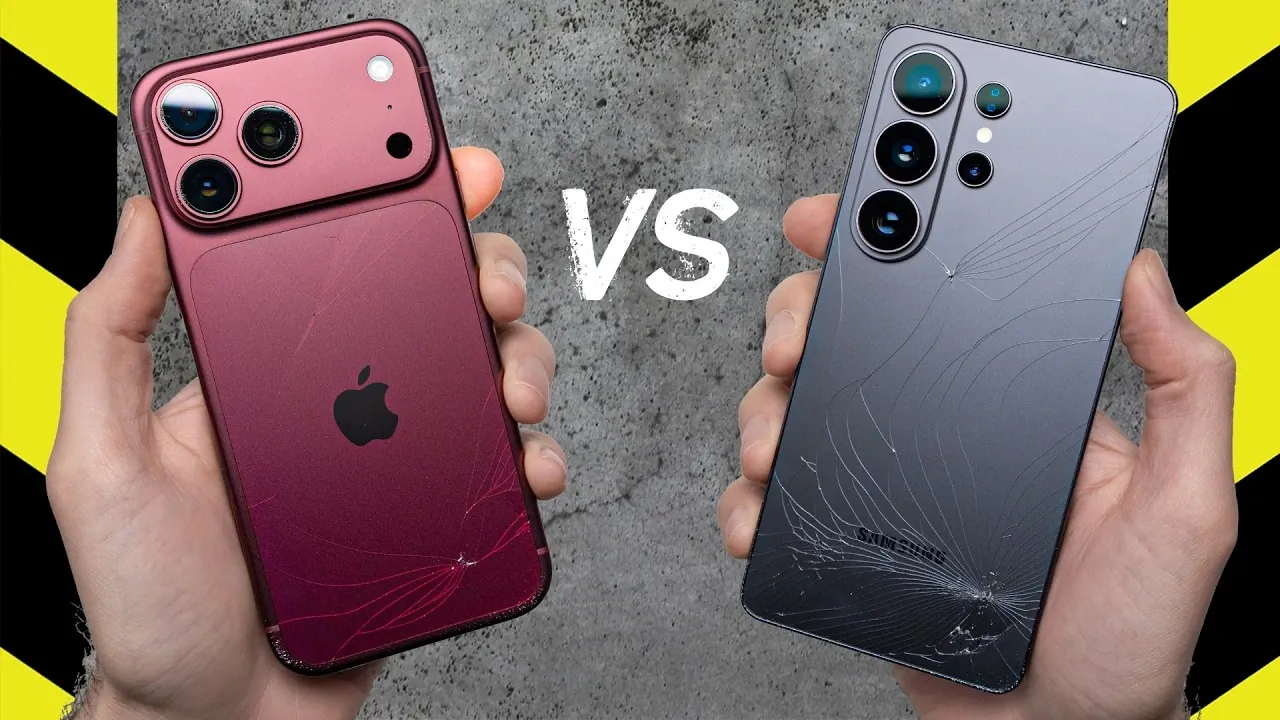
Modern smartphones are technological masterpieces, but their durability is often tested in real-world scenarios. In this detailed comparison, the iPhone 18 Pro Max and Galaxy S26 Ultra undergo six controlled drop tests to evaluate their resilience. Key aspects such as screen durability, structural integrity and functionality retention are analyzed to determine which device is better equipped to handle accidental drops. While both models showcase advanced engineering, the iPhone 18 Pro Max ultimately proves superior, thanks to its robust screen durability and ability to maintain functionality after impact. The video below from Phone Buff shows us how the two handsets perform side by side in a range of drop tests.

Design and Build: The Backbone of Durability
The durability of a smartphone begins with its materials and construction. The iPhone 18 Pro Max features a ceramic shield front, an aluminum frame and a glass back. This combination strikes a balance between strength and weight, enhancing its ability to withstand impacts. In contrast, the Galaxy S26 Ultra pairs an aluminum frame with an all-glass back. While visually appealing, this design increases the risk of shattering during drops.
The iPhone’s ceramic shield technology is specifically engineered to resist cracking during face-first impacts, giving it a distinct advantage in screen durability. Meanwhile, the Galaxy’s aluminum frame offers robust corner protection, a critical factor in minimizing damage during angled drops. However, the Galaxy’s all-glass back, though sleek in appearance, is more prone to cracking under stress, making it less durable in real-world conditions.
Testing Methodology: Real-World Scenarios Simulated
To ensure a fair and realistic comparison, both devices were subjected to six controlled drop tests. These tests were conducted on 120-grit sandpaper, chosen to replicate rough surfaces like concrete or asphalt. Each device was dropped from heights of 1 meter and 1.5 meters, targeting the back, corners and front. The tests were designed to evaluate three critical aspects:
- Impact resistance: How well the device absorbs and withstands the force of impact.
- Structural integrity: The ability of the device to maintain its physical form without significant damage.
- Functionality retention: Whether the device continues to operate as intended after being dropped.
This methodology provides a comprehensive assessment of each smartphone’s performance under stressful conditions, simulating the types of accidents users might encounter in daily life.
Drop Test Results: A Round-by-Round Breakdown
- Round 1 (1m Back Drop): The iPhone’s aluminum back sustained only minor scratches, while the Galaxy’s all-glass back developed noticeable cracks. This round favored the iPhone due to its superior material resilience.
- Round 2 (1m Corner Drop): The Galaxy’s aluminum frame absorbed the impact better, showing minimal damage. The iPhone, however, suffered a visible dent, giving the Galaxy the edge in this round.
- Round 3 (1m Face Drop): The iPhone’s ceramic shield front remained intact, while the Galaxy’s screen shattered, rendering its fingerprint scanner unusable. This was a decisive win for the iPhone.
- Round 4 (1.5m Back Drop): Both devices accumulated additional scratches and cracks, but neither experienced significant structural damage. This round ended in a tie, as neither device showed a clear advantage.
- Round 5 (1.5m Corner Drop): The Galaxy’s aluminum frame again proved more resilient, with minimal corner damage. The iPhone’s dent deepened, making this round another win for the Galaxy.
- Round 6 (1.5m Face Drop): Both screens cracked under the higher impact force. However, the iPhone retained Face ID functionality, while the Galaxy’s fingerprint scanner remained unusable. This round slightly favored the iPhone due to its retained usability.
Strengths and Weaknesses: A Closer Look
The iPhone 18 Pro Max emerged as the overall winner in this durability test. Its ceramic shield front demonstrated exceptional resistance to face-first impacts and it retained critical functionality, such as Face ID, even after significant damage. While its aluminum frame provided adequate protection, it was more prone to cosmetic dents compared to the Galaxy. This makes the iPhone a strong contender for users who prioritize screen durability and functionality retention.
The Galaxy S26 Ultra, on the other hand, excelled in corner impact resistance, thanks to its sturdy aluminum frame. However, its all-glass back proved to be a significant liability, cracking more easily during drops. Additionally, the Galaxy’s screen was more vulnerable to shattering and the loss of fingerprint functionality further highlighted weaknesses in its design. While the Galaxy performed well in specific scenarios, its overall durability fell short compared to the iPhone.
Final Verdict: iPhone 18 Pro Max Leads in Durability
In this head-to-head durability showdown, the iPhone 18 Pro Max outperformed the Galaxy S26 Ultra in critical areas such as screen durability and functionality retention. While the Galaxy demonstrated better corner impact resistance, its susceptibility to screen damage and loss of functionality ultimately hindered its overall performance. For users who prioritize reliability and resilience, the iPhone 18 Pro Max stands out as the more durable choice, offering a better balance of strength, usability and long-term reliability.
Here are additional guides from our expansive article library that you may find useful on iPhone 18 Pro Max.
- Early iPhone 18 Reports Point to Major Unconfirmed Shifts
- iPhone 18 Pro Max Leaks: 10 Massive Upgrades Coming to Camera, Screen, and Battery
- Early iPhone 18 Pro Max Leak Reveals the Upgrade We’ve Been Waiting For
- Just Leaked: 10 Huge Upgrades for the iPhone 18 Pro Max
- What Apple Just Confirmed About the iPhone 18 Pro and Ultra
- Early First Look at the Expected iPhone 18 Pro Design
Source & Image Credit: PhoneBuff
Disclosure: Some of our articles include affiliate links. If you buy something through one of these links, Geeky Gadgets may earn an affiliate commission. Learn about our Disclosure Policy.
