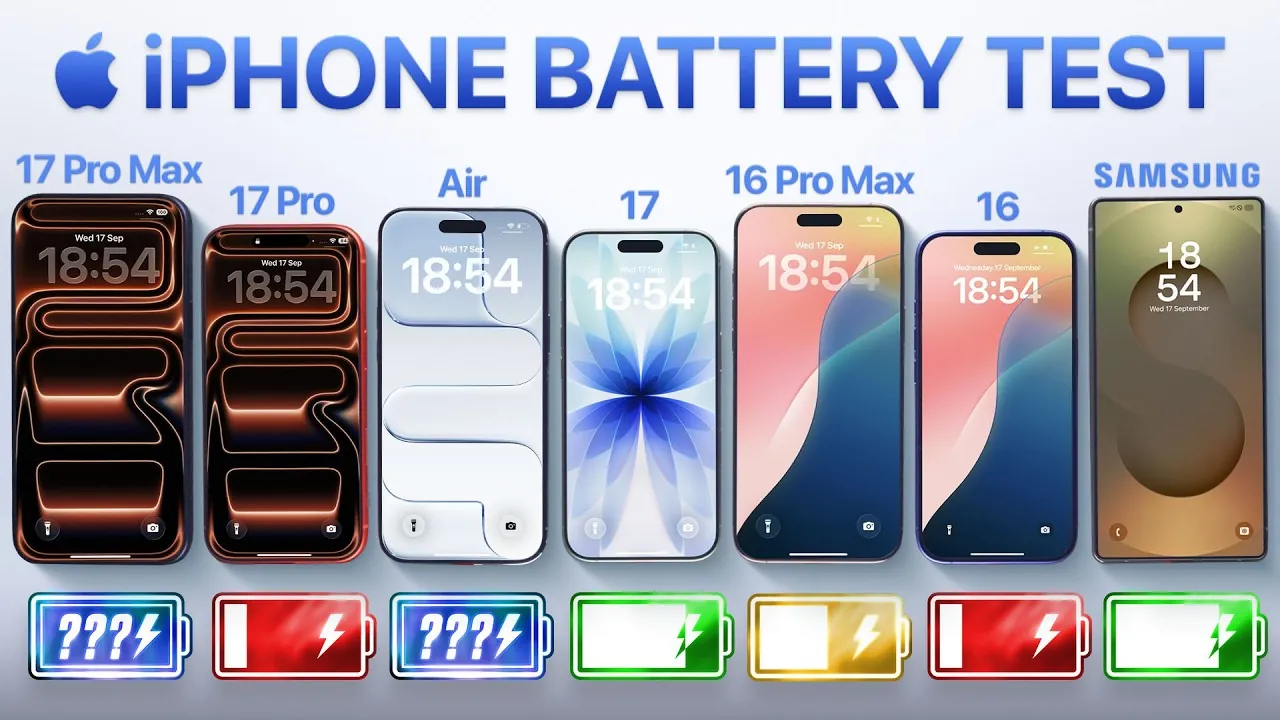
The iPhone 17 series introduces a blend of hardware and software enhancements aimed at improving battery performance, but the results vary significantly across its models. While the Pro Max model delivers impressive endurance, the Air model struggles to meet expectations. Apple’s claims of extended battery life are examined closely, revealing incremental improvements rather than new advancements. This detailed analysis video from Mrwhosetheboss explores the factors influencing battery performance, including hardware design, software optimization, and how the iPhone 17 series compares to its predecessors and competitors like the Samsung Galaxy S25 Ultra.

iPhone 17 Lineup: Performance Across Models
The iPhone 17 lineup includes four distinct models: the standard iPhone 17, the 17 Pro, the 17 Pro Max, and the 17 Air. Each model offers unique features and battery capacities, with the Pro Max emerging as the standout performer in terms of endurance.
- iPhone 17 Pro Max: Achieved an impressive 13 hours of battery life in controlled tests, outperforming both the iPhone 16 Pro Max and the Samsung Galaxy S25 Ultra. Its larger battery and efficient power management make it ideal for heavy users.
- iPhone 17 Air: Delivered only 7 hours and 18 minutes of battery life, falling short of Apple’s claims and lagging behind competitors. Its compact design compromises battery capacity, making it less suitable for demanding tasks.
- iPhone 17 and 17 Pro: Showed modest improvements over the iPhone 16 series, with gains being more noticeable in eSIM-only models. However, physical SIM variants demonstrated less significant advancements.
The Samsung Galaxy S25 Ultra remains a formidable competitor, particularly in multitasking scenarios where its larger battery capacity provides an edge. While Apple’s improvements are evident, they represent evolutionary progress rather than a innovative leap forward.
eSIM vs. Physical SIM: A Design Evolution
A significant change in the iPhone 17 series is the introduction of eSIM-only models in select markets. By eliminating the physical SIM tray, Apple has managed to increase battery capacity by approximately 5.5% to 7%. This design shift enhances battery life, particularly in the Pro Max and Pro models, where the additional space is used effectively.
However, physical SIM models, which remain widely available in many regions, show less pronounced improvements. This disparity highlights the importance of eSIM adoption for users prioritizing battery performance. For those in regions where eSIM models are unavailable, the benefits of the iPhone 17 series may feel less compelling.
Real-World Usage: Bridging the Gap Between Claims and Reality
Apple asserts that the iPhone 17 series offers up to 36% longer battery life compared to previous models. While controlled video playback tests support these claims, real-world usage paints a more nuanced picture.
- Multitasking and Resource-Intensive Apps: Heavy multitasking and demanding applications, such as gaming and video editing, reveal noticeable battery drain, particularly in the Pro Max model. Despite this, the Pro Max still outperforms the iPhone 16 Pro Max and Samsung Galaxy S25 Ultra under similar conditions.
- Everyday Scenarios: During typical daily use, such as browsing, streaming, and light multitasking, the Pro Max demonstrates consistent endurance, making it a reliable choice for most users.
These findings emphasize the importance of considering real-world scenarios when evaluating battery performance. Controlled tests often fail to account for the variability of everyday usage, which can significantly impact battery life.
The iPhone Air: Balancing Design and Performance
The iPhone Air prioritizes a sleek and lightweight design, but this comes at the expense of battery capacity and thermal management. Its smaller battery struggles to support prolonged usage, particularly during resource-heavy tasks like gaming or video editing.
While Apple has implemented software optimizations through iOS 26 to improve efficiency, these measures cannot fully compensate for the hardware limitations of the Air model. This trade-off highlights the challenge of balancing aesthetics with functionality in modern smartphone design. Users seeking a device for intensive tasks may find the Air model less suitable for their needs.
Software Optimization: Enhancements with iOS 26
The iPhone 17 series benefits from the introduction of iOS 26, which includes several features designed to enhance battery efficiency. These updates aim to maximize performance while minimizing power consumption.
- Adaptive Power Mode: Automatically adjusts performance based on usage patterns, extending battery life during periods of low activity.
- Enhanced Background App Management: Optimizes app behavior to reduce unnecessary resource consumption, particularly for apps running in the background.
- Improved Display Efficiency: Refines lighting calculations to minimize power usage during display-related tasks, contributing to overall battery savings.
While these software enhancements benefit all models in the iPhone 17 series, their impact is most noticeable in the Pro Max and Pro models, which already feature larger batteries. However, the Air model sees limited gains due to its smaller battery capacity.
Choosing the Right Model: Factors to Consider
The iPhone 17 series represents Apple’s ongoing efforts to refine battery technology and software optimization. While the Pro Max model stands out as the leader in battery performance, the advancements across the series are incremental rather than fantastic.
- eSIM Advantage: eSIM-only models offer a clear edge in battery life, but users in regions where physical SIM models dominate may find the improvements less compelling.
- Design vs. Functionality: The iPhone Air sacrifices battery performance for a thinner, more portable design, making it less suitable for users with demanding needs.
- Software Enhancements: iOS 26 introduces meaningful improvements, but these cannot fully overcome the hardware limitations of smaller models like the Air.
Ultimately, the choice of model will depend on individual priorities, such as battery life, design preferences, and the availability of eSIM models in your region. For users seeking the best battery performance, the Pro Max remains the top choice, while those prioritizing portability may opt for the Air despite its limitations.
Expand your understanding of iPhone 17 Battery Performance with additional resources from our extensive library of articles.
- iPhone 17 Pro Max Battery Life and Features: What to Expect
- Complete Guide to the iPhone 17: Specs, Pricing, and Release
- iPhone 17 Pro Max Battery Life: 5 Mind-Blowing Leaks
- iPhone 17 Pro Max Battery Life is INSANE
- iPhone 17 Pro Max Rumors: Battery Life, Cooling Tech, and More
Source & Image Credit: Mrwhosetheboss
Disclosure: Some of our articles include affiliate links. If you buy something through one of these links, Geeky Gadgets may earn an affiliate commission. Learn about our Disclosure Policy.
