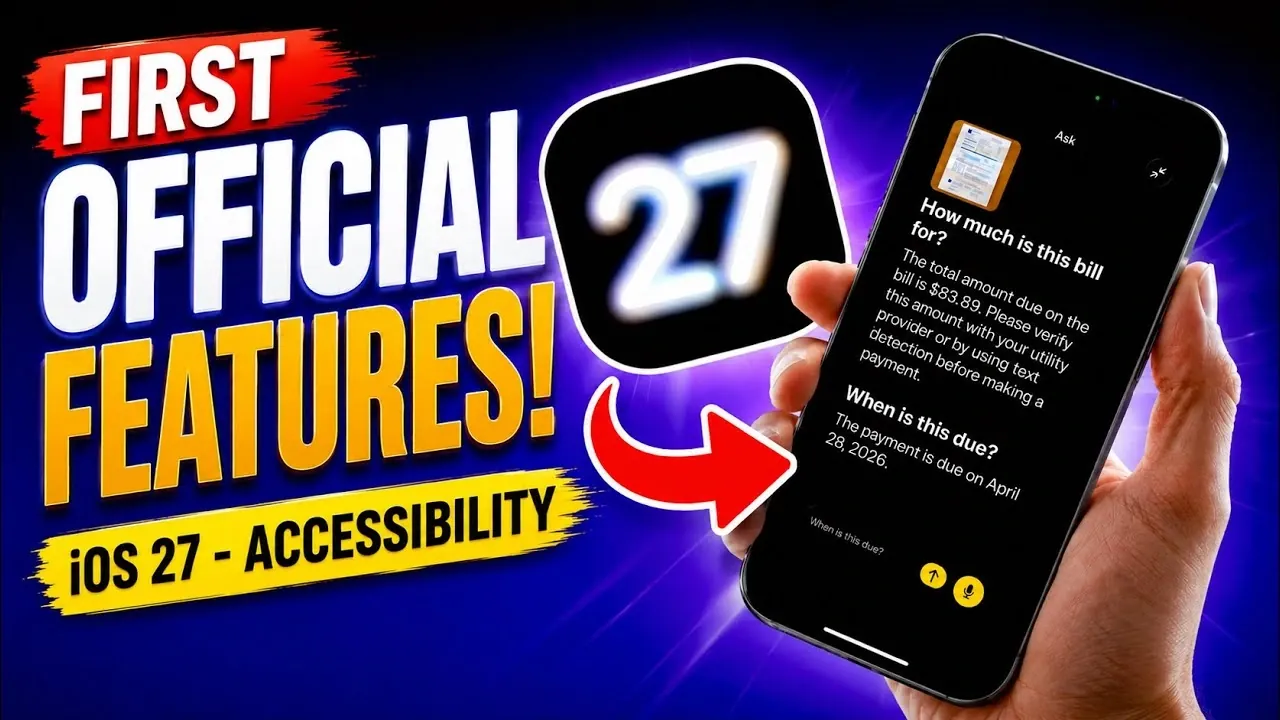
Apple’s iOS 27, a major update that emphasizes accessibility and user-centric design, is coming at WWDC 2026 next month. This release introduces a range of features powered by advanced Apple Intelligence, integrating technologies such as natural language processing, eye-tracking, and AI-driven tools. These innovations aim to make Apple devices more inclusive and adaptable to diverse user needs. The developer beta will be available starting June 8, 2024, during WWDC, offering developers and early adopters a glimpse into the future of Apple’s ecosystem. The video below from iDeviceHelp gives us more details on what Apple has planned for iOS 27.

Enhanced Accessibility Through Natural Language Processing
iOS 27 introduces significant advancements in natural language processing (NLP), transforming how users interact with their devices. For individuals with disabilities, these features make navigation and communication more intuitive. Voice controls now allow you to describe on-screen elements to perform actions. For example, you can say, “Open the menu at the top right,” and the system will execute the command without requiring precise gestures. This functionality is particularly helpful for users with motor impairments.
The Magnifier app has also been upgraded to use NLP capabilities. It can now answer natural language questions about on-screen content, providing detailed descriptions of both digital interfaces and physical surroundings. This enhancement is especially beneficial for visually impaired users, allowing them to better understand and interact with their environment.
Automatic Subtitles and Real-Time Sign Language Support
To address the needs of users with hearing impairments, iOS 27 introduces automatic subtitle generation for video content. This feature ensures that you can access videos without relying on third-party tools, making media consumption more seamless and inclusive. The subtitles are generated in real time, maintaining accuracy and synchronization with the audio.
Apple has also developed a new API that allows developers to integrate real-time sign language interpreters into FaceTime calls. This new feature enables a sign language interpreter to appear during video calls, facilitating smooth communication for the deaf and hard-of-hearing community. Whether you’re participating in a personal conversation or a professional meeting, this tool ensures that everyone can engage fully.
Apple Vision Pro: Accessibility Redefined
The Apple Vision Pro receives substantial updates in iOS 27, further enhancing its accessibility features. One of the most notable advancements is the integration of eye-tracking technology, which allows users with limited mobility to control devices and navigate environments with precision. For individuals using powered wheelchairs, this feature provides a new level of independence and control.
Additional improvements include enhanced vehicle motion cues and touch accommodations, making sure that the Vision Pro adapts to a wide range of user needs. These updates make the device more versatile and capable of supporting users in various scenarios, from navigating complex spaces to interacting with digital content.
Improved Hearing Aid and Text Accessibility
Apple continues to refine its support for Made for iPhone hearing aids, streamlining the setup process to make configuration easier and more efficient. This ensures that users can quickly connect their hearing aids and enjoy a seamless audio experience across Apple devices.
For users who require larger text, iOS 27 expands text enlargement options across the Apple ecosystem, including Apple TV and tvOS 27. This enhancement ensures that content remains accessible and easy to read, regardless of the device or screen size. By prioritizing readability, Apple makes its products more inclusive for users with visual impairments or other accessibility needs.
AI Integration: The Backbone of iOS 27
At the core of iOS 27’s advancements is AI-driven innovation, which powers many of the new accessibility features. From natural language processing to automatic subtitles, Apple Intelligence enables devices to adapt to individual needs with remarkable precision. These AI-driven tools not only improve usability but also set a new standard for how technology can foster inclusivity. By using AI, Apple ensures that its devices are not only smarter but also more empathetic to the diverse requirements of its users.
Why iOS 27 Matters
iOS 27 represents a significant leap forward in accessibility and user-focused design. By integrating technologies like natural language processing, eye-tracking, and AI, Apple continues to prioritize inclusivity across its ecosystem. Whether you rely on voice controls, real-time sign language support, or enhanced hearing aid compatibility, iOS 27 ensures that technology adapts to your unique needs.
With the developer beta launching at WWDC 2024, these features are poised to redefine how users interact with their devices. By making technology more accessible and adaptable, Apple reaffirms its commitment to creating a digital experience that is inclusive for everyone.
Take a look at other insightful guides from our broad collection that might capture your interest in iOS 27 Features.
- iOS 27 Rumors: Top Features We Need (and What’s Leaked So Far)
- Is Your iPhone on the List? iOS 27 Could Cut Off These Popular Models
- iOS 27 Leak: Apple Is Giving You More Control Over the ‘Liquid Glass’ Design
- Apple Just Leaked iOS 27 Features Early: New Visual Intelligence Coming to iPhone
- iOS 27: Big Changes Coming to YOUR iPhone
Source & Image Credit: iDeviceHelp
Disclosure: Some of our articles include affiliate links. If you buy something through one of these links, Geeky Gadgets may earn an affiliate commission. Learn about our Disclosure Policy.
