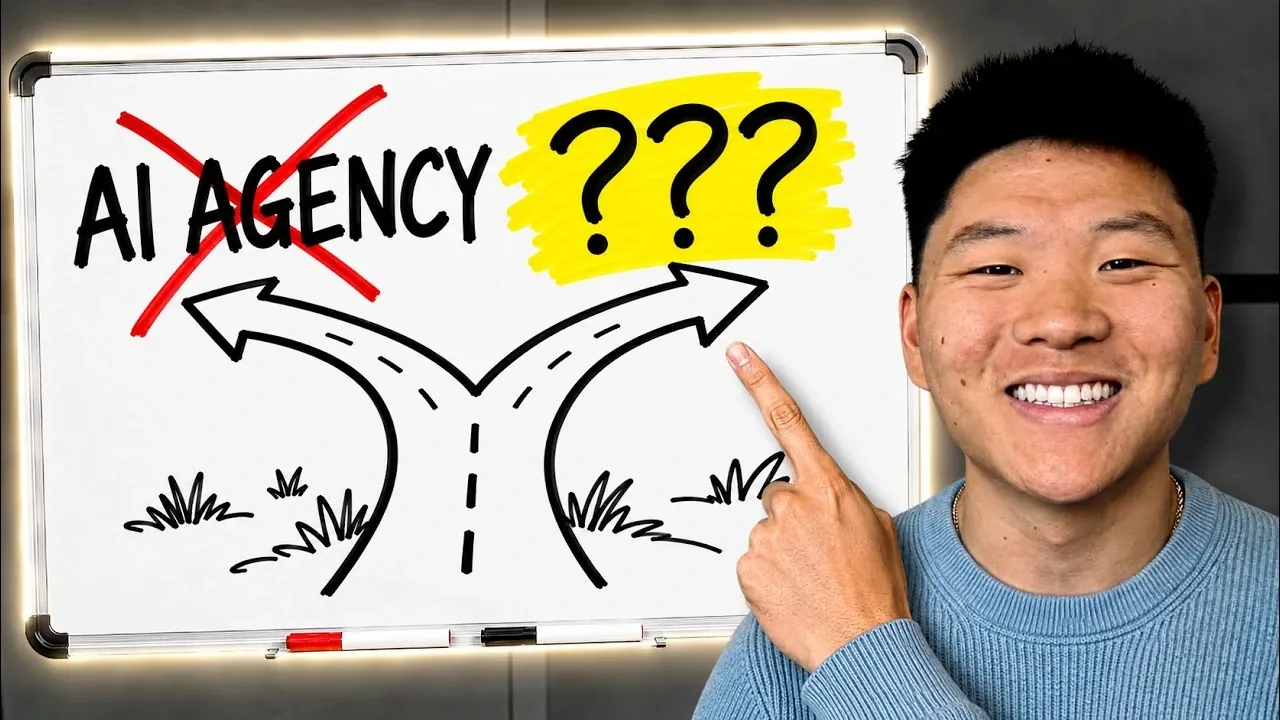
Artificial Intelligence offers a wealth of opportunities for professionals looking to enhance their careers without venturing into agency work. In a recent walkthrough by Nate Herk, the focus is on using AI strategically to align with your existing strengths and career goals. For instance, one approach involves identifying repetitive tasks in your current role that can be automated, allowing you to focus on higher-value work. This method not only boosts efficiency but also positions you as a forward-thinking contributor within your organization.
Dive into this guide to uncover actionable strategies for integrating AI into your professional life. You’ll gain insight into how to document and share AI-driven outcomes to build credibility, explore pathways for internal growth or external consulting roles and learn how to pair AI fluency with industry expertise to create unique value. Whether you’re aiming to optimize your current role or explore new opportunities, this breakdown provides a clear roadmap to help you navigate AI’s expanding role in the workplace.
The Growing Demand for AI Leadership
TL;DR Key Takeaways :
- AI is transforming careers by allowing professionals to integrate AI skills into their expertise, enhancing roles and opening new opportunities without needing to start an AI agency.
- Leadership roles like Chief AI Officer (CAIO) are on the rise, with businesses seeking AI-fluent leaders across departments to drive innovation and efficiency.
- A significant AI skills gap exists, presenting opportunities for professionals to master AI tools, automate tasks and showcase measurable results to gain recognition and leadership roles.
- AI is expanding across industries, with domain expertise combined with AI fluency creating unique value in sectors like healthcare and finance through predictive analytics and data-driven insights.
- To thrive in an AI-driven workplace, professionals must embrace continuous learning, align AI with their strengths and foster adaptability to remain competitive and lead innovation.
As AI adoption accelerates, organizations are increasingly prioritizing leadership roles that focus on its integration. Positions like Chief AI Officer (CAIO) are becoming more common, with projections indicating that 76% of large companies will adopt this role by 2026, compared to just 26% in 2024. Beyond CAIOs, businesses are seeking leaders across all departments who are fluent in AI to drive innovation, improve efficiency and streamline operations. This growing demand underscores the importance of AI knowledge not only for technical experts but also for leaders in diverse fields such as marketing, operations and human resources. By developing your AI expertise, you can position yourself as a forward-thinking leader capable of guiding your organization through this technological shift.
Closing the AI Skills Gap
Despite the increasing availability of AI tools, a significant skills gap persists. Research shows that while 86% of employees have the potential to learn AI, only 25% actively incorporate it into their daily workflows. This gap presents a unique opportunity for professionals who are willing to bridge the divide. By mastering AI tools and demonstrating their practical applications, you can establish yourself as a valuable asset within your organization. For example, automating repetitive tasks or using AI to analyze data can lead to measurable improvements in efficiency and decision-making. By showcasing these results, you can highlight the tangible benefits of AI and position yourself as a leader in its adoption.

Here are more detailed guides and articles that you may find helpful on AI workflow.
- Google Workspace Gemini Flows : Makes Creating AI Agents Easy Using a Single Prompt
- How to Copy & Replicate any Complex n8n Workflow in Seconds with Claude AI
- How to use Perplexity AI Inside n8n (No Code)
- How to Build Custom AI Agents to Automate Anything & Everything
- How to use Flowise AI : Complete 2025 Guide
- Building AI-First Automations with Trigger.dev, Modal, and Supabase
- Local AI Coding Workflow for 2026 : Links Devices for Shared Local AI Coding
- 10 AI tools to take your business to the next level
- Why Separating “Speed Tasks” is the Secret to Mastering AI at Work
- Why Anthropic is Using “Harnesses” to Control Long-Running AI Agents
Two Career Paths to Build an AI-Focused Career
You don’t need to launch an AI agency to build a successful career in this field. Instead, consider these two primary paths:
- Path A: External Opportunities – Freelancing, consulting, or joining AI-focused firms allows you to apply your expertise across various industries. This path offers flexibility and exposure to diverse challenges, allowing you to develop a broad skill set while working on innovative projects.
- Path B: Internal Growth – By becoming the most AI-proficient professional within your current organization, you can position yourself for leadership roles. Start by integrating AI into your workflows, identifying areas for improvement and showcasing measurable results. This approach can help you gain recognition and open doors to higher-level positions.
Both paths require a commitment to continuous learning and experimentation. Choose the one that aligns best with your career goals, personal preferences and long-term aspirations.
AI’s Expanding Role Across Industries
AI is no longer confined to the tech sector; it has become a cornerstone of innovation across virtually every industry. This shift is comparable to the internet’s fantastic impact in the early 2000s. In regulated sectors such as healthcare and finance, the combination of domain expertise with AI fluency is particularly valuable. For example:
- Healthcare professionals can use AI for predictive analytics, allowing earlier diagnoses and more personalized treatment plans.
- Finance experts can use AI-driven insights to enhance risk management, optimize investment strategies and improve decision-making processes.
By pairing your industry knowledge with AI skills, you can create unique value, drive innovation and contribute to meaningful advancements within your field.
The Cultural Shift in Work Dynamics
The integration of AI is reshaping workplace dynamics, influencing how tasks are performed and how teams collaborate. By 2030, the focus may shift from AI augmenting human roles to humans augmenting AI systems. This evolution will require a blend of technical expertise, strategic thinking and leadership skills. As a professional, you’ll need to guide your team in adopting AI while fostering a culture of innovation, adaptability and collaboration. Encouraging open communication and continuous learning will be essential to navigating this cultural shift effectively.
Practical Steps to Use AI
To establish yourself as an AI-savvy professional, start small and build momentum by taking these actionable steps:
- Identify repetitive tasks in your role that can be automated using AI tools, freeing up time for more strategic activities.
- Experiment with AI integration in your workflows, testing different tools and approaches to find what works best for your needs.
- Document your outcomes and share your AI-driven improvements with colleagues and leadership to gain recognition and support.
- Focus on areas where your expertise intersects with AI capabilities, creating innovative solutions that address specific challenges in your field.
These steps will help you demonstrate the practical value of AI in your work, positioning you as a forward-thinking professional and opening doors to new opportunities.
Long-Term Implications of AI
AI is set to become a fundamental aspect of every business function, making AI fluency a baseline requirement for future roles. Early adopters who define how AI is applied within their fields will set the standard for others to follow. By staying ahead of the curve, you can gain a competitive edge and play a pivotal role in shaping the future of work in your industry. This proactive approach will not only enhance your career prospects but also enable you to contribute to the broader evolution of your profession.
Strategies for Sustained Success
To thrive in an AI-driven workplace, align your efforts with your passions and strengths. This alignment will keep you motivated and help you navigate challenges effectively. Embrace continuous learning and experimentation to stay relevant in this rapidly changing field. By doing so, you can position yourself as a leader in AI integration, driving innovation and meaningful change within your organization or industry. Cultivating a mindset of adaptability and curiosity will ensure that you remain at the forefront of this technological revolution, ready to seize new opportunities as they arise.
Media Credit: Nate Herk | AI Automation
Disclosure: Some of our articles include affiliate links. If you buy something through one of these links, Geeky Gadgets may earn an affiliate commission. Learn about our Disclosure Policy.
