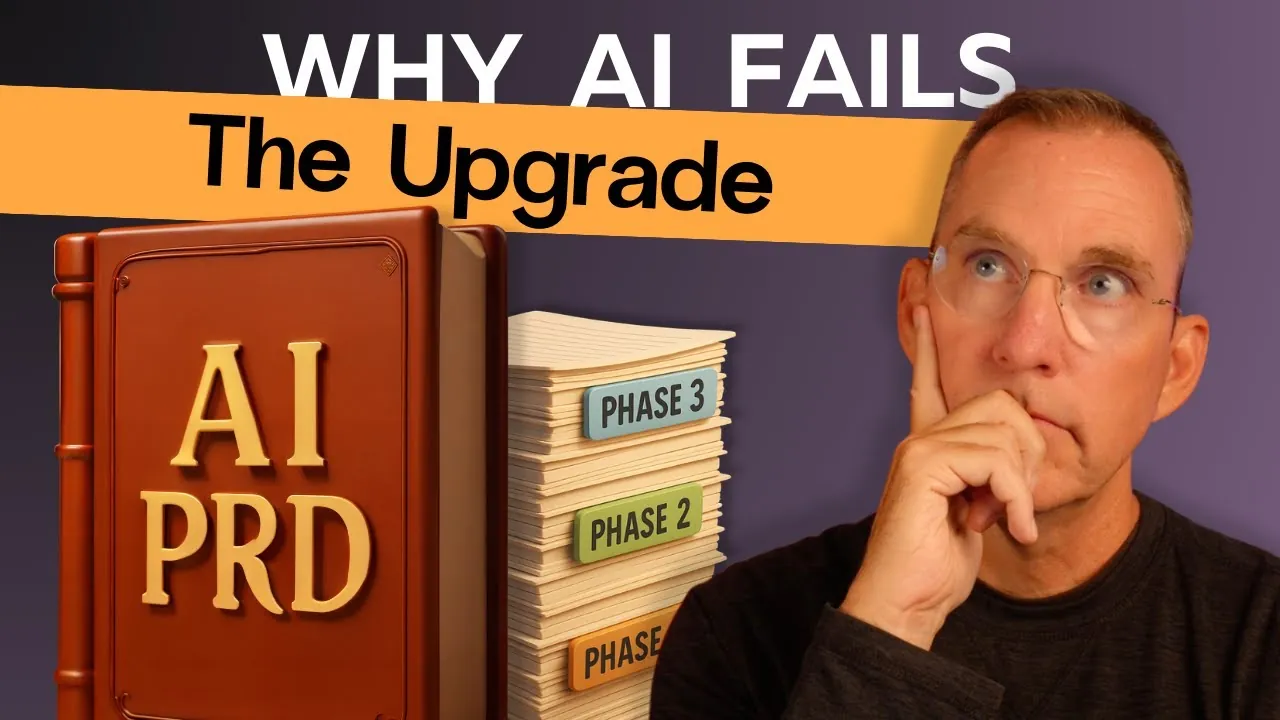
What if the secret to unlocking the full potential of artificial intelligence lies not in the algorithms themselves, but in how we communicate with them? Imagine an AI system tasked with designing a new marketing campaign, yet it falters because the instructions were vague or incomplete. This isn’t just a hypothetical scenario, it’s a common challenge in AI-driven projects. Enter the AI-specific Product Requirements Document (PRD), a innovative tool that bridges the gap between human intent and machine execution. Unlike traditional PRDs, these specialized frameworks are carefully crafted to guide AI systems with precision, making sure their outputs are not only accurate but also aligned with the project’s goals. The result? Smarter workflows, fewer errors, and a innovative way to approach development.
In the tutorial below, Matt Maher explains how AI PRDs are reshaping the landscape of project management and why they’re becoming indispensable in modern industries. You’ll discover how these documents address the unique needs of AI systems, from eliminating ambiguity to embedding context-rich prompts that produce meaningful results. We’ll also delve into their key components, practical applications, and the fantastic benefits they bring to iterative development. Whether you’re navigating the complexities of AI-driven creativity or managing large-scale technical projects, the insights ahead will challenge conventional thinking and reveal how structured guidance can unlock unprecedented efficiency. The question is: Are we ready to rethink how we collaborate with machines?
Understanding AI-Specific PRDs
TL;DR Key Takeaways :
- AI-specific Product Requirements Documents (PRDs) are essential for guiding AI systems, making sure outputs are accurate, aligned with project goals, and reducing misinterpretation risks.
- Unlike traditional PRDs, AI PRDs require explicit objectives, detailed inputs/outputs, behavioral rules, concrete examples, and proactive gap identification to address AI’s limitations in understanding ambiguity.
- Effective AI PRDs include clear objectives, structured inputs/outputs, behavioral constraints, examples, and evaluation criteria to enhance precision and minimize errors.
- Phased approaches in complex projects, supported by meta-PRDs, ensure incremental progress, coordination, and clarity across interconnected tasks.
- AI PRDs improve accuracy, relevance, and iterative development, making them indispensable for maximizing the potential of AI-driven projects across various industries.
The Importance of Context in AI Prompts
AI systems operate solely based on the data they are trained on and the instructions they receive. Unlike human collaborators, AI cannot infer meaning, ask clarifying questions, or fill in gaps when instructions are vague. Without clear and context-rich prompts, the outputs generated by AI can often be incomplete, irrelevant, or even misleading. For instance, a generic prompt such as “create a marketing strategy” might result in a broad, unfocused response that lacks actionable insights. However, a detailed prompt specifying the target audience, industry, and desired outcomes ensures the AI understands the task’s scope and delivers more relevant results.
AI-specific PRDs address this challenge by embedding detailed, structured guidance into the development process. By providing explicit instructions, these documents enable AI systems to produce outputs that are both precise and meaningful, reducing the risk of misinterpretation and enhancing the overall quality of results.
How AI PRDs Differ from Traditional PRDs
While traditional PRDs are designed to communicate objectives, constraints, and deliverables to human teams, AI-specific PRDs require a fundamentally different approach. The primary distinction lies in the level of detail and explicitness required. AI systems lack the ability to interpret ambiguity or seek clarification, making it essential for AI PRDs to anticipate potential gaps in understanding and address them proactively. Key differences between traditional and AI-specific PRDs include:
- Explicit Objectives: Clearly defined goals and task scopes eliminate guesswork and ensure alignment with project requirements.
- Defined Inputs and Outputs: Detailed specifications of the data the AI will process and the expected results guide the system effectively.
- Behavioral Rules: Constraints and acceptable behaviors are outlined to ensure the AI operates within defined parameters.
- Concrete Examples: Sample prompts and desired outputs provide clarity and context, reducing the likelihood of errors.
- Proactive Gap Identification: Potential misunderstandings are addressed in advance to minimize risks.
By incorporating these elements, AI PRDs bridge the gap between human intent and machine execution, making sure that AI systems deliver outputs that align with project objectives.
AI Product Requirements Documents (PRD) Explained

Explore further guides and articles from our vast library that you may find relevant to your interests in AI prompting.
- Write better ChatGPT AI prompts Using the CRAFT framework
- How to use AI prompt chains for better results
- Improve your AI prompt writing for better results
- Google AI Prompt Engineering Course : Master AI Prompts
- Advanced AI prompt writing framework’s to improve your results
- Master ChatGPT AI Prompts: The CASTLE Framework Explained
- OpenAI Quietly Releases New ChatGPT AI Prompt Generator
- Harnessing the Power of the RICE Framework for Perfect ChatGPT
- Write powerful AI prompts using the CRAFT framework
- How to Master Prompt Engineering for Better AI Results
Key Components of an Effective AI PRD
An AI-specific PRD is more than just a set of instructions; it is a comprehensive framework that guides the AI system throughout the project lifecycle. To achieve this, an effective AI PRD should include the following critical components:
- Clear Objectives: Define the purpose and scope of the task to provide a clear direction for the AI.
- Inputs and Outputs: Specify the data the AI will process and the expected results to ensure alignment with project goals.
- Behavioral Rules: Outline constraints, acceptable behaviors, and any limitations to guide the AI’s operations.
- Examples: Provide sample prompts and desired outputs to clarify expectations and reduce ambiguity.
- Evaluation Criteria: Establish metrics to assess the quality, accuracy, and relevance of the AI’s outputs.
These components work together to create a robust and structured document that minimizes errors, enhances efficiency, and ensures the AI’s performance aligns with the desired outcomes.
Overcoming Challenges in AI Understanding
AI systems face inherent limitations when interpreting instructions, particularly when prompts are ambiguous or lack sufficient detail. Unlike humans, AI cannot intuitively clarify vague requests or infer missing information. This can lead to errors or “hallucinations,” where the AI generates outputs that are factually incorrect or irrelevant. For example, asking an AI to “summarize a book” without specifying the title or key themes may result in a fabricated or overly generic response.
To mitigate these risks, AI PRDs must be precise, comprehensive, and structured. By leaving little room for misinterpretation, these documents ensure the AI system operates within clearly defined boundaries, reducing the likelihood of errors and improving the overall quality of outputs.
Phased Approaches for Complex Projects
Large-scale projects often involve multiple interconnected tasks, making it essential to adopt a phased approach to ensure clarity and coordination. Dividing a project into smaller, manageable stages allows for more focused development and reduces the risk of errors. Each phase can be guided by its own AI PRD, while a meta-PRD provides overarching context and alignment across all stages.
For instance, in the development of a mobile application, the initial phase might focus on core functionality, guided by a PRD that outlines basic features and user interactions. Subsequent phases could address advanced features, user interface design, and performance optimization, each with its own dedicated PRD. This phased approach ensures that progress is incremental and that each stage builds on the previous one, allowing efficient and coordinated development.
Benefits of AI-Specific PRDs
The adoption of AI-specific PRDs offers numerous advantages, making them an indispensable tool for modern project development. Key benefits include:
- Improved Accuracy: Detailed and explicit instructions reduce errors and misinterpretations, making sure outputs are precise and aligned with project goals.
- Enhanced Relevance: Context-rich prompts enable the AI to produce outputs that are meaningful and tailored to the task at hand.
- Streamlined Iterative Development: Feedback loops allow for continuous refinement of both the PRD and the AI’s outputs, improving overall quality over time.
These benefits highlight the critical role of AI PRDs in achieving high-quality results and maximizing the potential of AI-driven projects.
Applications and Tools Supporting AI PRDs
AI PRDs are versatile and can be applied across a wide range of industries and domains. In software development, they can guide AI systems in generating code, debugging, or optimizing performance. In creative industries, AI PRDs can be used to direct the creation of art, music, or written content. Tools such as custom GPTs, collaborative platforms, and version control systems like GitHub further enhance the creation and management of AI PRDs, allowing seamless collaboration and centralized documentation.
Best Practices for Developing AI PRDs
To maximize the effectiveness of AI PRDs, consider the following best practices:
- Start Simple: Begin with straightforward instructions to avoid overwhelming the AI in the early stages of development.
- Iterate and Refine: Use feedback loops to continuously improve the PRD and the AI’s outputs.
- Plan for Phases: Include placeholders and clear instructions for phased development to ensure clarity and coordination across all stages.
By adhering to these practices, you can create AI PRDs that are both effective and adaptable, making sure better alignment with project objectives and reducing inefficiencies.
Unlocking the Potential of AI with PRDs
AI-specific PRDs are a vital tool for guiding AI systems to deliver accurate, relevant, and impactful results. By providing clear, structured, and context-rich instructions, these documents enable you to harness the full potential of AI technologies. For complex projects, adopting a phased approach with a meta-PRD ensures clarity and coordination across all stages of development. Ultimately, the effective use of AI PRDs enables you to achieve your project goals with greater precision, efficiency, and confidence.
Media Credit: Matt Maher
Disclosure: Some of our articles include affiliate links. If you buy something through one of these links, Geeky Gadgets may earn an affiliate commission. Learn about our Disclosure Policy.
