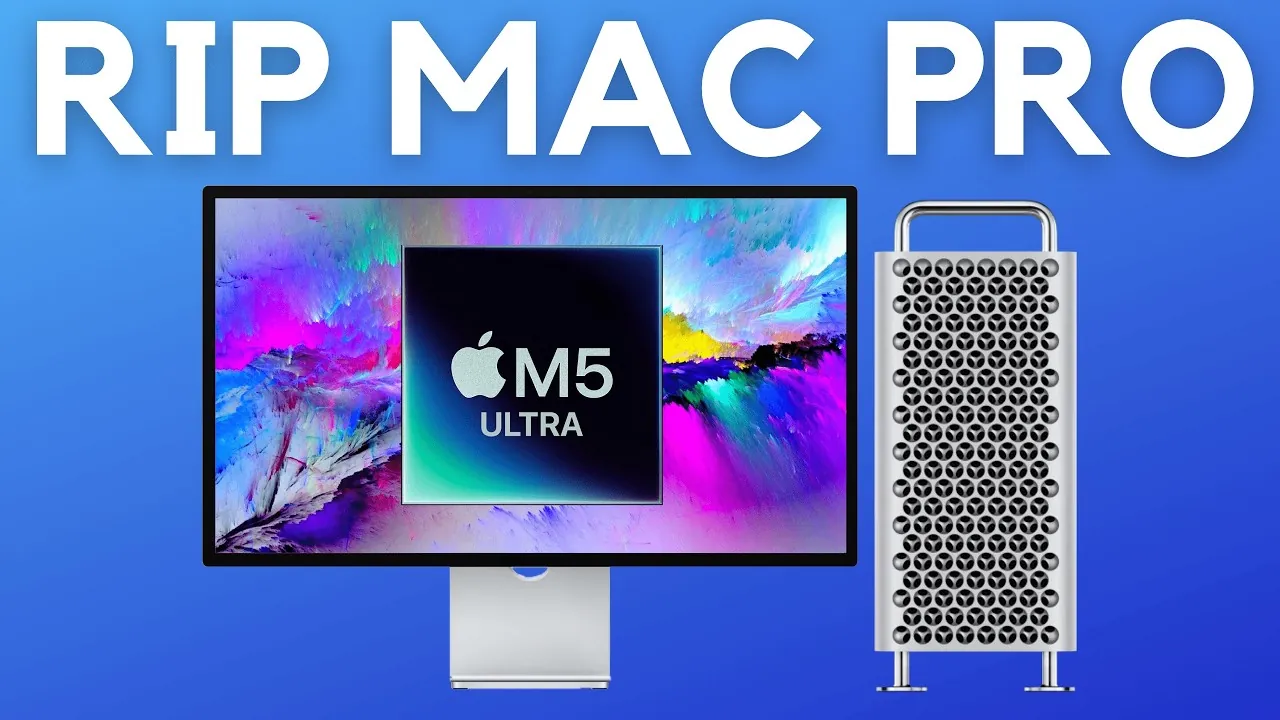
Apple’s Mac Pro, once regarded as the pinnacle of high-performance modular computing, is gradually losing its prominence within the company’s product lineup. The advent of Apple silicon and the increasing popularity of the Mac Studio signal a strategic pivot by Apple, moving away from traditional modular systems. This shift reflects broader trends in professional computing, where compact, integrated devices and cloud-based solutions are steadily replacing the need for expandable hardware. The Mac Pro, once a symbol of power and flexibility, now faces an uncertain future as Apple redefines its priorities. The video below from SaranByte gives us more details.

From Flagship to Footnote: The Decline of the Mac Pro
For years, the Mac Pro stood as a testament to Apple’s commitment to professional users, offering unmatched performance and modularity. However, its role has diminished significantly in recent years. The introduction of the Mac Studio—a smaller, high-performance desktop—has overshadowed the Mac Pro by delivering comparable capabilities at a fraction of the cost. Apple’s limited updates to the Mac Pro further underscore its declining importance in the company’s strategy.
The Mac Studio’s compact design and competitive performance have made it the preferred choice for many professionals, leaving the Mac Pro with a shrinking audience. While the Mac Pro still appeals to a niche group of users who value its expandability, the broader market has shifted toward more integrated solutions. This transition highlights the changing priorities of both Apple and its professional user base.
Apple Silicon: Redefining High-Performance Computing
Apple’s transition to its in-house silicon chips has fundamentally altered the landscape of professional computing. The M5 Ultra chipset, for instance, delivers exceptional performance in a compact, integrated design, effectively eliminating the need for modularity. This innovation directly challenges one of the Mac Pro’s core strengths: its ability to support PCIe slots and hardware expansions.
The Mac Studio, powered by Apple silicon, meets the demands of high-end users while offering a more streamlined and cost-effective solution. Its ability to handle complex workflows without requiring additional hardware expansions has made it a fantastic option in the professional computing space. As a result, the Mac Pro’s traditional advantages, such as modularity and expandability, have become less relevant in today’s market, where efficiency and integration are prioritized.
Shifting Market Trends and Evolving User Needs
The professional computing landscape has undergone a significant transformation in recent years. Modern workflows increasingly rely on external accelerators, cloud computing, and less specialized hardware. Features like PCIe slots, once essential for professionals, are now being replaced by peripheral processing units and remote computing solutions. These changes have reduced the demand for modular systems like the Mac Pro.
The Mac Studio’s design aligns seamlessly with these evolving needs, offering a streamlined, integrated solution that fits into modern workflows. Its compact form factor and powerful performance make it an ideal choice for professionals who value efficiency and flexibility. This shift reflects a broader industry trend, where the focus has moved away from modularity toward solutions that prioritize practicality and adaptability.
The Mac Pro’s Uncertain Future
Apple has provided no clear indication of plans to release a Mac Pro powered by the M5 Ultra chipset or any future Apple silicon processors. Instead, the company appears to be concentrating its efforts on the Mac Studio, which has quickly become the go-to high-performance desktop for professionals. While the Mac Pro may not disappear immediately, its gradual phase-out seems inevitable as Apple continues to prioritize products that align with its strategy of integration and efficiency.
The Mac Pro’s uncertain future raises questions about the role of modular systems in Apple’s product lineup. As the company focuses on delivering compact, high-performance solutions, the Mac Pro’s niche appeal becomes increasingly difficult to justify. This transition underscores Apple’s commitment to adapting to the changing needs of its professional users while maintaining its competitive edge in the market.
The Mac Studio: Apple’s New Professional Workhorse
The Mac Studio has emerged as a powerful alternative to the Mac Pro, offering high-end performance in a compact and cost-effective form factor. Designed to handle demanding workflows, the Mac Studio integrates seamlessly with Apple’s latest technologies, making it an attractive option for professionals across various industries.
With its ability to support future updates, including the M5 Ultra chipset, the Mac Studio is well-positioned to remain a cornerstone of Apple’s professional computing lineup. Its compact design and impressive performance capabilities make it a versatile solution for modern professionals, further diminishing the need for the Mac Pro. As Apple continues to refine and expand the Mac Studio’s capabilities, it solidifies its role as the company’s primary high-performance desktop offering.
Strategic Implications for Apple
Apple’s decision to deprioritize the Mac Pro reflects a broader strategic shift in its approach to professional computing. By focusing on the Mac Studio and other high-performance devices, Apple is streamlining its product offerings to better align with market demands. The Mac Pro’s niche appeal no longer fits within this strategy, as the company emphasizes practicality, integration, and cost-effectiveness.
This transition highlights Apple’s ability to adapt to the evolving needs of its professional user base. By prioritizing products like the Mac Studio, Apple is positioning itself to remain competitive in the high-performance computing market while addressing the growing demand for compact and efficient solutions. The decline of the Mac Pro marks a significant turning point in Apple’s professional computing history, signaling the end of an era and the beginning of a new chapter focused on innovation and adaptability.
Unlock more potential in Apple silicon by reading previous articles we have written.
- Local AI Setup Guide for Apple Silicon : Get a Big Boosts for Speed
- Apple Silicon in 2025: A New Era of Computing
- Cyberpunk 2077 on Mac : Apple Silicon Meets AAA Games
- Thunderbolt docking station for Apple Silicon MacBooks
- New Apple Mac Pro with Apple Silicon in the works
Source & Image Credit: SaranByte
Disclosure: Some of our articles include affiliate links. If you buy something through one of these links, Geeky Gadgets may earn an affiliate commission. Learn about our Disclosure Policy.
