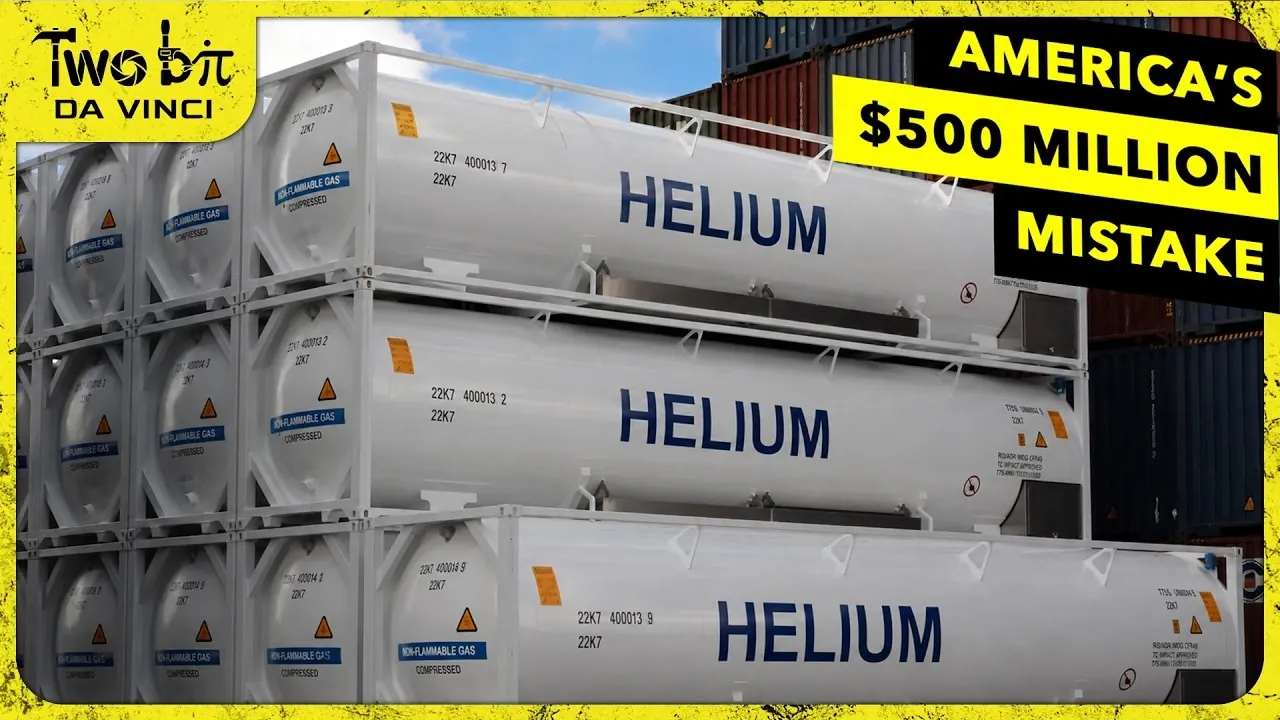
Helium, often associated with party balloons, plays a far more critical role in modern technology than most realize. The recent missile strikes on Qatar’s natural gas facilities in March 2026 have brought this into sharp focus, triggering a global helium shortage with far-reaching consequences. Qatar, responsible for nearly one-third of the world’s helium production, has been forced to halt operations indefinitely, exposing the fragility of this essential resource. As Two Bit da Vinci explains, helium’s unique properties, such as its ability to remain liquid at extremely low temperatures, make it indispensable for industries like semiconductor manufacturing, medical imaging and even space exploration. This sudden disruption has left industries scrambling to adapt, highlighting the urgent need for strategic resource planning.
In this explainer, you’ll gain insight into the cascading effects of the helium shortage, from its impact on global supply chains to the rising costs for industries that depend on it. Explore how the crisis is affecting critical sectors like MRI diagnostics and chip production and learn about potential solutions, including the exploration of helium-rich reserves and the development of more efficient technologies. Whether it’s understanding the economic fallout or the long-term strategies needed to stabilize supply, this breakdown offers a comprehensive look at a crisis that could reshape the future of innovation.
Why Helium Matters: The Invisible Backbone of Innovation
TL;DR Key Takeaways :
- The March 2026 missile strike on Qatar’s natural gas facilities has caused a global helium crisis, halting production and disrupting industries reliant on helium, such as medical imaging and semiconductor manufacturing.
- Helium’s unique properties make it indispensable for advanced technologies, including cooling MRI machines, allowing quantum computing and supporting semiconductor and space exploration industries.
- Qatar, responsible for 33% of global helium production, has ceased operations indefinitely, exposing vulnerabilities in global supply chains and highlighting the scarcity of helium as a non-synthesizable resource.
- The crisis has led to a 70-100% surge in helium prices, severely impacting industries like chip manufacturing, healthcare and technology, with ripple effects threatening economic growth and innovation.
- Proposed solutions include exploring new helium sources, improving efficiency in helium usage and long-term strategies like lunar mining, alongside calls for strategic resource planning and international cooperation to prevent future shortages.
Helium is far more than just a gas used to fill balloons; it is a cornerstone of technological advancement. Its unique properties, such as remaining liquid at extremely low temperatures and allowing superconducting magnets, make it indispensable across a wide range of industries. Helium’s applications include:
- Medical Imaging: Cooling MRI machines to ensure precise and reliable diagnostics.
- Semiconductor Manufacturing: Facilitating the production of chips that power smartphones, computers and electric vehicles.
- Space Exploration: Purging rocket fuel systems and pressurizing fuel tanks during launches.
- Quantum Computing: Cooling quantum processors to maintain their operational stability.
- Cloud Data Centers: Supporting the infrastructure that powers internet services and cloud storage.
Unlike many other gases, helium cannot be synthesized or easily replaced. Its scarcity and unique characteristics make it a critical resource for technological progress. Any disruption in its supply has immediate and far-reaching consequences, underscoring its importance in modern innovation.
What Triggered the Crisis?
The current helium crisis was set in motion by Iranian missile strikes targeting Qatar’s natural gas facilities. These facilities are integral to helium production, as helium is extracted as a byproduct during the liquefaction of natural gas. The damage to these facilities has halted production and repairs are expected to take months, if not longer. Compounding the issue, helium cannot be stored long-term due to its tendency to boil off, meaning any production disruption has immediate and severe impacts. With Qatar accounting for 33% of the global helium supply, industries worldwide are now scrambling to secure alternative sources or adapt to the shortage.
Expand your understanding of Helium with additional resources from our extensive library of articles.
- The Hidden 48-Day Countdown Threatening the Future of AI Chips
- Felix Baumgartner’s Space Jump Balloon Compared To The Statue Of Liberty
- Best Enterprise SEO Agencies Helping Tech Startups Scale in 2026
A History of Vulnerability
The helium crisis is not an isolated event but rather the culmination of decades of policy decisions that have left the global supply chain exposed. In 1929, the United States established a strategic helium reserve under the Helium Act to ensure a stable supply for critical applications. However, the Helium Privatization Act of 1996 mandated the sale of this reserve at undervalued prices, leading to its depletion over time. By 2024, the U.S. had sold off its remaining helium reserve to a private German company, leaving no strategic stockpile to cushion against supply disruptions.
This lack of foresight has created a precarious situation. With no significant reserves and limited global production capacity, industries and governments are now struggling to manage the fallout. The crisis serves as a stark reminder of the risks associated with neglecting strategic resource planning.
Economic and Industrial Fallout
The helium shortage is already causing widespread disruptions across multiple industries. Prices have surged by 70-100% within a week, placing significant financial strain on businesses that depend on helium. Key sectors are particularly affected:
- Semiconductor Manufacturing: Facilities in Taiwan, South Korea and the United States are facing critical shortages, jeopardizing the production of chips essential for electronics and electric vehicles.
- Medical Imaging: Hospitals are struggling to secure helium for MRI machines, potentially delaying life-saving diagnostic procedures.
- Technology Supply Chains: The ripple effects of the shortage could disrupt global production for months or even years, slowing technological innovation and economic growth.
The economic impact extends beyond these industries, as the shortage threatens to destabilize supply chains and hinder advancements in emerging technologies. The crisis underscores the interconnectedness of global industries and the cascading effects of resource scarcity.
Exploring Solutions to the Helium Shortage
Addressing the helium crisis requires a multifaceted approach that combines immediate actions with long-term strategies. Potential solutions include:
- Developing New Sources: Helium-rich reserves, such as those in South Australia, are being explored. While promising, these projects require substantial investment and time to become operational.
- Improving Efficiency: Researchers are working on helium-efficient technologies, such as advanced MRI machines that use less helium or alternative cooling methods for superconducting magnets.
- Lunar Mining: The moon’s surface contains helium-3, a rare isotope with potential applications in quantum computing and fusion energy. Although promising, this remains a long-term solution that depends on advancements in space exploration technology.
These efforts highlight the need for innovation and investment to secure a stable helium supply. However, the timeline for implementing these solutions varies and immediate challenges remain.
The Role of Policy and Strategic Planning
Despite helium’s critical importance, it is notably absent from the U.S. critical mineral stockpile, leaving the country vulnerable to supply disruptions. Policymakers are now under pressure to rebuild a strategic helium reserve and implement measures to secure long-term supplies. These measures could include incentivizing domestic production, diversifying supply sources and investing in research to develop alternative technologies.
The crisis also underscores the importance of international cooperation. Given helium’s global significance, collaborative efforts to stabilize supply chains and share resources could mitigate future risks. Proactive resource management and strategic planning are essential to prevent similar disruptions in the future.
A Call for Action
The helium crisis serves as a stark reminder of the fragility of global supply chains and the risks of neglecting strategic resource planning. As industries and governments grapple with the immediate impacts, the focus must shift toward sustainable solutions. Developing new sources, advancing helium-efficient technologies and rebuilding strategic reserves are critical steps to mitigate future risks. Without decisive action, the helium shortage could stall technological progress and destabilize economies for years to come. The time to act is now, as the consequences of inaction could reverberate across industries and societies worldwide.
Media Credit: Two Bit da Vinci
Disclosure: Some of our articles include affiliate links. If you buy something through one of these links, Geeky Gadgets may earn an affiliate commission. Learn about our Disclosure Policy.
