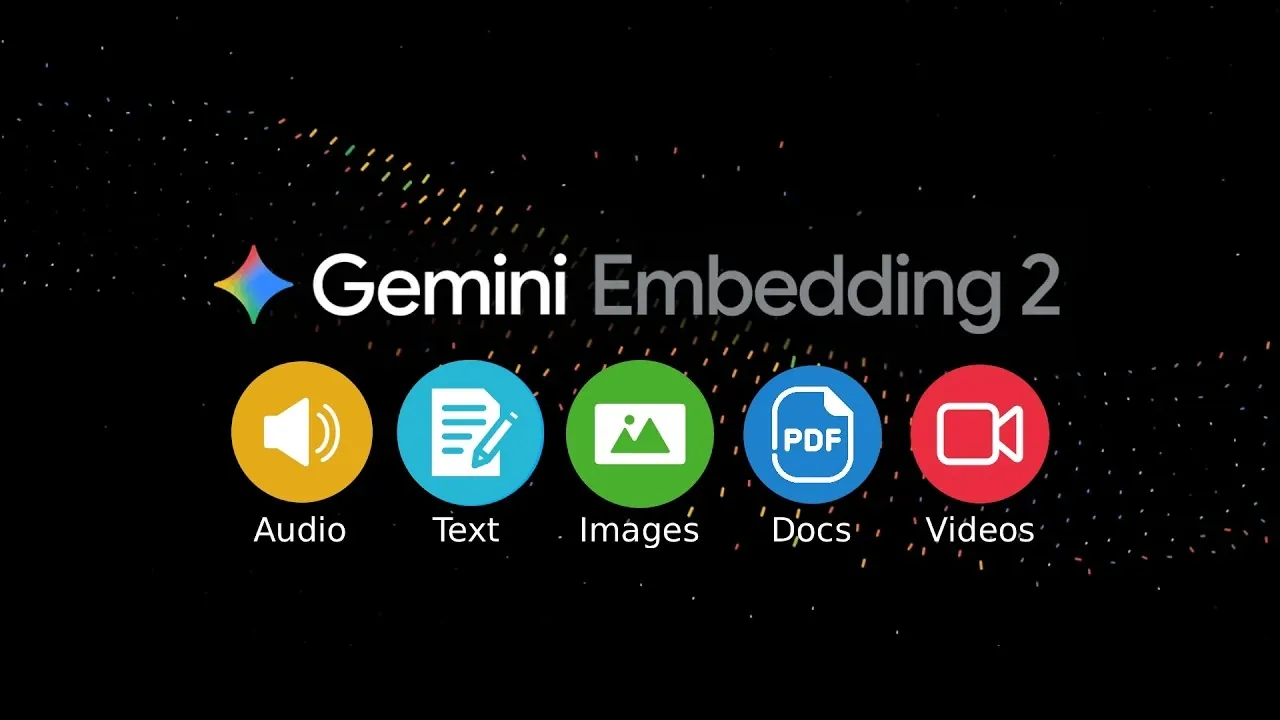
Gemini Embedding 2 offers a unified framework for embedding and retrieving multimodal data, including text, images, audio, videos and documents, within a shared vector space. As explained by Sam Witteveen, this approach eliminates the need for separate models and indexes for each content type, streamlining workflows and allowing cross-modal comparisons. For example, the system allows users to retrieve an image or video that semantically aligns with a text query, making it a versatile solution for tasks like semantic search and content retrieval. With support for up to 8,000 tokens for text, six images and two-minute videos per query, Gemini Embedding 2 is designed to handle diverse data types efficiently.
This breakdown explores how you can use Gemini Embedding 2 for specific use cases, such as cross-modal search and multimedia content retrieval. You’ll learn how its high-dimensional embeddings and compatibility with frameworks like LangChain simplify integration into existing systems. Additionally, the guide highlights practical considerations, such as chunking large content and balancing precision with computational efficiency. By the end, you’ll have a clear understanding of how this system can enhance data analysis and retrieval across various industries.
What Makes Gemini Embedding 2 Unique?
TL;DR Key Takeaways :
- Gemini Embedding 2 integrates text, images, audio, video and documents into a unified vector space, allowing seamless cross-modal similarity searches and eliminating the need for multiple models and indexes.
- The system supports diverse content types natively, allowing for semantic comparisons across modalities, such as retrieving an image or video based on a text query, simplifying workflows and enhancing search efficiency.
- It streamlines search systems by consolidating all modalities into a single API call, reducing operational overhead and improving performance for organizations managing large datasets.
- Key applications include cross-modal search, long-form content querying, educational tools, e-commerce optimization and multimedia content retrieval, showcasing its versatility across industries.
- Advanced features like high-dimensional embeddings, flexible representation learning and compatibility with frameworks like LangChain and ChromaDB ensure efficient performance and seamless integration into existing workflows.
Audio, Text, Images, Docs, Videos
Gemini Embedding 2 introduces an innovative multimodal embedding system that integrates various content types, text, images, audio, videos (up to two minutes), and documents like PDFs, into a shared high-dimensional vector space. This system processes all content natively, eliminating the need for format conversion and making sure compatibility across different data types.
By embedding all modalities into a single space, the model allows for semantic comparisons across diverse content. For example, you can retrieve an image or video that matches the meaning of a text query, or vice versa. This capability not only simplifies complex workflows but also enhances the efficiency of search and retrieval systems. The unified approach reduces the need for specialized tools, making it easier to manage and analyze multimodal data.
Streamlining Search Systems
Traditional search systems often rely on separate models and indexes for different content types, leading to inefficiencies and increased complexity. Gemini Embedding 2 addresses this challenge by offering a single, unified system that processes all modalities through one API call. This streamlined approach eliminates the need for multiple tools, reducing operational overhead and simplifying data management.
For organizations managing large and diverse datasets, this unified system is particularly valuable. It enables faster and more accurate retrieval of relevant content, regardless of the modality. By consolidating search processes, Gemini Embedding 2 not only improves performance but also reduces the technical barriers associated with integrating multiple models and indexes.

Below are more guides on Gemini 3 from our extensive range of articles.
- Gemini 3.5 Leak Details, Early Tests Show Mixed Performance
- Gemini 3.5 vs GPT-5 vs Claude : Early Scores & Speed Insights
- Google Gemini 3.5 Leak : Fierce Falcon vs Ghost Falcon
- Gemini 3.1 Pro Leak: Third-Party Benchmark Listing Suggests Updates
- ChatGPT 5.2 vs Gemini 3 : Coding, Math, and Vision Results
- Google’s Secret Gemini 3 Pro GA Models Leaked
- Gemini 3.5 vs GPT-5.1 High: Coding, Design, and Test Results
- Gemini 3.1 Flash Lite Adjustable Reasoning Depth : Fully Tested
- Gemini 3.1 Pro: Thinking Levels and Benchmark Gains Explained
- ChatGPT 5.2 vs Gemini 3 Pro, Benchmarks, Wins, and Real Use Cases
Key Applications and Use Cases
The versatility of Gemini Embedding 2 opens up numerous practical applications across various industries. Its ability to unify and process multimodal data makes it an essential tool for tasks that require cross-modal understanding and retrieval.
- Cross-Modal Search: Retrieve semantically similar content across different modalities. For instance, locate a video or image that aligns with a text description.
- Aggregated Embeddings: Combine multiple modalities, such as text and images, into a single representation for richer semantic understanding and analysis.
- Long-Form Content Search: Chunk and embed large videos or documents, allowing precise querying of specific sections or moments.
- Educational Tools: Enhance learning platforms by allowing students and educators to retrieve multimodal content, such as videos, documents and images, based on text queries.
- E-Commerce Optimization: Improve product search by matching user queries with multimodal representations of products, including text descriptions, images and videos.
- Multimedia Content Retrieval: Streamline access to diverse media assets in industries like entertainment, marketing and digital content management.
These use cases highlight the broad applicability of Gemini Embedding 2, making it a valuable resource for organizations seeking to use multimodal data effectively.
Technical Features That Set It Apart
Gemini Embedding 2 incorporates advanced technical features that enhance its performance, flexibility and usability. These capabilities ensure that the model can handle diverse content types while maintaining efficiency and precision.
- High-Dimensional Embedding: Each embedding is represented in 3,072 dimensions, with options for reduced sizes to optimize speed and computational efficiency.
- Token and Input Limits: Supports up to 8,000 tokens for text, six images and two-minute videos per query, making sure compatibility with a wide range of content types.
- Matrioska Representation Learning: Offers flexible embedding sizes, allowing users to balance precision and computational efficiency based on specific requirements.
These features make Gemini Embedding 2 adaptable to various use cases, providing users with the tools to optimize performance while managing computational resources effectively.
Performance and Seamless Integration
Gemini Embedding 2 delivers exceptional performance in tasks such as text-to-text, image-to-text and multimodal retrieval. Its ability to handle diverse data types with precision ensures accurate and meaningful results. Additionally, the model is compatible with popular frameworks like LangChain and Llama Index, as well as vector stores such as ChromaDB. This compatibility assists seamless integration into existing workflows, minimizing the need for extensive reconfiguration.
For developers and organizations, this ease of integration translates into faster deployment and reduced development time. Whether you are building a new application or enhancing an existing system, Gemini Embedding 2 provides the flexibility and performance needed to achieve your goals.
Limitations to Consider
While Gemini Embedding 2 offers numerous advantages, it is important to consider its limitations. For large content, such as lengthy videos or documents, chunking is required to process and embed the data effectively. This additional step may introduce complexity, depending on the specific use case.
Another consideration is whether to use separate embeddings for individual content pieces or aggregated embeddings for combined representations. This decision depends on the desired level of granularity and the performance requirements of your application. Understanding these trade-offs is essential for optimizing the model’s performance in real-world scenarios.
Empowering Multimodal Data Analysis
Gemini Embedding 2 unifies text, images, audio, video and documents into a shared vector space, offering a streamlined and efficient approach to multimodal data processing. By simplifying search systems, enhancing cross-modal retrieval and supporting a wide range of applications, it equips organizations with the tools to analyze and manage diverse datasets effectively. Whether applied in education, e-commerce, or multimedia content management, Gemini Embedding 2 represents a practical and powerful solution for the challenges of modern data analysis.
Media Credit: Sam Witteveen
Disclosure: Some of our articles include affiliate links. If you buy something through one of these links, Geeky Gadgets may earn an affiliate commission. Learn about our Disclosure Policy.
