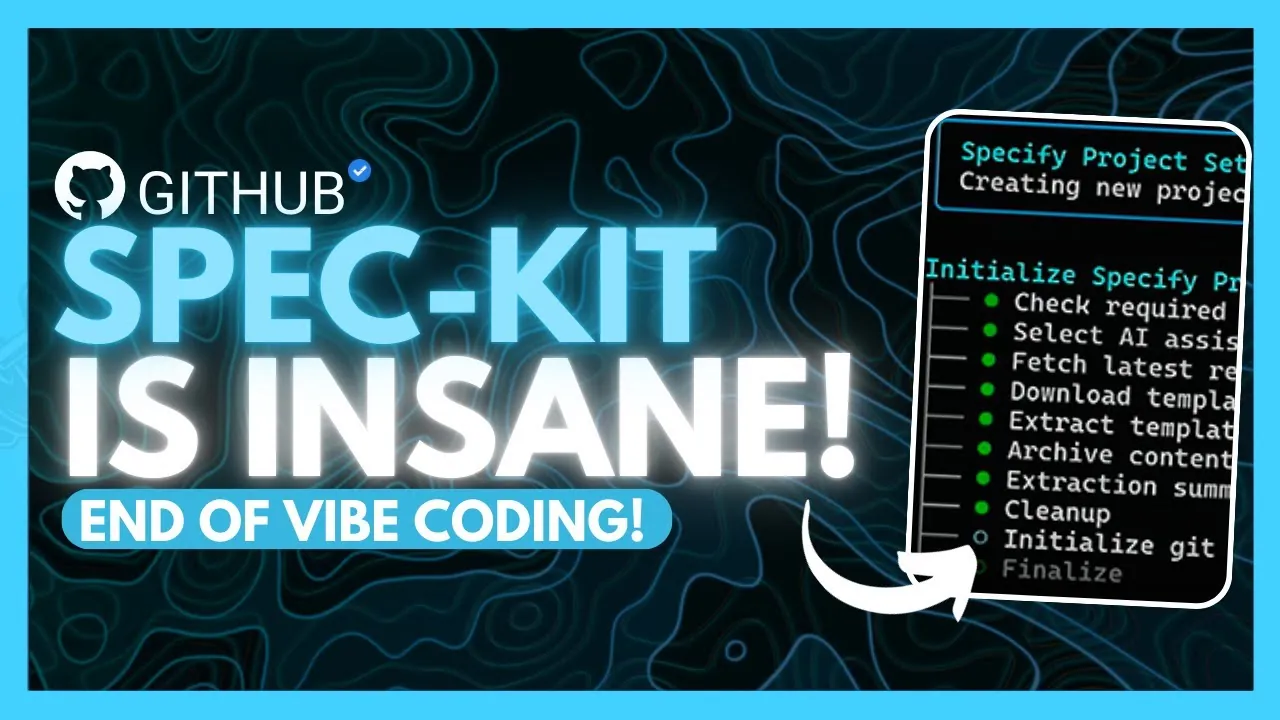
What if you could say goodbye to the chaos of vague prompts and unpredictable AI-generated code? Imagine a world where your software projects are built with precision, reliability, and alignment—every time. Enter GitHub’s new tool, SpecKit, which promises to end the era of “vibe coding” and replace it with a structured, specification-driven approach. Bold claim? Maybe. But with its ability to minimize errors, enhance collaboration, and streamline workflows, SpecKit is already being hailed as a fantastic option for developers. If you’ve ever felt frustrated by the inconsistencies of traditional AI coding methods, this might just be the solution you’ve been waiting for.
World of AI explain how Github’s SpecKit’s innovative features, like its dynamic specification system and intuitive CLI tool, are transforming the way developers approach AI-powered software development. You’ll discover the four-phase workflow that ensures your projects stay on track, learn how to harness SpecKit’s seamless integration with tools like GitHub Copilot, and see why it’s being called “100x better” than vibe coding. Whether you’re building a simple app or tackling a complex enterprise project, SpecKit offers a new standard for precision and efficiency. Let’s unpack what makes this toolkit so innovative and how it can elevate your development process.
Github SpecKit AI Development
TL;DR Key Takeaways :
- GitHub’s SpecKit introduces a specification-driven development approach, emphasizing precision, reliability, and alignment to address challenges in AI-generated code.
- SpecKit employs a four-phase workflow (Specification, Planning, Task, and Implementation) to streamline development and enhance collaboration between developers and AI tools.
- The toolkit includes a command-line interface (CLI) tool, “Specify,” with intuitive slash commands (
/specify,/plan,/task) for efficient project management. - SpecKit minimizes errors, ensures alignment with project goals, and supports both front-end and back-end development, making it versatile for various projects.
- As an open source tool under the MIT license, SpecKit integrates seamlessly with popular AI tools like GitHub Copilot and offers comprehensive documentation for easy adoption.
Understanding Specification-Driven Development
At the heart of SpecKit lies the concept of specification-driven development. Unlike conventional methods that rely on ambiguous prompts, this approach emphasizes the creation of detailed, executable specifications. These specifications serve as dynamic, evolving documents that guide the entire development process. By providing clear and actionable instructions for AI agents, they ensure that the final product aligns with your vision while minimizing errors and misinterpretations.
This approach is particularly effective in managing the complexities of modern software development. It fosters a collaborative environment where developers and AI tools work in tandem, resulting in more reliable and high-quality outcomes.
The Four-Phase Workflow of SpecKit
SpecKit employs a structured, four-phase workflow that ensures a logical progression from concept to implementation. Each phase builds upon the previous one, creating a seamless and cohesive development process:
- Specification Phase: This initial phase focuses on defining the project’s objectives, user outcomes, and key requirements. It establishes a solid foundation for the entire development process.
- Planning Phase: Here, you develop the project’s architecture, select the appropriate technology stack, and identify any constraints. This phase ensures technical feasibility and a well-organized structure.
- Task Phase: The project is broken down into smaller, testable units. These tasks provide clear guidance for the AI, allowing it to generate code that meets specific goals.
- Implementation Phase: The AI executes the tasks step-by-step, allowing you to review and refine the output for accuracy, functionality, and alignment with your objectives.
This iterative workflow not only streamlines the development process but also enhances collaboration between developers and AI tools, making sure consistent and high-quality results.
Improve Your Vibe Coding With Github SpecKit

Uncover more insights about vibe coding development in previous articles we have written.
- Vibe Coding Challenges and Advantages: A Guide to AI Dev
- What is Vibe Coding? A Beginner’s Guide to AI-Assisted
- Context Engineering vs. Vibe Coding: Structure Meets Intuition in AI
- What is Vibe Coding? A Beginner’s Guide to AI App Development
- Beginner’s Guide to Vibe Coding: AI Tools and Techniques
- Vibe Coding PRO: The Ultimate Framework for AI Coding
- Correct Your Vibe Coding Errors with Shotgun Code
- How to Start Vibe Coding Without Experience Using AI Tools
- Vibe Coding For Beginners : No Coding Skills? No Problem!
- How Warp and AI Are Improving Developer Tools with Vibe Coding
Key Features of SpecKit
SpecKit offers a range of features that make it a powerful and versatile tool for developers. As an open source project hosted on GitHub under the MIT license, it is freely accessible to the global developer community. Its compatibility with popular AI tools such as GitHub Copilot, Cloud Code, and Gemini CLI ensures seamless integration into existing workflows.
One of the standout features of SpecKit is its command-line interface (CLI) tool, “Specify.” This tool simplifies project initialization and management, allowing developers to navigate the workflow efficiently. Additionally, SpecKit includes intuitive slash commands like /specify, /plan, and /task, which streamline the development process and save valuable time.
Why SpecKit Stands Out
SpecKit addresses several critical challenges in AI-powered software development, making it an indispensable tool for developers:
- Minimized Errors: By focusing on detailed specifications, SpecKit reduces the likelihood of errors and hallucinations commonly associated with prompt-based coding.
- Alignment with Goals: The specification-driven approach ensures that the final product closely aligns with your original vision and objectives.
- Versatility: SpecKit supports both front-end and back-end development, making it suitable for a wide range of projects, from simple web applications to complex enterprise solutions.
- Consistency: The structured workflow promotes uniformity and quality throughout the development process.
These features make SpecKit a valuable resource for developers looking to harness the power of AI while maintaining control over their projects.
Getting Started with SpecKit
Starting with SpecKit is a straightforward process. Follow these steps to integrate it into your development workflow:
- Clone the SpecKit repository from GitHub to your local environment.
- Use the CLI tool to initialize your project and create detailed specifications.
- Plan the project architecture, define the technical stack, and identify constraints.
- Break the project into manageable tasks that the AI can execute step-by-step.
- Review and refine the AI-generated output to ensure accuracy and functionality.
Comprehensive documentation is available to guide you through each phase, making sure you can fully use SpecKit’s capabilities to achieve your development goals.
Practical Example: Developing a Photo Album Organizer
To illustrate the capabilities of SpecKit, consider the example of building a photo album organizer app. Using SpecKit, you would begin by specifying the app’s core features, such as photo categorization, tagging, and search functionality. During the planning phase, you would outline the app’s architecture, selecting a database and front-end framework that align with your requirements.
Next, the project would be divided into smaller tasks, such as implementing a tagging system or designing the search interface. The AI would then generate the code for each task, which you could review and refine to ensure it meets your expectations. This structured approach simplifies the development process while maintaining a high level of quality and precision.
SpecKit: A New Standard for AI-Driven Development
SpecKit represents a significant evolution in AI-powered software development. By prioritizing detailed specifications over vague prompts, it provides a structured framework that enhances reliability, precision, and collaboration. Whether you are an experienced developer or new to AI tools, SpecKit offers the resources and flexibility needed to navigate the complexities of today’s fast-paced development landscape. With its open source accessibility and robust feature set, SpecKit is poised to become an essential tool for developers worldwide.
Media Credit: WorldofAI
Disclosure: Some of our articles include affiliate links. If you buy something through one of these links, Geeky Gadgets may earn an affiliate commission. Learn about our Disclosure Policy.
