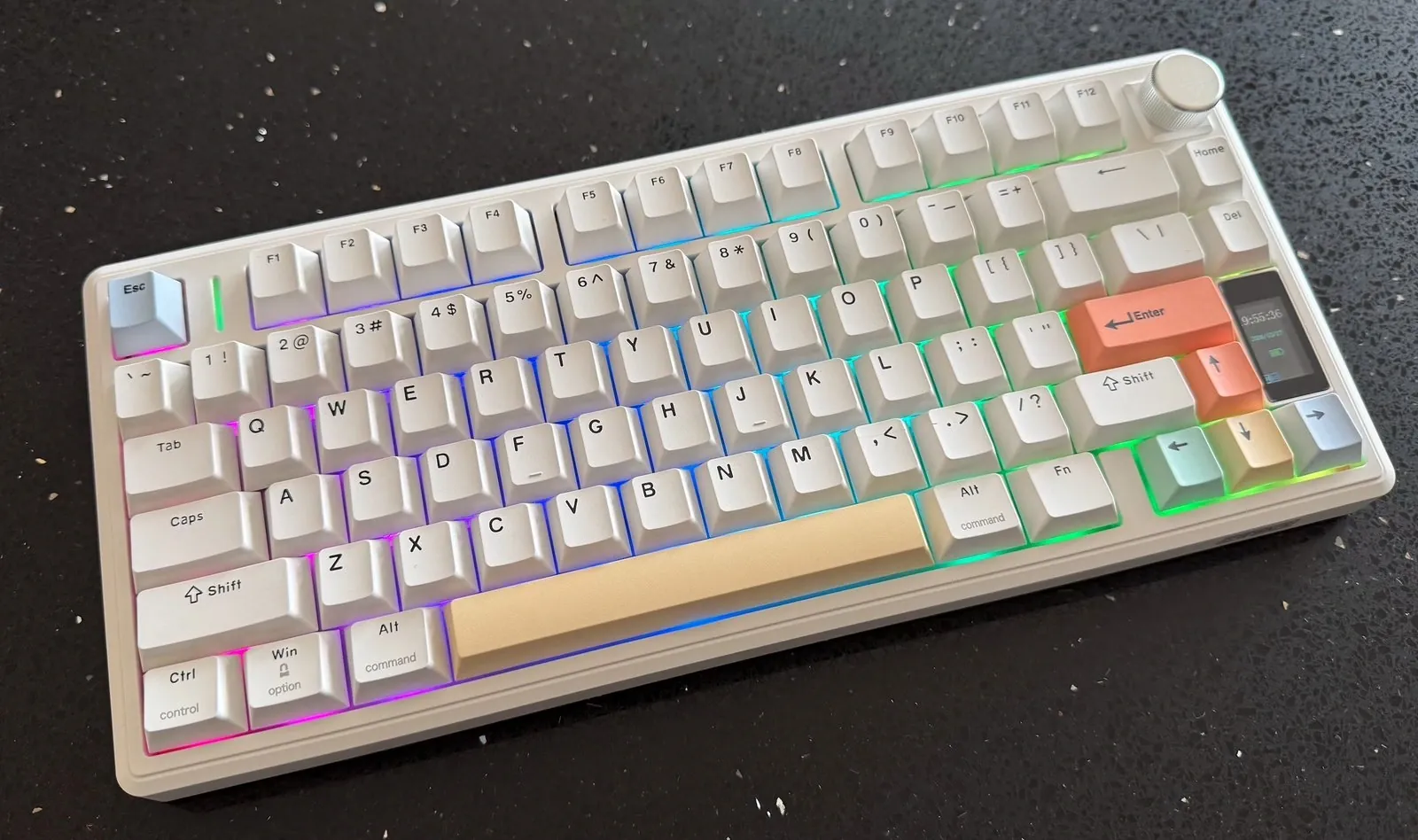
The moment I set the EPOMAKER TH80 V2 Pro down on my desk, two things registered: it was heavier than expected, and it wasn’t going anywhere. At 960g with solid rubber feet, this is a keyboard that plants itself and stays put. Priced at $77.99, it packs tri-mode wireless, a 1.06-inch glass-covered LCD, hot-swappable switches and a 10,000mAh battery into a compact 75% layout. The question is whether all of that hardware works together in practice or just looks impressive on a product page. Below, I put the TH80 V2 Pro through its paces across productivity, gaming and multi-device switching to find out.
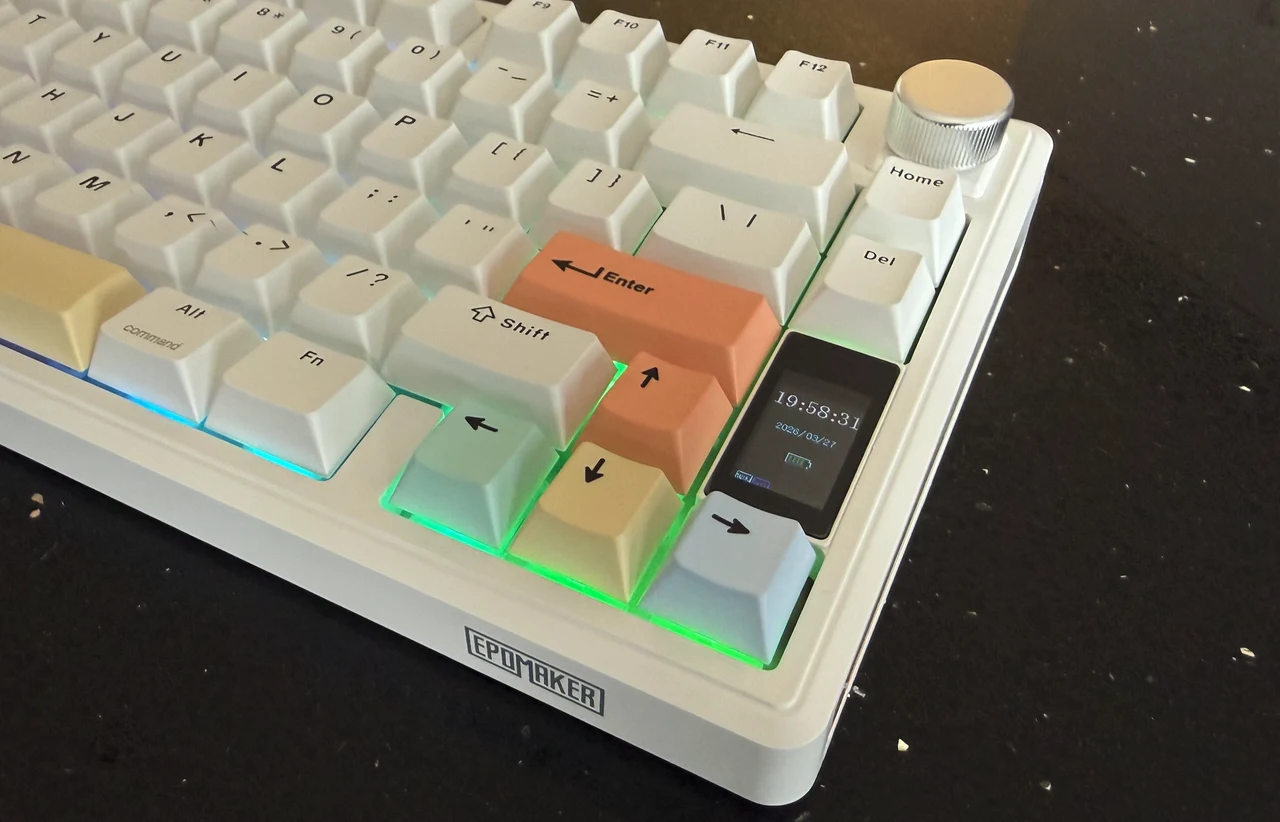
My review unit is the TH80 V2 Pro in a 75% ANSI US layout with 78 keys and 1 knob, fitted with the EPOMAKER Creamy Jade linear switches. It includes RGB backlighting with ambient side lighting and the glass-covered LCD screen positioned to the right of the Enter key.
Key Features
- The 75% layout keeps the function row and a compact navigation cluster, making it easy to stay productive without sacrificing too much desk space.
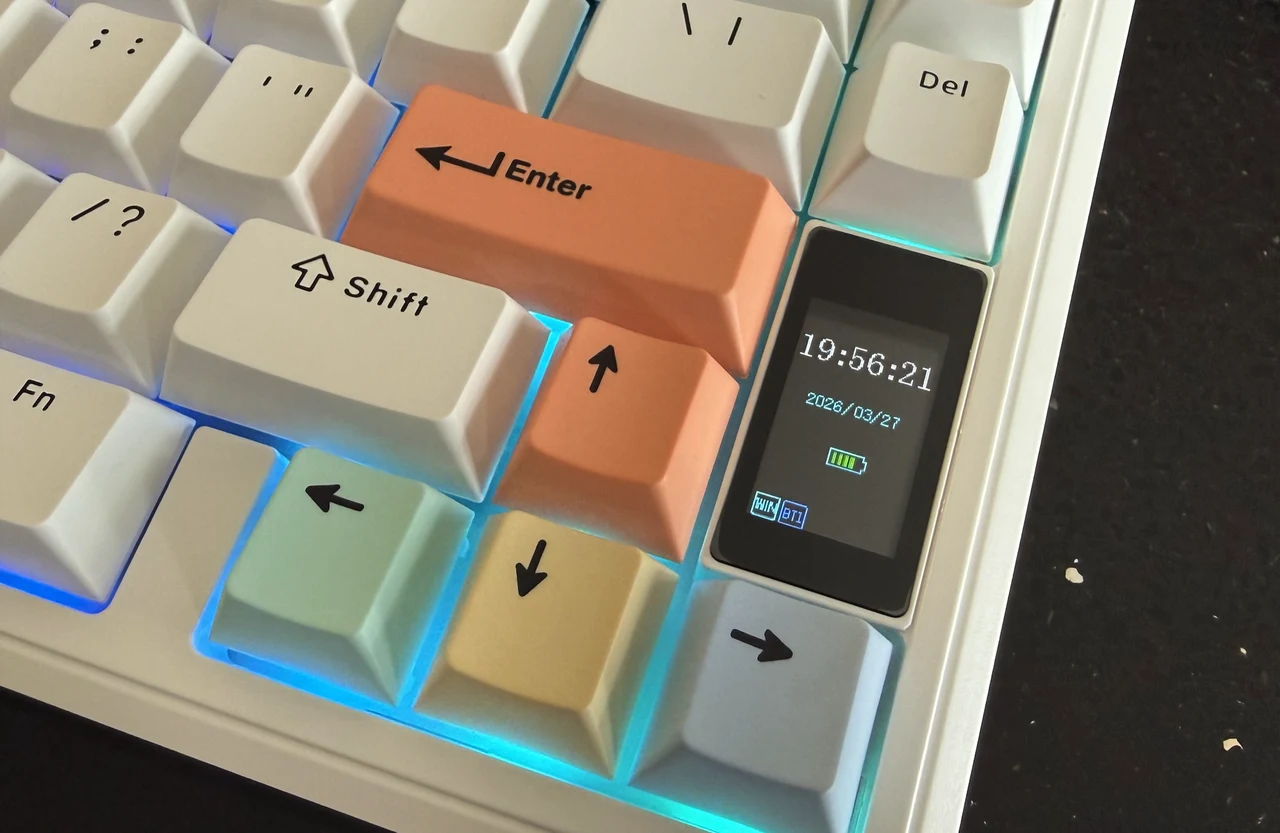
- The 1.06-inch glass-covered LCD is genuinely handy for at-a-glance checks like time, battery percentage and connection status while you’re mid-task.
- Tri-mode connectivity (2.4GHz, Bluetooth and USB wired) adds real flexibility for moving between a PC, Mac and mobile devices without changing keyboards.
- The hot-swappable PCB supports both 3-pin and 5-pin switches, making it an easy platform to tune the typing feel over time.
- The gasket-mount design with a multi-layer dampening stack helps the board feel more cushioned and less harsh than many budget plastic keyboards.
- Trade-off: the ABS plastic case keeps the price attractive, but it puts a clear ceiling on the premium “custom keyboard” refinement you would get from an aluminium or polycarbonate chassis.
Inside the box you will find the TH80 V2 Pro keyboard, a white braided USB-A to USB-C cable, two spare Creamy Jade switches, an insert keycap and a 2-in-1 keycap and switch puller tool. The puller is a welcome inclusion given the hot-swappable PCB; it means you can experiment with different switches straight away without sourcing additional tools. There is also a multilingual instruction manual that covers the RGB lighting shortcuts, connection modes and Fn-layer key combinations. Nothing essential is missing from the box, and the spare switches are a thoughtful extra at this price.
- White braided USB-A to USB-C cable for wired mode and charging
- 2 spare switches and an insert keycap for replacements
- 2-in-1 keycap and switch puller for hot-swap maintenance
- Instruction manual detailing RGB shortcuts and connection modes
Design, Build & Ergonomics
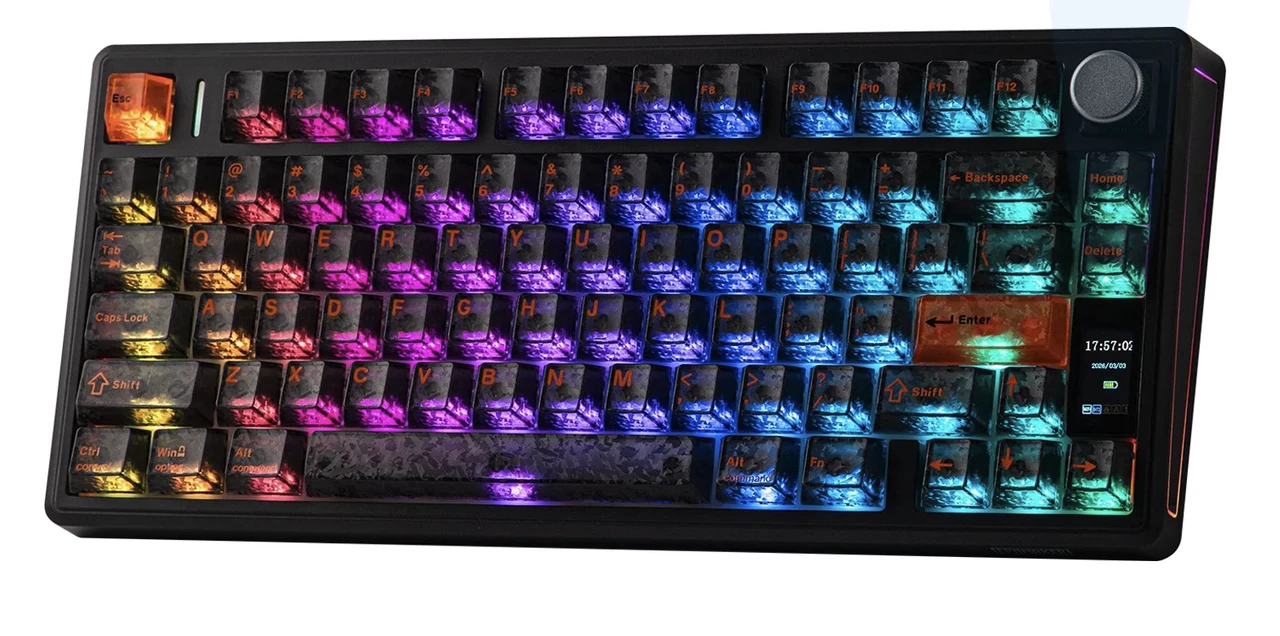
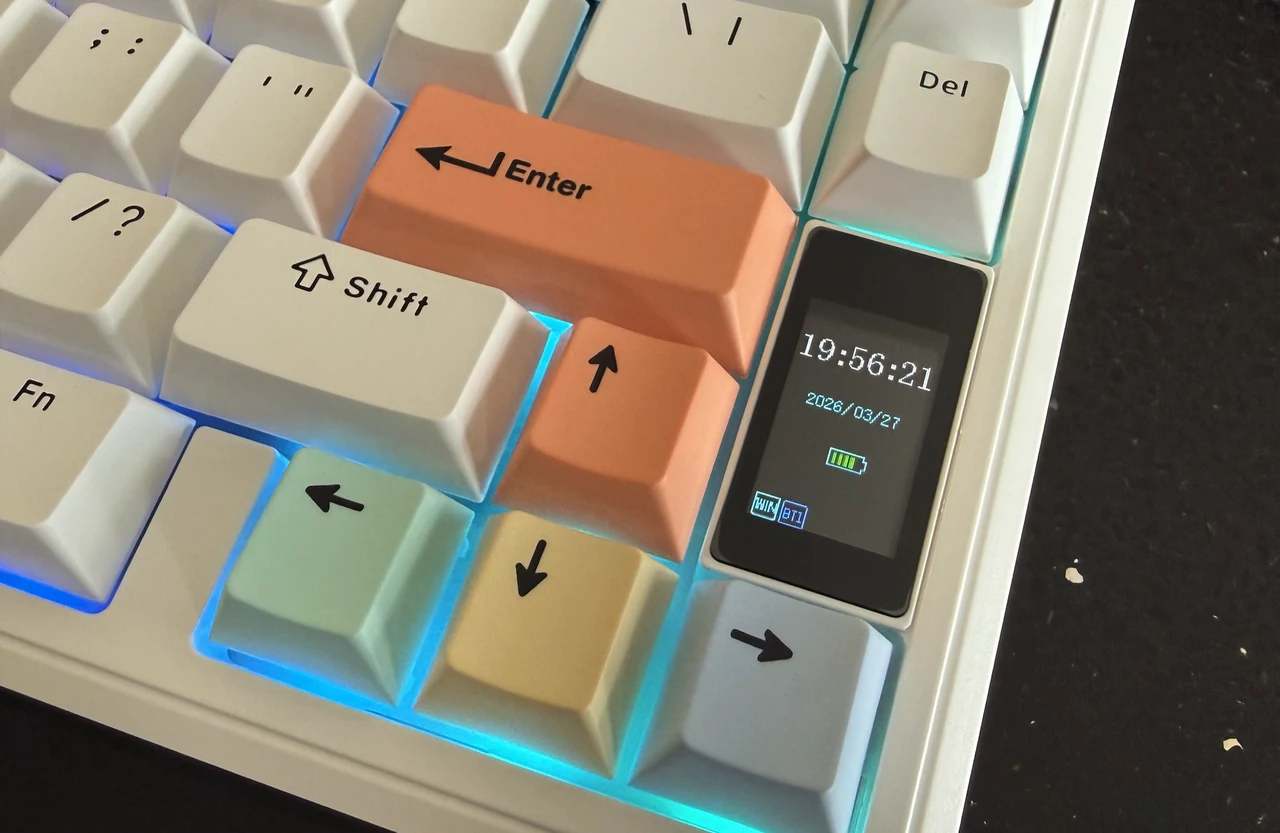
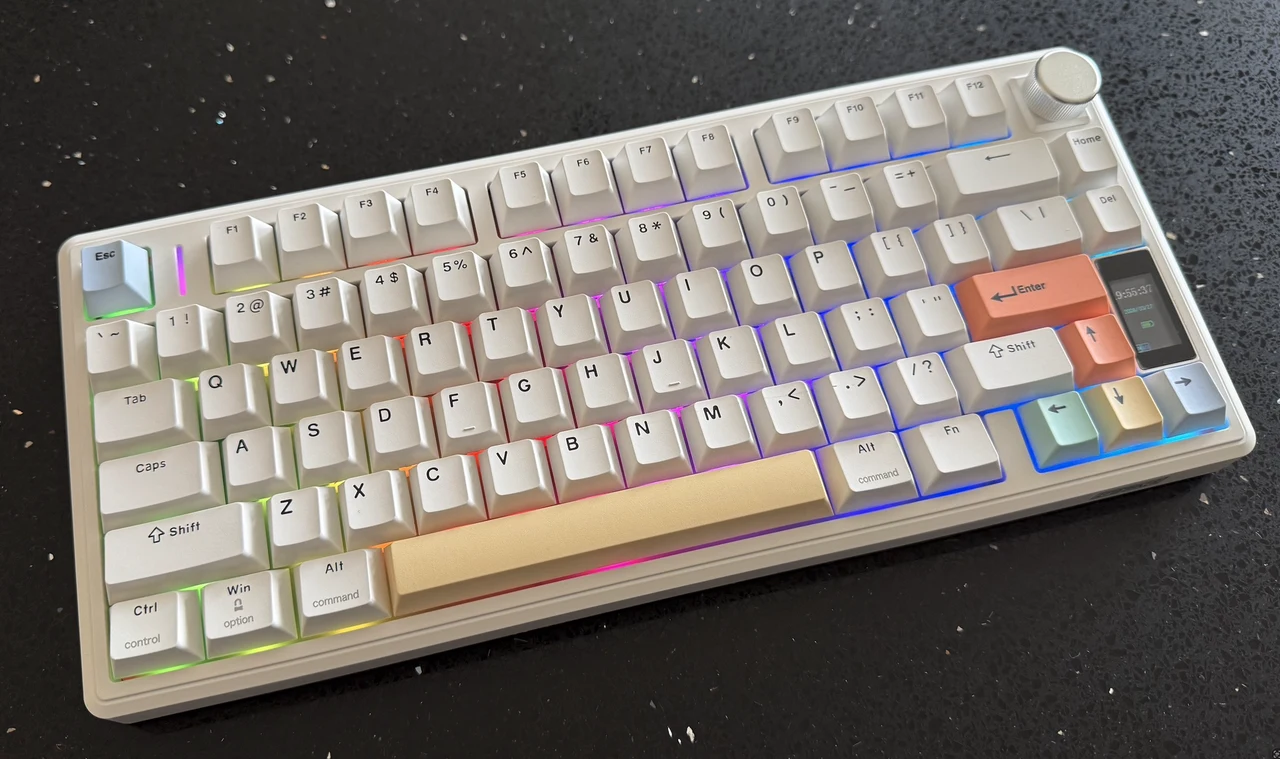
EPOMAKER sells versions in Black, White and Pink, and I appreciated that the White version layout uses subtle pastel colors for the Esc, Enter and the arrow cluster. Over time, those little visual anchors helped me re-orient faster when bouncing between windows and shortcuts. If you opt for the Black version, this design includes transparent keycaps, and if you opt for the Pink version, this features A gradient of pink from darker on the left to lighter on the right with edge printed keycaps leaving blanks under your fingers.
The case on all models is constructed from ABS plastic, which is exactly what the price suggests. At $78, nobody should expect machined aluminium, and within the context of plastic builds I found this one solid enough. Avoiding the squeaky, creaky behaviour some plastic boards develop when picked up by a corner. When I lifted it to route a cable or reach for the rear connectivity toggle, there were no twisting noises, just a dense, straightforward chunk of keyboard.
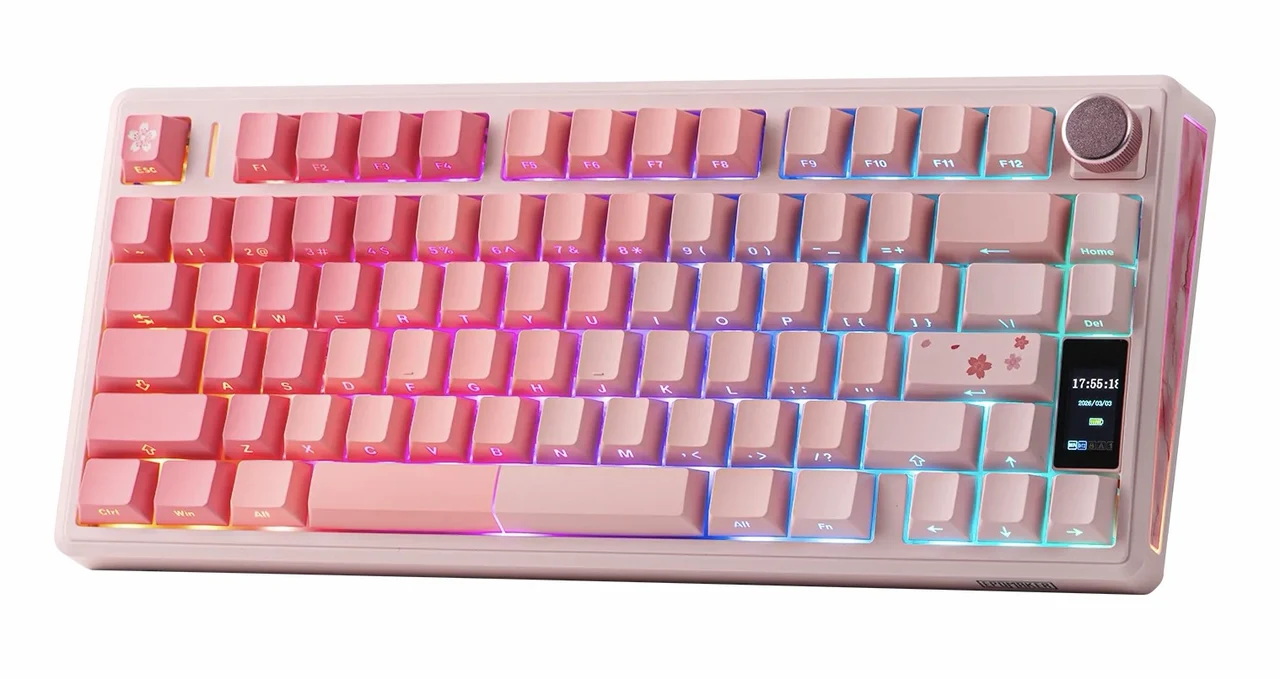
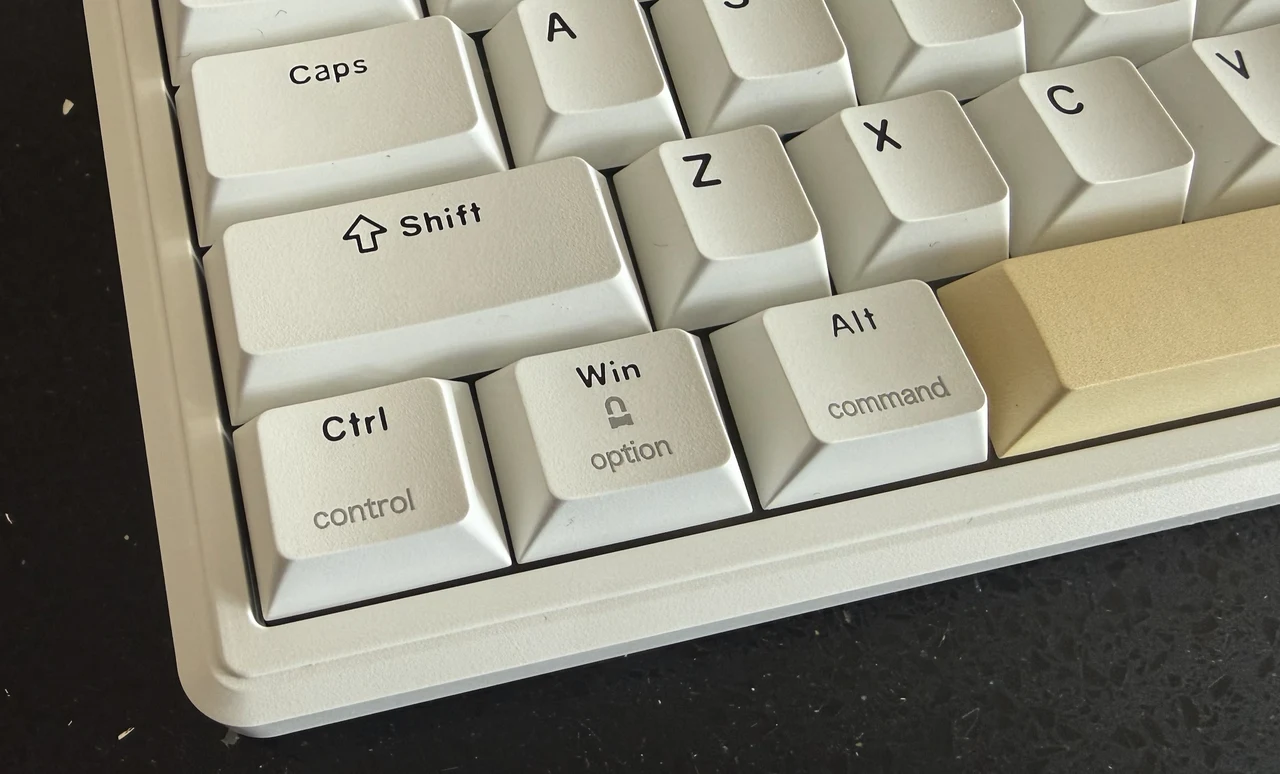
The PBT double-shot keycaps in Cherry profile deserve a mention. They have thick walls, resist shine and grease well, and the legends are crisp. The side-printed characters on the Pink version pairs well with south-facing RGB LEDs, giving the board a stealthy aesthetic that lights up nicely in dim conditions. I particularly liked that the Ctrl, Win and Alt keys are dual-printed with Control, Option and Command for Mac, so both operating systems are covered without needing to swap keycaps. It is a small detail, but it makes the board feel genuinely cross-platform out of the box.
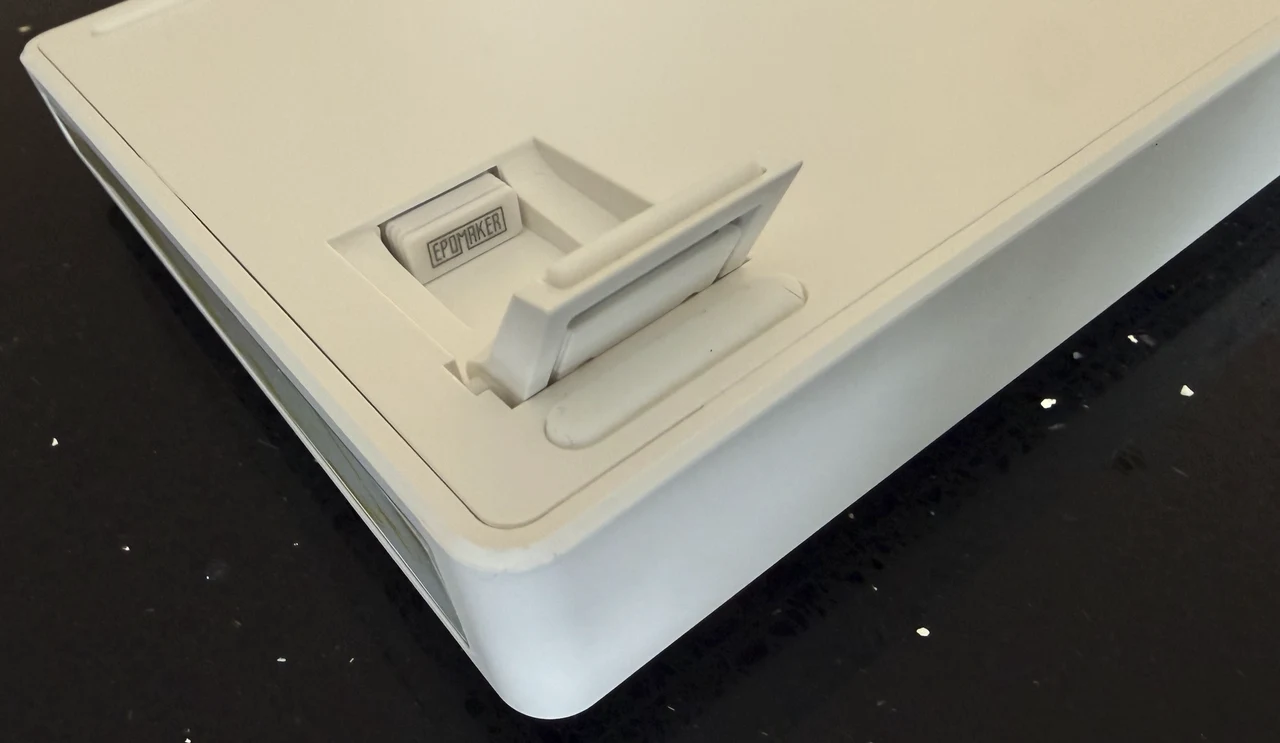
Ergonomics tie the build together. The 2-stage adjustable typing angle, with a front height of 18.5mm and a back height of 32.5mm, provides two stable positions rather than a wobbly compromise. During longer writing sessions I kept it on the raised setting; when doing quick edits and constantly reaching for the mouse, I dropped it flat to reduce wrist extension. Small routine decisions like this are what determine whether a board stays on a desk long-term. I also appreciate this particular flavour of 75% layout. A function row is non-negotiable for my workflow, and I do not want a keyboard that forces me into Fn-layer gymnastics just to use common shortcuts or F-keys in games.
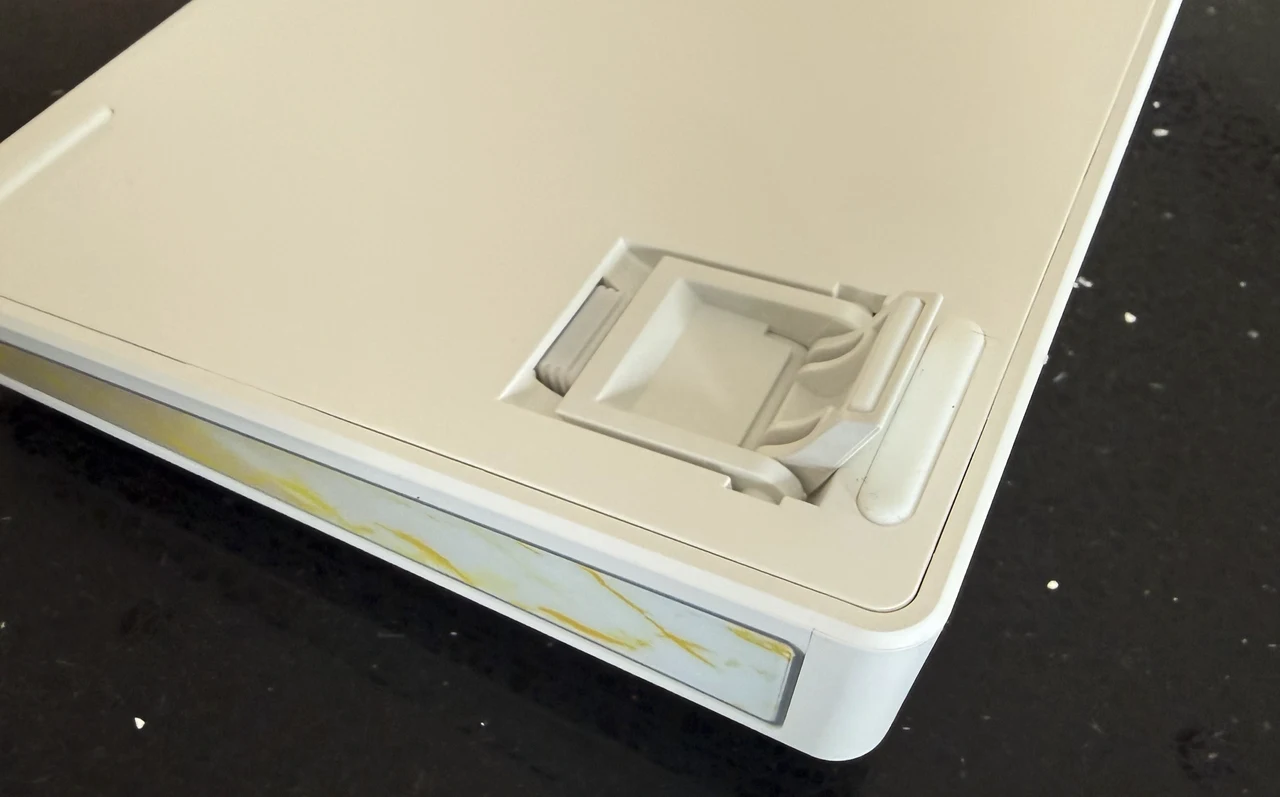
- 960g weight with rubber feet keeps the board planted during use
- ABS plastic case is solid with no flex or creaking, though clip-and-tab assembly is not mod-friendly
- PBT double-shot Cherry profile keycaps with side-printed legends and dual-printed Mac/Windows modifiers
- 2-stage adjustable angle (18.5mm front / 32.5mm back) for comfortable long sessions
Controls, Screen & Lighting
The control knob sits top-right and is easy to use without looking. It has a defined, stepped rotation that makes adjustments predictable by feel alone. I noticed the detents most during calls: I could nudge volume up slightly without glancing down or overshooting. The keyboard supports toggling the knob between volume control and screen navigation using Fn + knob press, and that pairing is what makes the screen feel integrated rather than bolted on as an afterthought.
The 1.06-inch glass-covered LCD ended up being useful allowing me to easily check battery percentage and connection status, and saved me from digging into OS menus mid-task. In practice, that meant fewer tiny interruptions: I could confirm I was on 2.4GHz before starting a gaming session, or check battery before a long working day, without breaking focus. The screen also supports GIF display for anyone who wants to personalise it further, which can be configured through the EPOMAKER Online Driver or VIA.
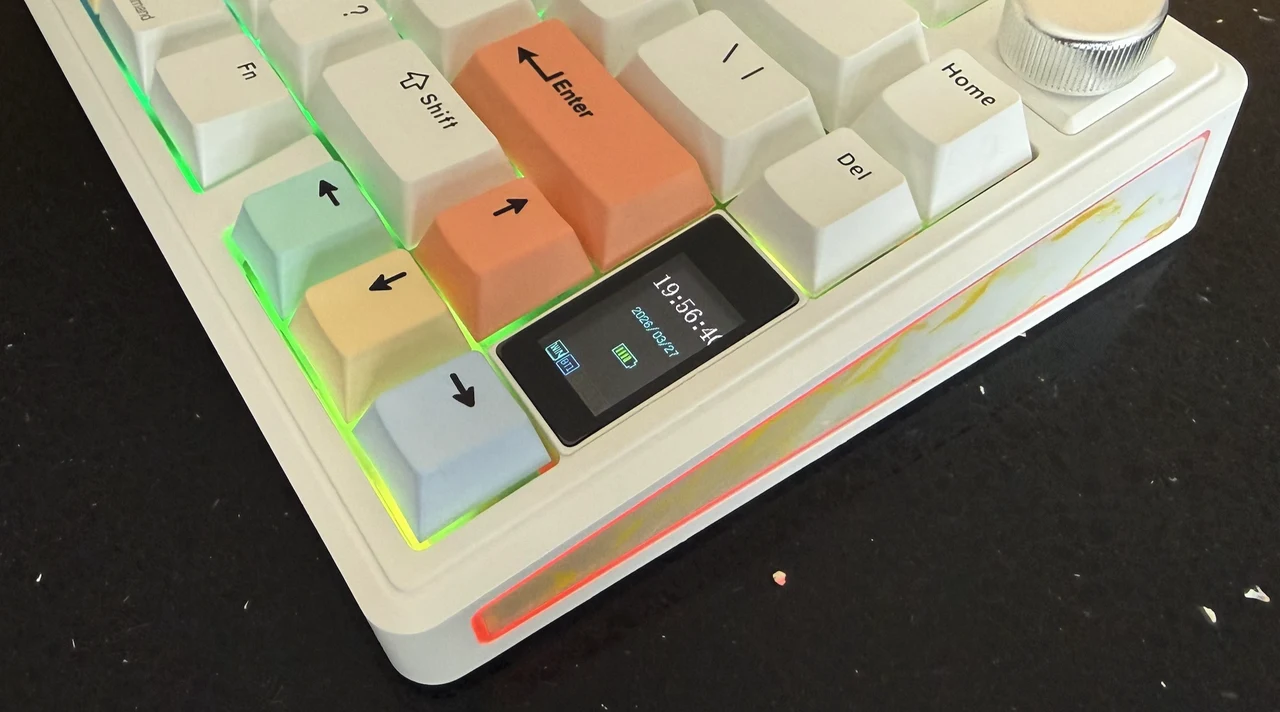
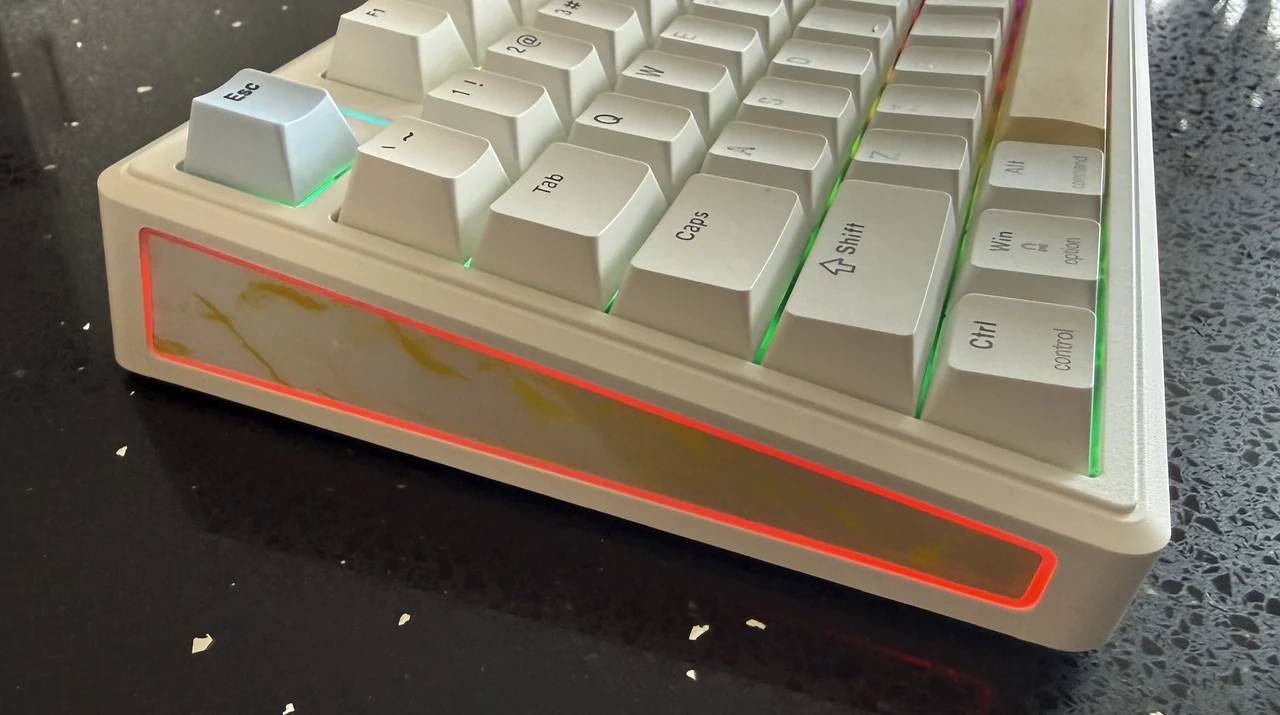
The south-facing RGB is vibrant and evenly distributed, with per-key backlighting and ambient side lighting that adds a soft glow around the case edge. Customisation is handled through keyboard shortcuts detailed in the included manual or through the EPOMAKER Online Driver software, and the range of effects and colour options is generous for the price point.
- Rotary knob with stepped detents toggles between volume and screen control via Fn + knob
- 1.06-inch glass LCD displays time, battery, connection status and supports custom GIFs
- South-facing RGB with per-key backlighting and ambient side lighting
- Keyboard shortcuts for RGB control without needing software
Switches & Typing Experience
My unit shipped with the EPOMAKER Creamy Jade switches: linear, pre-lubed, with a 45gf actuation force, 50gf bottom-out and 3.6mm total travel. They use a PC/PA66 housing with a POK stem. The switches produced a satisfying, deeper-pitched sound that paired well with the dampened case. EPOMAKER states that the board uses a gasket mount with a flex-cut PCB and a five-layer dampening stack (noise-absorbing foam, switch pad, sound enhancement pad, switch socket pad and bottom pad). Whatever is going on inside, the result you can hear and feel is real: the harsh bottom-out ping that plagues cheap keyboards is largely absent, replaced by a deeper, more cushioned sound signature that sounds noticeably better than a rigid tray-mount at this price. For a bundled switch, the Creamy Jades exceeded my expectations for smoothness and consistency across the board.
Since the keyboard PCB is hot-swappable offering support for both 3-pin and 5-pin switches, so you are not locked in. If the Creamy Jade linears are not your preference, swapping to a tactile or clicky option takes minutes with the included 2-in-1 puller tool. That flexibility is one of the strongest arguments for this board as an entry point into the mechanical keyboard hobby: buy it, use it, and upgrade switches later without replacing the entire keyboard.
- Creamy Jade switches: linear, pre-lubed, 45gf actuation, 50gf bottom-out, 3.6mm travel
- 5-layer dampening stack (per EPOMAKER) contributes to a deeper, cushioned sound profile
- Factory lube was consistent with no need to re-lube out of the box
- Hot-swappable PCB supports 3-pin and 5-pin switches for easy upgrades
Gaming Performance
EPOMAKER markets this as a tri-mode gaming keyboard, so I put that claim to the test. Over several sessions across fast-paced shooters, RPGs and the new Crimson Desert game, the board performed well. Anti-ghosting and N-key rollover handled simultaneous key presses without missed inputs, which is exactly what you need during combat sequences where you are strafing, sprinting and reloading at the same time. The 45gf actuation force of the Creamy Jade switches kept key presses light and responsive, and the 2.0mm pre-travel meant inputs registered quickly without needing to bottom out.
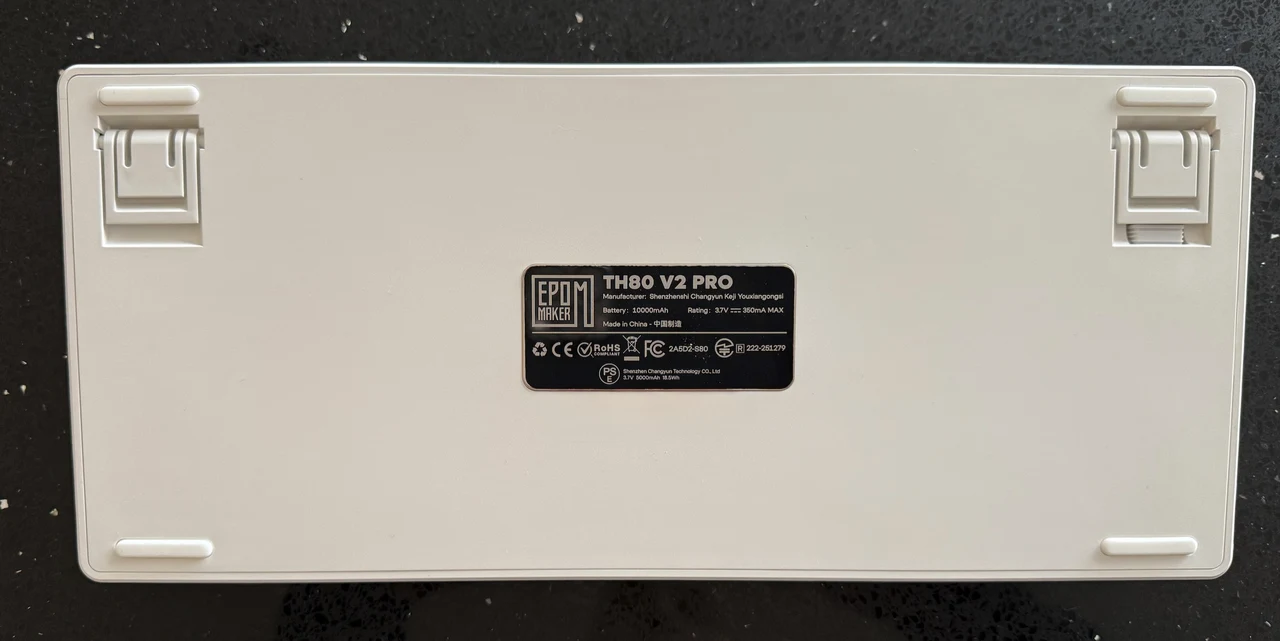
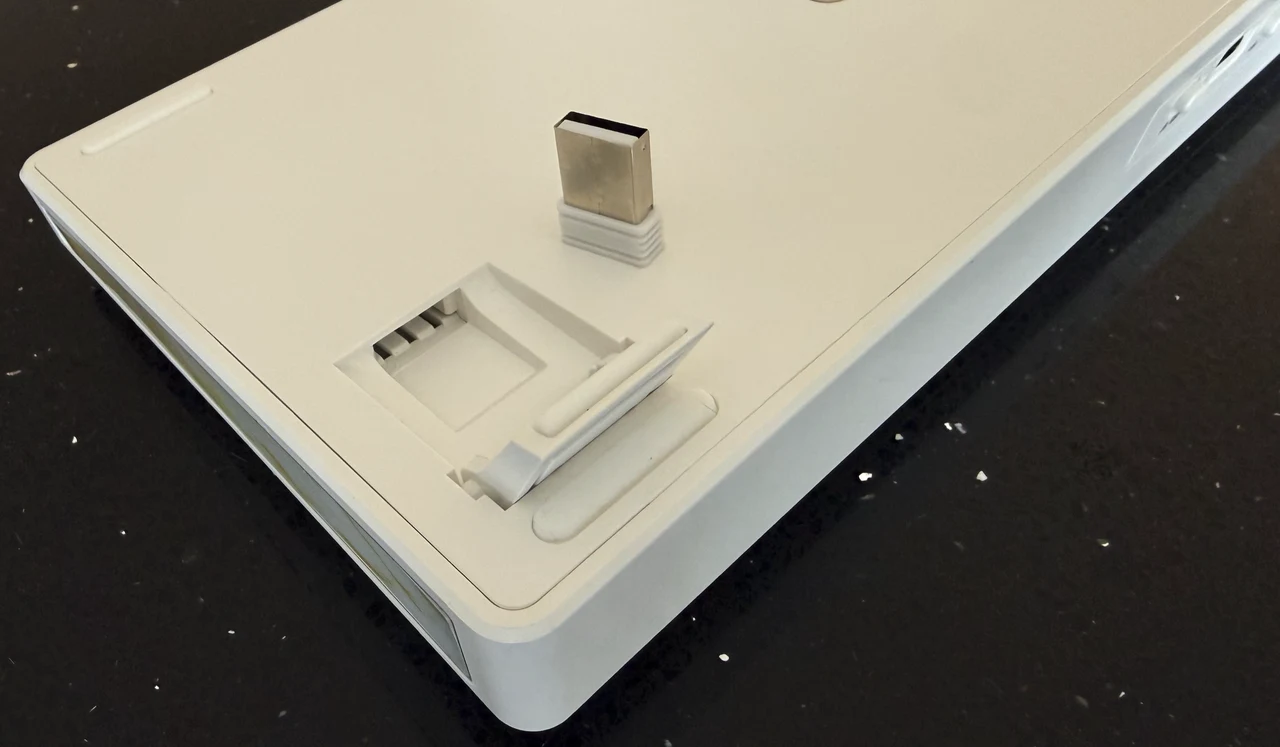
I stuck with the 2.4GHz dongle connection for gaming and experienced no perceptible input lag or dropped keypresses across extended sessions. The 75% layout does mean you lose a dedicated numpad, which matters for MMO players who bind abilities to numpad keys. However, the function row and arrow cluster are fully intact, so I did not need to rebind anything for the shooters and action RPGs I tested. The board’s weight worked in its favour here too: it stayed planted during tense moments where lighter wireless boards would have shifted under heavy use.
- Anti-ghosting and N-key rollover for reliable simultaneous key presses
- 2.4GHz wireless with no perceptible input lag during fast-paced gaming
- 45gf actuation / 2.0mm pre-travel for quick, responsive key registration
- 75% layout retains function row and arrows; numpad-dependent players will need to rebind
Wireless Performance & Battery
The 2.4GHz reliability I experienced in gaming carried over to everyday use. I paired the board to a desktop via the 2.4GHz dongle and a tablet over Bluetooth, and switching between them using the rear toggle was seamless with no noticeable reconnection delay.
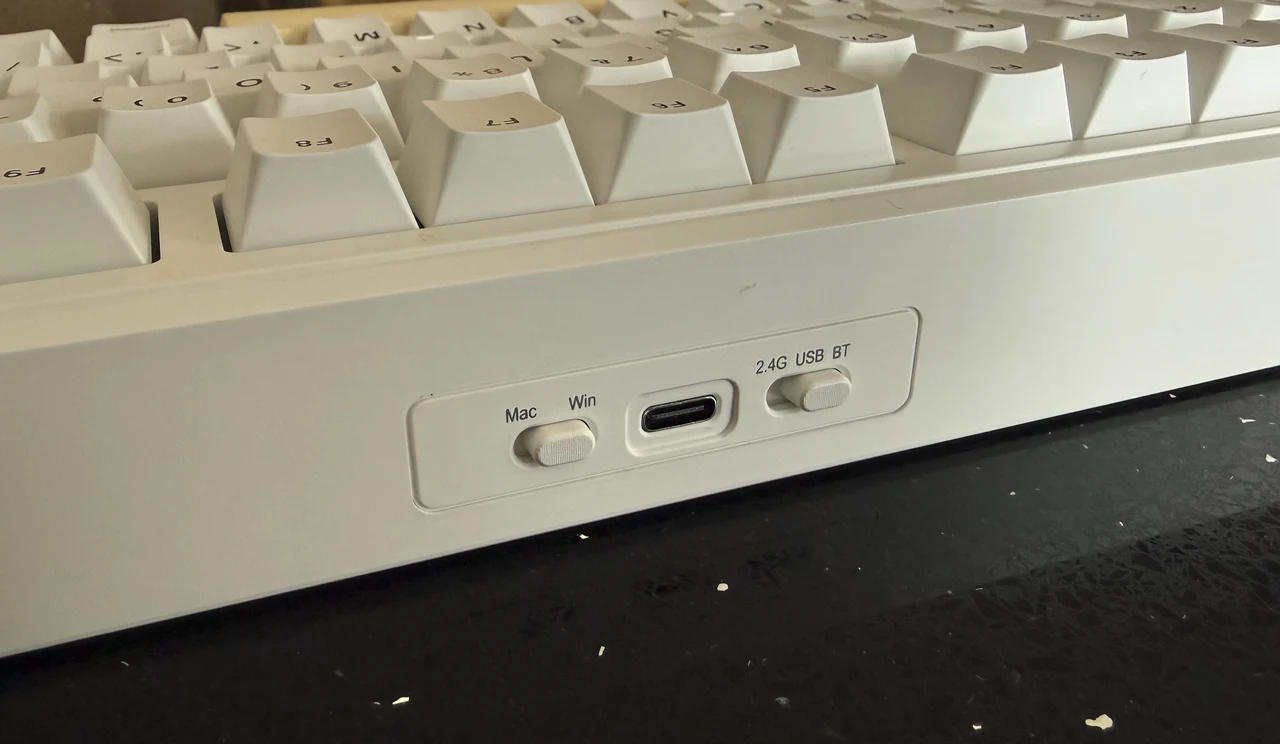
The 10,000mAh battery is a standout spec at this price. With RGB at a moderate brightness and the LCD active, I comfortably got through multiple working days before needing to charge. If you dial back the lighting or switch it off entirely, the battery life extends considerably. USB-C wired mode is always available as a fallback using the included braided cable.
- Tri-mode connectivity: 2.4GHz dongle, Bluetooth and USB-C wired
- 10,000mAh battery lasts multiple days with RGB and LCD active
- Rear toggle for seamless switching between connected devices
Final Thoughts
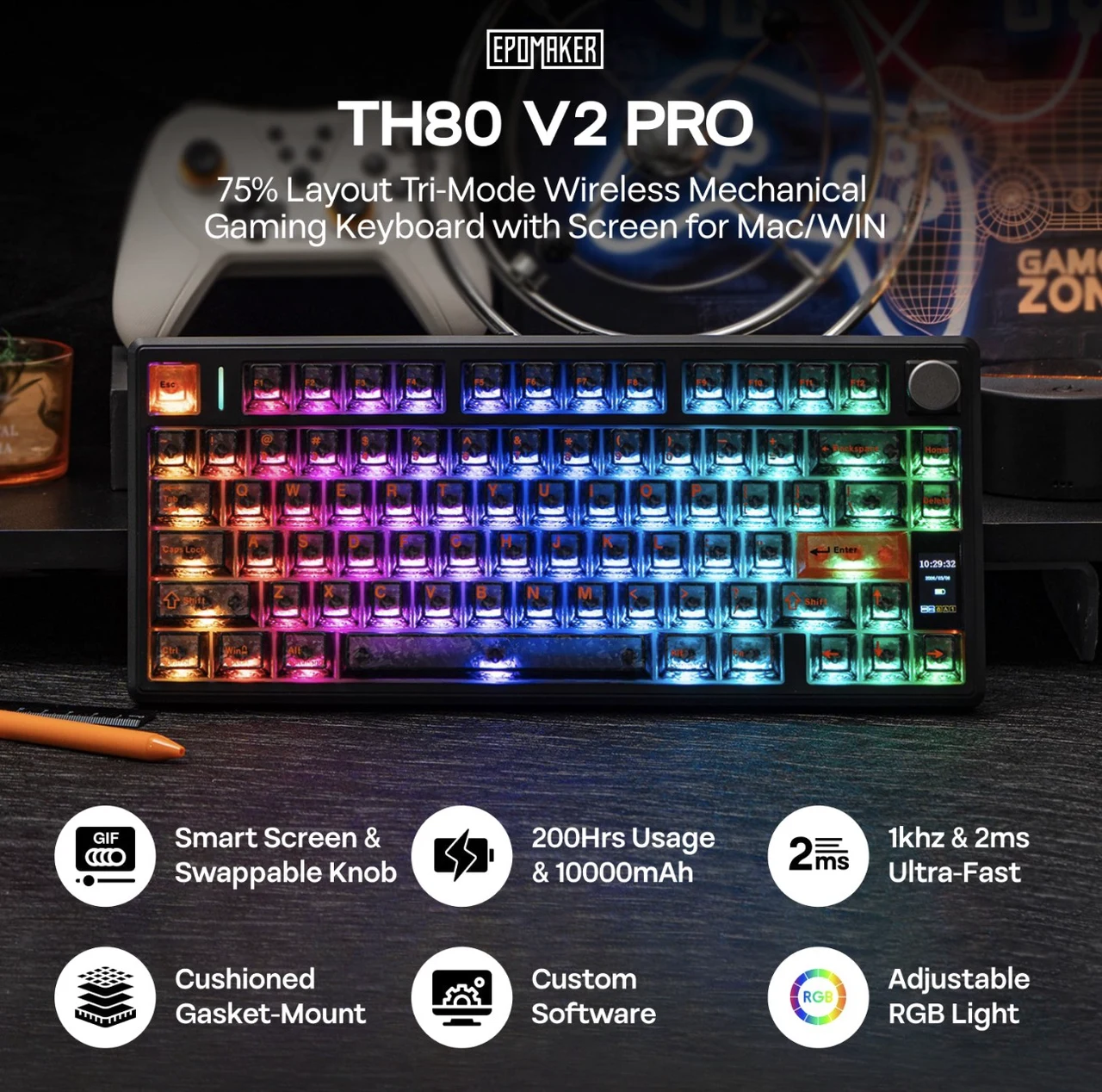
At $78, the EPOMAKER TH80 V2 Pro is fantastic value when compared to others in the same price bracket. Plenty of sub-$100 wireless keyboards offer one or two standout features, but very few bundle a glass LCD screen, a rotary knob, tri-mode wireless, hot-swappable switches, VIA support, screw-in stabilizers and a 10,000mAh battery into a single well-made board. The screen is practical rather than gimmicky, the knob is genuinely useful, wireless performance is solid across all three modes, and the typing experience is comfortable and well-tuned for a budget gasket-mount. Gaming performance held up without issue, and the hot-swappable PCB gives the board a longer life span than most keyboards at this price.
The ABS plastic case is the clearest reminder of the price point, and anyone expecting machined aluminium or custom-keyboard refinement from a sub-$80 board will need to recalibrate. But this is a fully featured, very functional keyboard at a very reasonable price, and the upgrade path is wide open without replacing the board itself. If you want a feature-rich 75% wireless keyboard for daily productivity and gaming without spending into triple figures, the TH80 V2 Pro is an easy recommendation.
Specifications
- Layout: 75% ANSI US, 78 keys + 1 knob
- Connectivity: Tri-mode (2.4GHz / Bluetooth / USB-C wired)
- Switches: EPOMAKER Creamy Jade (linear, pre-lubed, 45gf actuation, 50gf bottom-out, 3.6mm total travel)
- Keycaps: PBT double-shot, Cherry profile, with Mac modifier prints
- Mounting: Gasket-mount with flex-cut PCB
- Dampening: 5-layer stack (noise-absorbing foam, switch pad, sound enhancement pad, switch socket pad, bottom pad)
- Battery: 10,000mAh
- Case Material: ABS plastic
- Stabilizers: Screw-in
- Dimensions: 32.3 x 14.1 x 4.7 cm, 960g
- Typing Angle: 2-stage adjustable (front height 18.5mm, back height 32.5mm)
- Compatibility: Mac / Windows
- Available Colors: Black, White, Pink
Official Product Page : Epomaker
Disclosure: Some of our articles include affiliate links. If you buy something through one of these links, Geeky Gadgets may earn an affiliate commission. Learn about our Disclosure Policy.
