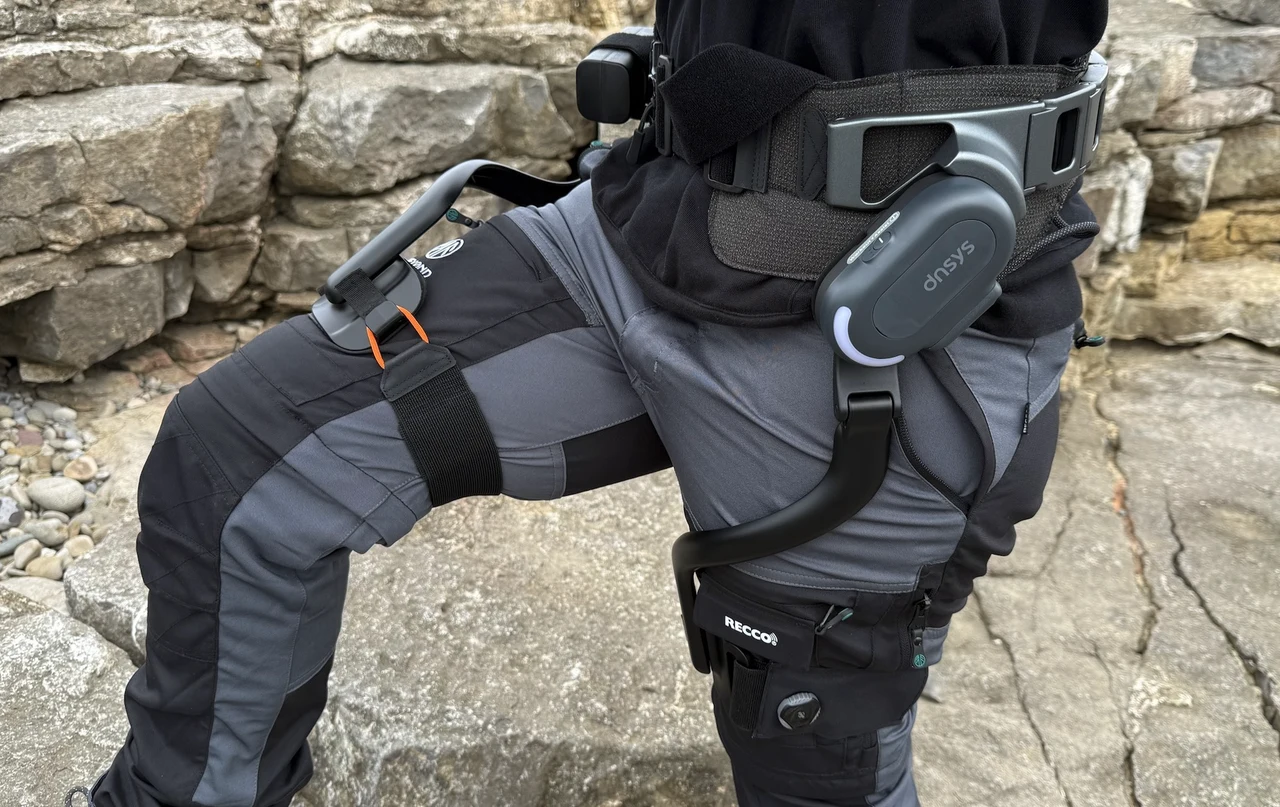
If you are searching for a solution to provide you with a little more power on your daily commute or hill walking, you might be interested in the Dnsys X1 Carbon. A 1.6 kg hip-assist exoskeleton that promises to make walking, hiking, running, and climbing meaningfully easier. It is not a medical device, it is not a rehab device, and it does not provide balance support. What it does is provide extra controllable power to your hip joints when you want, and can also apply resistance to them when you want to train a little harder. The result, is up to a 50% reduction in the effort it takes to walk or run. All from a compact, lightweight design complete with its own companion application, allowing you to customize the power transfer depending on your requirements and terrain.
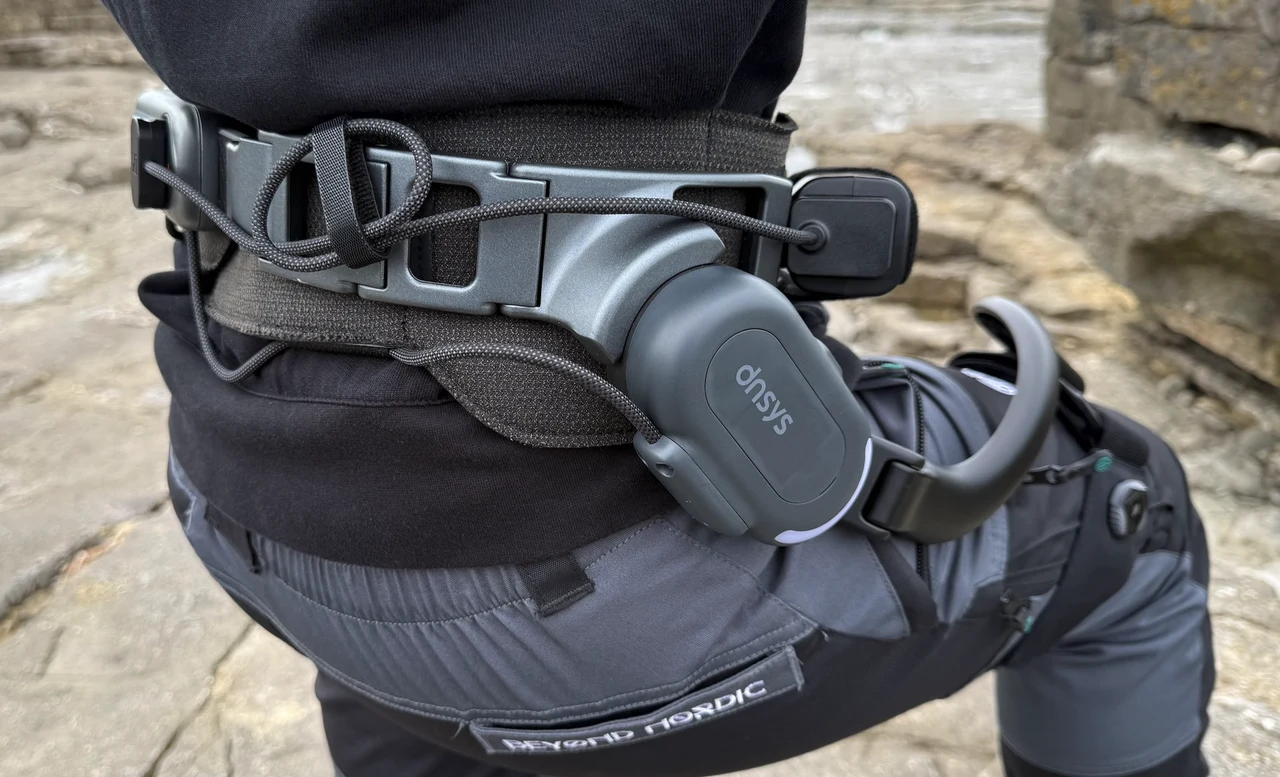
After several weeks of hands-on use, I can say the Dnsys X1 definitely helps you move with extra vigor. Allowing you to easily control how much assistance it provides via the easy to use companion app or using a pair of buttons on the belt itself. You can quickly scale up or down the power provided to match whatever you’re doing, from a flat stroll to a long mountain climb.
Prime Day June 2026 Deal
The X1 is currently on a Prime Day sale that’s worth flagging before anything else. The deal includes:
- The X1 exoskeleton with a free X1 Smart Battery thrown in
- $470 off the recommended retail price of $1,299, bringing the unit down to $829
- 0% interest payment plan at £58 per month if you’d rather spread the cost

What the X1 Actually Is
The X1 Carbon is the mid-tier model in the Dnsys X1 range. Below it sits the cheaper X1 Lite; above it sits the X1 Carbon Pro, which adds a second battery, titanium components, and optional engraving. The product originally launched via Kickstarter, where it raised roughly $1.4 million from over 1,700 backers, and is now available to purchase directly from the Dnsys website. Carbon retails at $1,299 full price and is currently only $829 in the Prime Day deal (details above).

Worth knowing up front: the X1 you can buy today is materially different from the earlier prototype versions. The production unit has a wider, softer waist belt, a more secure front closure, a belt-clipped battery, quieter motors, and a much more intuitive control system. Dnsys says most of these changes came directly from user feedback, which is a good sign from a young hardware company.

Who It’s For
If you walk over mountains and want extra assistance on the long hikes where altitude or climb wear you down, the X1 delivers extra strength and power exactly when you need it. It’s equally at home on shorter outings where you’d just like to feel less fatigued at the end of the day, and it shines on sustained climbs, stair-heavy days, and rolling terrain. If your usual day is mostly flat pavement, you’ll get less from it than someone tackling 600m of ascent.
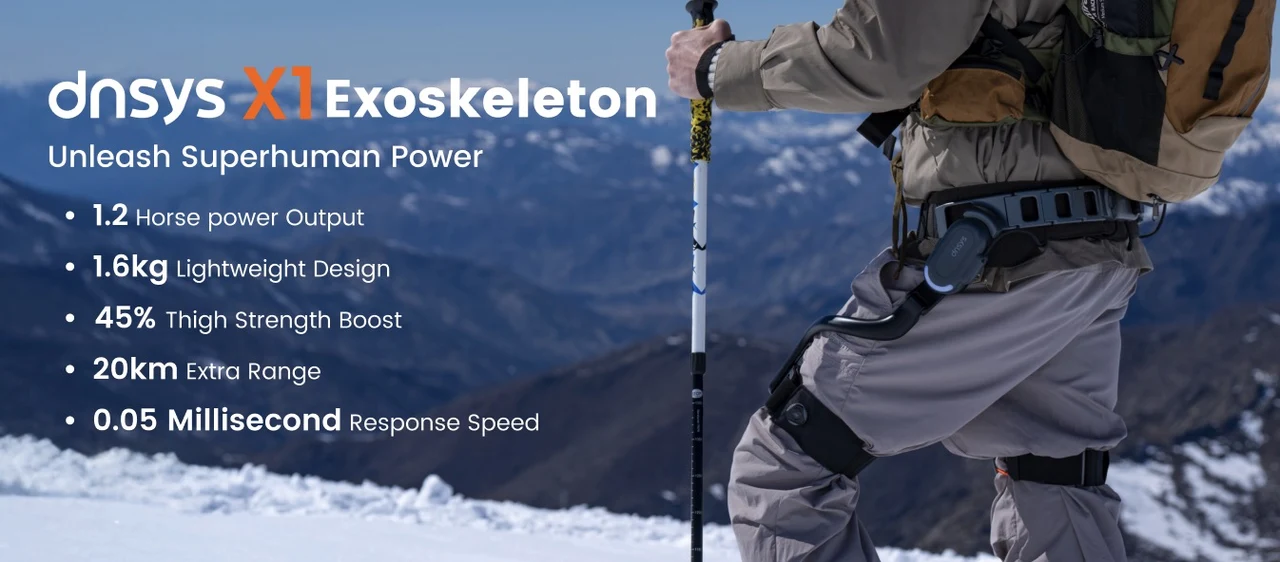
Young and older users with full mobility who want to extend their range or reduce post-hike fatigue will get real value out of it too. The X1 isn’t a medical device and shouldn’t be treated as one. Dnsys is clear it isn’t recommended for users with skeletal, muscular, or neurological conditions, or for anyone with limited balance, and that advice should be followed.
What’s in the Box
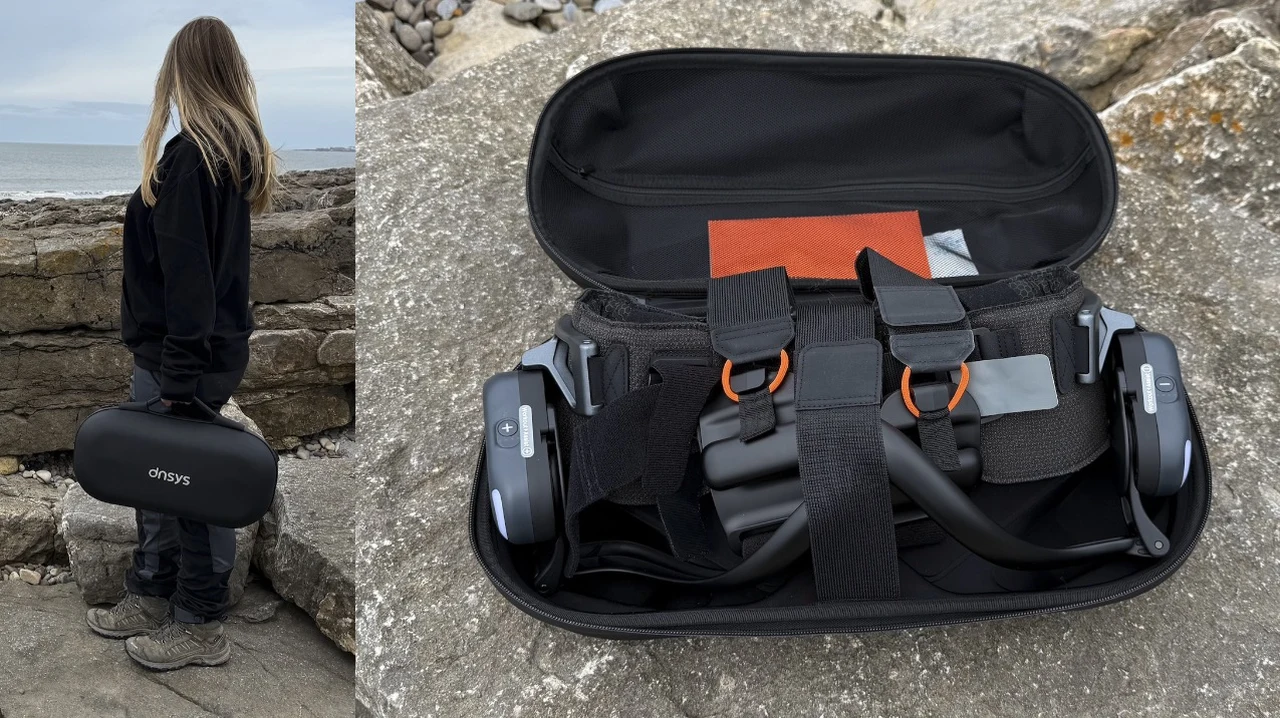
Inside the case you get:
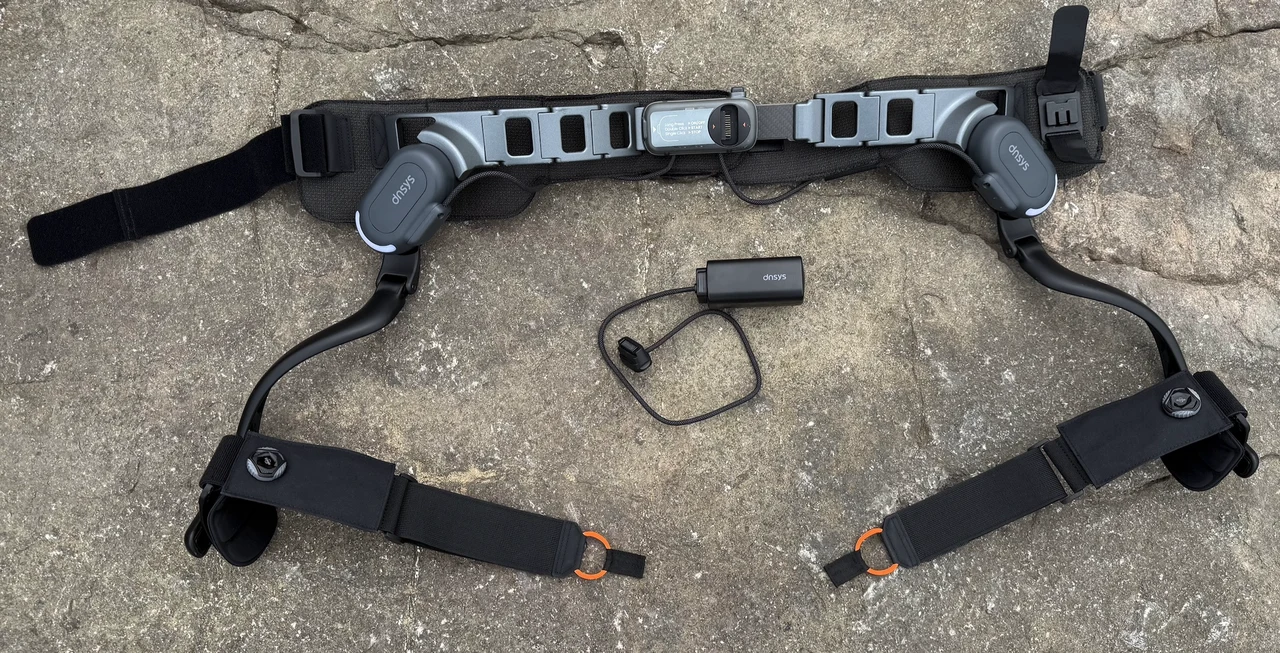
- The X1 Carbon exoskeleton itself
- One 2,400 mAh Smart Battery
- Charger and EU wall adapter
- Battery-to-exoskeleton cable
- Carry & Storage Case
- USB-C charging cable
- Two lengths of waist Velcro and two thigh strap inserts
A small but practical detail: the battery’s base has a USB-C output port, so you can charge a phone off the unit during a hike. Dnsys doesn’t flag this clearly in its marketing, but it’s a genuinely useful field feature for emergencies.
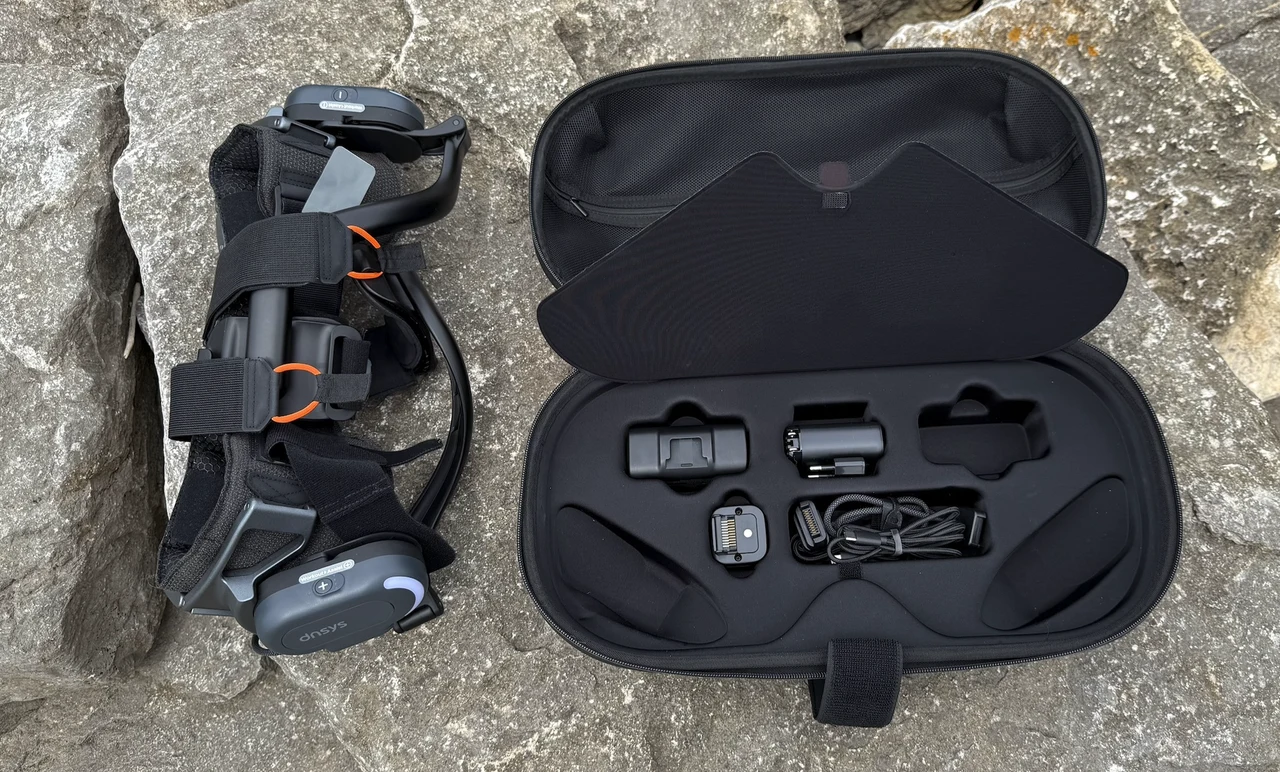
The whole package weighs under 2 kg, and the carry case is rugged but compact enough to leave in the back of the car when you’re not using it. Once the exoskeleton is on your waist, and after it has gauged your stride length, it disappears into a background within a few minutes.
Fitting and Setup
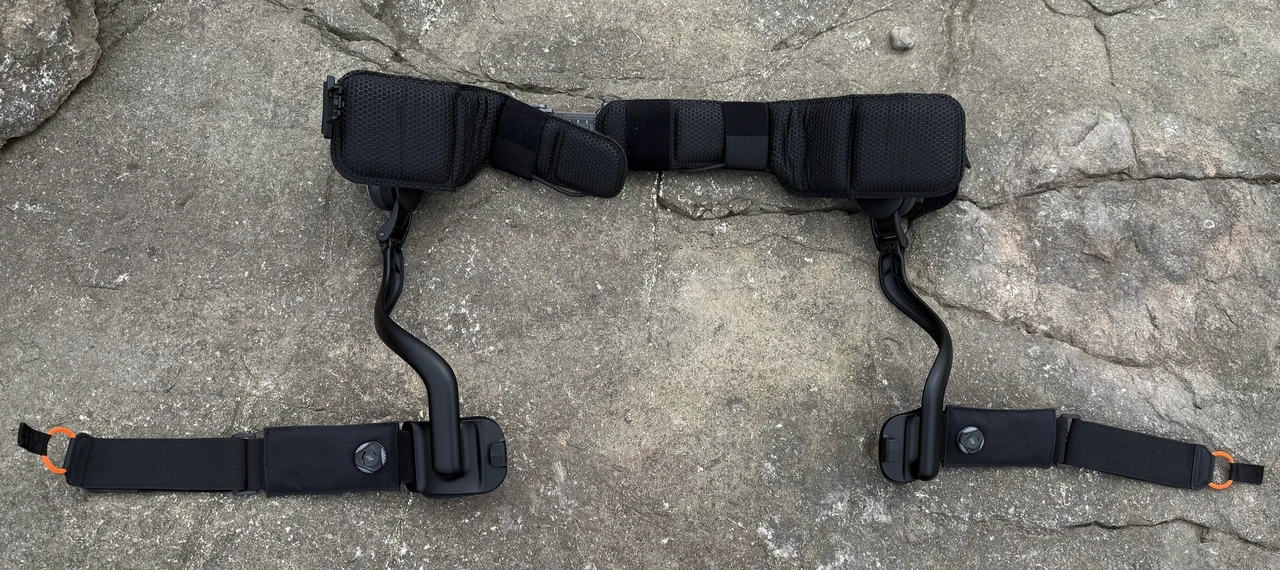
The X1 exoskeleton is really easy to fit and takes less than 60 seconds. You put it around your waist like a belt, then use the elastic straps to attach the power arms to your legs. The frame is lightweight and quick to take off again when you’re done. Build quality is exceptional throughout, and once the unit is correctly sized to your body. Check out the sizing guide below.
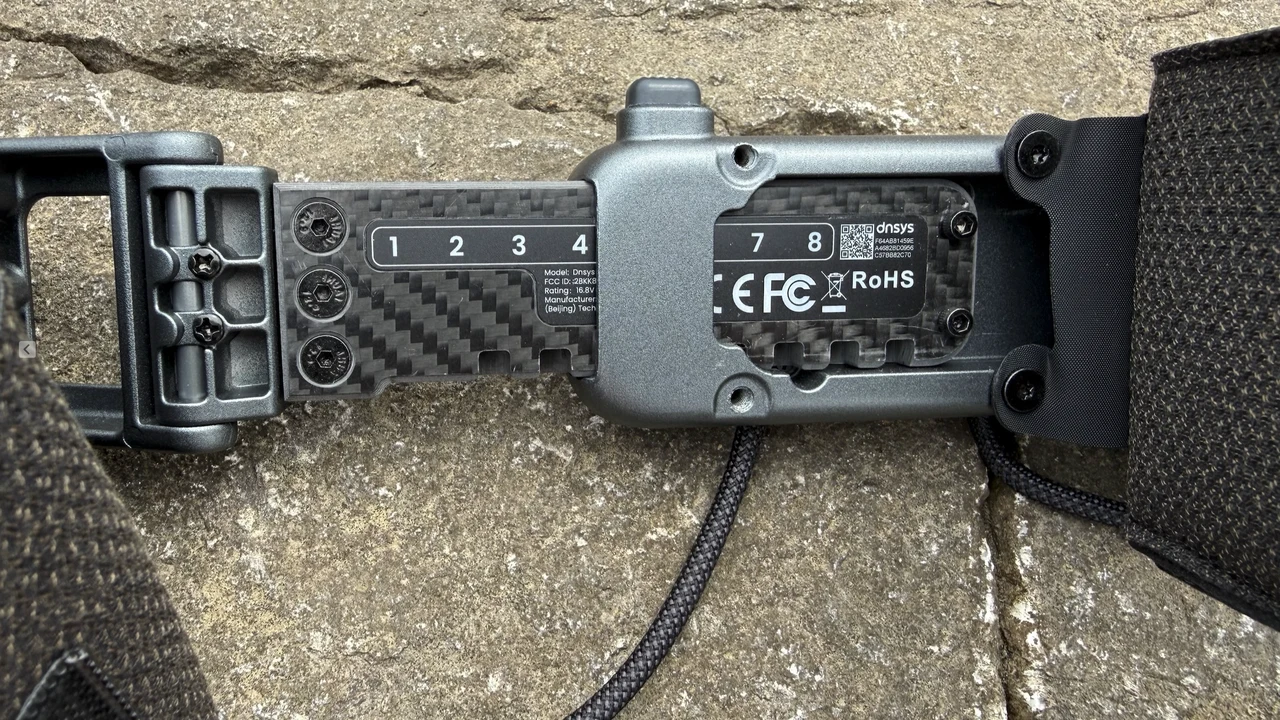
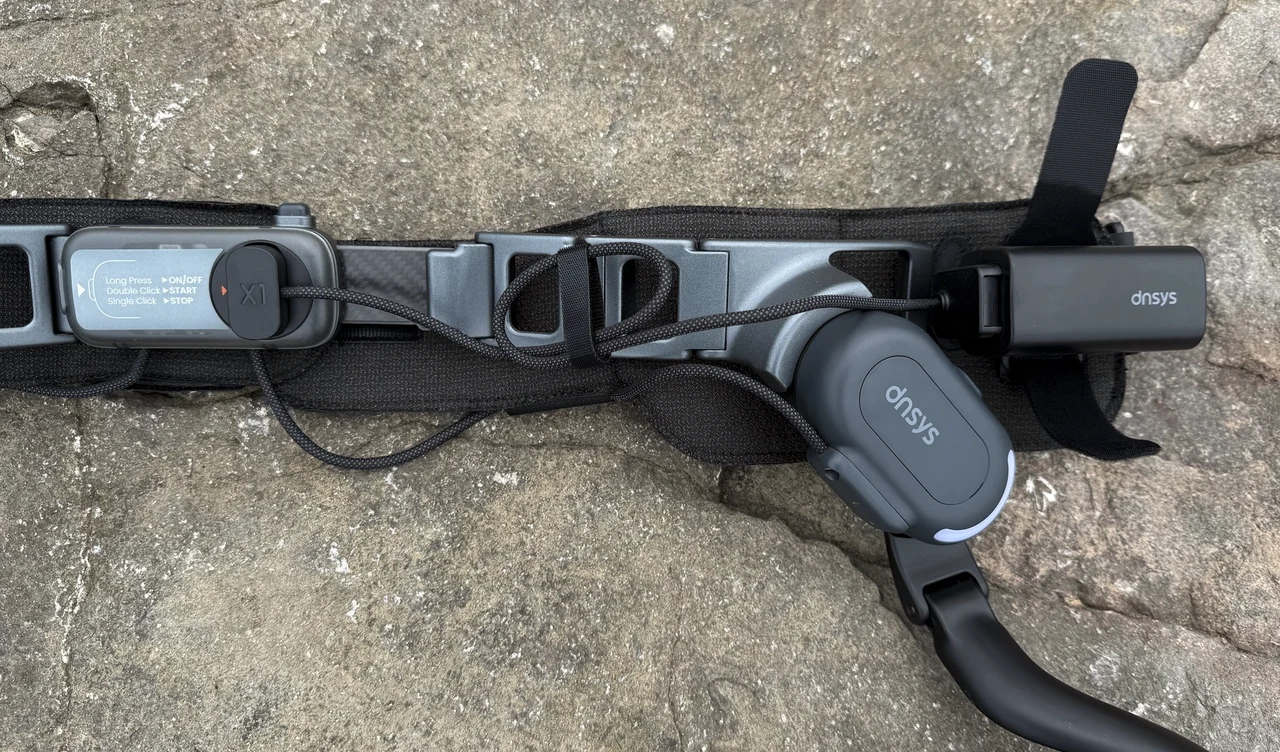
The waist belt sits high on the hips, with a rear dial for fine-tuning the fit. Two sizes of Velcro inserts ship in the box so you can match it to your shape, and the thigh cuffs tighten with side dials that snug them in place without feeling restrictive. The wider front closure stays put even when running, and the belt-clipped battery doesn’t shift as you move. Thanks to its lock-in position, mount and velcro strap.
One piece of advice for anyone picking this up: don’t skip the in-app fit tutorials. They are short, clearly produced, and help you dial things in properly on the first session, which makes every session after that so much simpler.
Sizing
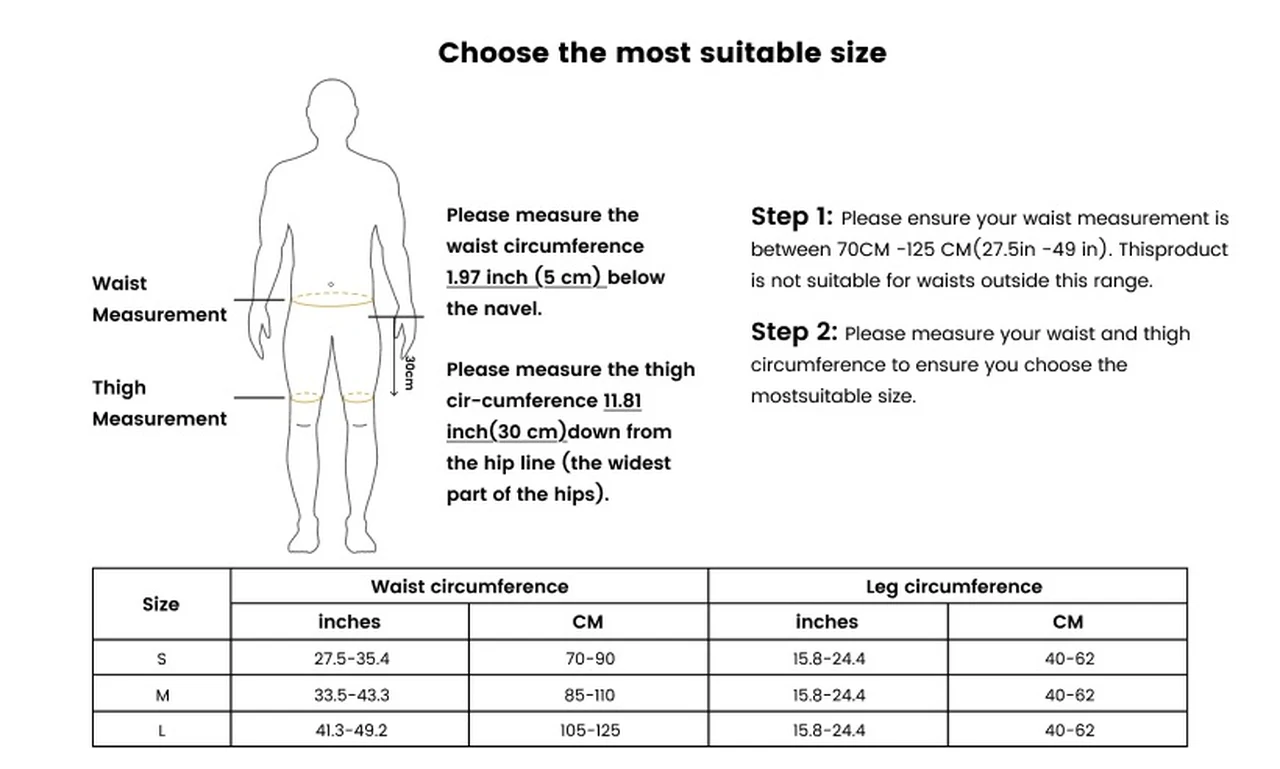
The X1 comes in three sizes covering waist measurements from 27.5 in to 49.2 in, so you should be able to find a fit whatever your shape:
- Size S (waistline 27.5 in to 35.4 in)
- Size M (waistline 33.5 in to 43.3 in)
- Size L (waistline 41.3 in to 49.2 in)
Two lengths of waist Velcro and two thigh strap inserts are also included in the box, so most adult body shapes are covered out of the gate.
Controls
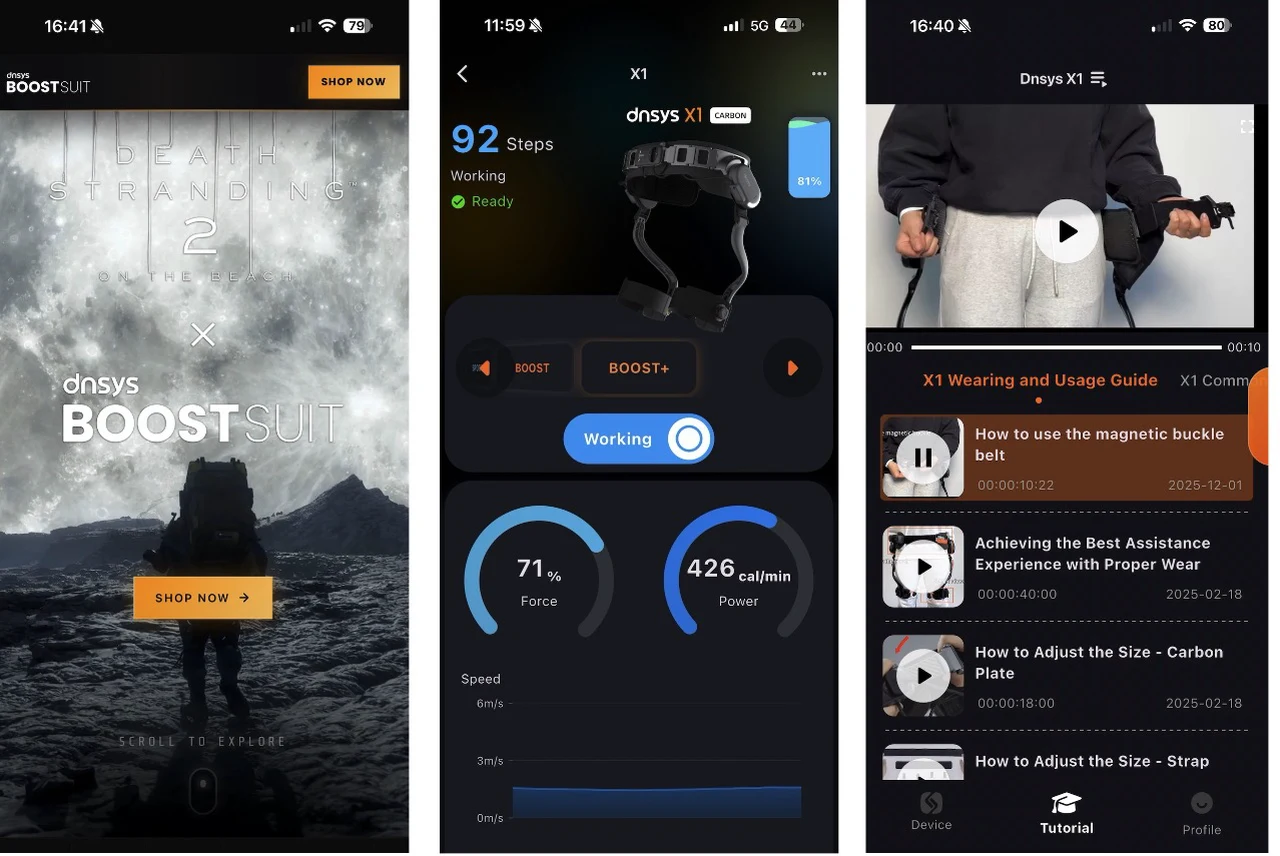
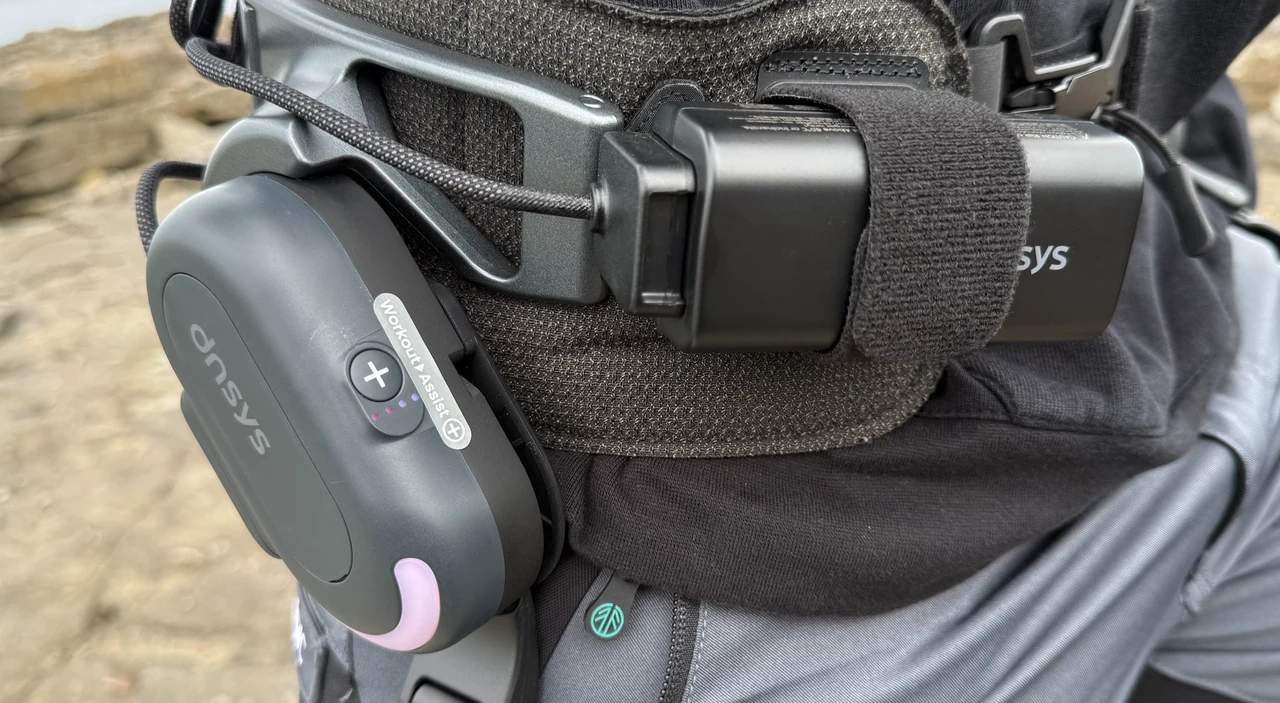
A long press of the rear button turns the exoskeleton on, and a quick double press connects it to the companion app. From there you can either drive it from your phone or use the plus and minus buttons on the left and right of the waistband. Plus increases assistance, minus decreases it, and the system steps cleanly between modes as you press through them.
There are six modes in total, each with its own LED colour so a glance at the belt tells you where you are:
- Eco — gentle assistance, lightest battery draw
- Sport — stronger assistance for hills and longer walks
- Boost — maximum assistance for sprints and steep climbs
- Transparent — motors on but not engaging, the neutral middle setting
- Aqua — resistance mode for everyday training
- Aqua Plus — maximum resistance for a properly hard workout
The exoskeleton learns your stride length over time and tunes its assistance to match your pace. Through the companion app you can track how many steps you’ve taken, how much force the unit is providing, and how much battery you have left. There are also presets that bump the power up for walking, hill climbing, and more, ready to engage when the terrain changes. Once you’re used to how the X1 delivers extra power into your stride, it becomes very easy to control.
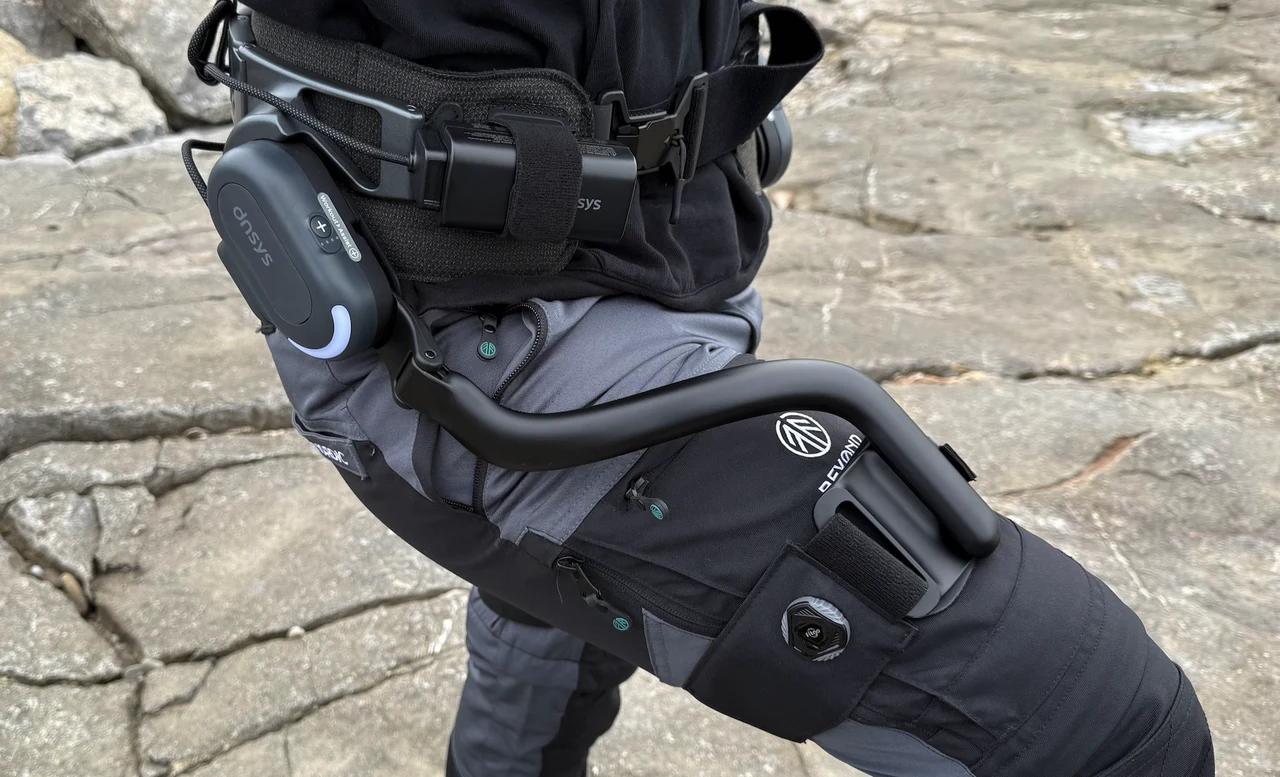
When the power assistance is engaged, you can definitely hear the motors whirring with every movement of your legs. But this is a small price to pay for the added strength it provides and quickly becomes a background noise. With assistance turned off, the frame moves easily with your stride and makes no real noise, which lets you save battery on the flatter sections and engage the power drive when you hit a steeper incline or start to feel fatigued.
How It Actually Performs
In Eco mode on flat pavement, the assist is subtle. You mostly notice it when you switch the unit off mid-walk and realise you’re suddenly doing a fraction more work than you were a moment ago. Eco is designed to shave a small percentage of effort off every step rather than push you along, and over a long day that adds up.
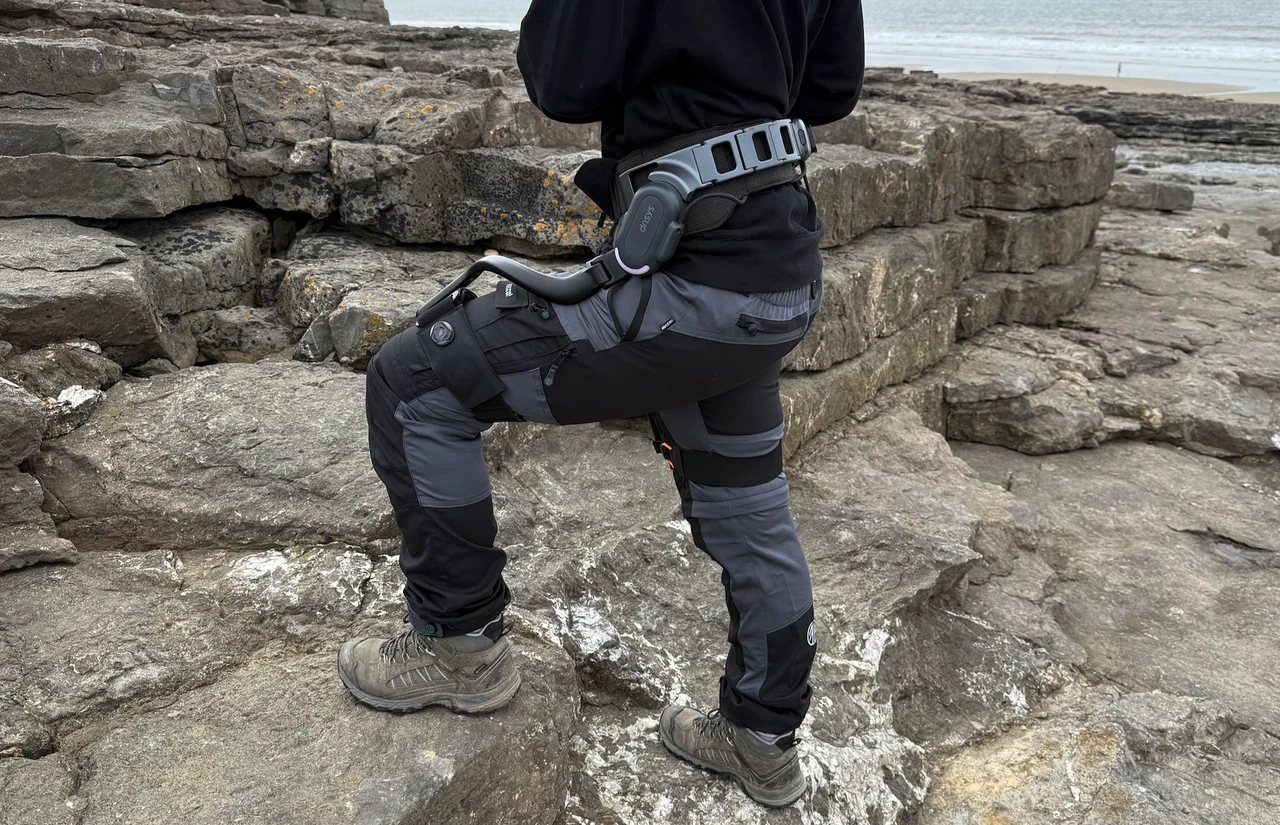
Sport mode on hills is where the X1 starts to feel genuinely useful. Steep gradients feel closer to moderate ones, and the climb your legs are doing feels more manageable than the climb your eyes are seeing. I used it consistently at steep inclines, and once I’d taken the exoskeleton off, I could definitely feel the difference when I wasn’t being assisted. On a measured uphill run I do regularly, my heart rate sat noticeably below my unassisted average for the same pace, and I finished less out of breath.
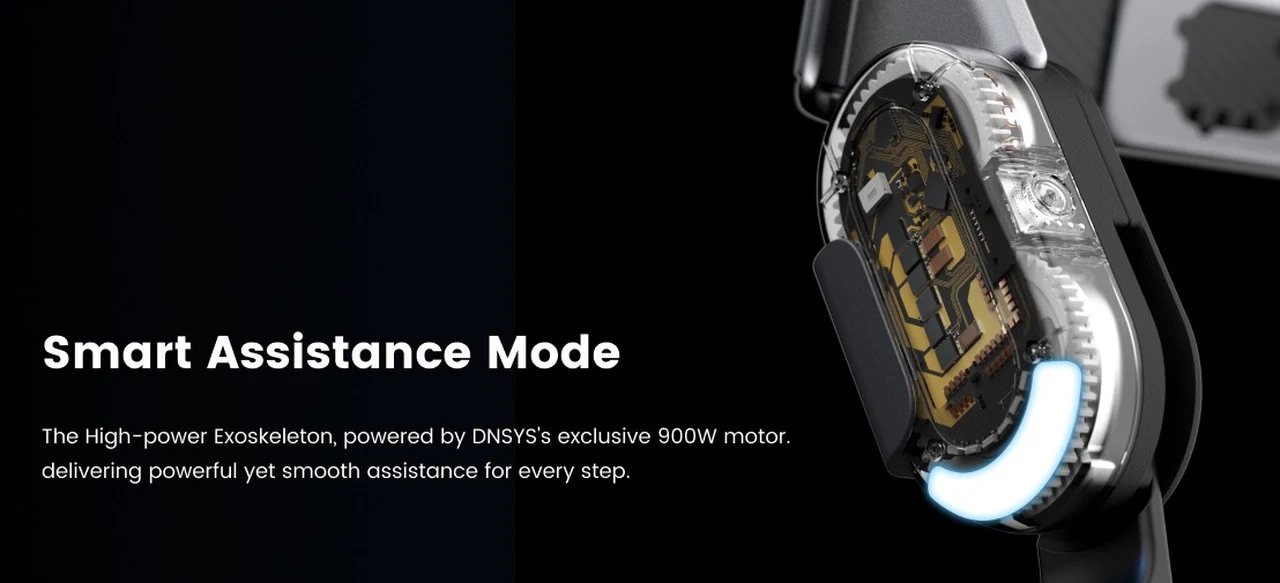
Boost mode is where the assist feels most pronounced. There’s a clear forward push at the hip on every stride, and your pace climbs without your effort climbing in step with it. Dnsys claims sprint assist up to 17 km/h. I can’t independently verify that ceiling, but on my own timed runs I consistently clocked faster splits at lower perceived effort.
One practical observation: the assist scales with your stride speed. If you put it in Boost and then dawdle, the motors barely engage, because the system is matching your tempo rather than overriding it. To get the most out of higher modes, you need to move at a pace the unit can lock onto. Walk slow and Boost feels like Eco. Walk briskly and it feels like you’ve found a tailwind.
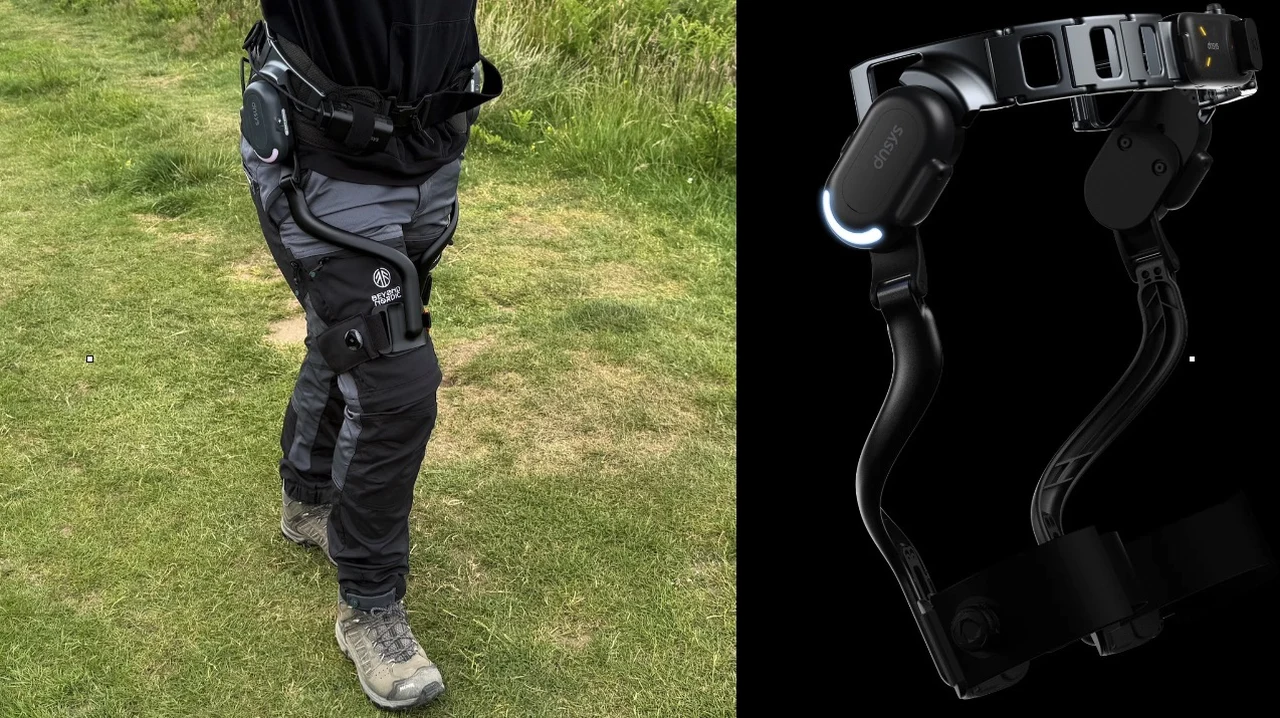
Going downhill. Switching to Aqua mode on the way down applies controlled resistance to your stride, which takes some of the strain off your knees and quads. If you’ve ever finished a long descent with shaking legs, that’s a useful tool to have.
Train Harder While You Walk : Aqua Mode
Aqua and Aqua Plus reverse the motors and resist your stride. You’re walking with active opposition at the hip joint, which means your glutes and hip flexors are working harder than they would be unassisted. A thirty-minute walk in Aqua Plus feels like a properly substantial workout. A hill climb in Aqua engages your lower body in a way uphill walking on its own doesn’t.
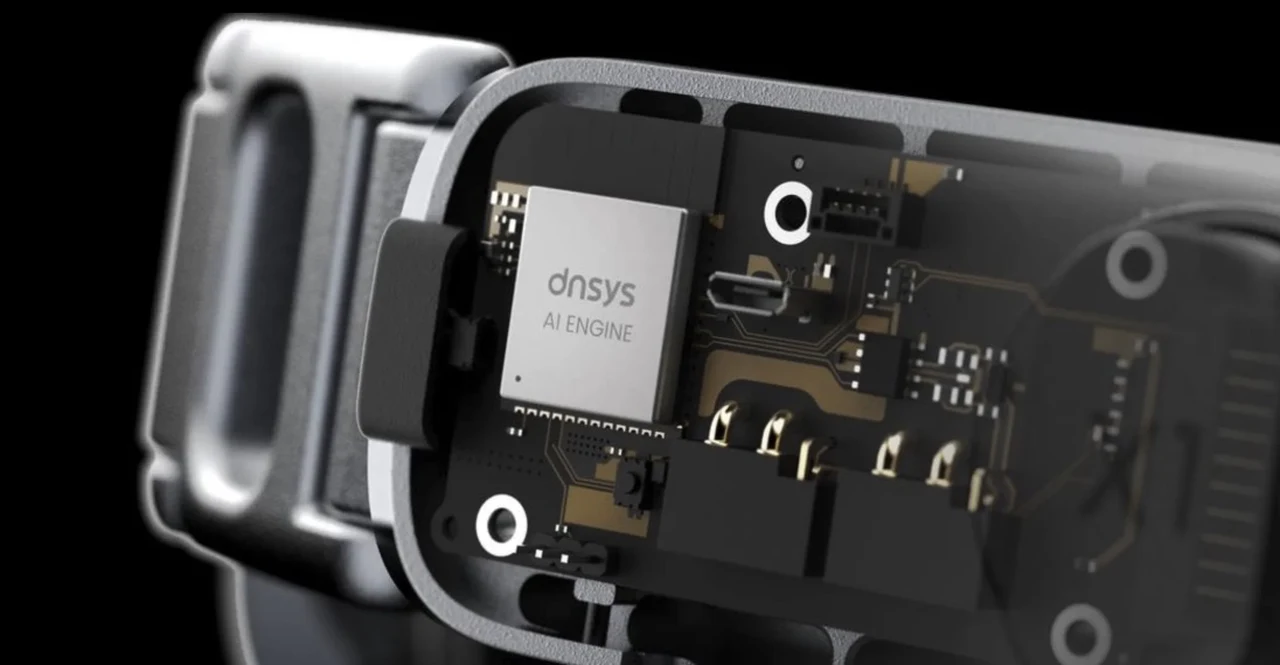
There’s a clever engineering detail too: the motors recapture some of the energy you put in and trickle-charge the battery while you work. A long Aqua session actively extends your remaining runtime rather than draining it. For anyone who wants a workout baked into a walk they were going to take anyway, it’s real value, and it’s a use case Dnsys’s own marketing barely sells.
Battery Life
Battery life is good, but I’d recommend picking up an extra battery or two depending on how long your hikes and hill climbs are. Dnsys claims 7 hours per battery on the Carbon. That figure is realistic in Eco on flat ground and gets shorter the harder you push the unit. In Sport mode with sustained climbs, expect closer to 3 hours. In Boost or Aqua Plus under continuous load, expect less. Below 20%, the unit limits you to Eco only, which protects the battery but does cut your effective high-power runtime.
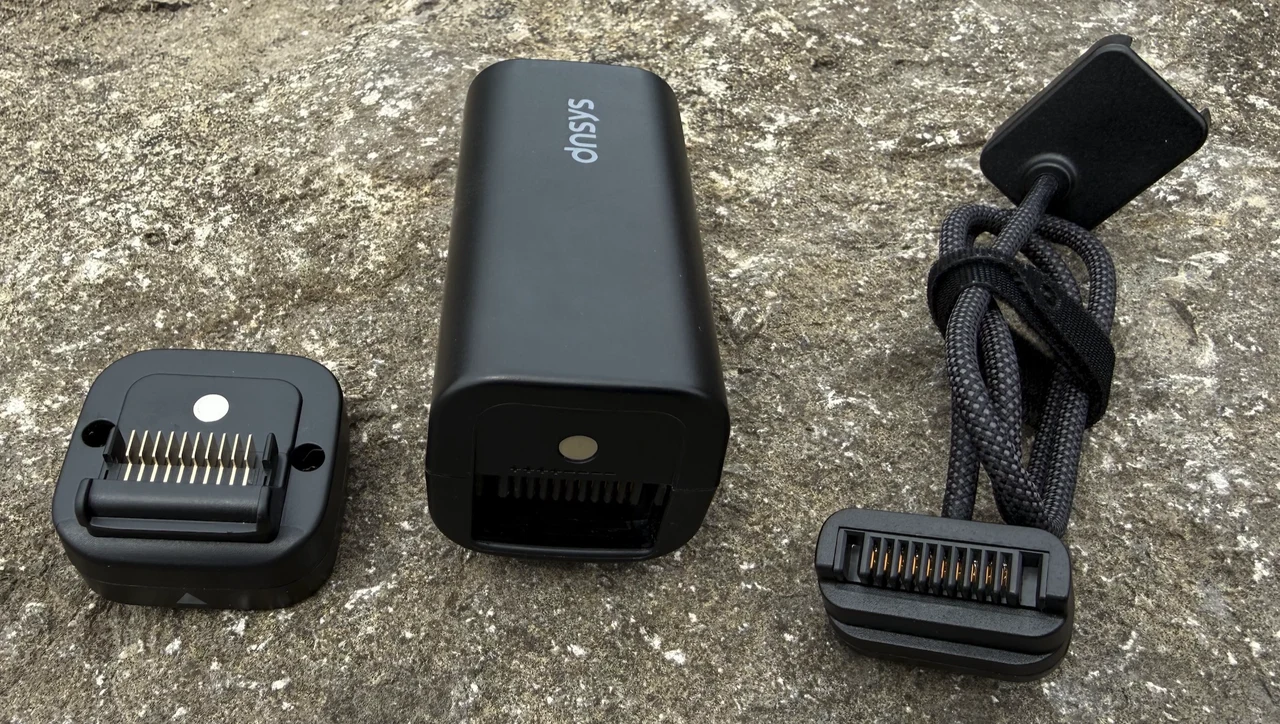
An extra Smart Battery ($139 from Dnsys) is a sensible add-on for serious use, and the packs are easy to swap out in the field. The Carbon Pro variant ships with two batteries as standard, and knowing what I know now, the step up to Pro would tempt me purely on the battery argument. A full battery charge from empty to full takes about an hour and a half.
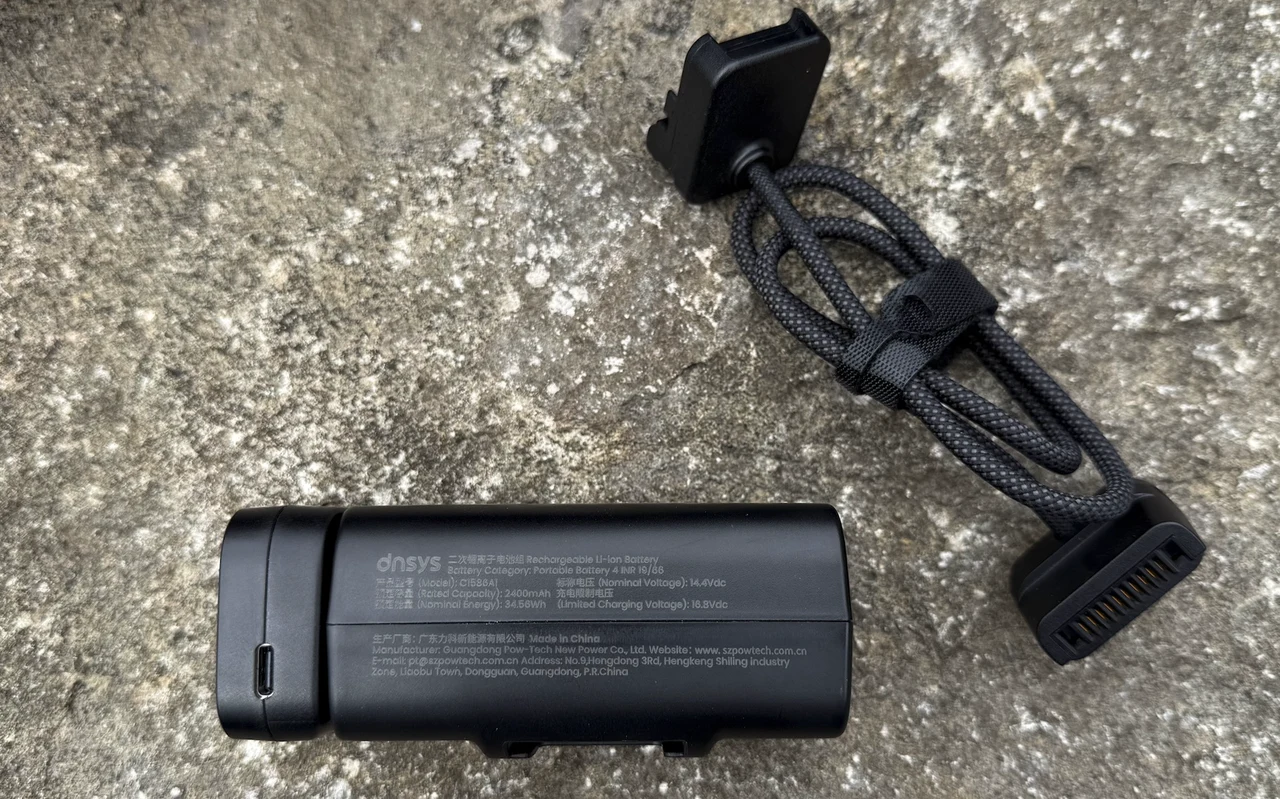
One thing worth remembering for longer walks. If the battery does run out mid-hike, you’re left walking with roughly 2 kg of inert kit on your hips. It’s manageable for a couple of miles; the unit doesn’t chafe and the weight sits close to your body. But for longer day adventures, plan accordingly.
Comfort Over a Long Day
After multiple multi-hour outings, the X1 stays comfortable. There’s some sweat buildup under the waist belt on warm days, which is unavoidable with any worn device, but it doesn’t chafe and the thigh cuffs don’t pinch. The unit is splash-resistant and held up to light drizzle without complaint, though I’d avoid heavy all day rain if possible.
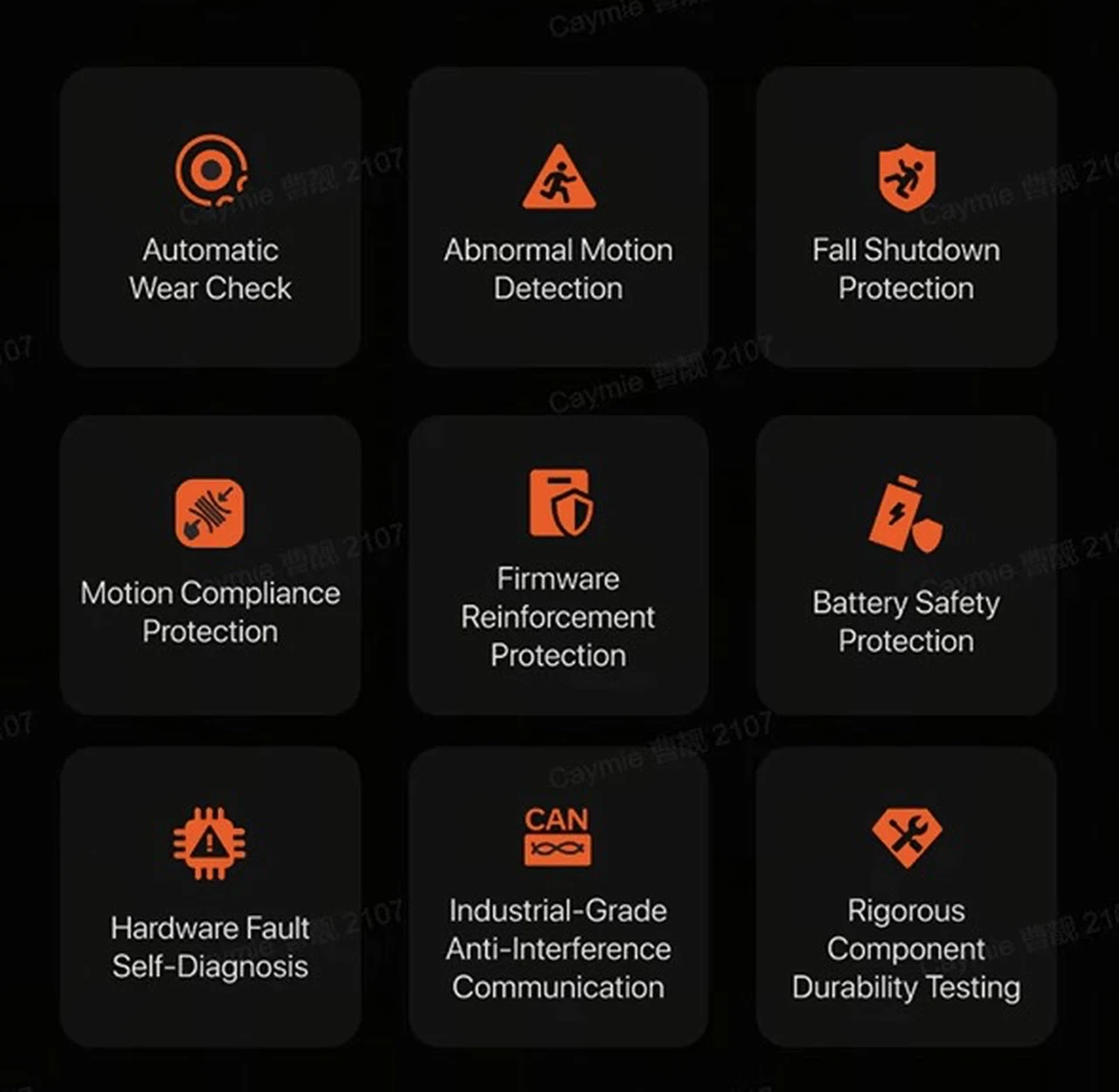
Safety Features
The Honest Pros and Cons
Pros:
- Build quality is exceptional
- Easy to fit, and the controls become second nature quickly
- Companion app for monitoring battery, steps, and force, plus presets for walking, hill climbing, and more
- Sport and Boost deliver real performance gains on hills and sprints
- Aqua and Aqua Plus are genuinely useful both as a training tool and as a knee-saver on descents
- Belt-clipped battery with USB-C output doubles as a phone charger in the field
- Carry case is small enough to live in the back of the car
Cons:
- Audible motor whirr when power assistance is engaged (a small price for what you’re getting back)
- Single-battery runtime under load is shorter than the marketing implies
- A spare battery should be budgeted in for serious use
Should You Buy One?
Overall, I was very impressed with the construction and the power the X1 was able to provide, and the ability to scale that power up or down depending on the terrain you’re covering is fantastic. The X1 Carbon won’t make you superhuman. It won’t enable you to do something you currently can’t do. What it will do is take what you already do and make it easier and faster, depending on which mode you choose.
Hikers wanting to keep pace with fitter companions will find it a real leveller. Walkers chasing longer, less fatiguing days out will get more miles before fatigue sets in. Older users with full mobility who want to extend their range will appreciate how the assist quietly takes the edge off. Anyone after a wearable training tool that loads everyday movement will find Aqua mode particularly rewarding. And if you’re walking over mountains and want extra assistance on long hikes where altitude or climb might wear you down, the X1 delivers extra strength and power exactly when you need it.
The X1 sits in a category that barely existed two years ago, and it’s the most accessible entry into that category right now. The production unit has earned its place. If any of the use cases above describe you, it’s a credible buy.
Source: Dnsys X1
Disclosure: Some of our articles include affiliate links. If you buy something through one of these links, Geeky Gadgets may earn an affiliate commission. Learn about our Disclosure Policy.
