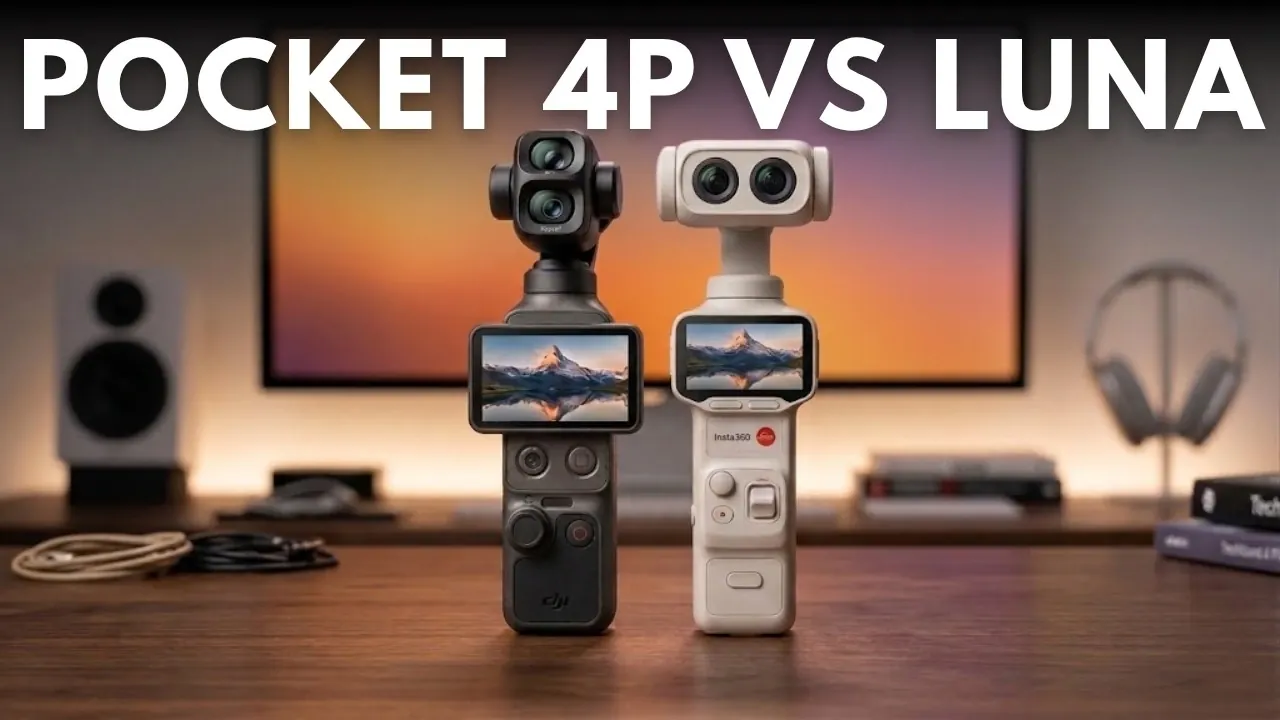
The pocket gimbal camera market sees a significant development as DJI and Insta360 introduce competing products with distinct design philosophies. Tech Court highlights DJI’s Osmo Pocket 4P, which debuts a dual-camera system featuring wide and telephoto lenses, bringing optical zoom to the series for the first time. This addition underscores DJI’s focus on optical precision and versatility for creators. In contrast, Insta360’s Luna camera adopts a modular design, allowing users to reconfigure the device for different shooting setups, such as handheld or remote use, offering flexibility in diverse filming scenarios.
Explore the specific features that differentiate these cameras, including DJI’s optical zoom capabilities and Insta360’s modular adaptability. Gain insight into how both devices incorporate advancements like AI-powered stabilization, 10-bit color depth, and high-frame-rate 4K video recording. By examining these elements, this overview provides a detailed look at the strategies shaping the latest portable filmmaking technologies.
DJI Osmo Pocket 4P: A Glimpse into the Future
TL;DR Key Takeaways :
- DJI’s upcoming Osmo Pocket 4P introduces a dual-camera system with wide and telephoto lenses, offering optical zoom for the first time in the series, signaling a focus on enhanced optical performance.
- Insta360’s Luna camera features a modular design with a detachable camera module, dual-lens system supporting up to 3x optical zoom and advanced capabilities like 4K video at 240fps and AI-powered stabilization.
- The competition between DJI and Insta360 highlights a shift in the pocket gimbal camera market, with innovation and user-centric design becoming key differentiators.
- DJI focuses on seamless integration within its ecosystem and a cautious market approach, while Insta360 emphasizes adaptability, innovation and a likely global launch strategy.
- This rivalry benefits creators by offering more advanced tools, catering to preferences for either streamlined workflows or creative flexibility in portable filmmaking.
DJI’s teaser for the Osmo Pocket 4P hints at a significant advancement in its product lineup. The standout feature is a dual-camera system equipped with wide and telephoto lenses, introducing optical zoom capabilities for the first time in the Osmo Pocket series. This departure from the single-lens design of previous models signals DJI’s commitment to enhancing optical performance, catering to creators who require greater versatility and precision in their work.
Although specific details remain scarce, the teaser, released exclusively on DJI’s China website, suggests a calculated strategy to refine its ecosystem and maintain its competitive edge. By addressing emerging trends and user demands, DJI is positioning itself to remain a dominant force in the market. This move reflects the company’s focus on delivering tools that seamlessly integrate into its existing ecosystem while pushing the boundaries of what pocket gimbal cameras can achieve.
Insta360 Luna: Redefining Flexibility
Insta360’s Luna camera introduces a modular design that challenges traditional norms in the pocket gimbal camera segment. The detachable camera module offers creators unparalleled flexibility, allowing configurations such as remote setups, POV rigs, or handheld shooting. This adaptability is further enhanced by Luna’s dual-lens system, which supports up to 3x optical zoom, with the potential for 6x optical zoom, though the latter remains unconfirmed.
Luna also features a suite of advanced features, including 4K video recording at 240fps, 10-bit color depth, AI-powered stabilization, and real-time portrait modes. These capabilities cater to creators seeking innovative workflows and greater creative freedom. Insta360’s approach underscores its dedication to pushing technological boundaries and appealing to users who prioritize adaptability and innovative features. By offering tools that empower creators to experiment and innovate, Insta360 is carving out a unique space in the competitive landscape.

Advance your skills in DJI Pocket 4 by reading more of our detailed content.
- DJI Pocket 4 Release Date (April 2026): Specs & Price
- DJI Pocket 4 Specs Officially Confirmed
- DJI Osmo Pocket 4 Release Date, Rumored Specs & Sensor
- DJI Pocket 4: Should You Pre-Order Now or Wait?
- DJI Osmo Pocket 4 Unboxing & Creator Combo Accessories
- Should You Wait for the Insta360 Luna Ultra or Buy the DJI Pocket 4?
- DJI Osmo Pocket 4 Review : Specs, Features, and Trade-Offs
- Should You Upgrade to the DJI Pocket 4?
- Osmo Pocket 4 vs Pocket 3 : Should You Upgrade in 2026?
- DJI Osmo Pocket 4 won’t be available in the US officially, but XTRA MUSE 2 PRO Will
Market Dynamics: A Battle for Innovation
The rivalry between DJI and Insta360 reflects broader shifts in the pocket gimbal camera market, where innovation and user-centric design are becoming key differentiators. DJI’s swift response to Insta360’s Luna mirrors its earlier reactions to Insta360’s advancements in the 360° drone category. This time, DJI is using its established ecosystem, brand loyalty and reputation for reliability to counter Insta360’s disruptive strategies.
Insta360, on the other hand, is targeting creators who value innovative features and adaptability. By focusing on modularity and advanced functionality, the company aims to challenge DJI’s dominance and reshape consumer expectations. This competitive dynamic is likely to benefit creators, as both companies strive to outdo each other by delivering more advanced and user-friendly products.
Strategic Approaches: Local vs. Global
The contrasting strategies of DJI and Insta360 highlight their differing priorities and market approaches. DJI’s decision to unveil the Osmo Pocket 4P teaser exclusively in China suggests a cautious and measured approach, likely aimed at gauging domestic interest before committing to a global rollout. This strategy aligns with DJI’s focus on its core markets and existing user base, making sure that its products resonate with its most loyal customers.
Insta360, by contrast, is expected to pursue a global launch for Luna, using its reputation for innovation to capture a broader audience. The company’s willingness to take risks and challenge established norms positions it as a formidable competitor in the international market. However, regulatory challenges in key regions, such as the United States, could influence the competitive landscape, potentially giving Insta360 an advantage in areas where DJI faces restrictions.
Creative Philosophies: Integration vs. Adaptability
At the core of this rivalry are two distinct creative philosophies that define the approaches of DJI and Insta360. DJI emphasizes seamless integration and polished refinement, catering to users who value reliability, ease of use and consistency. Its products are designed to work effortlessly within its ecosystem, making them ideal for creators who prioritize streamlined workflows and dependable performance.
In contrast, Insta360 champions adaptability and innovation. Luna’s modular design and advanced features are tailored for creators who seek tools that enable new possibilities and workflows. This philosophy aligns with Insta360’s broader mission of empowering users to explore creative boundaries and experiment with unconventional approaches to content creation.
What This Means for Creators
The competition between DJI and Insta360 is set to drive significant innovation in the pocket gimbal camera market, offering creators a wider array of tools and features to choose from. As the Osmo Pocket 4P and Luna prepare for their respective launches, real-world comparisons will play a crucial role in shaping consumer preferences and determining the success of each product.
For creators, this rivalry translates into more options and advanced capabilities. Whether you prioritize seamless integration within an established ecosystem or the creative flexibility offered by modular designs, the evolving market ensures that your needs will remain at the forefront of innovation. As DJI and Insta360 continue to push the boundaries of what pocket gimbal cameras can achieve, the future of portable content creation looks brighter than ever.
Media Credit: Tech Court
Disclosure: Some of our articles include affiliate links. If you buy something through one of these links, Geeky Gadgets may earn an affiliate commission. Learn about our Disclosure Policy.
