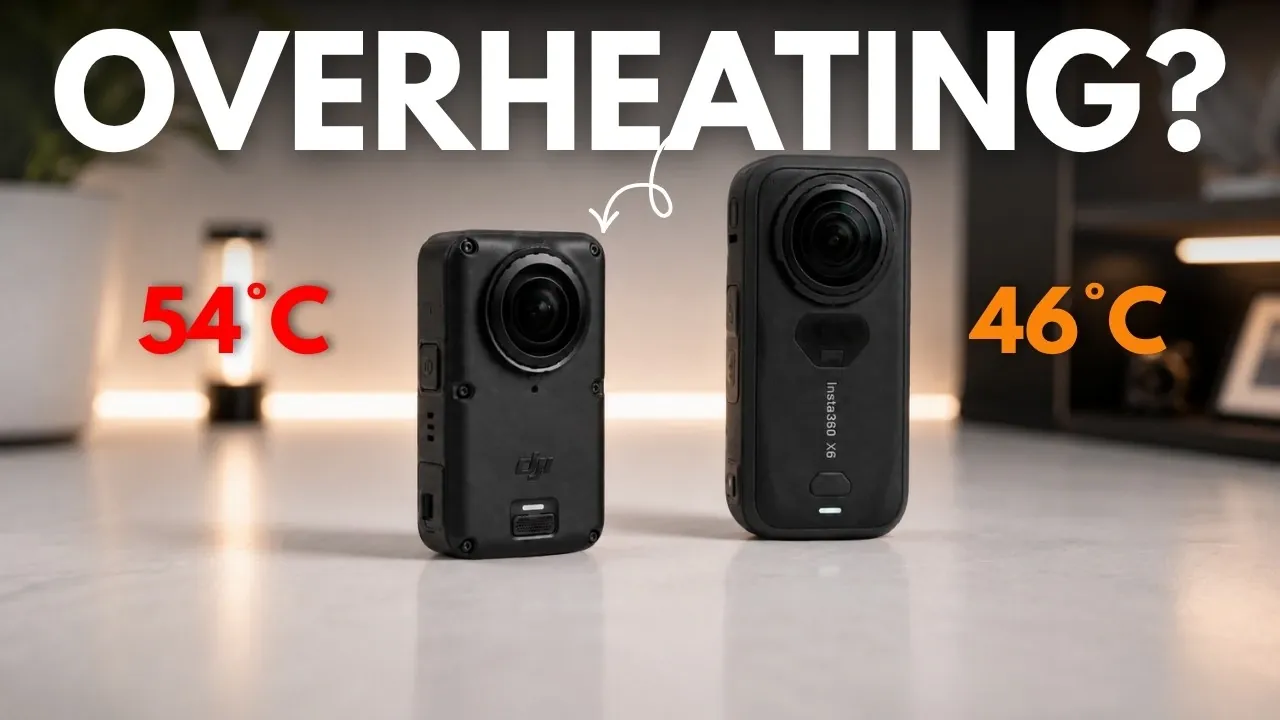
Thermal performance plays a significant role in the usability and reliability of high-resolution 360-degree cameras, especially during intensive tasks like 8K30 video recording. According to Tech Court, controlled tests show that the Insta360 X6 maintains an external surface temperature of approximately 46.8°C, while the DJI Osmo 360 II reaches a higher 54.5°C under similar conditions. These results highlight differences in heat management, which can influence both recording stability and device lifespan over time.
Explore this analysis to compare the recording endurance of these cameras, their respective price-to-feature ratios and the strengths of their ecosystems. Gain insight into the Insta360 X6’s software capabilities and longer recording durations, alongside the DJI Osmo 360 II’s cost efficiency and hardware design. This breakdown provides a clear look at how each camera performs under demanding conditions, helping you make an informed decision based on your specific requirements.
The DJI Osmo 360 II and Insta360 X6 are two of the most advanced 360-degree cameras available today, catering to creators who demand high-quality visuals and innovative features. A critical area of comparison between these devices is their thermal performance, as overheating can significantly affect recording reliability and endurance. While the Insta360 X6 demonstrates cooler external temperatures during 8K30 recording, neither camera has undergone extensive overheating tests, leaving some uncertainty about their long-term durability. Choosing between these two models ultimately depends on your specific priorities, such as budget, recording requirements and ecosystem preferences.
Thermal Performance: Which Camera Stays Cooler?
Thermal management is a crucial consideration for high-resolution cameras, especially during extended recording sessions. In controlled tests, the Insta360 X6 exhibited a cooler external temperature, with its rear surface reaching approximately 46.8°C during 8K30 recording. In contrast, the DJI Osmo 360 II’s surface temperature climbed to 54.5°C under similar conditions.
However, external temperature alone does not tell the full story. The higher surface temperature of the DJI Osmo 360 II could indicate more effective internal heat dissipation, potentially safeguarding its sensitive components. Without a controlled overheating test, it remains unclear which camera is better equipped to handle prolonged stress. For creators planning long recording sessions, this uncertainty may influence their decision.
Recording Endurance: How Long Can They Last?
Recording endurance is another critical factor for creators, particularly those working on extended projects. The Insta360 X6 excels in this area, sustaining 8K30 recording for approximately 155 minutes. However, when pushed to higher frame rates, such as 8K50, its endurance drops significantly to just 20–25 minutes under stress.
The DJI Osmo 360 II, on the other hand, is rated for up to 100 minutes of 8K30 recording in controlled lab conditions. While this falls short of the X6’s performance, real-world factors such as ambient temperature and heat management could further influence these figures. For users prioritizing longer recording times, the Insta360 X6 offers a clear advantage, but the DJI Osmo 360 II still provides respectable performance for its price.

More articles you might be interested in on Insta360 products :
- Leaked Insta360 X6 Box Confirms 8K 360° Video Recording
- DJI Osmo 360 II Tops Insta360 X6 with 8K 60Fps Video Support
- Insta360 X6 Costs $699, Marking a $150 Jump from the X5
- Leaked Insta360 X6 Retail Box Suggests €689 Starting Price: 8K Resolution Confirmed
- Leaked Insta360 X6 Retail Box Reveals a €689 Starting Price
- What the Insta360 Luna Ultra and Pro Launch Means for Vloggers
- Insta360 X6 Pre-Orders Open August 12, 2026 with New Features
- Leaked Insta360 X6 Starts at $700 for Standard Bundle
- Why Insta360’s Unreleased Luna Ultra is Already Beating DJI
- Why Pro Creators Are Skipping the Insta360 Luna Ultra for DJI
Price vs Value: Which Offers More Bang for Your Buck?
Price often plays a decisive role when choosing between two high-end devices. The DJI Osmo 360 II is the more affordable option, launching at approximately $499. In contrast, the Insta360 X6 is priced at $699.99 in the U.S. Despite its lower price, the DJI Osmo 360 II delivers a range of advanced features, including:
- 8K60 recording for smoother high-resolution footage
- 10-bit color for enhanced color depth
- 128GB of internal storage, reducing the need for external memory cards
- Replaceable lenses for improved durability and flexibility
These features make the DJI Osmo 360 II an attractive choice for budget-conscious users seeking high-end capabilities. However, the Insta360 X6 justifies its higher price with premium features such as dual 1/1.1-inch sensors, Dolby Vision, and superior low-light performance, which cater to professionals who demand top-tier image quality.
Features and Ecosystem: A Tale of Two Platforms
Both cameras bring unique strengths to the table, but their ecosystems and feature sets differ significantly. The Insta360 X6 features a mature software platform, offering tools like AI Director, InstaFrame, and zero-editing workflows. These features streamline the editing process, making it an excellent choice for creators who prioritize efficiency. Additionally, the X6 is waterproof up to 20 meters without additional housing, making it ideal for underwater shoots and extreme conditions.
The DJI Osmo 360 II, while newer to the market, focuses on delivering innovative hardware capabilities. It supports 8K60 recording, 4K240 slow motion, and 120MP stills, providing creators with versatile options for capturing high-quality content. With 128GB of internal storage, it also offers more onboard memory than the X6’s 47GB. However, its waterproofing is limited to 10 meters without housing, and its software ecosystem, including DJI Mimo and Studio, is still evolving. For users who rely heavily on software tools, the Insta360 X6’s refined ecosystem may hold the edge.
Software and Workflow: Refinement vs Potential
The software ecosystem is a critical aspect of any modern camera and the Insta360 X6 shines in this area. Its platform reflects years of refinement, with features like AI Director simplifying editing and zero-editing workflows catering to users who value streamlined post-production. These tools make the X6 particularly appealing for creators who need to produce polished content quickly.
In contrast, DJI’s Mimo and Studio software, while functional, lack the advanced features and seamless workflows offered by Insta360. While DJI’s software shows promise, it currently falls short of the X6’s platform in terms of usability and sophistication. For creators who depend on software for editing and content management, this difference could be a deciding factor.
Additional Considerations: Availability and Support
Availability and after-sales support are important factors to consider when investing in a high-end camera. The Insta360 X6 is officially available in the U.S., making sure easier access to warranty services and customer support. The DJI Osmo 360 II, however, is not yet officially sold in the U.S., which could complicate support for American users.
Both cameras now feature replaceable lenses, addressing a common pain point with older 360 cameras. This improvement enhances durability and reduces long-term maintenance costs, making both devices more practical for extended use. For creators who frequently shoot in challenging environments, this feature adds significant value.
Which Camera Should You Choose?
The Insta360 X6 stands out in areas such as external cooling, recording endurance, waterproofing, and its mature software ecosystem. These features make it an excellent choice for users who prioritize reliability, ease of use and advanced editing tools. Its higher price is justified by its premium capabilities, making it a strong contender for professionals and serious enthusiasts.
On the other hand, the DJI Osmo 360 II offers exceptional value with features like 8K60 recording, 10-bit color, and a lower price point. It’s an appealing option for budget-conscious creators who want high-end performance without overspending. While its software ecosystem is less polished, its hardware capabilities make it a compelling choice for those focused on capturing high-quality footage.
Ultimately, your decision will depend on your specific needs and priorities. If you value software maturity, recording endurance, and waterproofing, the Insta360 X6 is likely the better option. However, if affordability and innovative hardware features are your main concerns, the DJI Osmo 360 II offers an impressive package at a more accessible price.
Media Credit: Tech Court
Disclosure: Some of our articles include affiliate links. If you buy something through one of these links, Geeky Gadgets may earn an affiliate commission. Learn about our Disclosure Policy.
