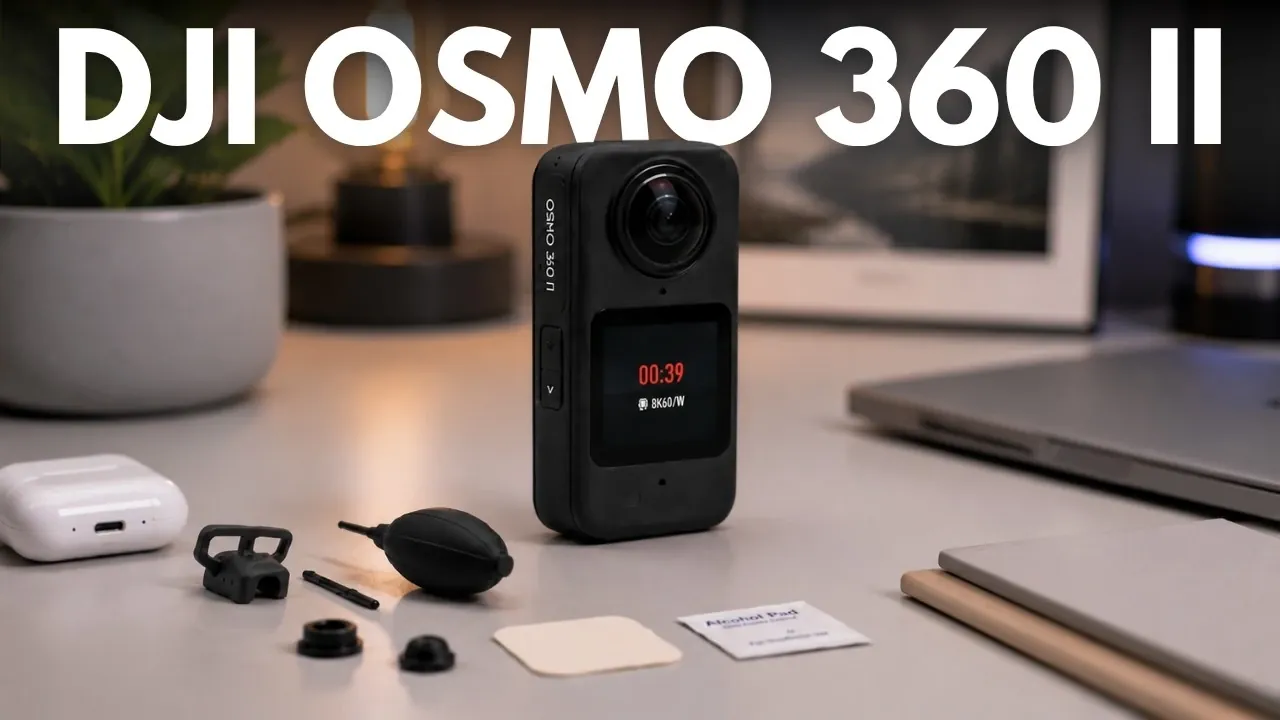
DJI has officially unveiled the Osmo 360 II, offering a closer look at how the company is refining its 360 camera lineup. As highlighted by Tech Court, the device retains the square body and front touchscreen design of its predecessor, making sure compatibility with existing accessories like mounts and protective cases. One notable improvement is the introduction of a larger 2,150 mAh battery, which provides extended recording times, an essential enhancement for users capturing long sessions, such as outdoor adventures or travel footage. Additionally, the redesigned lens housing hints at the possibility of user-replaceable lenses, a practical update that could address concerns about durability in rugged environments.
In this guide, you’ll explore how the Osmo 360 II balances incremental upgrades with user-focused enhancements. Discover the impact of faster USB-C charging, which reduces downtime with speeds of up to 27 watts and learn how DJI’s approach to accessory compatibility benefits its existing user base. You’ll also gain insight into how the Osmo 360 II stacks up against competitors like the Insta360 X6, particularly in areas such as design priorities and market positioning. These details provide a comprehensive understanding of what this release means for both casual users and professionals.
A Familiar Yet Refined Approach
TL;DR Key Takeaways :
- The DJI Osmo 360 II focuses on incremental improvements, including enhanced durability, backward compatibility with accessories and a functional design, catering to existing users in DJI’s ecosystem.
- Key upgrades include a larger 2,150 mAh battery for longer recording times and faster USB-C charging at up to 27 watts, reducing downtime for users.
- The redesigned lens housing hints at potential user-replaceable lenses, addressing durability concerns and reducing maintenance costs for rugged use cases.
- DJI has secured FCC certification for the Osmo 360 II, making sure compliance with U.S. regulations and maintaining market access amidst potential geopolitical challenges.
- Competition with Insta360 X6 highlights contrasting strategies: DJI prioritizes reliability and practical enhancements, while Insta360 focuses on innovative features, benefiting consumers with improved products overall.
Design and Compatibility
The Osmo 360 II retains the square body and front touchscreen design of its predecessor, signaling DJI’s commitment to a functional and recognizable aesthetic. This design continuity ensures compatibility with a wide range of existing accessories, such as selfie sticks, protective cases and mounts. For users already invested in DJI’s ecosystem, this backward compatibility is a significant advantage, reducing the need for additional purchases.
While the external design changes are subtle, the lens housing has undergone a slight redesign, hinting at potential new features. One notable possibility is the introduction of user-replaceable lenses, which could address durability concerns for users who frequently operate in rugged environments. This small but meaningful update suggests that DJI is actively responding to user feedback, focusing on practical improvements rather than dramatic overhauls.
Battery and Charging: Longer Life, Faster Recharging
One of the standout upgrades in the Osmo 360 II is its enhanced battery capacity. The new 2,150 mAh battery represents a 10% increase over the previous model’s 1,950 mAh, offering longer recording times. This improvement is particularly valuable for users capturing extended footage, such as during travel or outdoor adventures.
In addition to the larger battery, the Osmo 360 II now supports USB-C power delivery with charging speeds of up to 27 watts. This faster recharging capability significantly reduces downtime, making the device more convenient for both professional and recreational users. These enhancements reflect DJI’s focus on addressing practical user needs, making sure the camera is ready to perform when it matters most.

Here are more guides from our previous articles and guides related to DJI Osmo 360 II that you may find helpful.
- DJI Osmo 360 II Leaks Reveal Expected 8K at 60Fps Video
- New DJI Osmo 360 II Leak Points to Enhanced Waterproofing and Original Design
- Prime Day Camera Deals: DJI Osmo 360 at Its Best Price of the Year, Osmo Nano with 4-Month Interest-Free Installments
Durability and Potential New Features
The redesigned lens housing not only enhances the camera’s appearance but also suggests the possibility of user-replaceable lenses. If confirmed, this feature would be a fantastic option for durability, allowing users to replace damaged lenses themselves without requiring professional repairs. This capability could reduce maintenance costs and downtime, particularly for users who frequently operate in challenging conditions such as extreme sports or outdoor filming.
Although DJI has not officially announced this feature, the design updates strongly indicate a focus on addressing long-standing concerns about lens fragility. By prioritizing practical enhancements, DJI is positioning the Osmo 360 II as a reliable tool for a wide range of users, from casual hobbyists to professionals.
Regulatory Compliance: Staying Ahead of Challenges
The Osmo 360 II has already received FCC certification, making sure compliance with U.S. regulations. This proactive step is particularly important given the potential for future restrictions on DJI products in the United States. By securing regulatory approval early, DJI provides consumers and businesses with confidence that the product meets safety and performance standards. This move also reinforces DJI’s commitment to maintaining market access and addressing potential geopolitical challenges.
How It Stacks Up Against the Insta360 X6
As the Insta360 X6 prepares for its launch, it is expected to emphasize features such as a compact design, improved low-light performance, and extended recording times. In contrast, DJI’s Osmo 360 II strategy focuses on refining an already successful platform rather than introducing dramatic changes. This difference in approach highlights the companies’ distinct priorities: Insta360 aims to attract new users with innovative features, while DJI focuses on retaining its existing customer base by addressing practical concerns like durability, battery life and accessory compatibility.
This strategic divergence underscores the competitive dynamics of the 360 camera market. While Insta360 may appeal to those seeking innovative technology, DJI’s approach is likely to resonate with users who value reliability and usability over novelty.
Market Implications: A Win for Consumers
The competition between DJI and Insta360 is poised to drive innovation and quality improvements across the 360 camera market. Both companies are addressing key user concerns, such as reliability, usability and performance, rather than focusing solely on flashy, headline-grabbing features. This shift reflects a maturing market where user experience takes precedence over marketing hype.
For consumers, this competition translates into better products that cater to real-world needs. Whether it’s longer battery life, improved durability, or enhanced accessory compatibility, the focus on practical enhancements ensures that users benefit from meaningful advancements.
Lingering Questions
Despite the leaked images and preliminary details, several critical aspects of the Osmo 360 II remain unknown. DJI has yet to confirm key specifications such as the sensor size, recording resolutions, stabilization technology, or overall image quality. Rumors of 8K 60fps recording remain unverified, leaving potential buyers to speculate about the camera’s performance in terms of video quality and advanced features.
These unanswered questions will likely play a significant role in influencing purchasing decisions. As more details emerge, users will gain a clearer understanding of how the Osmo 360 II stacks up against its competitors and whether it meets their specific needs.
Incremental Evolution with Practical Benefits
The DJI Osmo 360 II represents a calculated evolution of the company’s 360 camera lineup. By focusing on durability, battery improvements, and accessory compatibility, DJI aims to strengthen its position in the market. While the lack of new features may disappoint some, the incremental upgrades address practical concerns that matter most to users.
As competition with Insta360 heats up, the 360 camera market is entering an exciting phase of innovation and growth. For consumers, this means access to better tools that enhance their ability to capture and share immersive experiences.
Media Credit: Tech Court
Disclosure: Some of our articles include affiliate links. If you buy something through one of these links, Geeky Gadgets may earn an affiliate commission. Learn about our Disclosure Policy.
