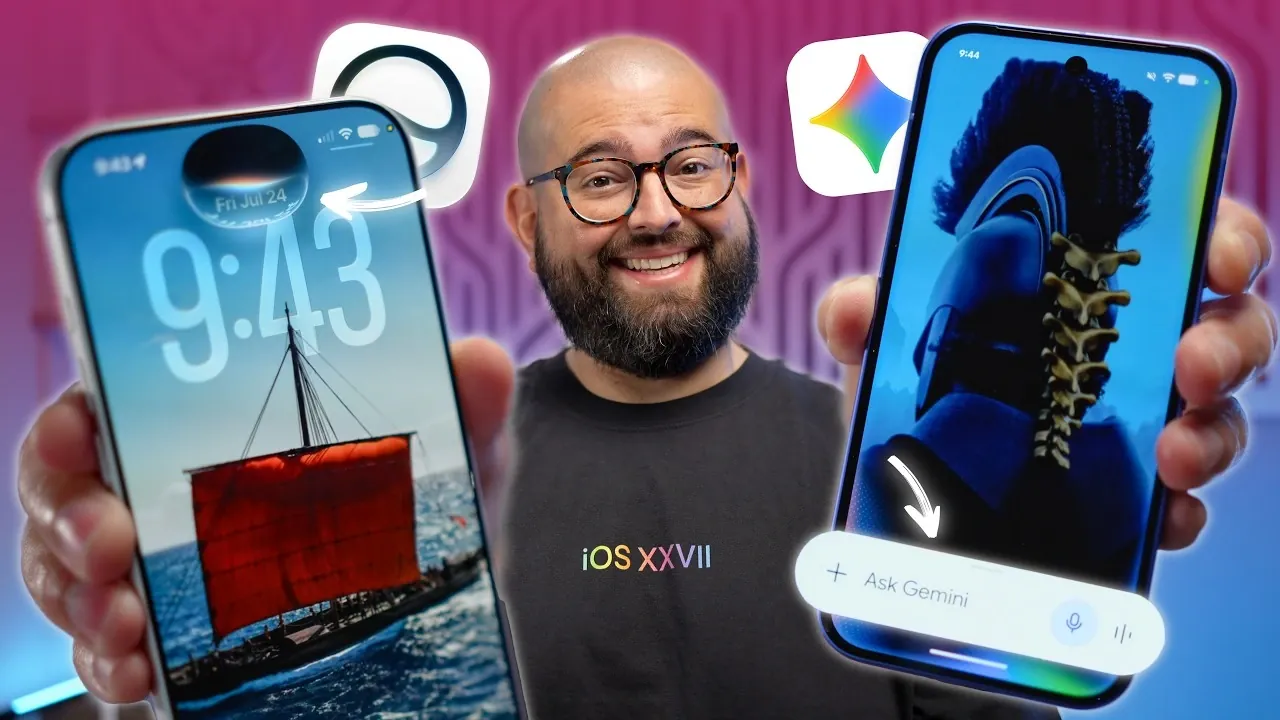
In the rapidly advancing landscape of personal assistants, Siri AI and Google Gemini stand out as two prominent contenders. Each assistant brings unique strengths and capabilities to the table, catering to different user needs and preferences. The video below from Stephen Robles provides more insights into their performance across critical areas such as speed, contextual awareness, integration, and privacy, providing a detailed comparison to help you decide which assistant aligns best with your requirements.

Speed and General Knowledge
When it comes to speed, Siri AI has a clear edge. It is designed to deliver quick, concise answers, making it an excellent choice for users who prioritize efficiency in their interactions. For instance, if you ask Siri for the current weather or a straightforward fact, it responds almost instantaneously, avoiding unnecessary elaboration. This makes it particularly effective for tasks requiring immediate results.
In contrast, Google Gemini excels in providing detailed and nuanced responses. While this depth of information is invaluable for complex queries, it often comes at the cost of slightly slower response times. For example, when asked about historical events or scientific concepts, Gemini offers comprehensive explanations and additional context, which may take a few extra moments to process. This makes it a better fit for users who value depth over speed in their assistant interactions.
Contextual Awareness and Data Access
Siri AI uses on-device data indexing to access personal information such as emails, messages and calendar events stored locally. This localized approach enhances privacy and ensures faster access to personal context. For example, Siri can quickly remind you of an upcoming meeting by accessing your calendar without relying on external servers, offering a more secure and private experience.
On the other hand, Google Gemini relies on cloud-based intelligence, seamlessly integrating with Google services like Gmail, Google Calendar and YouTube. This enables it to provide a broader perspective and a more interconnected experience for users deeply embedded in the Google ecosystem. For instance, Gemini can scan your Gmail to notify you of upcoming flights or reservations, offering a level of integration that Siri cannot match. However, this reliance on cloud-based data raises potential privacy concerns for users who prefer to keep their information localized.
On-Screen Content Recognition
Both assistants demonstrate strong capabilities in recognizing and acting on on-screen content, such as videos, event details, or media recommendations.
Siri AI is generally faster at parsing on-screen content, making it more efficient for quick actions like identifying a song playing in the background or finding a video based on a brief description. This speed is particularly useful for users who need immediate results without additional context.
Google Gemini, however, often provides richer contextual details. For example, while Siri might identify a movie title, Gemini can go a step further by suggesting related content, offering in-depth information about the cast, or even providing links to reviews and trailers. This makes Gemini a more versatile tool for users who value comprehensive insights alongside basic recognition capabilities.
Third-Party App Integration
When it comes to third-party app integration, Google Gemini takes the lead. It supports advanced task automation with a wide range of apps, including Starbucks, Instacart, and OpenTable. This enables users to perform complex tasks such as placing orders, scheduling deliveries, or making reservations directly through the assistant. For example, you can ask Gemini to order your favorite coffee from Starbucks or book a table at a nearby restaurant, streamlining your daily routines.
Siri AI, while capable of opening apps and performing basic searches, lacks the same level of automation. For instance, Siri can open a food delivery app but cannot complete an order on your behalf. This limitation makes it less versatile for users who rely heavily on third-party app integration for managing their tasks.
Privacy and Data Handling
Privacy is a key differentiator between the two assistants. Siri AI prioritizes on-device processing, making sure that your personal data remains secure and is less reliant on external servers. This approach appeals to users who are cautious about sharing their information online and prefer a more privacy-focused assistant.
In contrast, Google Gemini relies heavily on cloud-based indexing to access and analyze user data. While this enables broader access to your information across Google services, it raises potential privacy concerns for users who prefer to keep their data localized. However, for those who value integration and functionality over privacy, Gemini’s approach offers significant advantages, particularly in terms of interconnectedness and task automation.
Limitations
Both assistants have their limitations, which may influence your decision depending on your specific needs:
- Siri AI struggles with advanced task automation, such as creating playlists or managing complex workflows. Its limited integration with third-party apps can also restrict its versatility for users seeking a more interconnected experience.
- Google Gemini, while highly versatile, occasionally fails to access certain on-device data, such as emails from non-Google accounts. This can be a drawback for users who rely on multiple email providers or prefer a more localized approach to data management.
Which Assistant Fits Your Needs?
The choice between Siri AI and Google Gemini ultimately depends on your priorities and the ecosystem you are most comfortable with:
- Siri AI is ideal for users who value speed, privacy, and on-device data access. It is best suited for those who prefer a streamlined, efficient assistant that minimizes reliance on cloud-based services.
- Google Gemini is a better fit for users deeply integrated into the Google ecosystem. Its robust task automation, third-party app support, and cloud-based intelligence make it a powerful tool for managing complex workflows and accessing interconnected services.
Final Thoughts
Siri AI and Google Gemini represent two distinct approaches to personal assistant technology. Siri AI emphasizes speed, privacy, and localized data management, making it a strong choice for users who prioritize efficiency and security. Google Gemini, on the other hand, offers greater versatility through advanced task automation, third-party app integration and cloud-based intelligence, catering to those who value interconnectedness and functionality.
Ultimately, the decision between these two assistants will depend on your specific needs, daily routines, and ecosystem preferences. Both tools offer valuable features designed to enhance productivity and simplify your life, making sure that you can find the right fit for your personal and professional requirements.
Learn more about Siri AI with other articles and guides we have written below.
- Is Your iPhone on the Siri AI Support List?
- Siri AI Offers Advanced Capabilities Beyond Basic Usage
- Apple’s New Advanced Siri AI: Is Your iPhone on the Compatible List?
- Siri AI vs. ChatGPT vs. Claude: Can Apple’s Deep OS Integration Beat Raw Brainpower?
- Why You Should Wait to Install the iOS 27 Beta
Source & Image Credit: Stephen Robles
Disclosure: Some of our articles include affiliate links. If you buy something through one of these links, Geeky Gadgets may earn an affiliate commission. Learn about our Disclosure Policy.
