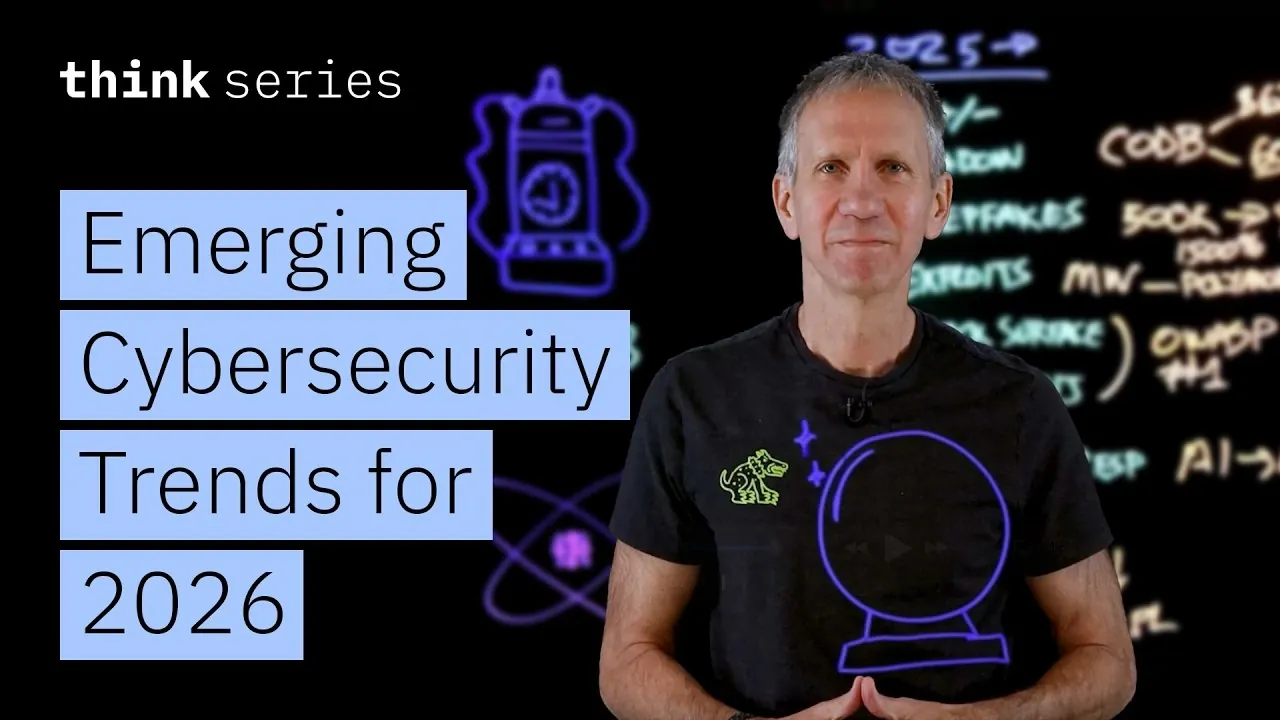
What if the very technologies designed to propel us into the future are also the ones that could unravel our digital security? IBM Technology explores how advancements like Shadow AI, quantum computing, and deepfakes are reshaping the cybersecurity landscape in 2026, presenting both unprecedented opportunities and alarming threats. Imagine a world where unauthorized AI systems quietly operate within your organization, bypassing safeguards and opening doors to costly breaches. Or consider the rise of deepfakes, now so convincing that they can manipulate trust itself, fueling identity fraud and misinformation at an unprecedented scale. These aren’t distant possibilities, they’re today’s realities, demanding immediate attention.
In this analysis, we’ll uncover the hidden risks lurking behind emerging technologies and explore strategies to stay ahead of evolving threats. From the quantum-powered disruption of encryption to the weaponization of AI in social engineering, this breakdown will equip you with the insights needed to navigate a rapidly shifting digital battlefield. Whether you’re grappling with the implications of autonomous AI agents or preparing for the quantum era, understanding these trends is critical to safeguarding your organization. As the lines between innovation and vulnerability blur, the question isn’t just how to adapt, but how to thrive in a world where cybersecurity is constantly being redefined.
Cybersecurity Trends 2026
TL;DR Key Takeaways :
- Shadow AI Risks: Unauthorized AI systems, known as Shadow AI, increase data breach costs by $670,000 on average, yet 60% of organizations lack policies to address this threat.
- Deepfake Threats: Deepfake technology has surged by 1,500% between 2023 and 2025, allowing advanced social engineering attacks, identity fraud, and misinformation campaigns.
- AI-Generated Cyber Threats: Cybercriminals are using AI to create adaptive malware and exploit vulnerabilities in AI systems, requiring advanced AI-driven cybersecurity tools for defense.
- Quantum Computing Risks: Quantum computing threatens traditional encryption methods, necessitating a transition to quantum-safe cryptography to protect sensitive data.
- Passkeys for Authentication: Passkeys are emerging as a secure alternative to passwords, offering resistance to phishing and credential theft, and are expected to become a standard in authentication systems.
Shadow AI: The Hidden Threat
Shadow AI refers to the use of unauthorized or unsanctioned AI systems within organizations. These systems often bypass established governance and security protocols, creating vulnerabilities that cybercriminals can exploit. Research indicates that Shadow AI increases the average cost of a data breach by $670,000. Despite this, 60% of organizations still lack adequate policies to address these risks, leaving them exposed to potential attacks.
To mitigate the risks associated with Shadow AI, you should:
- Develop and enforce clear policies governing the use of AI within your organization.
- Implement robust monitoring tools to track and manage all AI deployments.
- Educate employees about the dangers of unauthorized AI tools and their potential consequences.
By addressing Shadow AI proactively, you can reduce vulnerabilities and maintain better control over your organization’s digital infrastructure.
Deepfakes: A New Era of Cyber Deception
Deepfake technology has advanced significantly, with its usage increasing by 1,500% between 2023 and 2025. Cybercriminals are using deepfakes to conduct social engineering attacks, spread misinformation, and commit identity fraud. For example, attackers can manipulate video or audio to impersonate trusted individuals, tricking victims into revealing sensitive information or authorizing fraudulent transactions.
To defend against deepfake-enabled attacks:
- Invest in advanced tools designed to detect manipulated media and identify deepfakes.
- Train employees to critically assess communications, especially those requesting sensitive information or financial transactions.
- Foster a culture of skepticism, encouraging employees to verify unusual or unsolicited requests.
As deepfake technology becomes more accessible, staying vigilant and adopting detection measures will be essential to protecting your organization.
2026 Cybersecurity Trends : Shadow AI, Quantum & Deepfakes
Browse through more resources below from our in-depth content covering more areas on cybersecurity.
- WiFi Pineapple Pager: Retro Design Meets Modern Cybersecurity
- Build a Powerful Cybersecurity Tool With a Raspberry Pi Zero
- Deeper Connect Mini decentralized VPN
- How AI Is Transforming Cybersecurity and OSINT Problem Solving
- Claude in a Spy Plot, Why the Anthropic Story Raises Doubts
- GPT-5.2 Codex for Enterprise Coding and Security, What to Know
- Save 91% on the Zero to Hero Cyber Security Hacker Bundle
- Google AI in 2026, Unified Omnimodels & Smarter Gemini Features
- Save 96% on the Complete White Hat Hacker Certification Bundle
- What Are Zero-Click Attacks and How Do They Exploit AI Systems
AI-Generated Threats: A Growing Challenge
AI is increasingly being weaponized by cybercriminals to create sophisticated threats. For instance, AI-generated malware, such as polymorphic malware, can adapt in real-time to evade traditional detection methods. Similarly, prompt injection attacks exploit vulnerabilities in large language models, posing a persistent threat to AI-reliant systems.
To counter these advanced threats:
- Adopt AI-driven cybersecurity tools capable of identifying and neutralizing evolving attacks.
- Regularly update and patch systems to address known vulnerabilities.
- Conduct ongoing threat assessments to stay ahead of emerging risks and adapt your defenses accordingly.
By using AI in your cybersecurity strategy, you can better anticipate and respond to these evolving challenges.
Quantum Computing: Opportunity and Risk
Quantum computing is set to transform industries with its unparalleled computational power. However, this same power poses a significant threat to traditional encryption methods. Quantum computers have the potential to break widely used encryption algorithms, exposing sensitive data to unauthorized access and rendering many current security measures obsolete.
To prepare for the quantum era:
- Begin transitioning to quantum-safe cryptographic methods, even if they are still in their early stages of development.
- Stay informed about advancements in quantum computing and their implications for cybersecurity.
- Collaborate with industry experts to develop long-term strategies for quantum resilience and data protection.
Proactively addressing the risks posed by quantum computing will ensure your organization remains secure as this technology becomes more prevalent.
Autonomous AI Agents: Risks and Opportunities
Autonomous AI agents are becoming increasingly common, offering both significant benefits and potential risks. If compromised, these agents can execute large-scale attacks, such as zero-click exploits or privilege escalation. Additionally, the rise of non-human identities created by AI complicates identity management, while cybercriminals are using AI agents to automate phishing campaigns, ransomware, and other malicious activities.
To mitigate the risks associated with autonomous AI agents:
- Implement secure identity management systems to monitor and control AI agent activities.
- Regularly audit AI agents to identify vulnerabilities or unauthorized actions.
- Develop robust protocols to respond quickly to potential misuse of autonomous systems.
By maintaining strict oversight of AI agents, you can harness their benefits while minimizing their risks.
Social Engineering: Enhanced by AI
AI and deepfake technologies are amplifying the effectiveness of social engineering attacks. By creating hyper-realistic impersonations or tailoring phishing attempts, attackers are exploiting human trust with alarming precision. These attacks are becoming harder to detect, making them a growing concern for organizations worldwide.
To combat AI-enhanced social engineering:
- Provide regular training to employees on recognizing and responding to phishing attempts and other deceptive tactics.
- Encourage critical evaluation of unexpected or unusual requests, particularly those involving sensitive information.
- Adopt multi-factor authentication (MFA) to add an additional layer of security to your systems.
A well-informed and cautious workforce is your best defense against these increasingly sophisticated attacks.
Passkeys: The Future of Authentication
Passkeys are emerging as a secure and user-friendly alternative to traditional passwords. Unlike passwords, passkeys are resistant to phishing and credential theft, addressing one of the leading causes of data breaches. Major organizations are already adopting this technology, and it is expected to become a standard in authentication systems in the coming years.
To enhance your security posture with passkeys:
- Consider integrating passkeys into your organization’s authentication processes to reduce reliance on passwords.
- Educate users about the advantages of passkeys, including their resistance to common cyber threats.
- Collaborate with technology vendors to ensure a seamless and secure implementation of passkey technology.
Adopting passkeys can significantly improve your organization’s overall security while simplifying the user experience.
Staying Ahead in a Dynamic Cybersecurity Landscape
The cybersecurity environment in 2026 is defined by both innovation and risk. Technologies like AI, quantum computing, and deepfakes are reshaping industries while introducing new vulnerabilities. To navigate this complex landscape, you must adopt proactive strategies, including robust AI governance, quantum-safe cryptography, and secure identity management. By staying informed and implementing advanced defenses, you can protect your systems and data in an increasingly dynamic and interconnected digital world.
Media Credit: IBM Technology
Disclosure: Some of our articles include affiliate links. If you buy something through one of these links, Geeky Gadgets may earn an affiliate commission. Learn about our Disclosure Policy.
