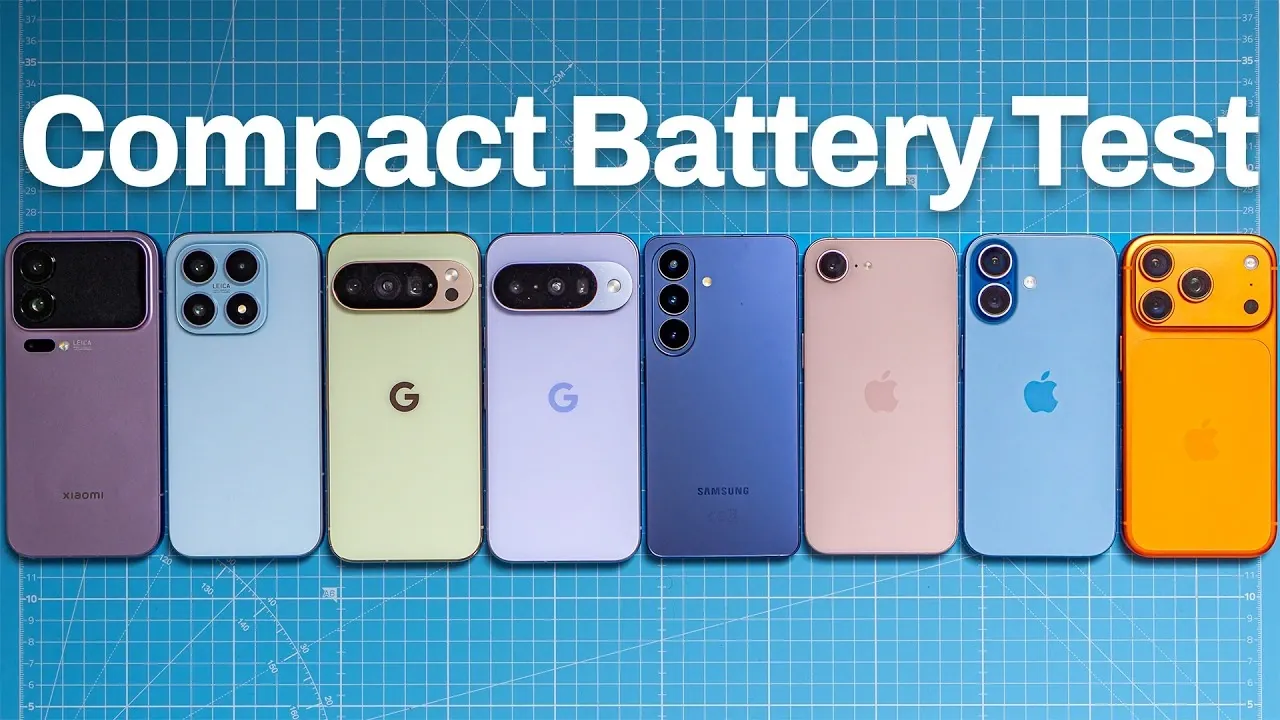
Battery life remains a crucial factor when selecting a smartphone, particularly for users who depend on their devices for extended periods without frequent recharging. A recent battery drain test from Techmo compared eight compact smartphones, Xiaomi 17 Pro, Xiaomi 17, Pixel 10 Pro, Pixel 10, Galaxy S26, iPhone 17e, iPhone 17, and iPhone 17 Pro, under real-world usage scenarios. The results highlighted significant differences in performance, with the Xiaomi devices emerging as clear leaders, while the iPhone 17 lagged behind due to its smaller battery capacity.

Battery Capacities: The Foundation of Endurance
Battery capacity is a fundamental determinant of how long a smartphone can last between charges. The tested devices showcased varying battery sizes, which directly influenced their performance:
- Xiaomi 17 Pro and Xiaomi 17: 6,300 mAh
- Pixel 10 Pro and Pixel 10: ~5,000 mAh
- Galaxy S26: 4,300 mAh
- iPhone 17 Pro and iPhone 17e: ~4,000 mAh
- iPhone 17: 3,700 mAh
Devices equipped with larger batteries, such as the Xiaomi 17 Pro and Xiaomi 17, demonstrated a clear advantage in longevity. Conversely, the iPhone 17, with its smaller 3,700 mAh battery, struggled to compete, particularly during intensive usage scenarios. This disparity underscores the importance of battery capacity as a foundational element of smartphone endurance.
Performance Benchmarks: Efficiency Matters
While battery size is critical, the efficiency of a smartphone’s chipset plays an equally important role in determining overall battery life. In single-core performance tests, Apple’s iPhones excelled, with the iPhone 17 Pro achieving the highest score. However, in multi-core benchmarks, the Galaxy S26 outperformed all other devices, followed closely by the Xiaomi 17 Pro and Xiaomi 17.
These results reveal a trade-off between single-core and multi-core performance. Apple’s processors are optimized for single-core tasks, which benefit activities like web browsing and app launches. On the other hand, devices like the Galaxy S26 and Xiaomi models deliver superior multi-core performance, which is advantageous for multitasking and resource-intensive applications. This difference in chipset efficiency directly impacts battery consumption, particularly during demanding activities such as gaming, video editing, or prolonged multitasking.
Battery Drain Test: Real-World Scenarios
To provide a realistic assessment of battery performance, the test simulated everyday usage through activities such as video playback, video calls and graphics-intensive tasks. The results revealed distinct patterns in battery endurance:
- Video Playback (4 hours): The Xiaomi 17 Pro and Xiaomi 17 retained 84% of their battery life, outperforming all other devices. The Pixel 10 had the lowest remaining battery at 71%, highlighting its relatively higher power consumption during media playback.
- Google Meet Calls (2 hours): Xiaomi devices again led the pack, while the iPhone 17 Pro outlasted the iPhone 17, which dropped to just 33% battery remaining. This result underscores the impact of smaller battery capacities on sustained usage.
- Graphics-Intensive Tasks: The Xiaomi 17 Pro and Xiaomi 17 maintained 50% and 48% battery, respectively, showcasing their ability to handle demanding tasks efficiently. Other devices, including the Galaxy S26 and Pixel models, performed respectably but fell short of Xiaomi’s endurance.
These real-world scenarios highlight the practical implications of battery capacity and chipset efficiency, with Xiaomi devices consistently delivering superior performance across all tested activities.
Key Factors Influencing Battery Life
Several critical factors contributed to the observed differences in battery performance among the tested smartphones. Understanding these factors can help users make informed decisions when selecting a device:
- Battery Capacity: Larger batteries, such as the 6,300 mAh units in the Xiaomi models, provided a significant advantage in all usage scenarios, allowing extended usage without frequent recharging.
- Chipset Efficiency: Efficient processors, particularly in the Xiaomi and Galaxy devices, played a pivotal role in optimizing power consumption during both light and demanding tasks.
- Display Refresh Rates: Higher refresh rates, while enhancing visual performance, consumed more power. Devices with adaptive refresh rate technology managed to balance performance and battery life more effectively.
- 5G Connectivity: The use of 5G networks increased battery drain, particularly during activities like video calls and streaming. Devices with optimized 5G modems demonstrated better endurance in these scenarios.
These factors collectively influenced the overall battery performance of each device, highlighting the importance of a balanced approach to hardware and software optimization.
Choosing the Right Device for Battery Life
For users prioritizing battery life, the Xiaomi 17 Pro and Xiaomi 17 stand out as the top choices. Their combination of large battery capacities and efficient performance enabled them to deliver exceptional endurance, with the Xiaomi 17 Pro lasting an impressive 9 hours and 21 minutes in the test.
The Galaxy S26 and Pixel devices offered solid alternatives, delivering respectable battery life that caters to a wide range of user needs. However, they fell short of matching the longevity of Xiaomi’s flagship models. Meanwhile, the iPhone 17 struggled to compete, with its smaller 3,700 mAh battery limiting its runtime to just 7 hours and 50 minutes.
Ultimately, the choice of a smartphone will depend on individual preferences and priorities. For those seeking maximum battery life, Xiaomi’s latest offerings provide a compelling solution, combining robust hardware with efficient performance to meet the demands of modern users.
Here are additional guides from our expansive article library that you may find useful on Smartphone battery drain test.
Source & Image Credit: Techmo
Disclosure: Some of our articles include affiliate links. If you buy something through one of these links, Geeky Gadgets may earn an affiliate commission. Learn about our Disclosure Policy.
