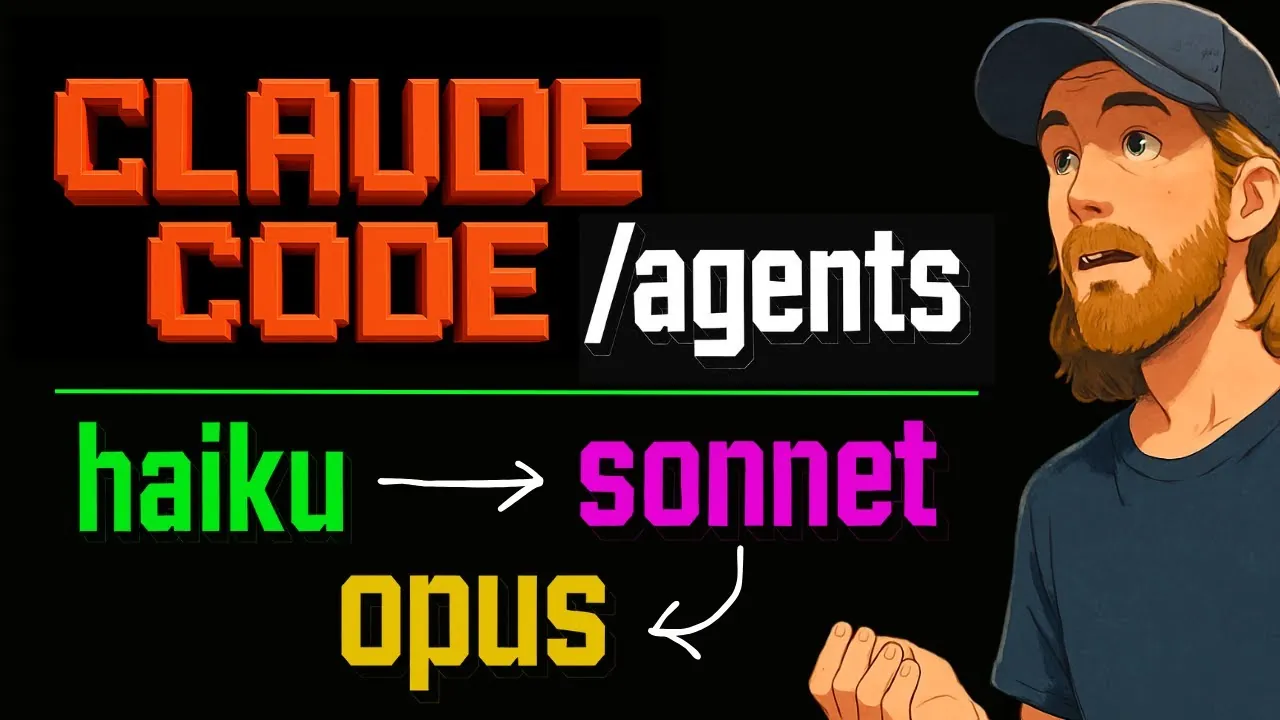
What if your workflows could think smarter, work faster, and adapt seamlessly to the unique demands of every task? The latest Claude Code update is turning that possibility into reality. With the new ability to assign specific AI models—like Haiku, Opus, and Sonnet—to individual subagents, this enhancement promises to transform how you manage complex projects. Imagine a system where lightweight tasks are handled with lightning speed, intricate plans are crafted with precision, and execution-heavy operations run like clockwork—all without wasting resources. This isn’t just an incremental tweak; it’s a bold leap toward smarter, more efficient task automation.
All About AI explains how this update enables you to optimize workflows by aligning the unique strengths of each AI model with the specific demands of your tasks. From boosting productivity to conserving computational resources, the benefits are as practical as they are fantastic. Whether you’re curious about how Haiku simplifies documentation, how Opus excels in strategic planning, or how Sonnet masters execution-heavy workflows, this feature offers a tailored solution for every challenge. As you explore the possibilities, you might just rethink what’s possible in task delegation and automation.
Assign AI Models to Subagents
TL;DR Key Takeaways :
- The update to Claude Code introduces the ability to assign specific AI models—Haiku, Opus, and Sonnet—to individual subagents, optimizing workflows and improving task performance.
- Each AI model is tailored for specific tasks: Haiku for lightweight tasks, Opus for complex planning, and Sonnet for execution-heavy operations, making sure precision and efficiency.
- Real-world demonstrations show how assigning models to subagents streamlines workflows, such as planning, execution, and documentation, reducing execution time and conserving resources.
- This feature enhances resource optimization by aligning tasks with the most suitable AI model, minimizing computational overhead and boosting overall system performance.
- The update encourages experimentation and customization, allowing users to adapt workflows, improve productivity, and unlock new possibilities in task automation.
How Model Assignment Works
This update enables you to assign AI models to subagents based on the unique complexity and requirements of each task. Each model is designed with distinct strengths, making it easier to match the right tool to the right job:
- Haiku: Ideal for lightweight, straightforward tasks that require minimal computational power.
- Opus: Suited for complex, multi-step planning tasks that demand structured and detailed approaches.
- Sonnet: Excels in execution-heavy operations, handling intricate processes with balanced performance.
For example, Haiku can efficiently handle simple tasks such as generating documentation or rolling dice, while Opus is better equipped for creating detailed project plans. Sonnet, on the other hand, is optimized for executing complex workflows, such as building applications or managing intricate operations. You can customize models for individual subagents or allow them to inherit settings from a primary agent, giving you full control over task delegation and execution.
Performance Insights: Matching Models to Tasks
Extensive testing has demonstrated how each model performs under different conditions, emphasizing the importance of selecting the right model for each task. Here’s a closer look at their capabilities:
- Haiku: Fast and efficient for simple tasks, such as generating basic documentation or performing lightweight calculations.
- Opus: Delivers structured, detailed plans for complex projects, making sure clarity and organization.
- Sonnet: Handles execution-heavy tasks with precision, excelling in scenarios that require intricate coordination and follow-through.
For instance, when tasked with creating a sprint plan for a project, Opus provided a comprehensive and well-organized approach. Sonnet then executed the plan by building an application, while Haiku efficiently generated the accompanying documentation. These results highlight the value of aligning the strengths of each model with the specific demands of a task, maximizing both efficiency and accuracy.
Claude Code : How to Assign AI Models to Your SubAgents
Here are more detailed guides and articles that you may find helpful on Claude Code.
- Guide to Installing Claude Code on Windsurf and Cursor
- Claude Hive : Boost Your Coding Efficiency with Sub-Agents
- 8 Essential Strategies to Master Claude Code in Just 14 Minutes
- How to Install Claude Code in 5 Minutes : Beginner Guide 2025
- How SuperClaude Enhances Claude Code Efficiency & Scalability
- Unlock Claude Code’s Full Potential with This Simple Hack
- How to Use Claude Code AI for Smarter Automations & Workflows
- How Claude Code Combines SEO & Storytelling for Better Content
- Claude Code’s Sub-Agents : How They Save Time & Enhance
- 13 Essential Claude Code Tips to Boost Your Coding Workflows
Real-World Workflow Demonstration
To showcase the practical benefits of this update, a real-world workflow was implemented using three specialized agents, each assigned a specific model:
- Planner Agent (Opus): Developed a detailed sprint plan for a Bitcoin price tracker application.
- Execution Agent (Sonnet): Built the application based on the sprint plan, making sure all components were executed seamlessly.
- Documentation Agent (Haiku): Created comprehensive project documentation to accompany the completed application.
This setup demonstrated the seamless delegation of tasks and efficient context sharing between agents. By assigning models tailored to the nature of each task, the workflow was streamlined, reducing execution time and conserving computational resources. The ability to assign specific models to subagents ensures that each task is handled by the most suitable AI, resulting in a more efficient and effective process.
Optimizing Resources and Efficiency
One of the most significant advantages of this update is its potential for resource optimization. Assigning the appropriate model to each task minimizes execution time and conserves computational resources, making sure that your system operates efficiently. For example, Haiku’s lightweight design is perfect for tasks requiring minimal computational power, such as generating simple reports or documentation. In contrast, Opus and Sonnet are better suited for more demanding operations, such as planning and execution-heavy workflows.
This targeted approach not only saves resources but also enhances overall system performance. By reducing unnecessary computational overhead, you can allocate resources more effectively, allowing your system to handle larger or more complex projects without compromising on speed or accuracy.
Encouraging Experimentation and Customization
This update encourages you to experiment with model assignments to discover the most effective configurations for your workflows. Whether you are managing a complex project, generating detailed documentation, or testing various scenarios, the ability to customize models for specific subagents offers unparalleled flexibility. This tailored approach allows you to optimize workflows, improve task performance, and explore new possibilities in task automation.
By experimenting with different model assignments, you can identify the configurations that best suit your needs. This not only boosts productivity but also enables you to adapt your workflows to changing requirements, making sure that your system remains efficient and effective over time. The flexibility provided by this update enables you to take full advantage of the unique strengths of each AI model, unlocking new opportunities for innovation and efficiency.
Maximizing Workflow Potential
The ability to assign AI models to subagents represents a significant advancement in task automation and resource management. By using the unique strengths of Haiku, Opus, and Sonnet, you can streamline workflows, enhance performance, and conserve resources. This update emphasizes the importance of aligning the right AI model with the right task, offering a smarter, more efficient way to manage complex projects.
Whether you are planning, executing, or documenting, this feature equips you with the tools to achieve your goals with precision and efficiency. By experimenting with model assignments and optimizing your workflows, you can unlock the full potential of your system, making sure that every task is completed with accuracy and speed. This update not only enhances productivity but also sets the stage for more advanced and efficient task automation in the future.
Media Credit: All About AI
Disclosure: Some of our articles include affiliate links. If you buy something through one of these links, Geeky Gadgets may earn an affiliate commission. Learn about our Disclosure Policy.
