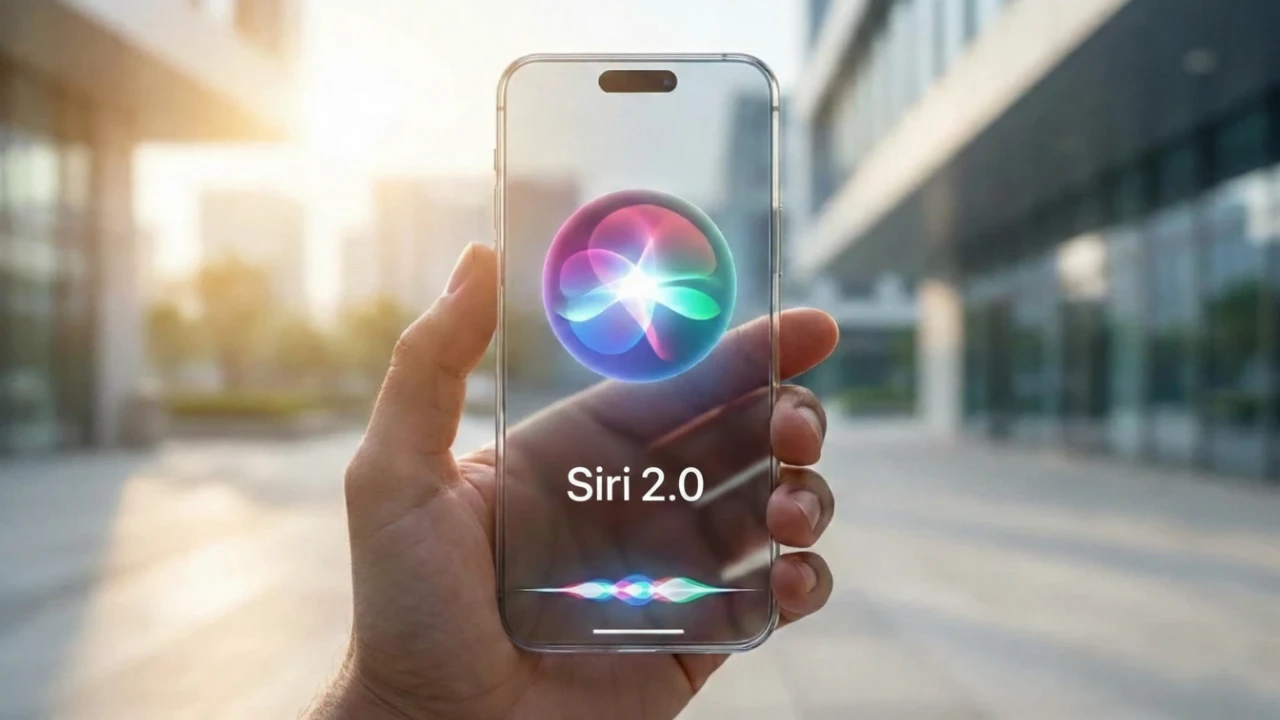
Apple is undertaking a fantastic initiative to redefine Siri, its long-standing voice assistant, into an innovative AI-powered chatbot. Internally referred to as “Campos,” this project seeks to address Siri’s historical limitations while positioning it as a strong competitor to advanced AI tools such as ChatGPT and Google’s Gemini. By using advancements in natural language processing, contextual understanding, and other innovative technologies, Apple aims to deliver a more seamless and intelligent user experience across its ecosystem. The video below from SaranByte gives us more details on what Apple has planned for Siri.

From Voice Assistant to Intelligent AI Chatbot
The evolution of Siri marks a significant shift from its role as a basic voice assistant to a dynamic AI chatbot capable of handling more complex and nuanced tasks. This transformation introduces a range of advanced features designed to enhance productivity and creativity, including:
- Engaging in natural, human-like conversations that feel intuitive and responsive.
- Performing web searches to provide accurate and contextually relevant information.
- Analyzing files, such as documents and spreadsheets, to extract deeper insights.
- Generating AI-powered images for creative and practical applications.
- Offering coding assistance, including debugging and suggestions for developers.
- Executing app-specific actions within native applications like Photos, Mail, and Music.
These capabilities highlight Apple’s intent to compete directly with established AI platforms by offering a robust alternative that integrates seamlessly into its ecosystem. This shift not only enhances Siri’s functionality but also positions it as a central tool for both personal and professional use.
Seamless Integration Across Apple’s Ecosystem
One of Siri’s most compelling advantages lies in its deep integration across Apple’s ecosystem, encompassing iOS, iPadOS, macOS, and beyond. Unlike standalone AI tools, Siri’s new capabilities will be embedded as a core system feature, allowing it to interact effortlessly with native apps and services.
For example, users could instruct Siri to organize their photo library, draft an email, or curate a playlist without needing to switch between apps. This level of integration uses Apple’s tightly interconnected ecosystem, making sure a unified and streamlined experience across devices. By embedding Siri into the heart of its platforms, Apple aims to make the assistant an indispensable part of daily life for its users.
Powered by Apple’s Custom AI Model
At the core of Siri’s transformation is a custom AI model designed to rival the capabilities of Google’s Gemini 3 and other leading platforms. This model relies heavily on server-based processing, which provides the computational power necessary to handle advanced tasks. To support this infrastructure, Apple is reportedly exploring partnerships with external providers, including Google, to ensure scalability and reliability.
While this server-based approach enables Siri to deliver faster and more accurate responses, it also introduces potential challenges. Latency issues and the need for constant internet connectivity could impact the user experience, making it essential for Apple to address these concerns effectively. Balancing performance with accessibility will be critical to the success of this ambitious overhaul.
Challenges in a Crowded AI Landscape
Apple’s entry into the competitive AI chatbot market comes with significant challenges. Siri’s reputation for limited functionality and inconsistent performance has eroded user trust over the years. Competing against established players like ChatGPT and Gemini, which have already gained widespread adoption, will require Apple to deliver a product that is not only reliable but also innovative.
To differentiate Siri, Apple must capitalize on its ecosystem’s strengths and offer unique features that competitors cannot easily replicate. Success will depend on Siri’s ability to perform consistently, adapt to user needs, and provide a compelling alternative to existing AI solutions. Rebuilding trust and demonstrating reliability will be key factors in gaining user confidence.
Monetization and Privacy: Balancing Innovation with Trust
Apple’s initial rollout of the revamped Siri is expected to be free, focusing on building trust and encouraging widespread adoption. However, the company may introduce a premium “Siri Pro” tier in the future, potentially bundled with its Apple One subscription service. This tier could include advanced features or enhanced performance, creating a new revenue stream while maintaining a free version for general users.
Privacy remains a cornerstone of Apple’s strategy. To protect user data, Siri may limit its memory of past interactions, making sure that sensitive information is not stored indefinitely. While this approach aligns with Apple’s commitment to privacy, it could also impact Siri’s ability to deliver personalized and context-aware responses over time. Striking the right balance between privacy and functionality will be essential to maintaining user trust.
Expanding AI Horizons: Internal Development and Enterprise Tools
Beyond consumer-facing applications, Apple has been quietly testing proprietary AI tools internally, including enterprise-focused assistants and scalable infrastructure. These developments could pave the way for future applications in industries such as healthcare, education, and business. By investing in proprietary technology, Apple is positioning itself as a leader in AI innovation, catering to both individual users and enterprise clients.
This dual focus on consumer and enterprise solutions reflects Apple’s broader vision for AI, which extends beyond personal devices to encompass a wide range of use cases. As these tools mature, they could open new opportunities for Apple to expand its influence in the AI landscape.
Looking Ahead: Launch Timeline and Risks
The revamped Siri is expected to make its debut at Apple’s Worldwide Developers Conference (WWDC) in June, coinciding with the release of iOS 27. This timeline provides Apple with a narrow window to refine the assistant and address potential issues before its public launch.
However, execution risks remain high. If Siri fails to deliver on its promises of reliability, speed, and intelligence, users may turn to more established competitors. Apple’s ability to meet these expectations will determine whether Siri’s transformation can redefine its role in the AI landscape. The stakes are high, and the tech world will be watching closely as Apple prepares to unveil its bold vision for Siri.
Dive deeper into AI chatbot with other articles and guides we have written below.
- The Ultimate AI ChatGPT & Python Programming Bundle | StackSocial
- The Complete ChatGPT Artificial Intelligence OpenAI Training
- Awesome Raspberry Pi 5 Offline AI Chatbot Project : Whisper
- VoiceType AI Voice-to-Text: Lifetime Subscription (Unlimited Words
- Siri’s Transformation in iOS 27: Apple’s AI Chatbot Explained
Source & Image Credit: SaranByte
Disclosure: Some of our articles include affiliate links. If you buy something through one of these links, Geeky Gadgets may earn an affiliate commission. Learn about our Disclosure Policy.
