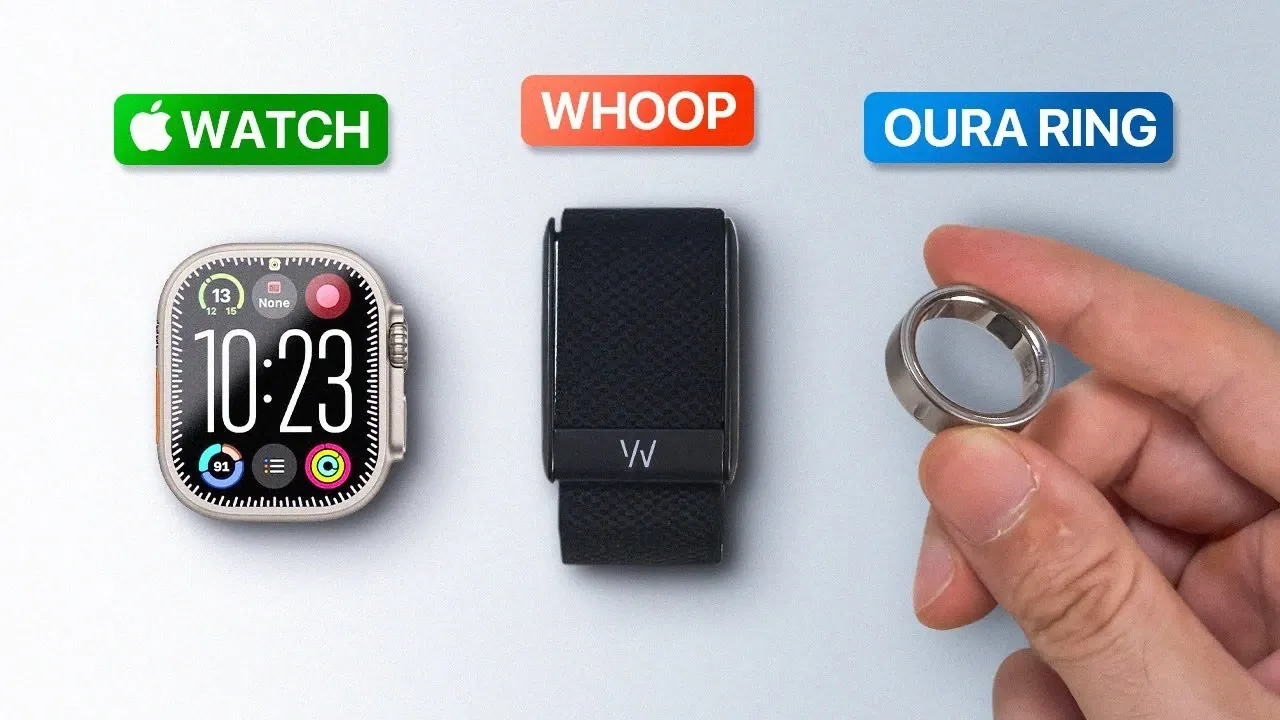
Wearable devices like the Apple Watch, Whoop and Oura Ring have become essential companions for health-conscious individuals, each offering distinct features tailored to different priorities. FromSergio explores how these devices compare across key areas such as comfort, battery life and data accuracy. For instance, the Apple Watch excels in versatility with smartwatch integrations but requires daily charging, while the Whoop offers uninterrupted tracking thanks to its wearable charging design. Meanwhile, the Oura Ring prioritizes sleep optimization with detailed metrics but may feel less practical during certain activities like typing or weightlifting.
Dive into this comprehensive breakdown to understand how each device aligns with specific goals. You’ll gain insight into how the Whoop’s recovery score supports athletes, why the Oura Ring’s readiness score is ideal for long-term wellness and how the Apple Watch balances fitness tracking with everyday functionality. This guide will help you navigate the strengths and limitations of each option, making sure you make an informed decision based on your lifestyle and priorities.
Apple Watch vs Whoop vs Oura
TL;DR Key Takeaways :
- Wearable devices like the Apple Watch, Oura Ring and Whoop cater to different user needs, focusing on fitness, sleep optimization and performance recovery.
- Comfort and battery life vary: the Apple Watch requires daily charging, the Oura Ring offers up to 5 days of battery life and Whoop provides 12-14 days with on-device charging.
- Each device excels in specific areas: Apple Watch for versatility and smartwatch features, Oura Ring for detailed sleep and wellness insights and Whoop for athlete-focused recovery and training metrics.
- Pricing models differ: Apple Watch has a one-time cost, Oura Ring includes a subscription for advanced features and Whoop operates on a subscription-based model with hardware included.
- Choosing the right wearable depends on individual priorities, with options to combine devices for comprehensive health tracking if needed.
Comfort and Wearability
Comfort is a critical factor in determining how consistently you’ll use a wearable device. Each of these options offers a different approach to wearability:
- Apple Watch: Designed for daily wear, it is comfortable for most activities but may feel bulky during sleep, especially for side sleepers.
- Oura Ring: Lightweight and unobtrusive, it excels in comfort during sleep but can be inconvenient for activities like typing or weightlifting due to its ring design.
- Whoop: Extremely lightweight and versatile, it can be worn on the wrist or other body locations, making it the least intrusive option for continuous use.
Battery Life and Charging
Battery life is a key consideration for uninterrupted tracking and these devices vary significantly in this area:
- Apple Watch: Requires daily charging, which can interrupt continuous monitoring, particularly for sleep tracking.
- Oura Ring: Offers up to five days of battery life but must be removed for charging, temporarily halting data collection.
- Whoop: Provides 12 to 14 days of battery life and allows charging while being worn, making sure seamless tracking without interruptions.

Take a look at other insightful guides from our broad collection that might capture your interest in fitness trackers.
- Apple Watch Ultra 4: Why 2026 Is Finally the Year for a Redesign
- Google Fitbit Air : Everything We Know About the $99 Screen-Free Tracker
Sleep Tracking
Sleep tracking capabilities are a major differentiator among these devices, with each offering unique strengths:
- Apple Watch: Provides basic sleep tracking, including features like sleep apnea detection, but lacks the depth of insights offered by its competitors.
- Oura Ring: Excels in sleep monitoring, delivering detailed metrics such as sleep stages, heart rate variability (HRV), and nap tracking, making it a top choice for sleep optimization.
- Whoop: Focuses on how sleep impacts recovery, offering actionable insights for athletes but less granular data compared to the Oura Ring.
Recovery and Readiness
For those prioritizing recovery and performance, these devices provide varying levels of support:
- Apple Watch: Tracks HRV and resting heart rate but lacks a dedicated recovery metric, limiting its utility for performance-focused users.
- Oura Ring: Features a “readiness score” that combines sleep and health metrics, making it ideal for long-term wellness tracking.
- Whoop: Offers a “recovery score” specifically designed for athletes, emphasizing daily strain management and performance readiness.
Fitness and Training
Fitness tracking is a core feature of these devices, but their approaches differ significantly:
- Apple Watch: Highly versatile, it provides real-time stats, GPS tracking and compatibility with a wide range of workout types, including cardio and strength training.
- Oura Ring: Autodetects workouts but lacks GPS and real-time feedback, which may limit its usefulness for active training sessions.
- Whoop: Tailored for athletes, it offers strain targets and real-time heart rate monitoring, though it is better suited for cardio workouts than strength training.
Stress Monitoring
Stress monitoring is another area where these devices differ in their capabilities:
- Apple Watch: Includes limited stress tracking features, focusing more on general health metrics.
- Oura Ring: Tracks stress, relaxation and long-term trends, even providing alerts for physiological changes that may indicate stress or illness.
- Whoop: Offers stress tracking but lacks detailed insights into relaxation or recovery from stress, focusing instead on overall strain and recovery.
Unique Features
Each device includes standout features that cater to specific needs and preferences:
- Apple Watch: Combines full smartwatch functionality with health tracking, offering features like ECG, smart home control, music playback and automations.
- Oura Ring: Provides advanced wellness insights, including menstrual cycle tracking, health alerts for potential illness and detailed sleep metrics.
- Whoop: Offers gamified features such as “Whoop Age,” AI coaching and advanced lab tracking for performance optimization, appealing to athletes and fitness enthusiasts.
Data Accuracy and Usability
The accuracy of data and how it is presented can significantly impact the user experience:
- Apple Watch: Relies on separate apps for health and fitness data, which can feel less streamlined compared to its competitors.
- Oura Ring: Delivers a polished app experience with clear, intuitive data presentation, making it easy to interpret wellness metrics.
- Whoop: Provides raw data and detailed insights but requires more effort from users to interpret and apply the information effectively.
Pricing and Subscriptions
Cost is an important factor, especially when considering ongoing subscription fees:
- Apple Watch: Priced at approximately $400 upfront with no subscription required, making it a one-time investment.
- Oura Ring: Costs around $400 upfront, with an additional $6 monthly subscription for access to advanced features.
- Whoop: Offers the device for free with a $240 annual subscription, which includes hardware upgrades as part of the membership.
Best Use Cases
Each device is best suited for specific scenarios, depending on user priorities:
- Apple Watch: Ideal for users seeking a versatile smartwatch that integrates health tracking with everyday functionality.
- Oura Ring: Perfect for individuals focused on sleep optimization and long-term wellness insights.
- Whoop: Best for athletes and performance-driven users who prioritize recovery and training metrics.
Combining Devices
For those seeking comprehensive health tracking, combining devices can be a practical solution. For example, pairing the Apple Watch for daily activity tracking with the Oura Ring for detailed sleep monitoring can provide a well-rounded view of overall health and fitness.
Potential Downsides
While these devices offer advanced features, they are not without drawbacks:
- Over-reliance on health data can lead to anxiety or stress for some users, particularly if metrics are misinterpreted.
- High costs, especially for Whoop’s subscription model, may deter budget-conscious consumers from committing to long-term use.
Making the Right Choice
Selecting the right wearable depends on your individual goals and lifestyle. The Apple Watch is a versatile option for those seeking a combination of smartwatch functionality and health tracking. The Oura Ring stands out for its detailed sleep and wellness insights, making it ideal for long-term health monitoring. Meanwhile, Whoop is tailored for athletes and performance-focused users, offering unparalleled recovery and training insights. By carefully evaluating your priorities and comparing the features of these devices, you can choose the wearable that best aligns with your needs.
Media Credit: FromSergio
Disclosure: Some of our articles include affiliate links. If you buy something through one of these links, Geeky Gadgets may earn an affiliate commission. Learn about our Disclosure Policy.
