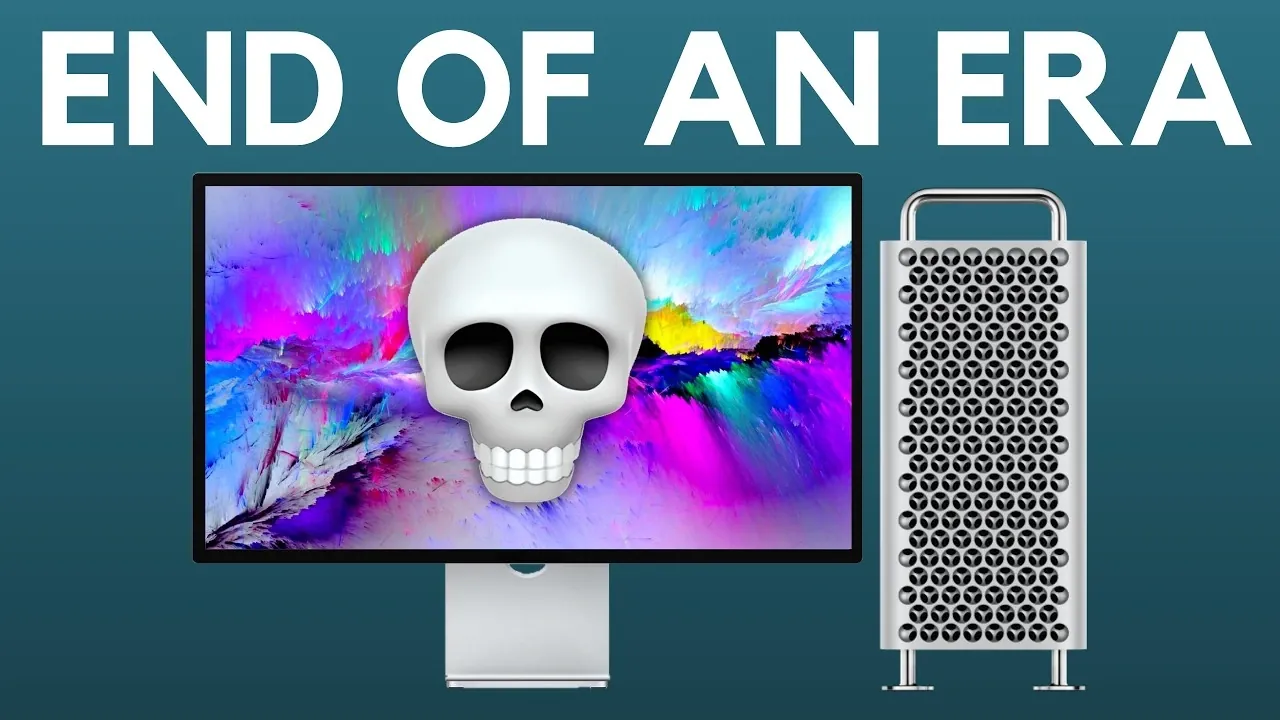
Apple has officially discontinued the Mac Pro, bringing an end to its iconic modular desktop line. This decision marks a significant turning point in Apple’s strategy for professional computing, emphasizing integration, efficiency, and a more streamlined product lineup. With the Mac Studio now positioned as the flagship high-performance desktop, Apple is redefining its hardware ecosystem to better align with the evolving needs of modern users. This move reflects a broader industry trend toward compact, integrated systems that prioritize performance and energy efficiency over traditional modularity.

Why the Mac Pro Is No More
The Mac Pro, once a symbol of professional-grade performance and modularity, has been removed from Apple’s product lineup. This decision eliminates redundancy within Apple’s desktop offerings, as the Mac Studio now provides comparable or superior performance in a smaller, more efficient form factor. While the Mac Pro’s internal expandability and PCIe slots cater to niche professional workflows, its relevance has diminished in an era where integrated systems dominate.
Apple’s decision also reflects the declining demand for modular systems. As software and hardware have become increasingly optimized for integrated platforms, fewer professionals require the ability to upgrade internal components. The Mac Studio, powered by Apple’s advanced silicon, delivers the performance needed for demanding tasks without the bulk or complexity of modular systems.
A Legacy of Innovation and Modularity
For years, the Mac Pro stood as a hallmark of professional computing excellence. Its modular design allowed users to customize and upgrade components, making it a favorite among video editors, 3D artists and other professionals with demanding workflows. Iconic models, such as the “cheese grater” and the cylindrical “trash can” designs, showcased Apple’s innovative approach to hardware design. These systems were celebrated for their ability to adapt to the needs of professionals, offering flexibility and power in equal measure.
However, the rise of Apple Silicon has fundamentally changed the landscape of professional computing. By integrating the CPU, GPU and memory into a single chip, Apple has achieved levels of performance and efficiency that were previously unattainable with traditional modular systems. This shift has rendered the Mac Pro’s modular philosophy less practical, as modern professionals increasingly prioritize compact, high-performance solutions over the ability to upgrade internal components.
The Apple Silicon Revolution
Apple Silicon represents a fantastic shift in the computing industry. By integrating key components such as the CPU, GPU and memory into a single chip, Apple has created systems that deliver exceptional performance and energy efficiency. This architecture not only outpaces traditional modular systems but also aligns with Apple’s broader ecosystem strategy, which emphasizes seamless integration across devices.
The Mac Studio, powered by advanced chipsets like the M3 Ultra, exemplifies the benefits of Apple Silicon. It offers performance that rivals or surpasses the Mac Pro, all within a smaller and more cost-effective package. This transition underscores Apple’s commitment to innovation and efficiency, as the company continues to push the boundaries of what integrated systems can achieve. By focusing on Apple Silicon, Apple has positioned itself at the forefront of the professional computing market, offering solutions that meet the demands of modern workflows while reducing complexity.
Key Reasons Behind the Discontinuation
Several factors contributed to Apple’s decision to discontinue the Mac Pro:
- Redundancy: The Mac Studio’s performance and capabilities made the Mac Pro redundant, particularly as fewer users required internal upgrades.
- Declining Modularity: Apple’s ecosystem has shifted away from modularity, reflecting a broader industry trend toward integrated systems.
- Shared Features: Unique selling points of the Mac Pro, such as U.S. assembly and professional-grade performance, are now common across other Apple products, diminishing its distinctiveness.
These factors highlight Apple’s strategic pivot toward a more focused and efficient product lineup, one that prioritizes integration and broader user needs over niche features.
Impact on Professional Users
The discontinuation of the Mac Pro may leave some professionals searching for alternatives to its internal expandability and PCIe slots. However, Apple has introduced external expansion solutions, such as Thunderbolt 5 enclosures, to address these needs. While these options may not fully replicate the capabilities of the Mac Pro, they align with Apple’s vision of a streamlined, interconnected ecosystem.
For professionals who require high performance, Apple’s advanced chipsets and external hardware solutions provide viable alternatives. Thunderbolt 5 technology, for example, enables fast data transfer and supports external GPUs, storage devices and other peripherals. This approach allows users to achieve the performance they need while benefiting from the compact and efficient design of systems like the Mac Studio.
What This Means for Apple’s Future
The end of the Mac Pro signals a broader shift in Apple’s hardware strategy. Without a modular desktop to house “extreme” chipsets, such as an M5 Extreme, Apple is unlikely to pursue such designs. Instead, the company is focusing on scaling performance through interconnected systems and technologies like Thunderbolt 5. This approach reflects Apple’s commitment to delivering high-performance solutions that align with its ecosystem strategy.
The transition from “Pro” branding to “Studio” branding further underscores this evolution. By emphasizing compact, high-performance systems, Apple is redefining its approach to professional computing. This shift not only simplifies Apple’s product lineup but also positions the company to better meet the needs of modern users, who increasingly value integration and efficiency over traditional hardware philosophies.
A Streamlined Desktop Lineup
Apple’s current desktop lineup, which includes the iMac, Mac Mini and Mac Studio, reflects a more focused and efficient approach to professional computing. By prioritizing integration and broader user needs, Apple has simplified its product offerings while maintaining exceptional performance. This strategy acknowledges certain trade-offs, such as reduced modularity, in favor of delivering a cohesive and efficient computing experience.
The Mac Studio, in particular, has emerged as a versatile solution for professionals and everyday users alike. Its compact design, combined with the power of Apple Silicon, makes it an ideal choice for a wide range of workflows. By streamlining its desktop lineup, Apple has created a hardware ecosystem that is both accessible and capable, making sure that users can find the right solution for their needs without unnecessary complexity.
A New Era for Professional Computing
The discontinuation of the Mac Pro marks a pivotal moment in Apple’s approach to professional computing. By shifting its focus to integrated, high-performance systems like the Mac Studio, Apple is adapting to the demands of modern users. While some professionals may miss the modularity of the Mac Pro, Apple’s streamlined strategy underscores its commitment to innovation, efficiency, and the future of computing. This evolution reflects a broader industry trend, where integration and performance take precedence over traditional hardware philosophies. As Apple continues to refine its hardware ecosystem, it is clear that the company remains dedicated to delivering solutions that meet the needs of professionals and everyday users alike.
Here are more detailed guides and articles that you may find helpful on Apple Silicon.
- Unlock More VRAM on a Mac: Terminal Steps for Apple Silicon
- New Apple M3, M3 Pro and M3 Max silicon chips with next gen GPU architecture
- M5 Max Upgrade Guide: When to Buy vs Waiting for the M6 Max
- Apple M5 Pro and M5 Max MacBook Pros Launch Wednesday
- Mac Mini M5 & M5 Pro: Release Date Leaks, Specs and Price
Source & Image Credit: SaranByte
Disclosure: Some of our articles include affiliate links. If you buy something through one of these links, Geeky Gadgets may earn an affiliate commission. Learn about our Disclosure Policy.
