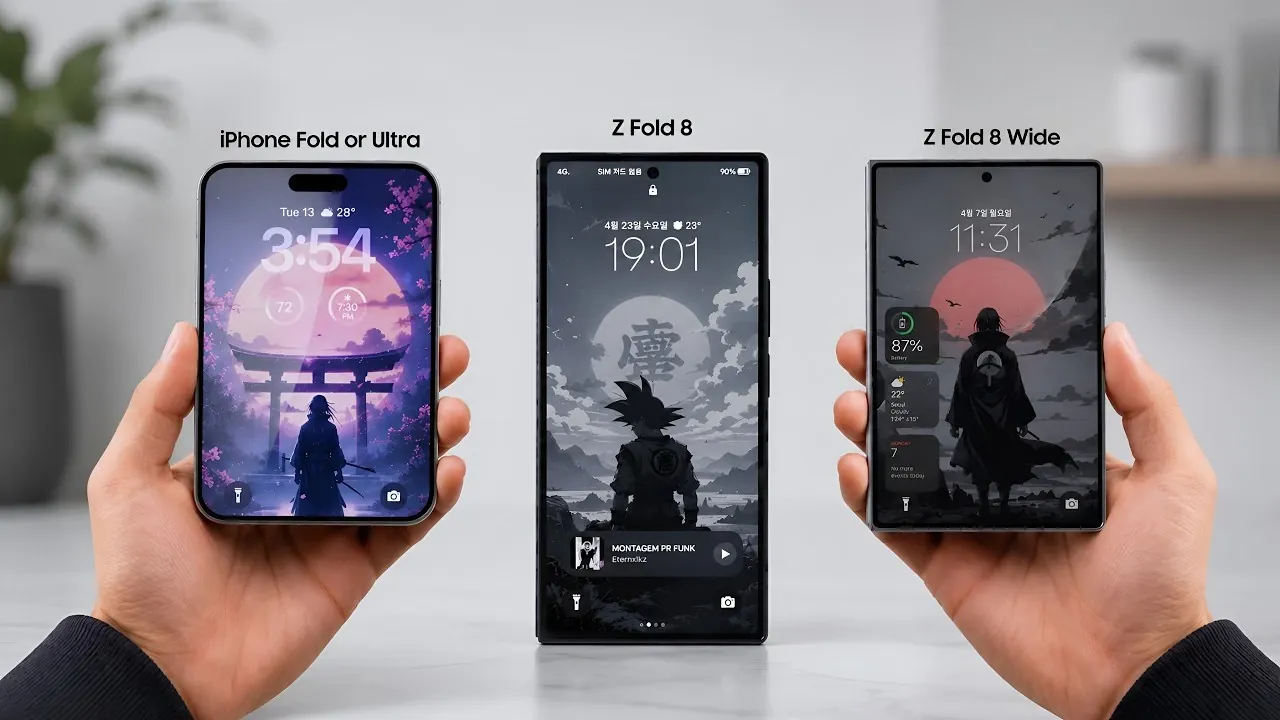
The foldable smartphone market is entering a fantastic phase as Apple prepares to launch its first foldable device, the iPhone Fold, directly challenging Samsung’s well-established Galaxy Z Fold series. This competition between two of the most influential tech giants is poised to redefine the premium smartphone landscape, offering you a choice between two distinct approaches to foldable technology. Here’s an in-depth look at how these devices compare across key aspects.

Design: Compact Usability vs Sleek Portability
Samsung’s Galaxy Z Fold 8 is expected to retain its signature tall and narrow design, featuring a 6.5-inch cover display and an expansive 8-inch inner screen. This design emphasizes portability and multitasking, catering to users who prioritize productivity in a slim, lightweight form factor. The taller aspect ratio allows for efficient multitasking, making it ideal for professionals or those who frequently switch between apps.
Apple’s iPhone Fold, in contrast, is rumored to adopt a wider, notebook-like design. With a 5.5-inch outer screen and a 7.8-inch inner display, Apple appears to focus on usability and a natural aspect ratio. This design could appeal to users who enjoy browsing, gaming, or streaming media on a compact yet functional device. The wider format may also make the iPhone Fold more intuitive for tasks like reading or editing documents, offering a different kind of versatility compared to Samsung’s approach.
Software Ecosystems: Android’s Flexibility vs iOS Integration
The software ecosystem plays a pivotal role in shaping the foldable experience. Samsung’s Galaxy Z Fold 8 will run on Android, a platform renowned for its customization options and app compatibility. Android’s adaptability has been a cornerstone of Samsung’s success in the foldable market, with features like split-screen multitasking and app continuity enhancing the user experience.
Apple’s iPhone Fold will introduce iOS to the foldable space, using its tightly integrated ecosystem. For you, this means seamless interaction with other Apple devices and services, such as iCloud, AirDrop and the Apple Watch. The iPhone Fold is likely to offer a polished, cohesive experience, especially for users already invested in Apple’s ecosystem. Your choice here may depend on whether you value Android’s flexibility or the seamless integration of Apple’s ecosystem.
Pricing: Premium Costs for Innovative Technology
Both devices are expected to come with premium price tags, reflecting the high cost of foldable technology. The iPhone Fold is rumored to be priced between $2,000 and $2,500, making it one of the most expensive smartphones ever. This pricing aligns with Apple’s positioning as a luxury brand and its focus on delivering premium features.
Samsung’s Galaxy Z Fold 8, while also expensive, may see a slight increase from its predecessor’s $2,000 launch price. Samsung’s experience in manufacturing foldable devices could allow it to offer competitive pricing while maintaining high-quality standards. For you, the decision may come down to whether you’re willing to pay a premium for Apple’s first foldable device or prefer Samsung’s more established foldable lineup.
Camera Systems: Hardware Power vs Software Optimization
Camera technology is another area where these devices take different approaches. Samsung’s Galaxy Z Fold 8 is expected to feature a triple-camera system, including a 200MP main sensor. This setup is designed to appeal to photography enthusiasts who prioritize innovative hardware and high-resolution imaging.
Apple’s iPhone Fold, on the other hand, is rumored to include a dual-camera setup with 48MP sensors. While this may seem less advanced on paper, Apple’s expertise in computational photography could deliver impressive results. Features like Smart HDR and Deep Fusion are likely to enhance image quality, making the iPhone Fold a strong contender for users who value software-driven photography. Your choice may depend on whether you prioritize raw hardware capabilities or the benefits of advanced software optimization.
Battery Life: Addressing a Common Challenge
Battery life has historically been a challenge for foldable devices, but both companies are taking steps to address this issue. Samsung’s Galaxy Z Fold 8 is expected to feature a 5,000mAh battery, designed to support its larger displays and multitasking capabilities. Samsung’s advancements in battery technology aim to ensure reliable performance throughout the day.
Apple’s iPhone Fold is rumored to include the largest battery ever in an iPhone, signaling a strong focus on long-lasting performance. Apple’s emphasis on software efficiency could further enhance battery life, making sure that the device meets the demands of foldable users. For you, both devices should provide enough power for a full day of use, though actual performance will vary based on individual usage patterns and software optimization.
Market Strategies: Established Leader vs New Challenger
Samsung, as the dominant player in the foldable market, is rumored to be exploring new designs, including a wider foldable model potentially named the Galaxy Z Fold Wide. This move could be a direct response to Apple’s rumored design, offering more options within the Galaxy lineup and reinforcing Samsung’s position as an innovator in the foldable space.
Apple, entering a market long dominated by Samsung, aims to challenge the status quo with the iPhone Fold. By using its reputation for innovation and ecosystem integration, Apple hopes to attract users who have been hesitant to adopt foldable technology. For you, this competition means more choices and potentially faster advancements in foldable devices, as both companies strive to outdo each other.
What This Means for You
As a consumer, you’ll soon face a decision between Samsung’s refined, taller design and Apple’s wider, usability-focused approach. Both devices promise premium experiences, but their differences in design, software, and features could influence your choice based on your preferences and needs. Whether you prioritize multitasking, seamless ecosystem integration, or innovative hardware, these devices offer compelling options.
This rivalry is also likely to accelerate innovation across the industry. With Apple and Samsung pushing each other to improve, you can expect foldable phones to become more versatile, durable, and accessible in the coming years. For you, this means a future where foldable devices are not only more advanced but also better suited to a wider range of users.
Unlock more potential in the iPhone Fold by reading the previous articles we have written.
- Why Apple’s iPhone Ultra Fold Changes Everything We Know About Smartphones
- iPhone Ultra Fold First Look: Apple Finally Went WIDE to Create the Ultimate Hybrid Device
- The ‘Passport’ iPhone Is Real: First Look at Apple’s Foldable ‘Ultra’ Design and its 7.8-inch Display
- Apple Just Confirmed 6 Major Features for the iPhone Ultra Fold
- Forget the iPhone 18: The iPhone Fold Leaks Reveal a 7.8-Inch Monster
- iPhone Ultra Fold Leaks: Every Design Feature Coming to Apple’s First Foldable
Source & Image Credit: Demon’s Tech
Disclosure: Some of our articles include affiliate links. If you buy something through one of these links, Geeky Gadgets may earn an affiliate commission. Learn about our Disclosure Policy.
