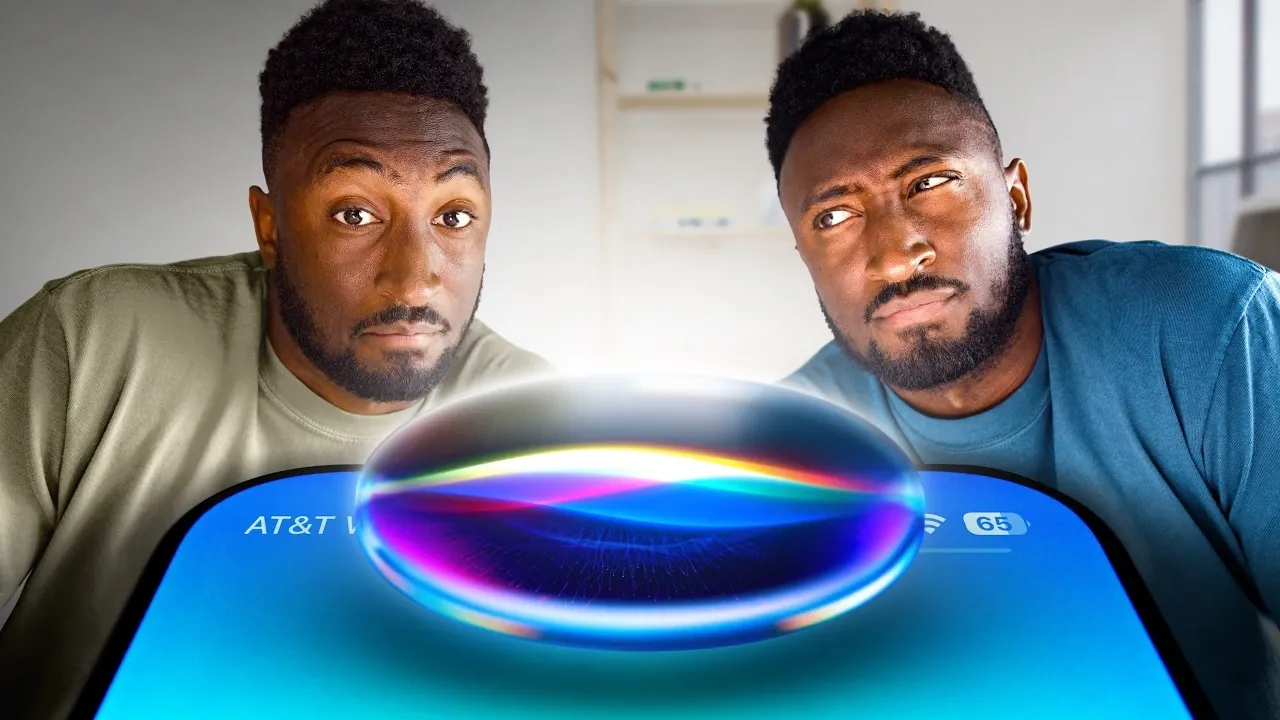
Apple, a company once synonymous with technological innovation, now finds itself struggling to keep pace in the rapidly evolving field of artificial intelligence (AI). While competitors such as OpenAI, Google and Meta are making significant advancements in AI-driven software and tools, Apple has chosen a different path, focusing heavily on hardware development and ecosystem integration. This divergence raises critical questions about the sustainability of Apple’s strategy. Can the company maintain its dominance in the tech industry, or will it be overtaken by competitors that are more agile and software-focused? The video below from Marques Brownlee gives us miore details

Apple’s AI Strategy: A Conservative Approach
Apple’s approach to AI has been marked by caution, with efforts like Siri and Apple Intelligence failing to match the new advancements seen in competing platforms. Siri, once a pioneer in voice assistance, now feels outdated when compared to conversational AI systems such as OpenAI’s ChatGPT or Google’s Bard. These competitors have redefined the possibilities of AI, offering tools that are more advanced, versatile, and capable of engaging users in meaningful ways. In contrast, Apple’s updates to Siri and other AI features have been incremental, focusing on improving integration within its ecosystem rather than delivering standalone innovation.
This conservative strategy reflects Apple’s broader philosophy: embedding AI into its tightly controlled ecosystem to enhance the user experience across its devices. While this ensures seamless functionality and a consistent experience for users, it has also left Apple vulnerable to competitors offering more advanced AI tools that operate across multiple platforms. As a result, Apple’s AI capabilities appear limited, especially when compared to the innovative solutions provided by its rivals.
Competitors Surge Ahead
Meanwhile, companies like OpenAI, Google and Meta are aggressively advancing their AI capabilities, setting new benchmarks in the industry. OpenAI’s ChatGPT, for instance, has transformed conversational AI, offering users a highly interactive and intuitive experience. Google continues to refine its AI-driven services, including Google Assistant and a suite of generative AI tools, while Meta has made significant investments in AI research, excelling in areas such as computer vision and large language models.
These advancements have resulted in AI tools that are not only more powerful but also widely accessible. From smartphones to smart home systems, these technologies are reshaping consumer expectations. In comparison, Apple’s current AI offerings feel limited, leaving users with fewer options for innovative AI experiences. This disparity highlights the growing gap between Apple and its competitors in the software-driven AI race.
Apple’s Hardware-Centric Focus
Despite its shortcomings in software, Apple’s emphasis on hardware development could prove to be a strategic advantage. The company has invested heavily in creating devices optimized for on-device AI processing, such as the Neural Engine integrated into its A-series and M-series chips. These processors are designed to handle advanced machine learning tasks directly on the device, enhancing privacy and reducing reliance on cloud-based systems.
This hardware-first approach aligns with Apple’s long-term vision of dominating AI applications through its ecosystem. By focusing on on-device AI, Apple aims to deliver a secure and integrated user experience that competitors relying on cloud-based solutions may find difficult to replicate. However, this strategy also comes with risks. While Apple’s hardware is undeniably powerful, its limited AI software capabilities could undermine its ability to fully use these technological advancements.
The Two AI Races
The current AI landscape can be divided into two distinct races: software innovation and hardware integration. In the software race, Apple has undeniably fallen behind. Its AI tools lack the sophistication, versatility and cross-platform functionality of those offered by competitors. This has left Apple users with fewer advanced features and limited access to the latest AI-driven innovations.
However, in the hardware race, Apple holds a significant edge. The company’s ability to create a seamless experience across its devices, combined with its focus on on-device AI, positions it as a leader in this area. The challenge lies in whether this hardware advantage can compensate for its lagging software capabilities. As competitors like Google and Meta continue to invest in AI-specific hardware, Apple’s dominance in this space may also come under threat.
Challenges and Emerging Competition
Apple faces mounting challenges as its competitors expand their reach into both AI software and hardware. Google’s Tensor chips and Meta’s research into AI-specific hardware signal a shift toward devices designed to optimize AI performance. These developments could pose a serious threat to Apple’s dominance in the hardware market, particularly if rivals achieve a comparable level of ecosystem integration.
At the same time, Apple’s reliance on its ecosystem presents both opportunities and risks. Loyal users appreciate the seamless integration of Apple’s devices, but they may grow increasingly frustrated with the limitations of its AI capabilities compared to competitors. This dynamic creates significant pressure for Apple to innovate, as failing to meet consumer expectations could lead to a loss of market share.
What Lies Ahead for Apple?
Looking ahead, Apple’s position in the AI race remains uncertain. The company’s current strategy appears to be a calculated gamble, prioritizing hardware development and ecosystem integration over aggressive software innovation. While this approach offers a unique value proposition that rivals may struggle to replicate, it also leaves Apple vulnerable to the rapid advancements being made in AI software by competitors.
The rise of AI-focused hardware from companies like Google and Meta further complicates Apple’s position. If these competitors succeed in creating devices that rival Apple’s in terms of performance and ecosystem integration, the company could face significant challenges in maintaining its market share. At the same time, the growing demand for innovative AI software will only increase the pressure on Apple to deliver more advanced and versatile solutions.
Ultimately, Apple’s ability to remain competitive in the AI race will depend on its willingness to adapt and innovate. Whether the company can rise to meet these challenges remains to be seen, but one thing is certain: the AI landscape is evolving rapidly, and the stakes have never been higher.
Unlock more potential in AI by reading the previous articles we have written.
- Google Fitbit Air : Everything We Know About the $99 Screen-Free Tracker
- Valve’s 2026 Steam Machine is Almost Here
- Why Apple is Putting Cameras in the New AirPods Pro 4 (Ultra)
- Apple TV 2026: The First Streaming Box Built for Apple Intelligence?
- Google’s New AI Smart Glasses Are Leaving Meta Behind
Source & Image Credit: Marques Brownlee
Disclosure: Some of our articles include affiliate links. If you buy something through one of these links, Geeky Gadgets may earn an affiliate commission. Learn about our Disclosure Policy.
