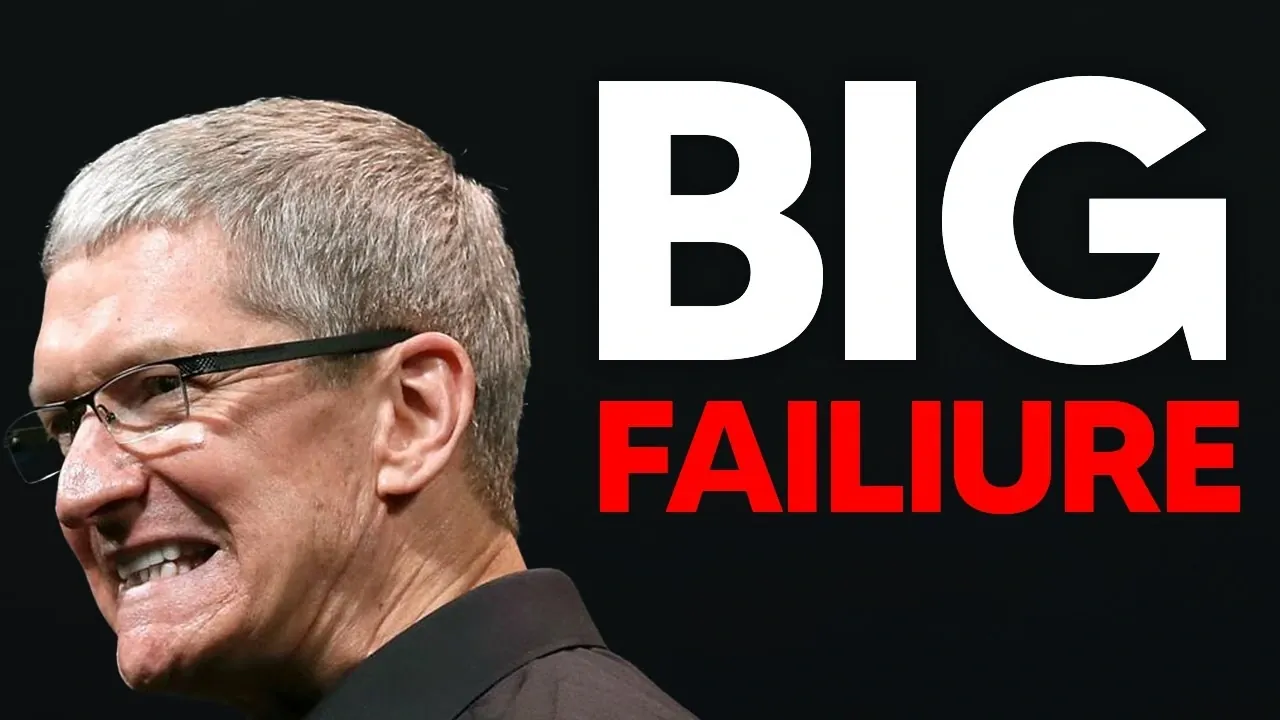
Is Apple, the tech giant that once redefined innovation, now falling further behind in the most critical race of our time? While competitors like Google, Microsoft, and Meta are unleashing new AI advancements, transforming everything from personal assistants to productivity tools, Apple seems to be stuck in neutral. Consider this: Siri, once a trailblazer in voice-activated AI, now struggles to handle basic commands while Google Assistant and Alexa dominate with sophisticated, context-aware capabilities. For a company that built its reputation on being ahead of the curve, Apple’s sluggish progress in AI feels like a glaring contradiction. Could it be that the very qualities that made Apple great, its secrecy, its focus on privacy, its cautious approach, are now the same forces holding it back?
In this deep dive, AI Grid uncover the structural and strategic missteps that have left Apple playing catch-up in the AI arms race. From Siri’s outdated architecture to the company’s late and underwhelming attempts at AI innovation, you’ll discover why Apple’s competitors are pulling ahead, and what this means for the future of your devices. But it’s not all doom and gloom; we’ll also explore the trade-offs Apple is making, like prioritizing privacy over performance, and whether this approach still holds value in a world increasingly driven by innovative AI. As the gap between Apple and its rivals widens, the question isn’t just whether Apple can catch up, but whether it even wants to.
Apple’s AI Struggles
TL;DR Key Takeaways :
- Apple is struggling to keep up in the AI race due to outdated systems, internal limitations, and a cautious approach, while competitors like Google, Microsoft, and Meta continue to innovate rapidly.
- Siri, once a innovative voice assistant, has fallen behind competitors like Google Assistant and Amazon Alexa in terms of functionality, contextual understanding, and integration.
- Apple’s AI initiative, “Apple Intelligence,” launched in 2024, has faced delays and underwhelming features, highlighting its inability to match the pace of rivals who are integrating advanced AI tools into their ecosystems.
- Key challenges for Apple include its secrecy culture, underinvestment in AI, privacy-focused constraints, technical debt from outdated systems, and a late start in the AI field.
- Apple’s future in AI remains uncertain, with potential paths including breakthrough innovation, strategic partnerships, or a pivot to other technologies like AR/VR, while consumers must weigh privacy against advanced AI functionality when choosing devices.
Siri: From Innovative to Outdated
When Siri debuted in 2011, it was heralded as a new innovation, introducing millions to the concept of voice-activated AI assistants. However, over the years, Siri has failed to keep pace with the rapid advancements made by its competitors. Today, platforms like Google Assistant, Amazon Alexa, and OpenAI’s ChatGPT offer far more advanced capabilities, including contextual understanding, natural language processing, and seamless integration with smart home ecosystems.
For example, Google Assistant excels at handling complex, multi-step tasks and delivering nuanced responses, while Siri often struggles with even basic commands. This stagnation has turned Siri into a symbol of Apple’s broader challenges in the AI domain, underscoring its inability to match the speed and sophistication of its rivals. As a result, Siri’s once-innovative status has been overshadowed by its competitors’ superior functionality and adaptability.
Apple Intelligence: A Disappointing Start
In 2024, Apple launched its AI initiative, branded as “Apple Intelligence,” with promises of fantastic innovation. However, the rollout has been plagued by delays and underwhelming features, leaving many to question the company’s ability to deliver on its ambitious goals. Updates to Siri, initially scheduled for release in 2026, remain in development, while other features, such as notification summaries, have faced criticism for their limited accuracy and functionality.
These setbacks stand in stark contrast to the achievements of competitors, who continue to release innovative AI-powered tools at a rapid pace. For instance, Microsoft has successfully integrated OpenAI’s GPT models into its productivity suite, while Google has introduced AI-driven features like real-time translation and context-aware assistants. Apple’s slower pace raises concerns about its ability to remain competitive in an industry that rewards agility and innovation.
Siri’s Lost Edge : How Google & Microsoft Left Apple’s Assistant Behind

Expand your understanding of Apple AI with additional resources from our extensive library of articles.
- Why Apple Is Struggling to Compete in the AI Revolution
- Apple’s New AI Strategy for Artificial Intelligence Beyond 2025
- Apple vs. Google: The AI Showdown at WWDC 2025 Explained
- Samsung Galaxy AI vs. Apple Intelligence
- How Apple Notes AI Features Transform Digital Note-Taking
- Apple Intelligence: Why It’s Struggling to Compete in the AI Market
- Apple HomePad: AI-Powered Security Camera and Smart Hub
- 2025 Apple TV Features: AI, Gaming, and Smart Home Integration
- AI Battle! Apple Intelligence vs Gemini vs Galaxy AI
- Apple’s SECRET Plan for Siri and AI Finally Revealed!
Why Apple Is Falling Behind
Several internal and strategic challenges have contributed to Apple’s struggles in the AI race:
- Secrecy Culture: Apple’s tightly controlled development process, while effective in maintaining product confidentiality, limits collaboration and innovation. In contrast, AI thrives on shared research and open experimentation, areas where Apple’s approach falls short.
- Underinvestment: Compared to rivals like Google and Microsoft, Apple allocates fewer resources to AI research and development. This disparity restricts its ability to compete with companies that prioritize AI as a core focus.
- Privacy Constraints: Apple’s commitment to on-device AI prioritizes user privacy but limits the data collection necessary for training advanced AI models. This trade-off has hindered its ability to develop competitive AI systems.
- Technical Debt: Siri’s outdated architecture, inherited from its 2010 acquisition, complicates efforts to modernize the platform and integrate new capabilities. This technical debt has become a significant obstacle to progress.
- Late Start: Apple’s delayed entry into the AI race has left it playing catch-up in a field where early movers have already established dominance and set high benchmarks for innovation.
These factors collectively highlight the structural and strategic issues that have slowed Apple’s progress in AI development, leaving it at a disadvantage compared to its more agile and resourceful competitors.
Competitors Lead the Way
While Apple grapples with these challenges, its competitors are forging ahead with new advancements. Google, for instance, has introduced AI-powered features like real-time language translation, predictive text, and context-aware virtual assistants that enhance user experiences across its ecosystem. Microsoft has integrated OpenAI’s GPT models into its products, transforming productivity tools such as Word and Excel with AI-driven capabilities.
Meta and Samsung are also using AI to innovate in areas like augmented reality (AR), advanced photo editing, and personalized user experiences. These developments not only showcase the potential of AI but also highlight the widening gap between Apple and its rivals. As these companies continue to push the boundaries of what AI can achieve, Apple risks falling further behind in a market that increasingly values innovative technology and seamless integration.
What Lies Ahead for Apple?
Apple’s future in the AI landscape remains uncertain, with several potential scenarios that could shape its trajectory:
- Breakthrough Innovation: Apple could surprise the industry with a major AI breakthrough or acquire innovative technology to close the gap with its competitors. However, given its current trajectory, this outcome appears unlikely in the near term.
- Strategic Partnerships: Collaborating with established AI leaders like OpenAI or Google could help Apple enhance its AI offerings and regain its competitive edge. This approach would require a shift in its traditionally insular strategy.
- Gradual Decline: Continued stagnation in AI development could lead to a gradual erosion of Apple’s market share, as consumers increasingly gravitate toward devices with more advanced AI features.
- Shift in Focus: Apple might pivot to other emerging technologies, such as augmented reality, virtual reality, or brain-computer interfaces, to redefine its competitive advantage and maintain its relevance in the tech industry.
Each of these scenarios presents unique challenges and opportunities, leaving Apple at a critical crossroads in its journey to remain a leader in consumer technology.
What This Means for You
As a consumer, Apple’s struggles in the AI race may not immediately impact your experience with its devices. However, as competitors continue to integrate advanced AI features into their products, Apple’s offerings risk feeling increasingly outdated. This creates a trade-off between Apple’s privacy-focused approach and the innovative functionality provided by its rivals.
For example, Apple’s on-device AI prioritizes safeguarding your data, but this comes at the expense of the advanced performance enabled by cloud-based AI systems. As a result, you may need to carefully consider your priorities, whether privacy or functionality matters more, when choosing your next device.
Making an Informed Choice
Staying informed about Apple’s AI developments is essential for making the best decision for your needs. If privacy remains your top priority, Apple’s approach may still align with your values. However, if you seek the most advanced AI capabilities, exploring alternatives like Google’s Pixel devices, Samsung’s Galaxy lineup, or Microsoft’s AI-enhanced tools might be worth considering. Ultimately, your choice should reflect your individual preferences and the features that matter most in your daily life.
Media Credit: TheAIGRID
Disclosure: Some of our articles include affiliate links. If you buy something through one of these links, Geeky Gadgets may earn an affiliate commission. Learn about our Disclosure Policy.
