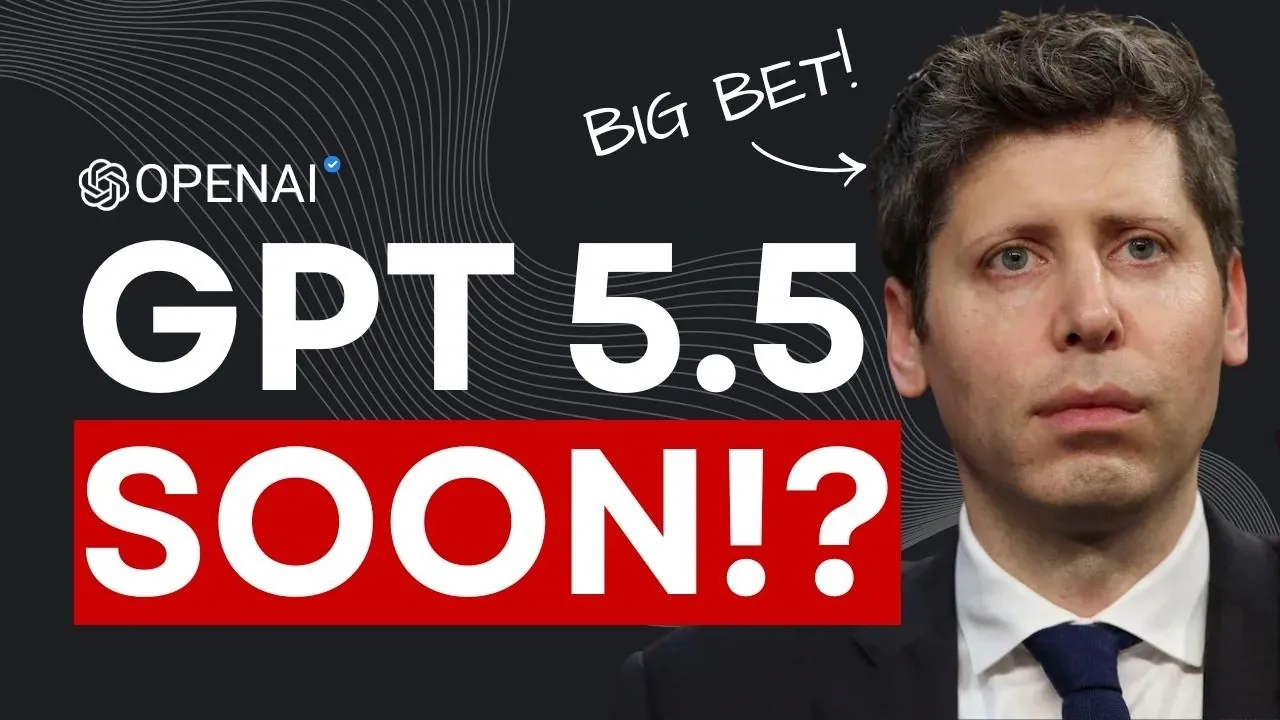
OpenAI, DeepSeek and Anthropic are at the forefront of a rapidly evolving AI landscape, each making strides to secure their position in a competitive market. In a recent overview by Universe of AI, OpenAI’s upcoming ChatGPT 5.5 model is highlighted as a pivotal step toward the anticipated GPT-6, codenamed “Spud.” While ChatGPT 5.5 focuses on incremental improvements, such as refining memory management and task continuity, it serves as a strategic bridge to more advanced capabilities. Meanwhile, DeepSeek’s V4 model, powered by Huawei’s Ascend 910B chips, underscores China’s growing independence in AI hardware, marking a significant milestone in the global AI ecosystem.
Explore how OpenAI’s “super app” initiative aims to unify ChatGPT, Codex and the Atlas browser into a single platform, promising streamlined workflows and enhanced user interaction. Gain insight into DeepSeek’s efforts to build a self-sufficient AI ecosystem amid geopolitical challenges and understand how these developments could reshape the competitive dynamics of the AI industry. This overview offers a detailed look at the strategies driving innovation and the broader implications for the future of AI.
OpenAI’s Model Evolution: ChatGPT 5.5 & Beyond
TL;DR Key Takeaways :
- OpenAI is set to release ChatGPT 5.5 as a stepping stone to the fantastic GPT-6, which is expected to feature infinite context, advanced memory management and a new agent mode.
- DeepSeek’s V4 model, powered by Huawei’s Ascend 910B chips, marks a significant milestone for China’s AI ecosystem, showcasing its growing independence from U.S. technologies.
- OpenAI is developing a “super app” that integrates ChatGPT, Codex and the Atlas browser, aiming to streamline AI functionalities and enhance user experience.
- Competition in the AI sector is intensifying, with OpenAI, DeepSeek and Anthropic driving rapid innovation and reshaping the global AI landscape.
- Advancements in AI models and hardware, such as GPT-6’s features and China’s domestic AI stack, have far-reaching implications for industries, economies and global technological independence.
OpenAI is preparing to launch ChatGPT 5.5, a significant step forward from its current GPT-5.4 model. While ChatGPT 5.5 is not expected to introduce innovative features, it serves as a critical bridge to the highly anticipated GPT-6, internally codenamed “Spud.” This incremental update reflects OpenAI’s strategy of steady, deliberate progress toward more advanced capabilities.
GPT-6 is rumored to introduce several fantastic features, including:
- Infinite context capabilities for managing extensive and complex inputs.
- Advanced memory management to improve task continuity and efficiency.
- A new agent mode designed to enhance user interaction and task execution.
These features have the potential to redefine how AI systems manage workflows and interact with users, offering greater precision and adaptability. However, OpenAI faces increasing competition from Anthropic, which is advancing its own suite of models, Mythos, Tiramisu and Capybara. ChatGPT 5.5 may act as a strategic placeholder, allowing OpenAI to refine GPT-6 while maintaining its competitive edge in the rapidly evolving AI market.
OpenAI’s Unified “Super App”
OpenAI is taking a bold step by consolidating its offerings into a single, unified desktop application. Referred to as the “super app,” this platform will integrate ChatGPT, Codex and the Atlas browser, creating a seamless and cohesive user experience. This initiative reflects OpenAI’s commitment to simplifying access to its AI tools while enhancing their functionality.
The super app is designed to address several key challenges in AI tools, including:
- Improved context management for more reliable and efficient workflows.
- Streamlined access to multiple AI functionalities within a single platform.
- Enhanced user interaction through advanced agent modes and intuitive design.
By integrating GPT-6 into the super app, OpenAI aims to differentiate itself in an increasingly crowded market. This move also positions the company to compete directly with Anthropic, whose integrated desktop app has gained significant traction, particularly in enterprise settings. OpenAI’s focus on delivering fewer but higher-quality products demonstrates its strategic approach to maintaining leadership in the AI industry.
OpenAI’s Unified “Super App”
OpenAI is taking a bold step by consolidating its offerings into a single, unified desktop application. Referred to as the “super app,” this platform will integrate ChatGPT, Codex and the Atlas browser, creating a seamless and cohesive user experience. This initiative reflects OpenAI’s commitment to simplifying access to its AI tools while enhancing their functionality.
The super app is designed to address several key challenges in AI tools, including:
- Improved context management for more reliable and efficient workflows.
- Streamlined access to multiple AI functionalities within a single platform.
- Enhanced user interaction through advanced agent modes and intuitive design.
By integrating GPT-6 into the super app, OpenAI aims to differentiate itself in an increasingly crowded market. This move also positions the company to compete directly with Anthropic, whose integrated desktop app has gained significant traction, particularly in enterprise settings. OpenAI’s focus on delivering fewer but higher-quality products demonstrates its strategic approach to maintaining leadership in the AI industry.

Here are more detailed guides and articles that you may find helpful on ChatGPT 5.
- ChatGPT 5.4 Thinking vs Earlier Models : Token Savings and Stronger Self-Checks
- ChatGPT 5.4 1M-Token Context, Extreme Reasoning Mode: Longer Tasks, Fewer Mistakes
- ChatGPT 5.3 Upgrade Focus on Reasoning and Reliability Boost
- OpenAI GPT-5.4 Leak During Codex Demo Sparks Release Questions
- ChatGPT 5.3 Instant Cuts Unneeded Disclaimers
- Opus 4.6 vs ChatGPT 5.3 : Code Size, Speed & Build Tradeoffs
- OpenAI ChatGPT 5.4: 1M-token Context, Tool Search & New Prices
- OpenAI Codex 5.3 vs Anthropic Opus 4.6 : Coding Comparison
- Gemini 3.5 Leak Details, Early Tests Show Mixed Performance
- OpenAI GPT-5.3 Codex: 5 Things You Need to Know
OpenAI’s Unified “Super App”
OpenAI is taking a bold step by consolidating its offerings into a single, unified desktop application. Referred to as the “super app,” this platform will integrate ChatGPT, Codex and the Atlas browser, creating a seamless and cohesive user experience. This initiative reflects OpenAI’s commitment to simplifying access to its AI tools while enhancing their functionality.
The super app is designed to address several key challenges in AI tools, including:
- Improved context management for more reliable and efficient workflows.
- Streamlined access to multiple AI functionalities within a single platform.
- Enhanced user interaction through advanced agent modes and intuitive design.
By integrating GPT-6 into the super app, OpenAI aims to differentiate itself in an increasingly crowded market. This move also positions the company to compete directly with Anthropic, whose integrated desktop app has gained significant traction, particularly in enterprise settings. OpenAI’s focus on delivering fewer but higher-quality products demonstrates its strategic approach to maintaining leadership in the AI industry.
Rising Competition in the AI Sector
The race to dominate the AI industry is intensifying as OpenAI, DeepSeek and Anthropic compete to deliver the most advanced and reliable solutions. Anthropic’s rapid advancements have accelerated OpenAI’s efforts to solidify its leadership position. The integration of GPT-6 into OpenAI’s super app could provide a significant competitive advantage, especially if the rumored features meet user expectations.
Meanwhile, DeepSeek’s success with Huawei chips highlights the growing capabilities of China’s domestic AI ecosystem. This development not only challenges U.S. export controls but also signals a shift in the global AI landscape, where reliance on U.S.-based hardware may no longer be a necessity. As these companies push the boundaries of AI technology, the competition is driving innovation at an unprecedented pace.
Broader Implications for AI Technology
The advancements in AI models and hardware carry profound implications for the industry and beyond. Features like infinite context and advanced agent modes in GPT-6 could transform how AI systems handle complex tasks, making them more efficient, reliable and user-friendly. Similarly, DeepSeek’s progress with Huawei chips demonstrates the viability of a fully domestic AI stack, which could inspire other nations to pursue similar strategies to achieve technological independence.
As the competition among AI leaders intensifies, companies are prioritizing innovation, strategic partnerships and long-term planning to stay ahead. These developments highlight the dynamic nature of the AI industry and the relentless pursuit of technological excellence by its leading players. The coming years are poised to bring significant advancements that will shape the future of AI and its role in society, influencing industries, economies and everyday life on a global scale.
Media Credit: Universe of AI
Disclosure: Some of our articles include affiliate links. If you buy something through one of these links, Geeky Gadgets may earn an affiliate commission. Learn about our Disclosure Policy.
