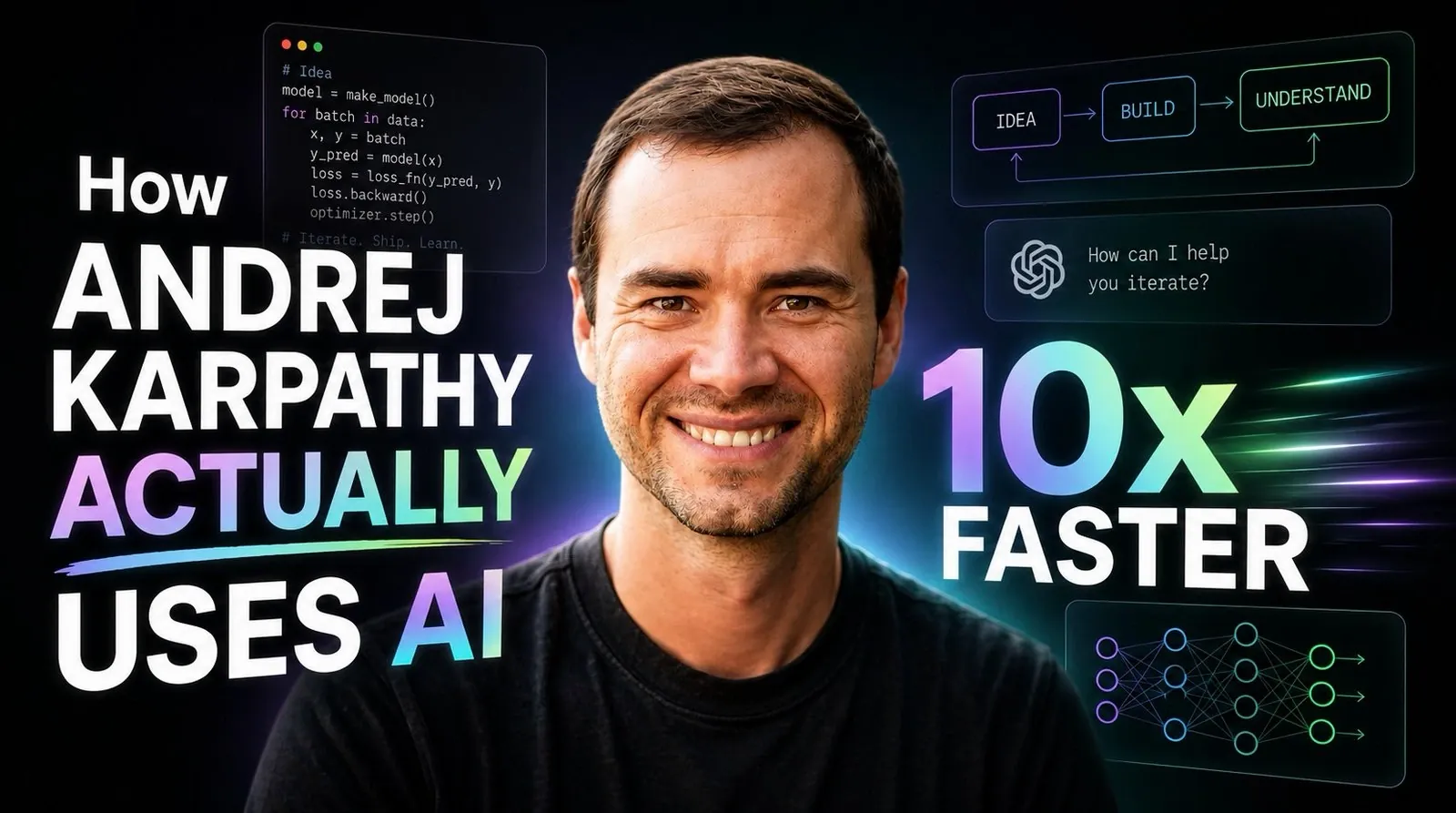
Andrej Karpathy, a prominent figure in artificial intelligence, has adopted a thoughtful approach to incorporating AI into everyday tasks. One notable method involves using speech-to-text systems, such as Super Whisper, to interact with AI more naturally and efficiently. By dictating rather than typing, Karpathy minimizes friction in communication and enhances the flow of ideas. As explained by Parker Prompts, this approach demonstrates a clear focus on using AI to complement human creativity and streamline problem-solving.
Gain insight into how Karpathy creates a personal knowledge repository to produce contextually accurate AI outputs and adapts static information into dynamic, interactive formats. Discover how he integrates persistent memory systems to maintain consistency across projects and coordinates multiple AI agents to handle intricate workflows. These strategies offer practical ways to enhance productivity and achieve more effective outcomes with AI.
Accelerating Interactions with Speech-to-Text Tools
TL;DR Key Takeaways :
- Andrej Karpathy uses speech-to-text technologies like Super Whisper to interact with AI systems, allowing faster and more intuitive communication while focusing on higher-level tasks.
- He curates a personal “LLM Wiki” to provide AI with contextually relevant and precise information, making sure tailored and accurate outputs for research and decision-making.
- Karpathy transforms static documents into interactive tools using platforms like Notebook LM, allowing for dynamic engagement, better retention and actionable insights.
- He employs a data-driven problem-solving approach, analyzing raw data to uncover patterns and develop objective, evidence-based solutions.
- By delegating complex tasks and orchestrating multiple AI agents, Karpathy enhances productivity, allowing seamless collaboration and efficient completion of multifaceted projects.
Karpathy enhances his efficiency by using speech-to-text technologies to interact with AI systems. Instead of relying on traditional typing, he uses voice input to communicate more naturally and quickly. Tools like Super Whisper allow him to dictate spontaneous or unstructured thoughts, which the AI then organizes into actionable prompts. This method not only saves time but also fosters a more intuitive and fluid interaction with AI, allowing him to focus on higher-level tasks without being constrained by manual input.
Building a Personal “LLM Wiki” for Contextual Precision
To ensure that AI outputs are accurate and tailored to his needs, Karpathy curates a personal knowledge repository often referred to as an “LLM Wiki.” This library includes carefully selected documents such as research papers, reports and PDFs. By integrating this curated data into his AI systems, he avoids reliance on generic or potentially unreliable internet-based information. This approach ensures that the AI delivers contextually relevant and precise responses, making it a powerful tool for research and decision-making.

Learn more about Andrej Karpathy with other articles and guides we have written below.
- Google Releases Open Knowledge Format (OKF) to Standardize Karpathy LLM Wikis
- Andrej Karpathy Picks Anthropic Over OpenAI : Here’s Why It Matters for Claude
- New ChatGPT Voice Full-Duplex Update Lets You Interrupt at Any Time
- AI Agents, LLMs & Economic Growth : Karpathy’s Surprising Predictions
- How to Build an AI Knowledge Vault Using Obsidian & Claude Code
- Why Andrej Karpathy Chose Anthropic Over OpenAI
Transforming Static Documents into Interactive Tools
Karpathy uses platforms like Notebook LM to convert static documents into dynamic, interactive resources. These tools allow him to engage deeply with complex materials by asking questions, extracting insights and generating summaries. Features such as AI-generated mind maps and flashcards further enhance his ability to retain and apply information. This dynamic interaction transforms dense content into actionable knowledge, making it easier to navigate and use for problem-solving or project development.
Adopting a Data-Driven Problem-Solving Approach
When tackling challenges, Karpathy employs a data-centric mindset to ensure objective and reliable decision-making. By analyzing raw data, such as performance metrics or statistical trends, he identifies patterns and uncovers actionable insights. This method minimizes the influence of assumptions or biases, allowing him to develop solutions grounded in factual evidence. The result is a more effective and consistent problem-solving process that aligns with his goals.
Enhancing Workflow with Persistent AI Memory
Karpathy utilizes persistent memory systems to maintain continuity across projects and conversations. By organizing information in structured, folder-based setups, he enables AI tools to retain and update relevant context over time. This eliminates the need to repeatedly reintroduce background information, streamlining transitions between tasks and improving efficiency in long-term projects. Persistent memory ensures that the AI remains a reliable partner in managing complex workflows.
Delegating Complex Tasks to AI Systems
A cornerstone of Karpathy’s productivity strategy is delegating multi-step, intricate tasks to AI. For instance, he might assign an AI system to draft a detailed overview, code a software feature, or conduct in-depth research. By thinking beyond simple, isolated tasks, he unlocks the full potential of AI tools to handle complex workflows. This delegation not only saves time but also allows him to focus on strategic decision-making and creative problem-solving.
Orchestrating Multiple AI Agents for Advanced Workflows
Karpathy takes task delegation a step further by coordinating multiple AI agents to work collaboratively. Each agent is assigned a specific role, such as data analysis, content creation, or project management. For more advanced workflows, he designs hierarchical systems where one AI agent oversees and manages the activities of several sub-agents. This structured approach ensures seamless collaboration between AI systems, enhancing overall efficiency and allowing the completion of large-scale, multifaceted projects.
Maximizing AI’s Potential for Productivity
Andrej Karpathy’s innovative strategies demonstrate how AI can be a powerful ally in achieving faster, smarter and more efficient results. By integrating tools like speech-to-text technologies, building contextual knowledge bases and transforming static documents into interactive resources, he optimizes his interactions with AI. His data-driven approach, use of persistent memory systems and ability to delegate complex tasks further highlight the fantastic potential of AI in modern workflows. By orchestrating multiple AI agents, Karpathy exemplifies how strategic coordination can unlock even greater productivity, offering a compelling model for using AI in both personal and professional contexts.
Media Credit: Parker Prompts
Disclosure: Some of our articles include affiliate links. If you buy something through one of these links, Geeky Gadgets may earn an affiliate commission. Learn about our Disclosure Policy.
