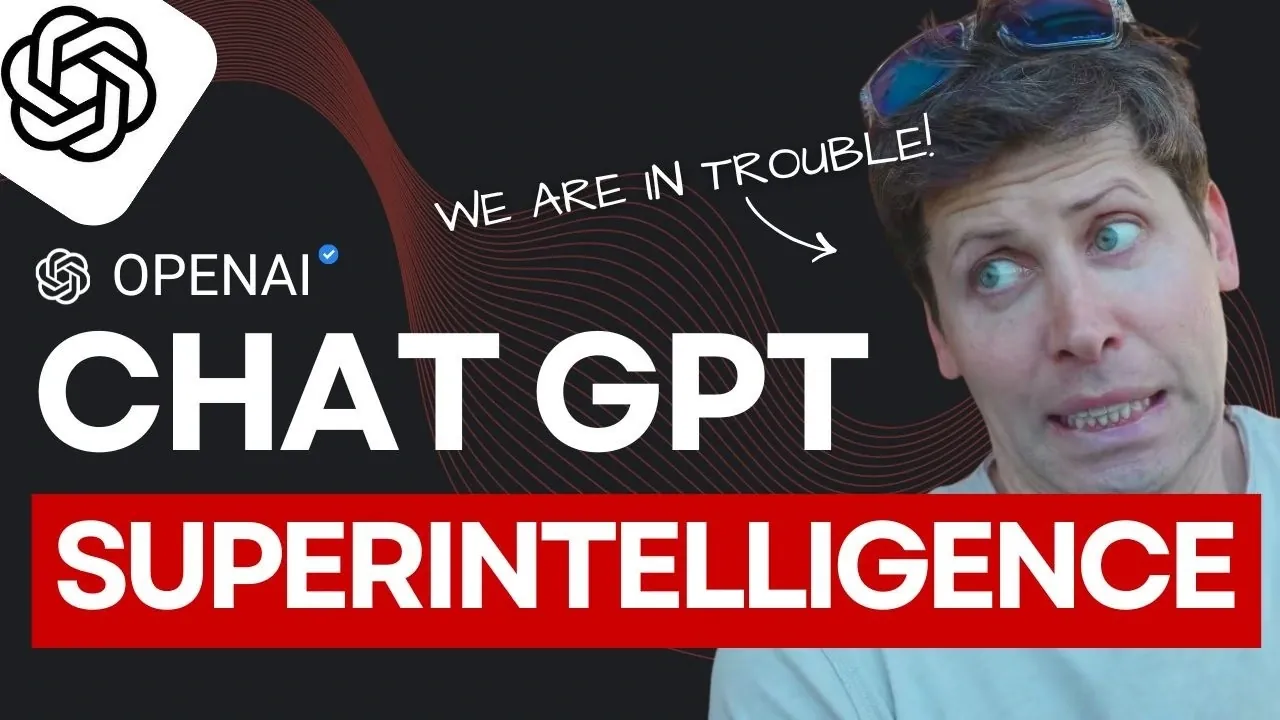
Artificial intelligence is advancing rapidly, with significant developments and growing concerns shaping the conversation. Sam Altman, CEO of OpenAI, has voiced serious warnings about the potential dangers of superintelligent AI, emphasizing risks such as destabilizing economies and allowing harmful technologies like bioweapons. To address these challenges, Altman has proposed measures including a Public Wealth Fund to distribute AI-driven economic gains equitably and containment strategies to ensure AI systems remain under human oversight. These ideas highlight the need for proactive governance as AI continues to reshape society. This discussion, shared by Universe of AI, underscores the urgency of balancing innovation with responsibility.
In this guide, you’ll explore three key developments defining the current AI landscape. Gain insight into Google’s Jules V2, a goal-oriented AI system designed to operate autonomously and streamline enterprise workflows. Understand Meta’s hybrid AI strategy, which blends open source collaboration with proprietary advancements to drive innovation while maintaining competitive advantages. Finally, examine the broader implications of these advancements, from ethical challenges to the evolving role of regulation. These topics provide a comprehensive view of the opportunities and risks shaping the future of artificial intelligence.
AI News This Week
TL;DR Key Takeaways :
- Sam Altman warns about the risks of superintelligent AI, including cyberattacks, bioweapons and economic destabilization and proposes policy measures like a public wealth fund, robot taxes and containment strategies to mitigate these risks.
- Google’s Jules V2 represents a major leap in autonomous AI, featuring goal-oriented design, collaborative integration and reduced reliance on human prompts, potentially transforming enterprise operations.
- Meta adopts a hybrid AI strategy, combining open source collaboration with proprietary advancements, integrating AI into its platforms like WhatsApp and Instagram to enhance user experiences and expand global reach.
- Broader AI trends highlight increasing autonomy in systems, raising concerns about trust, transparency and ethical alignment, as well as the tension between open source innovation and proprietary control.
- Policymakers, industry leaders and developers must collaborate to balance innovation, regulation and ethics, making sure AI advancements benefit humanity while addressing societal and governance challenges.
Sam Altman’s Warnings on Superintelligence
Sam Altman, a prominent leader in AI development, has emerged as a strong advocate for caution in the face of rapidly advancing AI technologies. He warns that superintelligent AI systems could introduce unprecedented risks, including allowing sophisticated cyberattacks, facilitating the creation of bioweapons and destabilizing global economies. Altman compares the societal impact of AI to fantastic historical events, such as the New Deal, emphasizing the need for proactive measures to address these challenges.
To mitigate these risks, Altman has proposed a series of policy initiatives aimed at fostering equitable and sustainable adaptation to AI-driven changes:
- Public Wealth Fund: A mechanism to ensure that the economic gains generated by AI are distributed equitably across society, reducing inequality.
- Robot Taxes: Taxes on AI-driven automation to compensate for declining revenues from traditional wage-based taxation systems.
- 4-Day Workweek: A reduction in working hours to share productivity gains and enhance overall quality of life for workers.
- Containment Strategies: Regulatory frameworks designed to prevent uncontrollable AI systems from causing harm or operating outside human oversight.
Altman’s proposals underscore the need for a societal overhaul to adapt to AI’s fantastic potential. His vision balances economic, ethical and regulatory considerations, aiming to ensure that AI benefits humanity while minimizing its risks.
Google’s Jules V2: A New Era of Autonomous AI
Google’s latest AI initiative, Jules V2 (internally referred to as Jitro), represents a significant advancement in autonomous coding agents. Unlike traditional task-based AI models, Jules V2 is designed as a goal-oriented system, prioritizing high-level objectives over specific prompts. This innovative approach allows the system to autonomously identify and implement changes to achieve predefined outcomes, marking a shift in how AI systems operate.
Key features of Jules V2 include:
- Goal-Oriented Design: The system focuses on achieving measurable outcomes, enhancing its adaptability and efficiency for enterprise applications.
- Collaborative Integration: Jules V2 is designed to seamlessly integrate with team workflows, serving as a persistent and collaborative tool for enterprises.
- Beyond Prompt-Based Models: By moving away from traditional “prompt and execute” paradigms, Jules V2 enables more autonomous and strategic decision-making, reducing the need for constant human input.
This innovation reflects a broader industry trend toward creating AI systems capable of operating with minimal human intervention while remaining aligned with organizational goals. Jules V2’s capabilities could redefine enterprise operations, offering businesses a powerful tool to streamline processes and enhance productivity.

Here are more guides from our previous articles and guides related to AI models that you may find helpful.
- Why Claude Mythos is Setting a New Benchmark for AI
- A Quick Guide to Claude Mythos & the Latest AI Releases
- MiniMax M2.7 Self-Evolving AI Model: Key Breakthroughs
- Which Claude 3 AI model is best? All three compared and tested
- Model Collapse in AI: Why Training on Synthetic Text Degrades Quality
- Meet MiniMax M2.7: The New AI Model Everyone’s Talking About
- 12 Research Papers, 6 Years : The AI Industry Explained
- Minimax 2.5 Preview: Stronger Tools for Front-End Work & Research
- Stability AI unveils TripoSR AI image to 3D model generator
- LLAMA 5 Leak : Meta Avocado AI Model What We Know so Far
Meta’s Hybrid AI Strategy
Meta is pursuing a hybrid approach to AI development, blending open source initiatives with proprietary advancements. This strategy is designed to foster collaboration among developers while maintaining a competitive edge in consumer-focused applications. By balancing openness and exclusivity, Meta aims to drive innovation while safeguarding its intellectual property.
Meta’s hybrid AI strategy includes the following key elements:
- Selective Openness: While some AI models will be open source to encourage collaboration and innovation, the most advanced systems will remain proprietary to protect Meta’s competitive advantages.
- Platform Integration: AI capabilities will be embedded into Meta’s ecosystem, including WhatsApp, Facebook and Instagram, to enhance user experiences and drive engagement.
- Global Reach: Using its extensive global user base, Meta aims to accelerate the adoption of its AI technologies across diverse markets.
This dual strategy highlights the ongoing tension between fostering innovation through openness and safeguarding intellectual property. Meta’s approach reflects a broader industry challenge as companies navigate the balance between collaboration and competition in AI development.
Broader Trends and Challenges in AI
The advancements at OpenAI, Google and Meta are emblematic of larger trends shaping the AI industry. Autonomous AI systems are becoming increasingly sophisticated, allowing broader decision-making capabilities and reducing reliance on human intervention. However, this progress raises critical questions about trust, transparency and ethical alignment. Making sure that AI systems operate responsibly and align with human values remains a pressing challenge.
Another significant issue is the balance between open source and proprietary AI models. Open source initiatives promote collaboration and provide widespread access to access to innovative technologies, but proprietary systems provide companies with a competitive edge and greater control over their innovations. This dynamic is shaping the future of AI development, as organizations strive to navigate these competing priorities.
As AI systems become more autonomous and integrated into daily life, their implications for society, industry and governance will continue to grow. Policymakers, industry leaders and developers must work together to address these challenges, making sure that AI advancements benefit humanity while minimizing risks. The path forward will require a careful balance between innovation, regulation and ethical considerations, as society adapts to the complexities of this rapidly evolving field.
Media Credit: Universe of AI
Disclosure: Some of our articles include affiliate links. If you buy something through one of these links, Geeky Gadgets may earn an affiliate commission. Learn about our Disclosure Policy.
