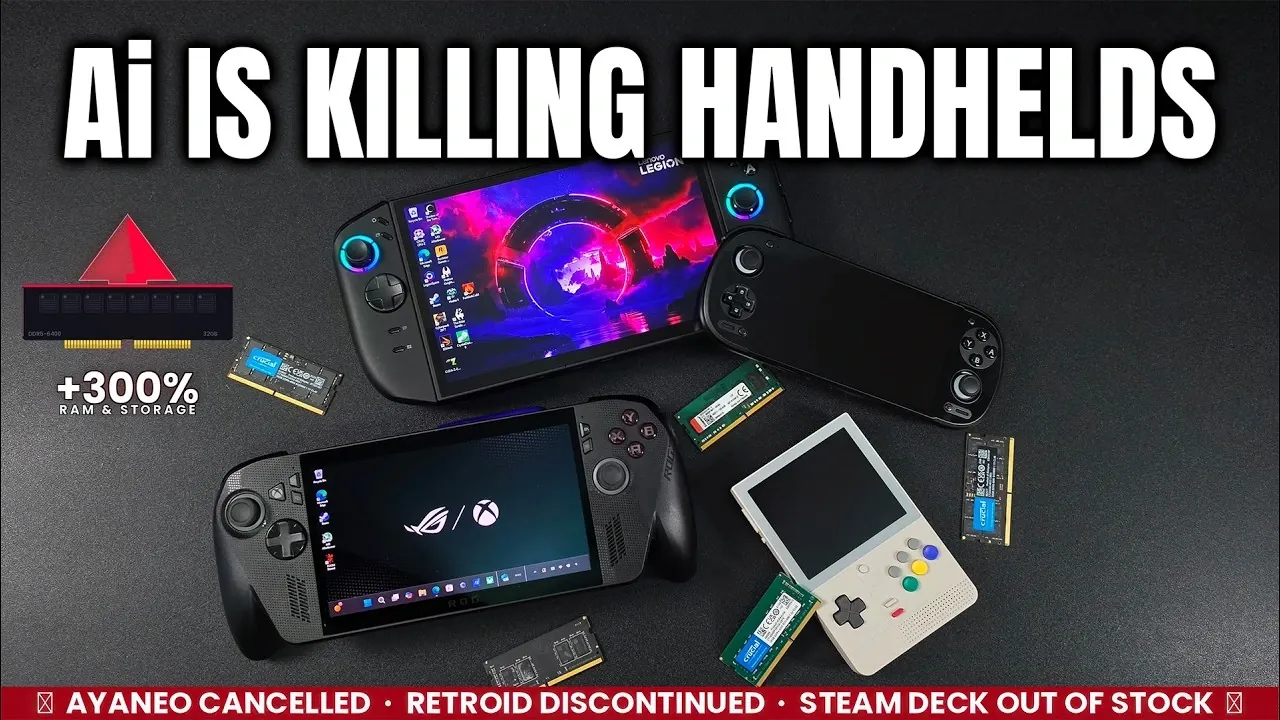
The handheld gaming industry is under pressure as the rapid growth of AI data centers drives up demand for essential components like RAM and storage, creating supply shortages. According to ETA Prime, this surge, fueled by companies such as NVIDIA and Google, has led to rising production costs and delays across the sector. Smaller manufacturers like AYANEO and Retroid have been hit particularly hard, with some canceling devices like the Neo Next 2 and scaling back on others, including the Pocket 6. Even larger companies like Valve and Lenovo are experiencing setbacks, as increasing costs and supply chain disruptions affect their flagship products.
Learn how these component shortages are reshaping production strategies, including the shift toward premium models and the impact on pricing. Discover how consumer behavior is adapting, from the growing reliance on the secondhand market to the adoption of cloud gaming as an alternative. Gain insight into the difficult trade-offs manufacturers face as they navigate rising costs and changing market demands and understand the broader implications for the future of handheld gaming.
Why RAM and Storage Shortages Are Disrupting the Industry
TL;DR Key Takeaways :
- The handheld gaming industry is facing a severe shortage of RAM and storage components due to high demand from AI data centers, causing production disruptions, cost increases and device cancellations.
- Smaller manufacturers like AYANEO and Retroid are particularly affected, with soaring production costs leading to halted sales, discontinued product lines and price hikes for budget-friendly devices.
- Even major players like Valve and Lenovo are scaling back production or delaying releases, highlighting the widespread impact of the component shortage across the industry.
- While some companies are pushing forward with innovative devices like Lenovo’s Legion Go 2 and Asus’s ROG Ally X, these come with high price tags, limiting their appeal to a niche audience.
- Consumers are increasingly turning to the secondhand market or alternative gaming platforms like cloud and mobile gaming, as the shortage reshapes market trends and limits accessibility to new devices.
At the heart of this crisis is the surging demand for RAM and storage from AI data centers. Companies such as Nvidia, Microsoft and Google are consuming vast quantities of these components to power and train advanced AI models. This prioritization of enterprise needs over consumer electronics has created a bottleneck, leaving manufacturers of handheld gaming devices scrambling to secure critical resources.
Smaller companies, including AYANEO and Retroid, are particularly vulnerable in this competitive environment. Without the purchasing power of larger corporations, they struggle to obtain components at reasonable prices. For example, the cost of RAM has surged dramatically, doubling production expenses for some devices. This has led to production halts, price increases and even the cancellation of certain product lines, placing immense pressure on smaller players in the market.
Device Cancellations and Rising Costs
The impact of these shortages is becoming increasingly evident as manufacturers are forced to make difficult decisions. A growing number of handheld devices have been canceled or discontinued due to unsustainable production costs. Notable examples include:
- AYANEO suspending sales of its high-end Neo Next 2 handheld after production costs soared from $2,000 to nearly $4,000.
- Retroid discontinuing the 12GB variant of its Pocket 6 and temporarily halting production of the Pocket G2.
- Budget-friendly devices like the Retroid Pocket Classic and AYN Odin 3 experiencing significant price hikes, making them less accessible to cost-conscious gamers.
These disruptions underscore the fragility of the handheld gaming market. Supply chain constraints have left manufacturers struggling to balance affordability with availability, creating a challenging environment for both producers and consumers.

Become an expert in handheld console with the help of our in-depth articles and helpful guides.
- AYANEO Pocket DS First Look : Portable Dual Screen Gaming
- Retroid Pocket Flip 2 Review: Features, Specs, and Performance
- Retroid Pocket 5 Review: PC Game Emulation on Android
- Steam Deck OLED vs Older Model, Display & Comfort Upgrades
- Steam Machine vs PlayStation vs Xbox
- FunKey S tiny foldable handheld console hits Kickstarter from €62
- 2025 GPD Win Mini Review: Specs, Features, and Performance
- Anbernic RG557 Review: Features, Specs & Performance Tested
- ONEXFLY Apex First Look : Specs & Early Performance Results
- Lenovo Legion Go 2 SteamOS vs Windows : Cost & Features Compared
Even Industry Giants Are Feeling the Strain
The challenges posed by the RAM and storage shortage are not limited to smaller companies. Even industry giants are feeling the strain, with production delays and cost increases affecting their operations. For instance:
- Valve has scaled back production of its popular Steam Deck, discontinuing the LCD model and indefinitely delaying the release of the Steam Machine.
- Lenovo is grappling with higher production costs for its upcoming Legion Go 2, which is expected to launch at a premium price.
These examples highlight the widespread impact of the shortage, reshaping the competitive landscape and forcing even well-established companies to adapt to the new reality. The ripple effects are being felt across the industry, leaving no manufacturer untouched.
Innovation at a Cost: The Future of Handheld Devices
Despite the challenges, some manufacturers are pressing forward with new releases, aiming to maintain innovation in the face of adversity. Devices such as Lenovo’s Legion Go 2 and Asus’s ROG Ally X promise innovative features and improved performance. However, these advancements come with steep price tags that may deter many consumers.
Adding to the complexity, delays in chip production from major suppliers like Intel and Qualcomm are slowing the rollout of next-generation handhelds. This creates a difficult balancing act for manufacturers, who must weigh the need for innovation against the rising costs of production. While these devices showcase the potential for technological progress, their high prices and limited availability may restrict their appeal to a niche audience.
Shifting Consumer Behavior and Market Trends
As new devices become more expensive and harder to obtain, many gamers are turning to the secondhand market as a practical alternative. Older models of devices like the Steam Deck and previous-generation handhelds are increasingly sought after by budget-conscious buyers. However, even this market is not immune to the effects of the shortage. Limited supply has driven up prices, mirroring trends seen in the desktop PC market, where RAM and SSD costs have also surged.
This shift in consumer behavior reflects a broader trend in the gaming industry. Gamers are exploring alternative platforms, such as cloud gaming and mobile gaming, which offer more affordable and accessible options. These changes highlight how the crisis is reshaping the market, pushing consumers to adapt to the evolving landscape.
What Lies Ahead for Handheld Gaming?
The future of the handheld gaming industry remains uncertain. With the RAM and storage shortage expected to persist until at least 2027, manufacturers will continue to face rising costs, production delays and limited innovation. For consumers, this translates to fewer options and higher prices, potentially driving more gamers toward secondhand markets or alternative gaming solutions.
As AI data centers continue to expand, the competition for critical components will only intensify. This ongoing struggle raises important questions about the adaptability of the handheld gaming industry. Will manufacturers find innovative ways to overcome these challenges, or will the crisis mark the beginning of a long-term decline for handheld gaming devices? The coming years will be pivotal in determining the trajectory of this once-thriving market.
Media Credit: ETA PRIME
Disclosure: Some of our articles include affiliate links. If you buy something through one of these links, Geeky Gadgets may earn an affiliate commission. Learn about our Disclosure Policy.
