Apple has recently introduced significant price increases across its product lineup, impacting a wide range of devices, including MacBooks, iPads, HomePods, and Apple TVs. Even refurbished products, which have traditionally offered a more affordable alternative, have not been exempt from these adjustments. The company has attributed these changes to rising costs for memory and flash storage, driven by the growing demand for AI infrastructure. However, the scale of these increases has sparked widespread debate about their justification and the potential effects on consumer purchasing decisions. The video below from MacRumors gives us more details about the increased prices.

How Much Have Prices Increased?
The price hikes are substantial, with some products experiencing increases of up to 30%. Below is a detailed breakdown of the changes:
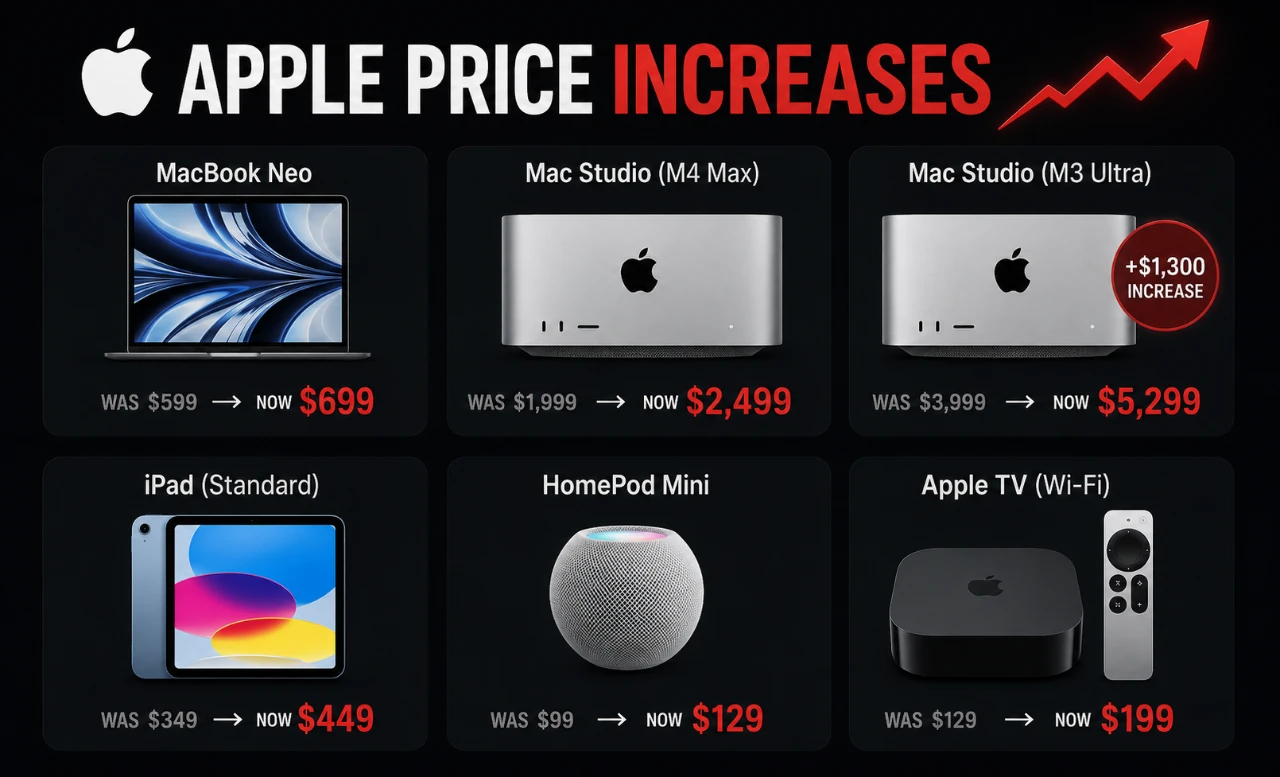
- The MacBook Neo now starts at $699, up from $599.
- The Mac Studio featuring the M4 Max chip has risen from $1,999 to $2,499.
- High-performance models like the M3 Ultra Mac Studio have jumped from $3,999 to $5,299, reflecting a $1,300 increase.
- The standard iPad now costs $449, compared to its previous price of $349.
- The HomePod Mini has increased from $99 to $129.
- Apple TV models have also seen price adjustments, with the Wi-Fi-only version now priced at $199, up from $129.
Larger devices have not been spared either. The full-size HomePod now costs $349, while the Apple TV Wi-Fi + Ethernet model has jumped from $149 to $249. These increases reflect a broader trend across Apple’s ecosystem, where both new and refurbished products are being affected. The scale of these adjustments has raised questions about how they will influence consumer preferences and purchasing habits.
Refurbished Devices Are No Longer a Bargain
Apple’s refurbished products, often considered a cost-effective option, have also seen notable price increases. Refurbished Macs now cost an additional $200 to $330 on average, while refurbished iPads have risen by $120 to $150. This shift has drawn criticism, as refurbished devices are typically built using components acquired before the recent surge in memory and flash storage costs. Critics argue that these price hikes are harder to justify, given the lower production costs associated with refurbished products.
For consumers who rely on refurbished devices as a more affordable entry point into Apple’s ecosystem, these changes could be particularly discouraging. The higher prices may force buyers to reconsider their options, potentially pushing them toward alternative brands or delaying purchases altogether.
Apple’s Justification for the Price Hikes
Apple has cited rising costs for key components, particularly memory (RAM) and flash storage, as the primary reason for the price increases. The company points to the growing demand for these components, fueled by the rapid expansion of AI infrastructure, as a major factor. According to Apple, it absorbed these rising costs for as long as possible but ultimately had to pass them on to consumers to maintain its financial stability.
While this explanation aligns with broader trends in the tech industry, it does not fully address concerns surrounding refurbished products. Since these devices are built using components acquired before the current cost surge, many argue that they should not be subject to the same price pressures as new products. This discrepancy has led to questions about whether the price hikes for refurbished devices are justified or simply a reflection of Apple’s broader pricing strategy.
What Does This Mean for Consumers?
The price increases could have a significant impact on consumer behavior. For high-end products like the M3 Ultra Mac Studio, the steep price jump may deter potential buyers or encourage them to explore alternative brands or configurations. Similarly, the higher costs for entry-level devices, such as the standard iPad or Apple TV, could make Apple’s ecosystem less accessible to budget-conscious consumers.
Apple’s decision to pass these costs directly to customers marks a notable shift in its pricing strategy. While this approach helps the company maintain its profit margins and reinforces its premium brand image, it risks alienating a segment of its customer base, particularly those who have traditionally relied on refurbished products for affordability. The changes may also prompt consumers to reevaluate their purchasing priorities, potentially leading to a decline in demand for certain products.
Balancing Innovation, Cost, and Accessibility
Apple’s pricing strategy underscores the challenges of balancing innovation, cost and accessibility in the tech industry. The rising costs of memory and flash storage provide a plausible explanation for the increases, but the inclusion of refurbished devices in these adjustments raises valid concerns. For consumers, these changes may necessitate a careful reassessment of their purchasing decisions, particularly for high-end or refurbished products.
As Apple navigates these challenges, its approach to pricing will likely influence broader discussions about affordability and value in the technology market. Whether these increases represent a temporary adjustment or signal a long-term trend remains uncertain. However, they highlight the growing tension between technological advancement and consumer accessibility, a dynamic that could shape the future of the industry in the years to come.
Deep dive into the latest in Apple price increases by exploring our other resources and articles.
- Apple Is Reportedly Raising iPhone 17 Prices Sooner Than Anyone Expected
- Apple’s next big shift: Why iPhone prices are heading toward a record high
Source & Image Credit: MacRumors
Disclosure: Some of our articles include affiliate links. If you buy something through one of these links, Geeky Gadgets may earn an affiliate commission. Learn about our Disclosure Policy.
