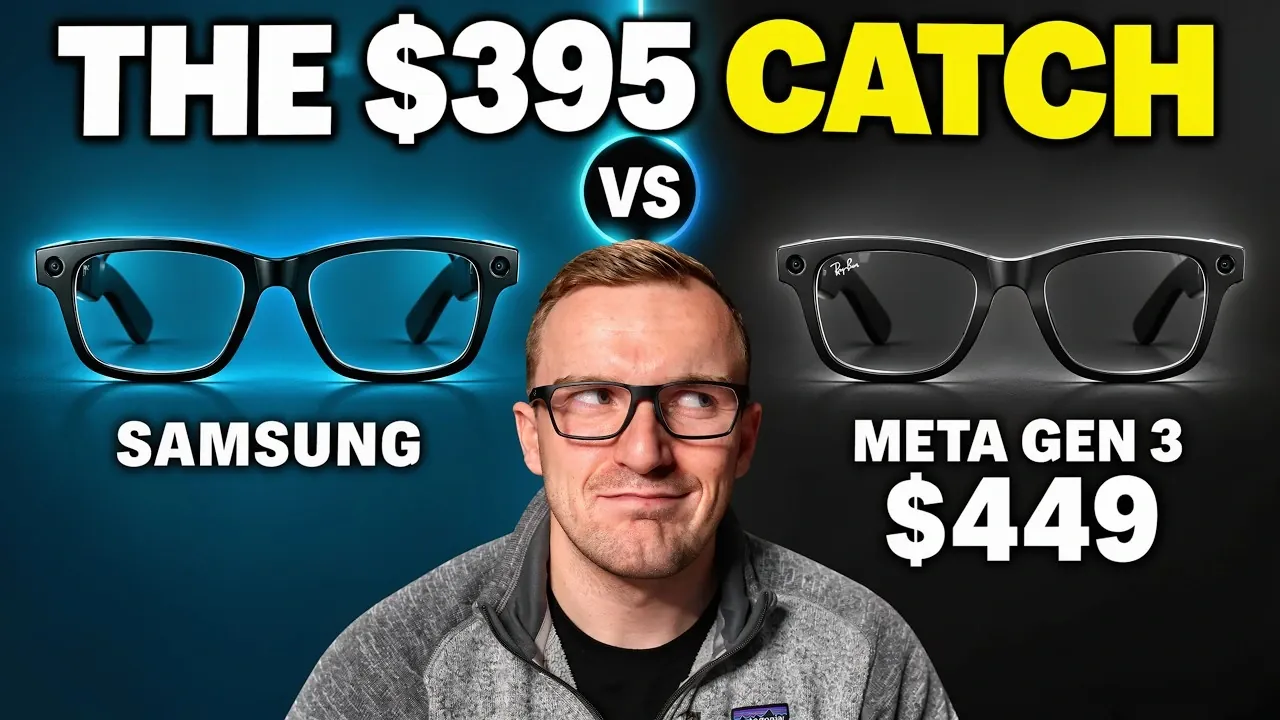
Samsung’s smart glasses start at $395, or $54 less than Ray-Ban Meta Gen 3, and may offer better value on paper for a first-time buyer who needs prescription lenses. That comparison is provisional: Samsung’s glasses are not scheduled to ship until December 10, so their fit and everyday performance remain untested by Tech with Spencer.
Compare prescription costs and return policies across Warby Parker and Gentle Monster, including how insurance and lens upgrades can change the final price. The feature also examines camera specifications and recording limits, then looks at phone compatibility and AI features to help you identify which functions are available on your device at launch.
Samsung vs Meta Smart Glasses
TL;DR Key Takeaways :
- Samsung and Google’s smart glasses start at $395, $54 less than the Ray-Ban Meta Gen 3. A Warby Parker single-vision pair costs almost $180 less than the $674 prescription Gen 3 in one comparison.
- Both pairs have cameras, microphones and speakers but no lens display. Both capture 12-megapixel photos and 3K video at 30 frames per second; PCMag and 9to5Google report a roughly 90-second clip limit for Samsung’s glasses.
- Samsung lists 64 GB of storage versus Meta’s 32 GB and says its glasses weigh about 41 g versus the Gen 3’s 51 g. Both companies claim up to nine hours of battery life on the glasses.
- Samsung’s glasses use Google Gemini, while Meta’s use Meta AI. Google lists live translation in more than 70 languages versus Meta’s 20, but Gemini remains a demo on Samsung’s glasses until they ship.
- At launch, Samsung supports recent Galaxy models on One UI 9, Pixel 7 and newer, and iPhone 13 Pro and newer, with a US or South Korean Google account required. Tech with Spencer considers Samsung the better deal on paper for a first-time Galaxy or Pixel buyer, especially with a prescription, but advises trying them on first.
Samsung and Google’s first smart glasses start at $395, less than the Ray-Ban Meta Gen 3, while matching its camera resolution and battery-life claim. For the right first-time buyer, particularly someone who needs prescription lenses, Samsung looks like the better deal on paper.
That comparison rests on specifications: Samsung’s glasses do not ship until December 10. The Meta comparison draws on experience wearing the Gen 2 and Ray-Ban Meta Gen 3, which was bought last month.
Both designs place cameras, microphones and speakers in the frames, without a lens display. You can take photos and video, play music, handle calls and connect to an AI assistant. Samsung makes the hardware, Google supplies the software, and Warby Parker and Gentle Monster provide the frames.
Prescription Prices and Frame Choices
Warby Parker frames start at $395, or $54 less than the starting price of the Ray-Ban Meta Gen 3. Meta still sells the Gen 2 for $379, as well as glasses without the Ray-Ban name. After wearing both generations, the Gen 2 was found to do almost everything the Gen 3 does.
In one breakdown, a Warby Parker single-vision pair costs almost $180 less than a prescription Gen 3 priced at $674. Warby Parker lists progressive lenses at $725; a single-vision pair with every lens upgrade reaches $780.
Warby Parker accepts vision insurance, FSA and HSA funds for prescription pairs and claims an average saving of about $100. Gentle Monster adds about $100 for prescription lenses and is out of network for insurance. Its range goes to minus 9, compared with minus 8 at Warby Parker and minus 12 for Meta.

Find more information on Samsung and Meta smart glasses by browsing our extensive range of articles, guides and tutorials.
- Samsung Galaxy Glasses: Official Pre-Order Date and December Release Confirmed
- What We Now Know About the Samsung Galaxy Glasses
- Upcoming Samsung Smart Glasses Ditch Displays for Google Gemini
- Ray-Ban Meta Gen 3 Upgrades Camera to 3K Resolution Video
- 5 Smart Glasses Under $450 That Beat the $579 Ray-Ban Meta Gen 3
Cameras, Weight and Battery
Samsung’s listed hardware has a weight and storage advantage, while the camera specifications are close:
- Weight: About 41 g, according to Samsung.
- Camera: 12-megapixel photos and up to 3K video at 30 frames per second.
- Battery: Up to nine hours, Samsung claims; the case takes the total to 72 hours.
- Storage: 64 GB, compared with 32 GB on the Ray-Ban Meta Gen 3.
- Processor: Snapdragon AR1 Gen 1 with 2 GB of RAM.
- Water resistance: IPX4.
The Gen 3 weighs about 51 g and put pressure above the ears in testing. Lighter frames could matter, though how Samsung’s feel cannot be judged until they are tried. Sweat and light rain are fine for Samsung’s IPX4-rated pair; a pool probably is not.
Both cameras capture 12-megapixel photos and 3K video at 30 frames per second. Meta also offers 1080p at 60 frames per second; Samsung has not listed a 60-frame mode. Gen 3 clips run about three minutes at 3K, while PCMag and 9to5Google report a roughly 90-second clip limit for Samsung’s glasses. Both outlets appear to have tried them.
Meta also claims up to nine hours on the glasses, with its case adding 50 hours, making battery life essentially even on paper. Meta has an audio edge on paper, with six microphones against Samsung’s four; both use open-ear speakers. Tech with Spencer ranks the Meta speakers first among the pairs he has tested, and Samsung still has to match them.
Gemini Against Meta AI
Meta AI received an upgrade this year and runs on the newer Muse Spark model in the US and Canada. After months of asking it about things in view, translating and sending messages by voice, it was found to work for everyday needs.
Samsung’s glasses use Google Gemini, connected to Google apps. Google says Gemini can look at an event poster, check your calendar and say whether you are free. It can also add grocery-list items and set reminders. Google Maps provides turn-by-turn directions, music works with major apps, and Galaxy phone owners also get Bixby.
Google lists live translation in more than 70 languages, versus Meta’s 20. Gemini appears intended to act within the phone, rather than primarily answer questions, but it remains a demo on these glasses until they ship. A PCMag reviewer spent hours with a pair and reported that Gemini handled nearly everything he tried, while also giving one wrong answer.
Phone Support, Fit and Availability
At launch, supported phones are recent Galaxy models on One UI 9, Pixel 7 and newer, and iPhone 13 Pro and newer. You need a Google account from the US or South Korea, which are the only launch countries. The Meta glasses have worked regardless of which phone was used. One buyer said he canceled a $1,000 order because his OnePlus phone was unsupported.
Some Samsung features work only on Android at launch, including guided vision, which describes the surroundings for blind and low-vision users. Google says guided vision in Aira may require a subscription. Gemini needs the phone; Samsung says the glasses otherwise provide only photos, video and volume.
Samsung’s temples do not adjust, so you choose a size; an optician can adjust Gen 3 temple tips. Gentle Monster prescription orders cannot be returned, including the glasses. Warby Parker offers 30-day returns and a one-year warranty. Google says demos are available in more than 360 Warby Parker stores. Samsung reached $395 by cutting two microphones, adjustable fit and access for most of the world.
At the time of recording, Gentle Monster preorders were sold out, with notification sign-ups available. Warby Parker orders begin shipping in mid-December, and prescription pairs can take up to 21 days once in production. Tech with Spencer is not preordering yet: he tries glasses on first for every review.
Privacy and the buying decision
Both pairs have a recording light and a physical off switch. Samsung says its camera will not record if the light is covered. But 9to5Google reports that the light comes on only when a photo or video is saved and stays off while Gemini looks through the camera. Google says nearby faces are hidden before Gemini sees them and camera material sent to Gemini is not used to train its AI or target ads.
He wants more real-world time before trusting either company’s privacy claims. A required Gen 3 security update arrived during the review without making clear exactly what it fixed.
Tech with Spencer thinks Samsung is the better deal on paper for a first-time buyer with a Galaxy or Pixel, especially with a prescription, but advises trying the glasses on first. For existing Gen 2 or Gen 3 owners, he would not switch now: that would mean spending about $400 on an AI upgrade nobody has lived with yet. He leans toward Meta for iPhone owners because Samsung loses features at launch. Neither pair is for someone who wants a lens display.
Media Credit: Tech with Spencer
Disclosure: Some of our articles include affiliate links. If you buy something through one of these links, Geeky Gadgets may earn an affiliate commission. Learn about our Disclosure Policy.
