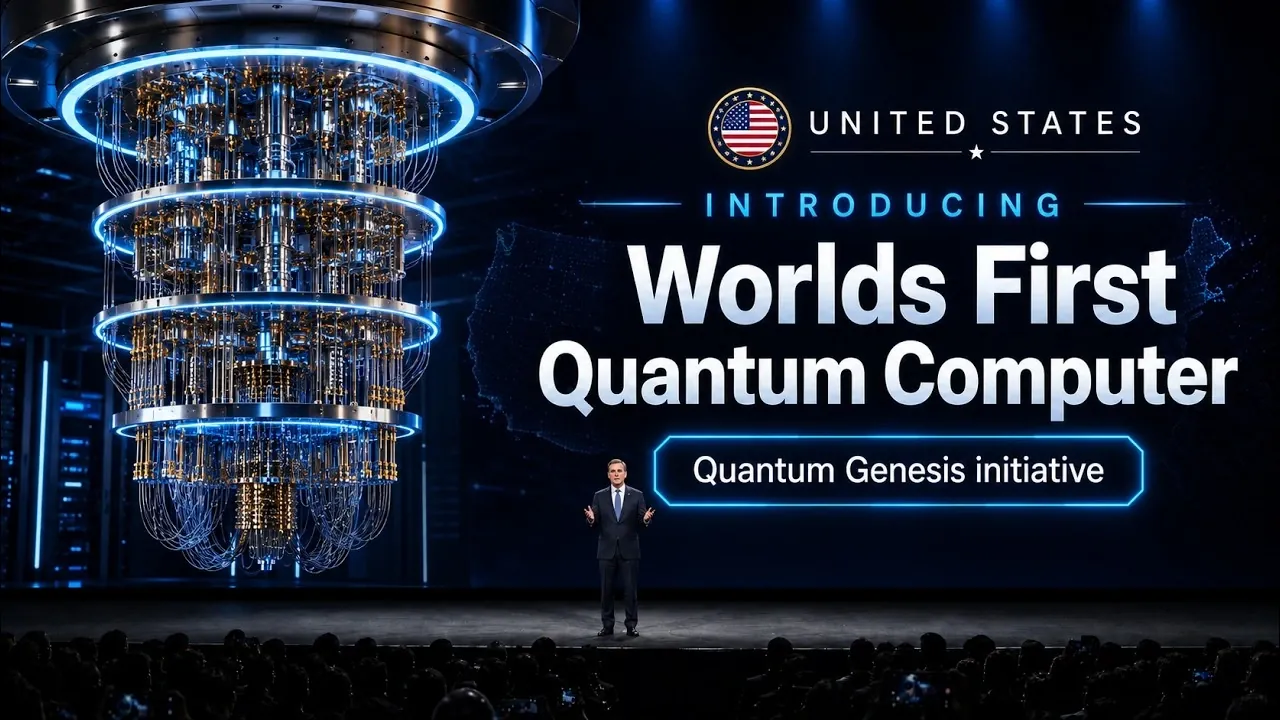
The unveiling of the Quantum Genesis Initiative marks a pivotal moment in the global race for quantum computing supremacy. Announced by the U.S. Department of Energy, this ambitious program aims to develop the world’s first fault-tolerant quantum computer by 2028, a feat that could transform industries ranging from healthcare to national security. Unlike classical computers, quantum systems harness the principles of quantum mechanics to solve problems of immense complexity, such as simulating molecular interactions or optimizing large-scale logistics. AI Grid explores how this initiative not only accelerates quantum innovation but also addresses critical challenges like qubit instability and error correction, which remain key barriers to achieving reliable quantum computation.
Dive into this explainer to understand the broader implications of the Quantum Genesis Initiative and its role in shaping the future of technology and geopolitics. You’ll gain insight into the strategic importance of post-quantum cryptography, the U.S. government’s $2 billion investment in quantum research and the collaborative frameworks being established to safeguard national interests. Additionally, this breakdown highlights the global stakes of the quantum race, particularly the competition between the U.S. and China and what it means for technological leadership in the decades ahead.
The Vision Behind the Initiative
TL;DR Key Takeaways :
- The U.S. has launched the Quantum Genesis Initiative to develop the world’s first fault-tolerant quantum computer by 2028, aiming to enhance national security, scientific discovery and economic competitiveness.
- Two executive orders focus on accelerating quantum innovation and transitioning to post-quantum cryptography by 2030-2031 to address both opportunities and security risks posed by quantum technology.
- Achieving fault tolerance in quantum computing is a major challenge due to qubit instability, prompting the establishment of specialized research centers to advance error correction techniques.
- The U.S. is investing $2 billion in grants and taking ownership stakes in quantum ventures to maintain leadership in the global quantum race, particularly against China’s significant advancements.
- The initiative’s success could redefine global power dynamics, with quantum computing poised to transform industries such as healthcare, finance, logistics and national defense.
The Quantum Genesis Initiative’s primary goal is to create a fault-tolerant quantum computer capable of solving complex, real-world problems that are beyond the reach of classical computing. Unlike traditional computers, which process information in binary (0s and 1s), quantum computers use the principles of quantum mechanics to perform calculations at exponentially faster speeds for specific tasks. These tasks include simulating molecular interactions for drug development, optimizing large-scale logistical systems and solving mathematical problems that currently defy classical computation.
However, achieving fault tolerance remains a formidable challenge. Quantum bits, or qubits, are highly sensitive to environmental disturbances, leading to frequent errors during computation. To address this, the U.S. government plans to establish specialized research centers and networks dedicated to advancing error correction techniques and making sure reliable quantum operations. These efforts are critical to unlocking the full potential of quantum computing and achieving the initiative’s ambitious objectives.
Executive Orders: Laying the Groundwork
The initiative is underpinned by two executive orders that provide a clear framework for progress:
- “Ushering in the Next Phase of Quantum Innovation”: This order focuses on accelerating the development of quantum computing technologies by fostering innovation and collaboration across government, industry and academia.
- “Securing the Nation Against Advanced Cryptographic Attacks”: This order mandates a transition to post-quantum cryptography by 2030-2031 to protect sensitive data and critical infrastructure from the potential decryption capabilities of future quantum computers.
These directives address both the opportunities and risks associated with quantum technology. By emphasizing innovation while proactively mitigating security threats, the U.S. aims to maintain its leadership in this fantastic field.
National Security: Opportunities and Risks
Quantum computing holds immense potential for national security, offering opportunities to transform areas such as defense simulations, secure communications and intelligence analysis. For instance, quantum algorithms could enhance the accuracy of battlefield simulations or improve the encryption of classified communications. However, this technology also poses significant risks. A sufficiently advanced quantum computer could render current encryption methods obsolete, exposing sensitive government data, financial transactions and personal information to potential cyberattacks.
To counter these risks, the U.S. is prioritizing the development and adoption of quantum-resistant cryptographic standards. These measures aim to safeguard the nation’s digital infrastructure against future quantum-enabled threats, making sure the security of critical systems in an increasingly interconnected world.

Here are more detailed guides and articles that you may find helpful on Quantum Computing.
- Why AI’s Quantum Computing Leap Has Cybersecurity Experts Alarmed
- Nvidia’s New 30B Nemotron Model Tested : Mixture of Experts (MoE)
- Inside the Grok 5 Roadmap: How xAI Plans to Reach AGI
- Quantum Computing : IBM’s Vision for the Future of AI and Encryption
- How Quantum Computers Are Solving the World’s Biggest Problems
- Quantum Computers Could Break Encryption : Are We Ready for the Digital Apocalypse?
- Rigetti’s Ankaa-3 84-Qubit Quantum Computer is Here to Disrupt the Industry
Global Competition: The U.S. and China
The race for quantum supremacy has become a focal point of global competition, with the U.S. and China emerging as the primary contenders. Quantum technology is widely regarded as a cornerstone for advancements in artificial intelligence, cybersecurity and economic leadership. While the U.S. currently holds a slight edge due to its robust research ecosystem and private-sector innovation, China’s substantial investments in quantum research and development present a formidable challenge.
Maintaining leadership in this field will require sustained innovation, strategic investments and close collaboration between government agencies, private companies and academic institutions. The stakes are exceptionally high, as the nation that achieves quantum supremacy could gain a decisive advantage in shaping the future of global technology and power structures.
Collaboration and Investment: Keys to Success
The success of the Quantum Genesis Initiative hinges on strong partnerships across sectors. To assist this collaboration, the U.S. government has allocated $2 billion in grants to support quantum computing companies. Additionally, it plans to take direct ownership stakes in key ventures to ensure that critical advancements remain under domestic control.
This collaborative approach is designed to accelerate technological progress while safeguarding national interests. By pooling resources and expertise, the initiative aims to overcome the technical and logistical challenges associated with quantum computing. Such partnerships are essential to achieving the ambitious goals set forth by the initiative and maintaining the U.S.’s competitive edge in this rapidly evolving field.
Economic Implications and Market Impact
The announcement of the Quantum Genesis Initiative has already had a noticeable impact on the economy, with quantum computing stocks experiencing a surge in value. This reflects growing investor confidence in the government’s commitment to fostering demand for quantum technologies. The initiative is expected to stimulate innovation across industries, from healthcare and finance to logistics and energy.
However, early-stage companies face significant hurdles in meeting the initiative’s ambitious timelines. Developing fault-tolerant quantum computers and advancing error correction techniques are complex and resource-intensive endeavors. Success will require not only substantial financial investment but also breakthroughs in hardware, software and quantum algorithms.
Timelines and Technical Challenges
The Department of Energy has set an ambitious timeline to deliver a functional fault-tolerant quantum computer by 2028. Additionally, federal agencies are required to implement post-quantum cryptographic standards by 2030-2031. While these deadlines underscore the urgency of the initiative, they also highlight the immense technical challenges involved.
Quantum systems are inherently complex and the technology is still in its infancy. Overcoming these challenges will require advancements in qubit stability, error correction and system scalability. Despite these obstacles, the initiative’s ambitious goals serve as a rallying point for researchers, engineers and policymakers, driving progress in this critical field.
A Defining Moment in Technological History
The race for quantum supremacy represents a pivotal moment in the history of science and technology. Success in this endeavor could redefine global power dynamics, granting the U.S. a decisive edge in areas such as national security, economic influence and technological innovation. Conversely, failure to achieve the initiative’s objectives could allow competitors, particularly China, to take the lead, with profound implications for the U.S. and its allies.
The Quantum Genesis Initiative is more than just a technological project; it is a strategic effort to shape the future of global leadership in the 21st century. By fostering innovation, addressing security challenges and strengthening economic competitiveness, the U.S. is positioning itself to lead the next technological revolution. As the global race intensifies, the stakes could not be higher and the outcome will undoubtedly influence the trajectory of nations and industries for decades to come.
Media Credit: TheAIGRID
Disclosure: Some of our articles include affiliate links. If you buy something through one of these links, Geeky Gadgets may earn an affiliate commission. Learn about our Disclosure Policy.
