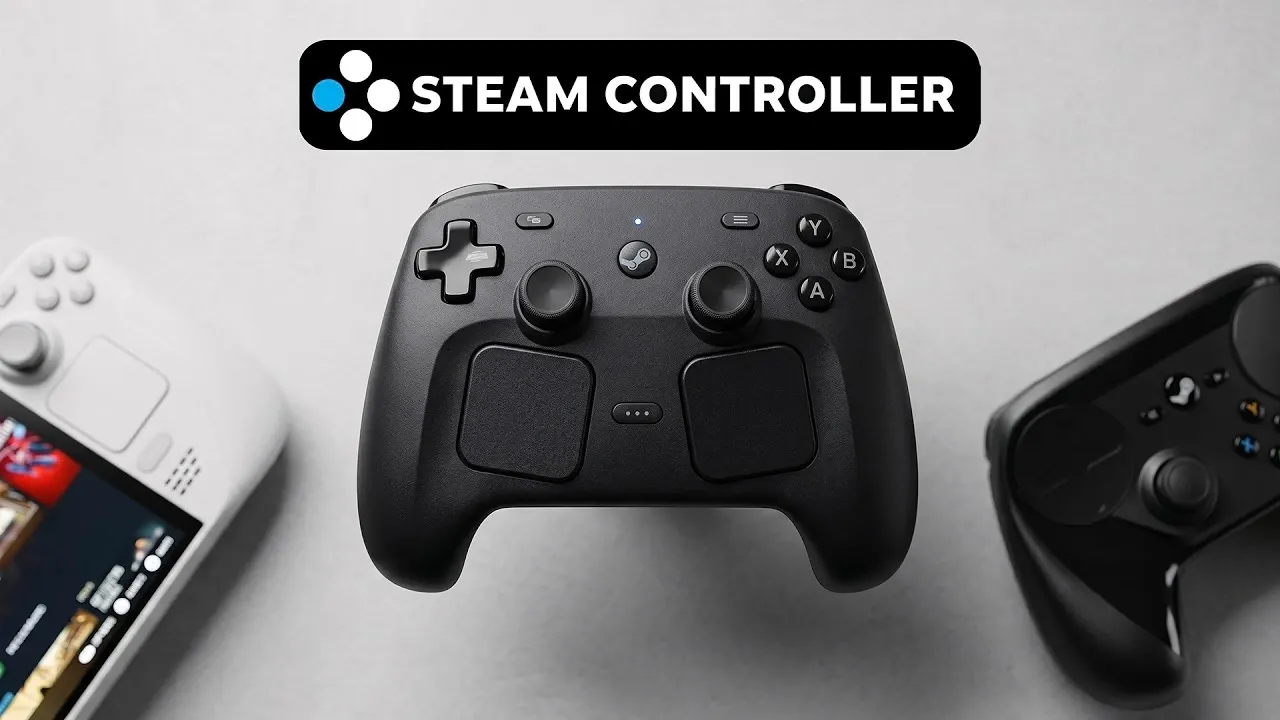
ETA Prime examines the latest version of the Steam Controller, focusing on its updated design and expanded functionality. Building on the foundation of the 2015 model, this iteration introduces dual analog sticks, dual trackpads and a redesigned D-pad, aiming to accommodate diverse gaming preferences. Features like capacitive sensors and gyro gameplay add precision and flexibility, though its limited support for non-Steam platforms may pose a drawback for users who game across multiple ecosystems.
Discover how the controller’s programmable buttons, adjustable gyro sensitivity and customizable trackpad settings contribute to a tailored gaming experience. Gain insight into its connectivity options, including Bluetooth, USB-C and a proprietary wireless puck, designed for various setups. Additionally, learn about the TMR analog sticks and responsive triggers, which are particularly suited for gamers seeking accuracy in competitive scenarios.
Design and Build: Balancing Comfort and Functionality
TL;DR Key Takeaways :
- The new Steam Controller features a refined design with dual analog sticks, dual trackpads, a redesigned D-pad and capacitive sensors, enhancing precision and versatility for various gaming styles.
- It offers multiple connectivity options, including a proprietary 2.4 GHz wireless puck, Bluetooth and USB-C, but performs best within the Steam ecosystem.
- Customization is a standout feature, allowing gamers to program buttons, adjust gyro sensitivity and configure trackpad behavior for tailored gameplay experiences.
- High-performance hardware, such as TMR analog sticks and responsive triggers, ensures precision and responsiveness, particularly for competitive gaming.
- While priced at $99 and optimized for Steam, its limited compatibility with non-Steam platforms and consoles may deter users seeking a universal controller solution.
The updated Steam Controller strikes a careful balance between ergonomic comfort and functional versatility. Its lightweight design and compact form factor make it a strong competitor to popular controllers like the Xbox and Switch Pro. Key design elements include:
- Dual analog sticks and dual trackpads: These provide flexibility for a wide range of gaming styles, from first-person shooters to strategy games.
- Redesigned D-pad: The improved directional pad enhances accuracy, particularly for genres like platformers and fighting games.
- Capacitive sensors: Features such as gyro gameplay and grip-sense functionality add layers of immersion and control.
The controller’s design is tailored to meet the needs of both casual and competitive gamers, making sure a comfortable and intuitive experience during extended gaming sessions.
Connectivity: Flexible Options for Every Setup
The Steam Controller offers multiple connectivity options, making it adaptable to various gaming setups and environments. These include:
- Proprietary 2.4 GHz wireless puck: This low-latency option is ideal for competitive gaming, making sure smooth and responsive inputs.
- Bluetooth: Expands compatibility to a broader range of devices, including mobile platforms and PCs.
- USB-C wired connection: Provides a stable and reliable connection, eliminating battery concerns during marathon gaming sessions.
While these options enhance its versatility, the controller performs best within the Steam ecosystem, where its features are fully optimized.
Become an expert in Steam Controller with the help of our in-depth articles and helpful guides.
- Leaked Specs and Pricing for Valve’s Next-Gen Steam Controller
- Valve Steam Controller 2026 Tested : Is the $100 Gamepad Worth It?
- Steam Controller Low-Latency Receiver and Drift-Resistant Sticks
- Steam Controller 2026 vs Original : What Might Improve in 2026
- Valve Steam Frame VR & Steam Controller Update & Guide
Customization: Tailored to Your Playstyle
Customization remains one of the standout features of the new Steam Controller, offering extensive options through Steam Input. Gamers can program every button to suit their preferences, whether for casual play or competitive scenarios. Advanced customization options include:
- Gyro sensitivity adjustments: Fine-tune motion controls for precise aiming and movement.
- Trackpad behavior settings: Adapt the trackpads to fit different game genres, from shooters to real-time strategy games.
- Button remapping: Optimize button layouts for specific games or playstyles.
The inclusion of haptic feedback and responsive trackpads, reminiscent of the Steam Deck, enhances the tactile gaming experience, making it both immersive and highly responsive.
Performance: Precision at Its Core
The Steam Controller is engineered for high-performance gaming, with hardware innovations that prioritize precision and responsiveness. Key performance features include:
- TMR analog sticks: Magnetic sensors eliminate drift and deliver unparalleled accuracy, addressing a common issue with traditional analog sticks.
- Responsive triggers: Perfect for racing games and other genres requiring nuanced inputs, these triggers provide a smooth and consistent feel.
- Enhanced D-pad: The redesigned D-pad ensures reliable performance across a variety of genres, from retro classics to modern titles.
These features make the controller a reliable choice for gamers who demand accuracy and responsiveness, particularly in competitive settings.
Compatibility: A Steam-Centric Approach
The controller integrates seamlessly with Steam OS and Steam games, offering a plug-and-play experience that is optimized for the Steam ecosystem. However, its compatibility outside of Steam is more limited:
- Non-Steam games: To use the controller with non-Steam titles, users must add them as non-Steam games within the Steam client, which can be an inconvenient extra step.
- Console support: The controller does not work with PlayStation or Xbox consoles, restricting its appeal to PC gamers.
This narrow compatibility may deter users who frequently switch between gaming platforms, making it less attractive to those seeking a universal solution.
Price and Value: A Premium Investment
Priced at $99, the new Steam Controller positions itself as a premium option in the gaming peripheral market. While this price point is $50 higher than its 2015 predecessor, the extensive features and customization options justify the cost for gamers deeply invested in the Steam ecosystem. Compared to other high-end controllers, it offers a competitive edge for Steam-focused users, delivering a tailored experience that aligns with the platform’s strengths.
Limitations: Room for Improvement
Despite its many strengths, the Steam Controller has some limitations that may affect its broader appeal:
- Limited platform compatibility: The lack of support for PlayStation and Xbox consoles reduces its versatility for multi-platform gamers.
- Extra setup for non-Steam games: Adding non-Steam titles to the Steam client can be a cumbersome process, detracting from its ease of use.
These drawbacks may make the controller less appealing to users who prioritize universal compatibility and seamless integration across multiple platforms.
A Controller for Steam Enthusiasts
The new Steam Controller is a compelling choice for PC gamers who value customization, precision and performance within the Steam ecosystem. Its advanced features, such as dual trackpads, TMR analog sticks and programmable buttons, set it apart as a premium gaming peripheral. While its limited compatibility with non-Steam platforms and consoles may deter some users, its robust feature set and seamless integration with Steam make it an excellent investment for dedicated Steam users. At $99, it offers strong value for its target audience, solidifying its position as a top-tier option for PC gaming enthusiasts.
Media Credit: ETA PRIME
Disclosure: Some of our articles include affiliate links. If you buy something through one of these links, Geeky Gadgets may earn an affiliate commission. Learn about our Disclosure Policy.
