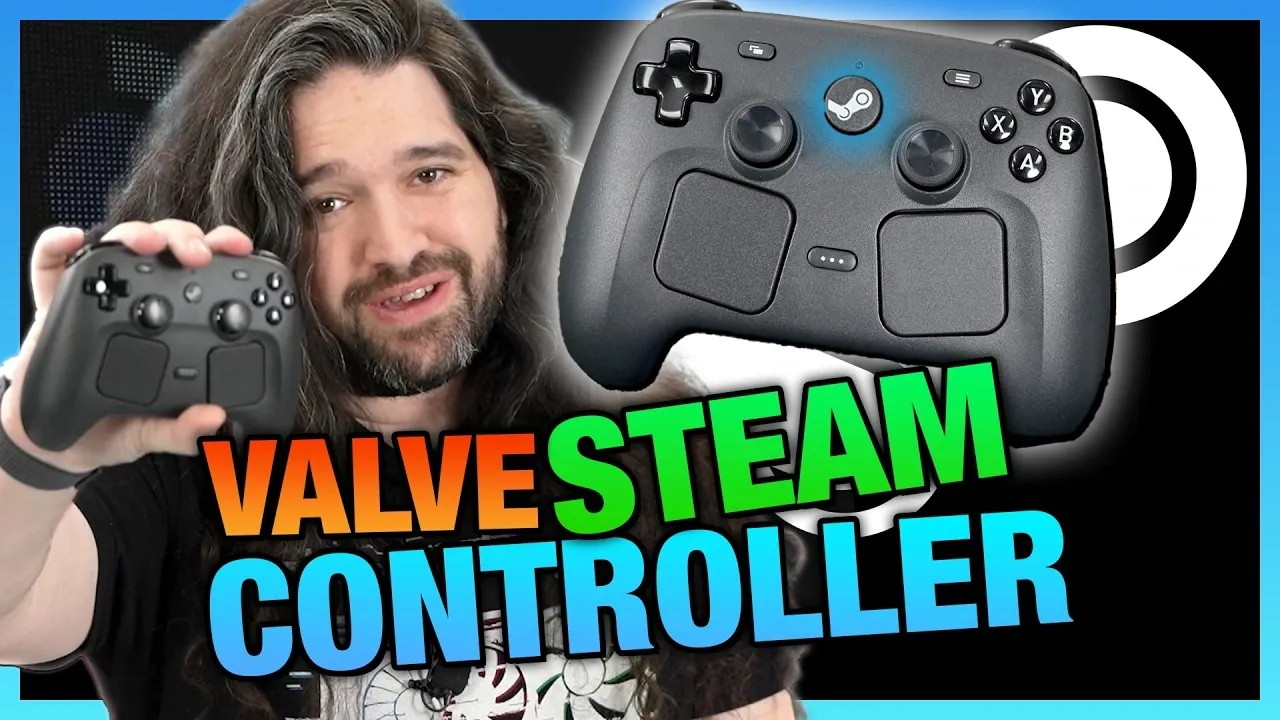
Valve’s new Steam Controller, launching May 4, 2026, builds on its 2015 predecessor with a focus on precision, customization and repairability. Below the awesome team at Gamers Nexus highlights standout features such as TMR analog sticks, which reduce dead zones for competitive gaming and haptic trackpads that mimic PC-style controls for nuanced input. The controller also introduces a modular design, allowing users to easily replace components like the rechargeable battery using non-security Torx screws. Priced at $100, it targets gamers who value adaptability and long-term usability, though its reliance on the Steam ecosystem may limit broader appeal.
Explore how the controller performs in critical areas like latency benchmarks, where the proprietary puck adapter ensures near-instant responsiveness and battery life, which exceeded Valve’s 35-hour claim during testing. Gain insight into its repairability, supported by Valve’s partnership with iFixit for accessible replacement parts and understand its limitations, including Bluetooth connectivity challenges in high-interference environments. This hands-on review offers a comprehensive look at whether the Steam Controller aligns with your gaming needs.
Design and Features
TL;DR Key Takeaways :
- The Valve Steam Controller, launching May 4, 2026, features advanced TMR analog sticks, haptic trackpads and a modular design for enhanced customization, priced at $100.
- Performance highlights include low-latency connections via a proprietary puck adapter, exceptional battery life of up to 73 hours and quick recharging in under 3.5 hours.
- Repairability is a key focus, with modular components, non-security Torx screws and collaboration with iFixit for easy part replacements, promoting sustainability and long-term usability.
- Targeted at PC gaming enthusiasts and living room gamers, the controller offers precision, adaptability and compatibility with Steam Deck, Steam Machine and Steam Frame VR headsets.
- Limitations include potential Bluetooth connectivity issues in high-interference environments, platform dependence on Steam and a premium $100 price point that may deter casual gamers.
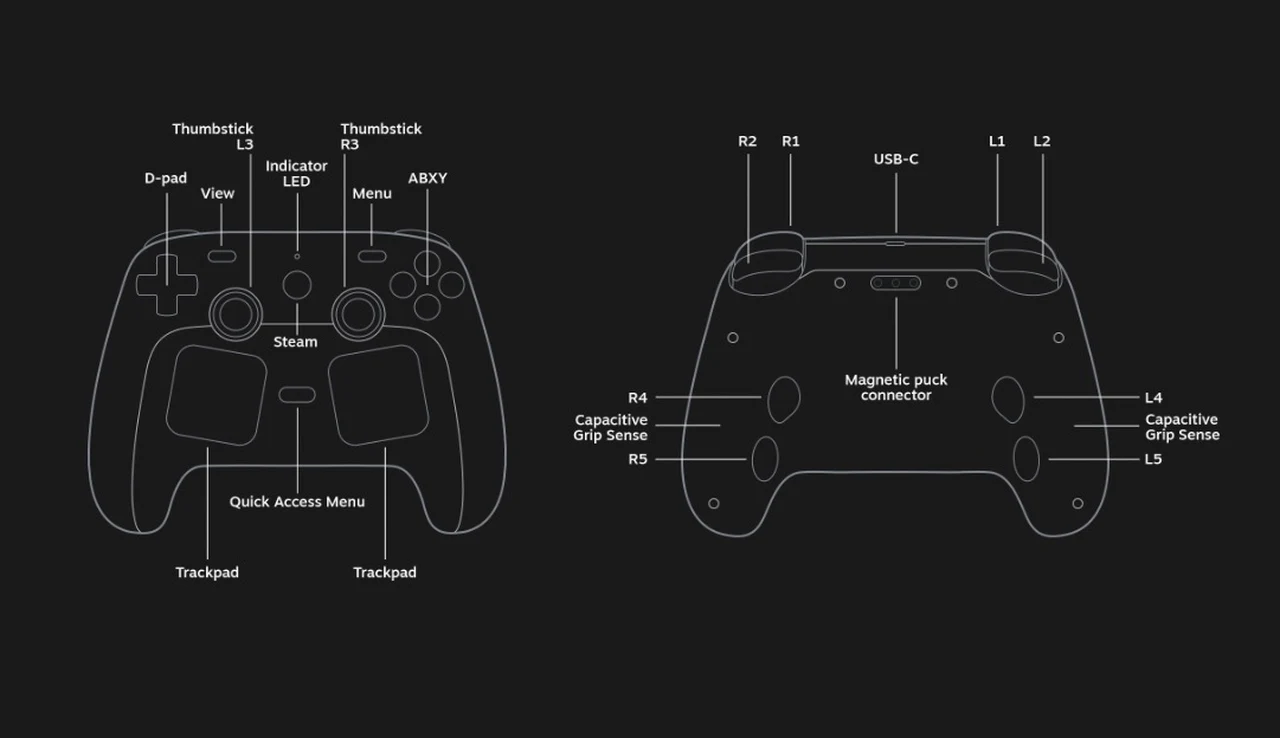
Valve’s latest Steam Controller emphasizes durability, precision and user customization, making it a versatile tool for gamers. Its standout features include:
- TMR Analog Sticks: These sticks deliver enhanced accuracy and reduced dead zones, making them particularly effective for competitive gaming where precision is critical.
- Haptic Trackpads: The trackpads provide an alternative to traditional thumbsticks, offering precise control for PC-style navigation and games requiring fine input adjustments.
- Customizable Layout: Gamers can modify button configurations and control schemes to suit different genres, from fast-paced shooters to intricate strategy games.
- Proprietary Wireless Puck Adapter: This adapter ensures a stable, low-latency connection, while Bluetooth compatibility broadens its usability across various devices.
- Rechargeable Battery: The internal battery is designed for easy replacement, supported by modular components and non-security Torx screws for straightforward disassembly.
The controller’s design prioritizes adaptability and long-term usability, allowing you to tailor it to your gaming style while making sure it remains functional for years to come.
Performance Testing
The Steam Controller delivers impressive performance across key metrics, particularly in latency and battery life. Testing has revealed the following:
- Latency: When connected via the puck adapter or a wired connection, latency is virtually imperceptible, making sure responsive gameplay. However, Bluetooth performance may vary in environments with significant wireless interference.
- Battery Life: The controller exceeded Valve’s 35-hour claim during testing, lasting up to 73 hours on a single charge. This makes it an excellent choice for extended gaming sessions.
- Charging Time: Using a standard Steam Deck charger, the battery recharges fully in approximately 3 hours and 26 minutes, minimizing downtime between sessions.
These results highlight the controller’s reliability for both casual and marathon gaming, though Bluetooth connectivity may present challenges in high-interference setups.

Browse through more resources below from our in-depth content covering more areas on Valve Steam Controller.
- Leaked Specs and Pricing for Valve’s Next-Gen Steam Controller
- Steam Controller Low-Latency Receiver and Drift-Resistant Sticks
- Steam Controller 2026 vs Original : What Might Improve in 2026
- Steam Machine Pricing Tipped at $600 to $650 with Supply Tight
- Valve Steam Frame VR & Steam Controller Update & Guide
Repairability and Sustainability
Valve has prioritized repairability and sustainability in this iteration of the Steam Controller. Its modular design, combined with the use of non-security Torx screws, makes disassembly and repairs straightforward. Valve’s collaboration with iFixit ensures that replacement parts will be readily available, empowering users to extend the controller’s lifespan. This approach not only reduces electronic waste but also aligns with the growing demand for environmentally conscious electronics. By allowing users to repair and maintain their devices, Valve has positioned the Steam Controller as a sustainable choice for long-term gaming.
Target Audience
The Steam Controller is designed for a specific group of gamers who value precision, customization and advanced features. It is particularly well-suited for:
- PC Gaming Enthusiasts: Those who prioritize accuracy, adaptability and innovative technology will find the controller’s features highly appealing.
- Living Room Gamers: Seamless integration with the Steam Deck, Steam Machine and Steam Frame VR headsets makes it an excellent choice for couch gaming and immersive experiences.
- Versatile Gamers: The controller’s ability to mimic both PC and gamepad controls ensures compatibility with a wide range of games, from action-packed shooters to complex strategy titles.
However, the $100 price tag and advanced customization options may deter casual gamers or those seeking a more budget-friendly, plug-and-play solution.
Limitations
Despite its many strengths, the Steam Controller has some limitations that may affect its appeal to certain users:
- Bluetooth Connectivity: While the puck adapter provides a reliable connection, Bluetooth performance can degrade in environments with heavy wireless interference, potentially frustrating users who rely on this feature.
- Platform Dependence: The controller’s full functionality is heavily tied to the Steam platform, which may limit its appeal for gamers who use other ecosystems or platforms.
- Price: At $100, the controller is positioned as a premium product, which may alienate budget-conscious gamers or those who prioritize simplicity over advanced features.
These limitations suggest that the Steam Controller is best suited for dedicated gamers who are willing to invest in its advanced capabilities and platform-specific features.
Additional Insights
The proprietary puck adapter is a standout feature, making sure a seamless and low-latency connection for competitive gaming. Compatibility with Steam Deck control profiles allows for effortless transitions between devices, enhancing its versatility. Furthermore, the controller is designed with future integration in mind, supporting the Steam Machine and Steam Frame VR headset for a more immersive gaming experience. These features position the Steam Controller as a forward-thinking device that caters to the evolving needs of modern gamers.
Media Credit: Gamers Nexus
Disclosure: Some of our articles include affiliate links. If you buy something through one of these links, Geeky Gadgets may earn an affiliate commission. Learn about our Disclosure Policy.
