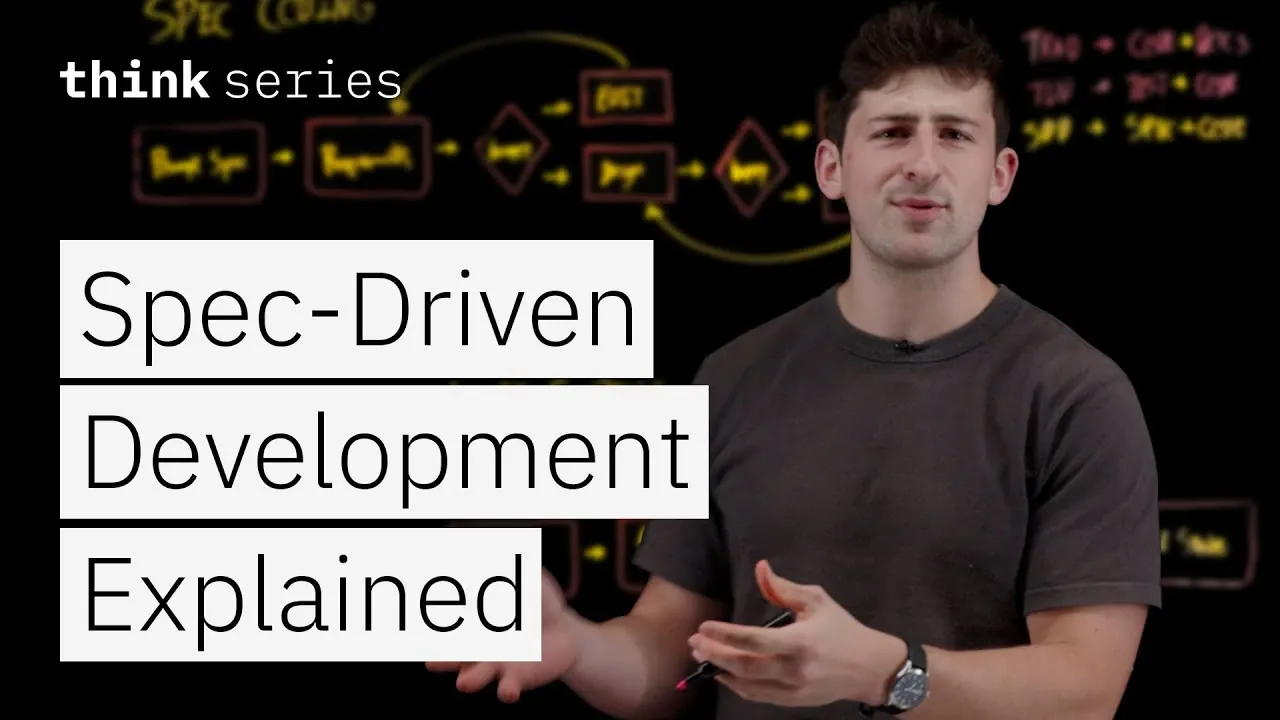
Spec-driven development (SDD) offers a structured approach to AI-assisted coding by prioritizing detailed specifications before any code is written. Unlike “vibe coding,” which relies on iterative prompts and trial-and-error, SDD ensures that AI-generated code adheres to predefined requirements and expected behaviors. IBM Technology highlights how this method integrates seamlessly with the Software Development Life Cycle (SDLC), using specifications as a foundational “contract” to guide development. For instance, in the planning phase, specifications define system behaviors and constraints, setting the stage for a cohesive and reliable workflow across all stages of the SDLC.
In this guide IBM, explore how SDD minimizes ambiguity and enhances precision in AI-assisted development. Key takeaways include a comparison of SDD with traditional methods like test-driven development, a step-by-step breakdown of the SDD process and a practical example of building a user authentication feature. By the end, you’ll gain a clear understanding of how this methodology supports scalability, reduces errors and simplifies downstream tasks such as testing and maintenance.
Spec-Driven Development Overview
TL;DR Key Takeaways :
- Spec-driven development (SDD) emphasizes creating detailed specifications before coding, making sure alignment with predefined requirements and reducing ambiguity in AI-assisted coding projects.
- SDD contrasts with “vibe coding,” which relies on iterative prompts and trial-and-error, by offering a structured approach ideal for projects requiring precision, scalability and reliability.
- SDD integrates seamlessly with the Software Development Life Cycle (SDLC), anchoring each phase, planning, design, implementation, testing and maintenance, to clear specifications for improved collaboration and consistency.
- The step-by-step SDD process includes defining specifications, creating design documents, generating AI-assisted code and iterating through feedback and testing to ensure quality and alignment with project goals.
- SDD enhances clarity, alignment, efficiency and scalability, making it a robust framework for managing complex software development projects, particularly when using AI tools.
Vibe Coding vs Spec-Driven Development
When using AI to generate code, developers often choose between two distinct approaches: vibe coding and spec-driven development. Each method offers unique advantages and challenges, but their effectiveness depends on the project’s goals and complexity.
- Vibe Coding: This approach relies on iterative prompts and trial-and-error. Developers provide AI models with loosely defined objectives and refine the results through multiple iterations. While this method can yield quick results, it often lacks structure, leading to inconsistencies and bypassing critical steps in the SDLC. Vibe coding is best suited for exploratory tasks or prototyping where precision is less critical.
- Spec-Driven Development: In contrast, SDD begins with a comprehensive set of specifications that act as a blueprint for the entire development process. These specifications guide the AI to produce code that adheres to predefined requirements, reducing guesswork and minimizing errors. This structured approach ensures that the final product aligns with the intended design and functionality, making it ideal for projects requiring high levels of accuracy and reliability.
The structured nature of SDD makes it particularly advantageous for complex projects where precision, scalability and long-term maintainability are paramount.
How SDD Integrates with the Software Development Life Cycle (SDLC)
Spec-driven development integrates seamlessly into the Software Development Life Cycle (SDLC), a framework that outlines the stages of software development from initial planning to long-term maintenance. In SDD, specifications serve as a foundational “contract” that defines system behavior, constraints and requirements. This contract ensures alignment across all SDLC stages, fostering collaboration and reducing miscommunication among stakeholders.
Here’s how SDD aligns with each phase of the SDLC:
- Planning: During this phase, the desired outcomes, constraints and system behaviors are clearly defined. These specifications establish the foundation for the entire project.
- Design: The specifications are translated into detailed design documents that outline the system architecture, data flow and implementation guidelines.
- Implementation: AI models are used to generate code based on the design documents, making sure adherence to the predefined specifications.
- Testing: The generated code is rigorously tested to verify that it meets the original specifications and functions as intended.
- Maintenance: The specifications serve as a reference point for updates, troubleshooting and future enhancements, making sure consistency over time.
By anchoring each phase of the SDLC to a clear set of specifications, SDD reduces ambiguity, enhances collaboration and ensures a cohesive development process.
Spec-Driven Development: AI Assisted Coding Explained
Browse through more resources below from our in-depth content covering more areas on AI coding.
- 7 Awesome Antigravity Features That Give Vibe Coders the Edge
- Best AI Coding Tools for Developers in 2025
- Kimi 2 5 Multimodal Ai Model
- Open Source AI Agents: Cost Cuts, Setup Needs, and Best Practices
- Techniques That Get More from AI Coding Assistants Today
- Auto Claude: Free Open Source AI Coding Assistant with GitHub
- Gemini CLI : Google’s Open-Source AI Coding Assistant
- Local AI Coding Guide for 2026 : GPUs, Models, and Setup Tips
- Opus 4.5 vs GPT-5.2 : AI Coding Build Results, Strengths & Weaknesses
- Best AI Model for Web Design : Claude 4.5 vs GPT 5.2 vs Gemini 3 Pro
The Step-by-Step Process of Spec-Driven Development
Spec-driven development follows a structured, repeatable process designed to maintain consistency and quality in AI-assisted coding. This methodology ensures that every stage of development is aligned with the project’s goals and requirements.
- Define Specifications: Begin by clearly outlining the system’s behavior, constraints and requirements. These specifications should be as detailed as possible to minimize ambiguity.
- Create a Design Document: Translate the specifications into actionable guidelines that provide a roadmap for implementation. This document serves as a bridge between planning and coding.
- Generate Code: Use AI models to implement features, create tests and verify outputs. The AI-generated code should strictly adhere to the specifications outlined in the design document.
- Iterate as Needed: Refine the design and implementation through feedback and testing to ensure alignment with the original requirements.
This systematic approach not only improves the quality of the generated code but also simplifies downstream tasks such as testing, quality assurance and documentation. By adhering to these steps, developers can ensure that their projects remain on track and meet the desired standards.
How SDD Compares to Traditional Development Methods
Spec-driven development builds upon traditional software engineering practices while addressing some of their inherent limitations. By combining the strengths of established methodologies with the precision of AI-assisted coding, SDD offers a balanced approach to modern software development.
- Code-First Development: Traditional coding often begins with intuition or exploratory programming, with documentation and specifications added later. This approach can lead to inconsistencies and misalignment with project goals. In contrast, SDD starts with a clear plan, reducing the risk of errors and making sure that the final product aligns with the intended design.
- Test-Driven Development (TDD): TDD emphasizes writing tests before implementing code, making sure that the code meets specific functional requirements. While effective, TDD does not always prioritize detailed specifications. SDD complements TDD by focusing on comprehensive specifications, creating a more structured and scalable development process.
By integrating the strengths of these methods, SDD enhances both precision and efficiency, making it a valuable approach for projects that demand high-quality outcomes.
Advantages of Spec-Driven Development
Spec-driven development offers several key benefits, particularly in the context of AI-assisted coding. These advantages make it an ideal choice for projects that require precision, reliability and scalability.
- Clarity: By providing clear guidelines for AI-generated code, SDD reduces ambiguity and ensures that the development process remains focused and organized.
- Alignment: SDD ensures that AI coding agents adhere to specific project goals, minimizing errors and inconsistencies.
- Efficiency: The structured nature of SDD reduces the need for iterative adjustments, saving time and resources during development.
- Scalability: SDD assists downstream tasks such as testing, quality assurance and documentation, making it easier to scale projects over time.
These benefits highlight the value of SDD as a robust framework for managing the complexities of modern software development.
Practical Example: Building a User Authentication Feature
To demonstrate the practical application of spec-driven development, consider the creation of a user authentication feature. This example illustrates how SDD ensures consistency, reliability and adherence to project requirements.
- Define Specifications: Begin by outlining the feature’s requirements, such as endpoint behavior, input validation rules (e.g., username and password formats), and fallback scenarios for invalid inputs.
- Create a Design Document: Translate these specifications into actionable guidelines, detailing the system architecture and data flow.
- Generate Code: Use an AI model to implement the feature, making sure that the generated code adheres to the predefined specifications.
- Test the Code: Verify that the code meets the original requirements through rigorous testing, identifying and addressing any discrepancies.
This structured process ensures that the final product is consistent, reliable and free from common errors, demonstrating the effectiveness of SDD in real-world scenarios.
Media Credit: IBM Technology
Disclosure: Some of our articles include affiliate links. If you buy something through one of these links, Geeky Gadgets may earn an affiliate commission. Learn about our Disclosure Policy.
