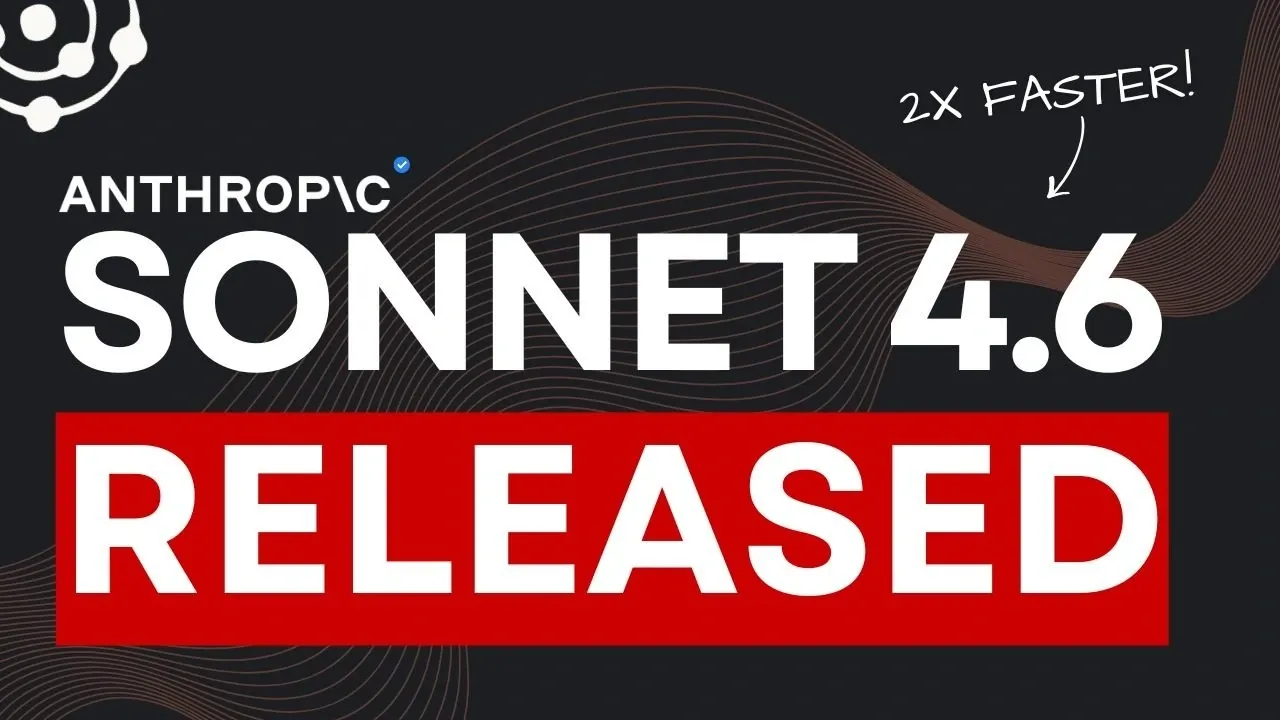
Enthropic’s Claude Sonnet 4.6 delivers near-premium AI performance while maintaining the same pricing as its predecessor, Sonnet 4.5. As outlined by Universe of AI, this mid-tier model introduces key enhancements such as improved coding capabilities, stronger context comprehension, and greater task reliability. Notably, it includes beta support for a 1-million-token context window, allowing users to process extensive datasets like legal documents or codebases in a single request. These updates position Sonnet 4.6 as a practical and cost-efficient option for professionals seeking advanced AI functionality without the expense of premium-tier models.
This analysis explores how Sonnet 4.6 addresses common challenges in AI workflows, offering insights into its coding improvements, expanded context handling, and minimized error rates. You will learn how developers can benefit from its ability to produce reliable, logic-driven outputs, and how researchers or analysts can streamline complex, multi-step tasks with greater accuracy. By understanding these features, you can better evaluate how Sonnet 4.6 fits into your specific needs, whether for software development, academic research, or other data-intensive applications.
Claude Sonnet 4.6 Overview
TL;DR Key Takeaways :
- Claude Sonnet 4.6 offers near-premium AI performance at the same cost as its predecessor, making it a cost-effective solution for developers, researchers, and businesses.
- Key enhancements include improved coding capabilities, enhanced context understanding, and minimized false success claims, making sure reliable and efficient outputs for complex tasks.
- The model introduces beta support for a 1-million-token context window, allowing users to process large datasets like codebases or legal documents in a single request, streamlining workflows.
- Benchmark results highlight its coding excellence, achieving a 79.6% score, surpassing Sonnet 4.5 and approaching Opus 4.5, making it a strong alternative to premium-tier models.
- Sonnet 4.6 is praised for its real-world applications, including software development, legal analysis, and academic research, offering a versatile and dependable tool across industries.
Same Price, Greater Value
Sonnet 4.6 retains the pricing structure of its predecessor, making it the default model for Enthropic’s free and pro plans. At $3 per million input tokens and $15 per million output tokens, it delivers enhanced performance without increasing costs. This pricing strategy ensures that developers, researchers, and businesses can access high-quality AI tools while maximizing their return on investment. By offering improved capabilities at the same price point, Sonnet 4.6 provides a compelling option for those seeking to balance performance and affordability.
Key Performance Enhancements
Sonnet 4.6 introduces a range of improvements that address common challenges in AI-driven workflows. These enhancements include:
- Improved Coding Capabilities: Developers have shown a 70% preference for Sonnet 4.6 over both Sonnet 4.5 and Opus 4.5 for coding tasks. This preference stems from its ability to produce better logic, reduce overengineering, and deliver more reliable outputs, making it a valuable tool for software development.
- Enhanced Context Understanding: The model demonstrates a stronger ability to consolidate information and handle complex, multi-step tasks with greater accuracy. This improvement is particularly beneficial for tasks requiring detailed analysis and logical reasoning.
- Minimized False Success Claims: Outputs generated by Sonnet 4.6 are more dependable, reducing errors and improving overall efficiency in workflows. This reliability ensures that users can trust the model’s results for critical applications.
These advancements make Sonnet 4.6 a versatile and dependable tool for a wide range of applications, from software engineering to academic research and beyond.
Opus-Level Performance at Half the Price!

Browse through more resources below from our in-depth content covering more areas on Claude Sonnet.
- ChatGPT 5 vs Claude Sonnet: Real-World AI Coding Comparison
- Claude Sonnet 4.7 & GPT 5.3 – AI
- Claude Sonnet 4.6 vs Opus 4.6: Benchmark Results and Safety Limits
- Best Uses for Claude Sonnet 4.6 When Token Budgets Matter
- Claude 4.5 Sonnet vs Gemini 3 Pro : AI Coding Face-Off Who Wins?
- Claude Agents 2.0 are INSANE : Non-Stop AI Coding Until Its
- NotebookLM Alternative That Uses GPT 5.2, Claude Sonnet 4.5
- Sonnet 4.5 vs GLM 4.6 vs Codex : Detailed AI Coding Comparison
- Claude Sonnet 4.5 Tested : Coding to Complex Problem Solving
- MiniMax M2 : Open Source AI Model Simplifying Complex Tasks
1-Million-Token Context Window
One of the standout features of Sonnet 4.6 is its beta support for a 1-million-token context window. This capability allows users to process large datasets, such as entire codebases, legal documents, or research papers, in a single request. By eliminating the need for manual segmentation, this feature significantly streamlines workflows, saves time, and enhances productivity. For professionals handling extensive data, the expanded context window offers a practical solution to manage complex tasks more efficiently.
Benchmark Results and Coding Excellence
Sonnet 4.6 has demonstrated its enhanced capabilities through benchmark testing. On the software engineering benchmark, it achieved a score of 79.6%, surpassing Sonnet 4.5’s 77.2% and closely approaching Opus 4.5’s 80.9%. This improvement highlights its ability to produce organized and integrated outputs, particularly in coding tasks. For developers, this translates to a more efficient and reliable tool for tackling complex software engineering challenges. The model’s performance underscores its value as a cost-effective alternative to premium-tier options.
Real-World Applications and User Feedback
Early adopters of Sonnet 4.6 have praised its ability to handle intricate challenges with precision and efficiency. Its improved logical reasoning and context comprehension make it particularly valuable for tasks requiring detailed analysis and multi-step problem-solving. Practical applications of Sonnet 4.6 include:
- Software Development: Streamline coding workflows with reliable outputs and improved logic, allowing developers to focus on innovation rather than troubleshooting.
- Legal Analysis: Process extensive legal documents with accuracy and efficiency, reducing the time required for manual review and interpretation.
- Academic Research: Analyze large datasets or research papers in a single request, facilitating faster and more comprehensive insights for researchers.
These capabilities make Sonnet 4.6 a dependable choice for professionals across industries, offering practical solutions to complex challenges.
Cost-Effective and Strategic Benefits
Sonnet 4.6 provides near-Opus-level performance at a fraction of the cost, making it an attractive alternative to Enthropic’s premium models. This affordability enables developers, researchers, and organizations to achieve their goals without exceeding budget constraints. By offering advanced AI tools at a competitive price, Sonnet 4.6 ensures that innovative technology remains accessible to a broader audience. Its combination of performance and cost-efficiency makes it a strategic choice for businesses aiming to optimize their workflows and achieve high-quality results.
Claude Sonnet 4.6: A Balanced Solution for Advanced AI Needs
Claude Sonnet 4.6 represents a significant step forward in mid-tier AI modeling, combining affordability with enhanced performance. Its improved coding capabilities, expanded context window, and reliability in multi-step tasks make it a powerful tool for developers, researchers, and businesses alike. Whether you are optimizing workflows, analyzing complex data, or tackling intricate projects, Sonnet 4.6 offers a balanced solution that delivers high-quality results without compromising your budget. By addressing the needs of diverse industries, it solidifies its position as a versatile and accessible AI model for the modern era.
Media Credit: Universe of AI
Disclosure: Some of our articles include affiliate links. If you buy something through one of these links, Geeky Gadgets may earn an affiliate commission. Learn about our Disclosure Policy.
