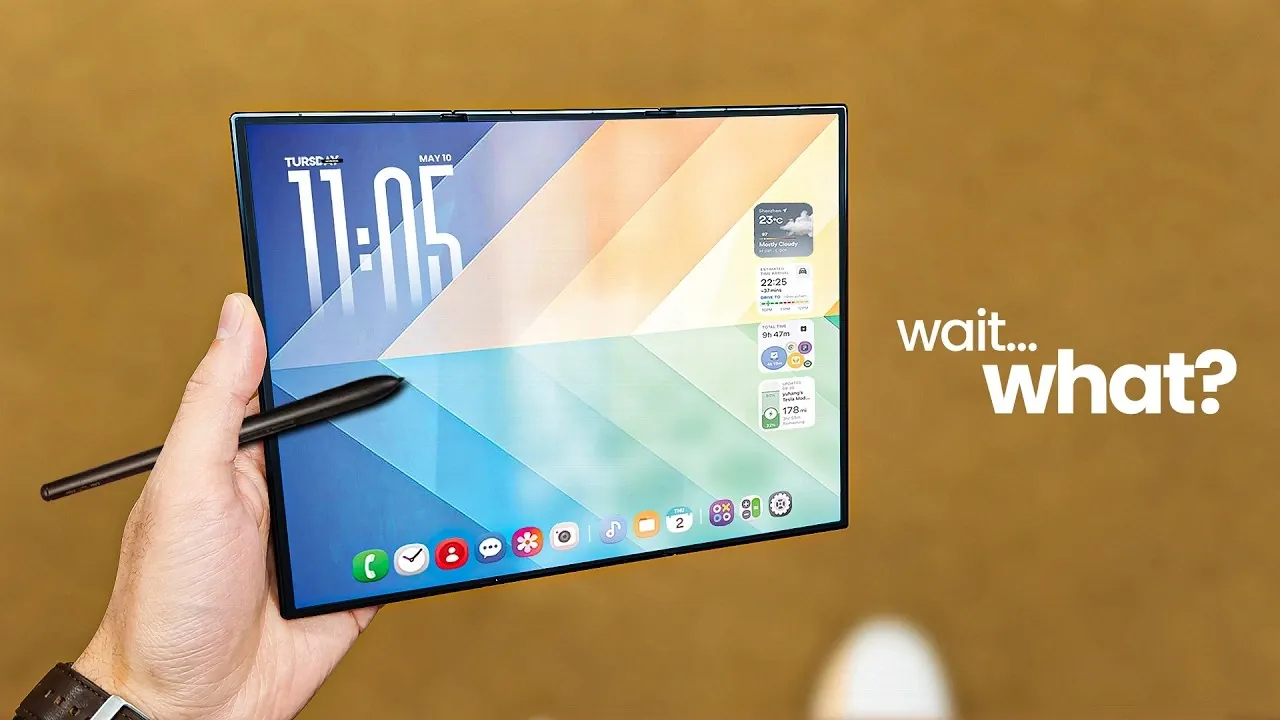
The Samsung Galaxy Z Tri-Fold 2 has captured attention as a potential milestone in the evolution of foldable smartphone technology. With rumored features such as S Pen integration, the device aims to address limitations seen in earlier foldable models. However, conflicting leaks and significant design challenges raise questions about the practicality of these innovations. While the concept is undeniably ambitious, its feasibility and real-world application remain uncertain, leaving both enthusiasts and industry experts intrigued. The video below from Techtics gives us more details about the rumored device.

S Pen Integration: Innovation Meets Complexity
One of the most anticipated features of the Galaxy Z Tri-Fold 2 is the rumored inclusion of the S Pen, a tool that has long been associated with Samsung’s productivity-focused devices. According to patent filings, Samsung may house the stylus within one of the phone’s hinges, potentially incorporating features like magnetic retention, hinge-based charging and sensors to ensure proper placement. For professionals and creatives, this could significantly enhance the device’s functionality, offering a seamless experience for tasks such as note-taking, sketching and document editing.
However, this innovation introduces notable challenges. The folding display, already a delicate and complex component, could be at risk of damage during the insertion or removal of the stylus. Additionally, the placement of the S Pen across the unfolded display may obstruct usability, particularly if it interferes with the screen’s seamless operation. These potential drawbacks highlight the difficulty of balancing innovative features with practical design considerations.
Design Challenges: Form vs Function
Integrating the S Pen into a tri-fold design presents a host of engineering and design challenges. To accommodate the stylus, one of the device’s panels may need to be shorter or narrower, potentially resulting in an asymmetric design. This could impact the overall aesthetics of the device, as well as its usability, creating a trade-off between form and function.
Samsung’s ongoing efforts to make foldable devices thinner and lighter further complicate the situation. Previous models achieved slimness by removing digitizers, which are essential for stylus functionality. Reintroducing this hardware could add bulk and weight, directly conflicting with the company’s design priorities. These challenges underscore the difficulty of creating a device that is both innovative and practical, particularly in a market where consumer expectations for sleekness and portability are high.
Conflicting Leaks: A Divided Vision
Leaks and rumors surrounding the Galaxy Z Tri-Fold 2 paint a divided picture of its development. While some reports emphasize the inclusion of the S Pen as a key feature, others suggest that Samsung is prioritizing a sleeker, more lightweight design. These goals appear to be at odds, as the hardware required for stylus integration could undermine efforts to reduce the device’s size and weight.
Adding to the uncertainty is Samsung’s exploration of digitizer-free S Pen technology, which could eliminate the need for traditional stylus integration. If successful, this innovation could allow for a thinner and lighter device while still offering stylus functionality. However, this technology is still in development and its readiness for the Tri-Fold 2 remains unclear. These conflicting priorities highlight the challenges Samsung faces in balancing innovation with practicality, particularly as it seeks to maintain its leadership in the foldable market.
Looking Ahead: Development and Market Prospects
The Galaxy Z Tri-Fold 2 is not expected to launch until 2027, giving Samsung ample time to refine its design and address the challenges associated with its ambitious concept. The company’s history of innovation suggests that elements of the Tri-Fold concept could influence other devices in its foldable lineup, such as the Z Fold and Z Flip series. This extended timeline also allows Samsung to explore emerging technologies, such as digitizer-free solutions, that could redefine the functionality of foldable devices.
It is important to note, however, that much of the current information is based on patents and leaks. Many patents never translate into actual products and Samsung has not officially confirmed any details about the Tri-Fold 2. As a result, the final design and features of the device remain speculative. Despite this uncertainty, the Galaxy Z Tri-Fold 2 represents a bold step forward in the evolution of foldable smartphones, offering a glimpse into the potential future of mobile technology.
- Will Samsung successfully integrate the S Pen without compromising the device’s design and usability?
- Can the company achieve a balance between innovation and practicality in a tri-fold format?
- How will emerging technologies, such as digitizer-free S Pen solutions, influence the design of future foldable devices?
The answers to these questions will determine whether the Galaxy Z Tri-Fold 2 becomes a pioneering device in the foldable market or remains an ambitious concept that highlights the challenges of pushing technological boundaries. As the foldable smartphone market continues to evolve, Samsung’s ability to navigate these hurdles will play a crucial role in shaping the future of mobile innovation.
Source & Image Credit: Techtics
Disclosure: Some of our articles include affiliate links. If you buy something through one of these links, Geeky Gadgets may earn an affiliate commission. Learn about our Disclosure Policy.
