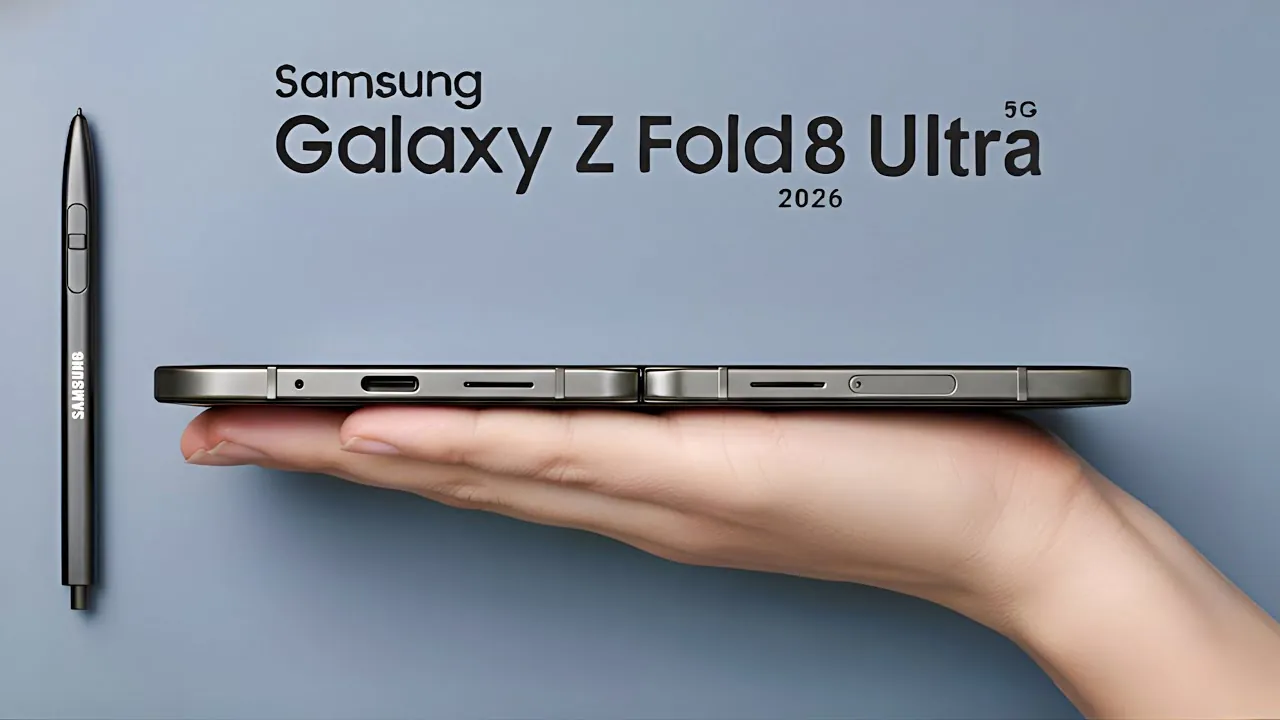
Samsung is expected to launch the new Galaxy Z Fold 8 this year. It is rumored to be a device that addresses one of the most persistent challenges in foldable phone technology: the visible crease on foldable displays. By unveiling a creaseless foldable OLED screen, Samsung has set a new industry standard, enhancing the user experience and pushing the boundaries of innovation. This development marks a pivotal moment in the evolution of foldable devices, especially as Apple is rumored to enter the foldable market soon. The competition between these tech giants is expected to accelerate advancements, reshaping consumer expectations and driving the adoption of foldable technology.

Creaseless Foldable OLED Display: A New Standard
The Galaxy Z Fold 8’s standout feature is its creaseless foldable OLED display, a significant leap forward in foldable technology. Earlier models often struggled with visible creases that disrupted the viewing experience, but Samsung’s latest engineering breakthroughs have effectively eliminated this issue. The display incorporates a metal reinforcement plate, which provides structural integrity while maintaining the flexibility required for folding. This innovation ensures a smooth, uninterrupted viewing experience, making the device ideal for both productivity and entertainment.
Apple, on the other hand, is rumored to be taking a different approach with its foldable iPhone. Reports suggest that Apple will use glass reinforcement technology to create a rigid and uniform surface. While this method may not completely eliminate creasing, it aligns with Apple’s emphasis on premium aesthetics and durability. These contrasting approaches highlight the diverse philosophies driving innovation in foldable display technology, offering consumers a variety of options tailored to their preferences.
Engineering Breakthroughs: Addressing Durability and Creasing
Samsung’s solution to the creasing issue goes beyond the display itself. The Galaxy Z Fold 8 features a softer adhesive layer beneath the OLED panel, which reduces stress during repeated folding and unfolding. This design not only minimizes the risk of creasing but also enhances the device’s overall durability, making sure a longer lifespan for users who rely on their devices for daily tasks.
Apple’s rumored strategy focuses on glass reinforcement to achieve a consistent surface over time. While this approach may not completely resolve the creasing issue, it emphasizes durability and aligns with Apple’s design philosophy of creating robust and visually appealing products. These differing engineering strategies underscore the complexity of overcoming the technical challenges associated with foldable devices, demonstrating the innovation required to meet consumer demands.
Hardware Advancements and Design Philosophies
The Galaxy Z Fold 8 is expected to feature a innovative camera system, including a 200 MP main sensor, a 50 MP ultrawide lens, and a 10 MP telephoto lens. This advanced setup positions the device as a powerful tool for photography enthusiasts, offering versatility and high-quality imaging capabilities. Additionally, Samsung is likely to include a side-mounted fingerprint reader, providing secure and convenient authentication for users.
In contrast, Apple’s foldable iPhone is rumored to adopt a simpler dual-camera system. While less ambitious in terms of hardware, Apple’s strength lies in its ability to optimize software, potentially delivering a seamless and intuitive user experience. Both devices are expected to include side-mounted fingerprint readers, reflecting a shared commitment to balancing innovation with practicality. These contrasting approaches highlight the unique strengths of each company, offering consumers a choice between hardware-driven advancements and software-centric design.
Software Optimization and Market Impact
Software optimization plays a critical role in the success of foldable devices. Samsung has long been a leader in foldable hardware, but Apple’s expertise in software and ecosystem development could provide it with a competitive edge. Apple’s entry into the foldable market is likely to expand consumer interest, encouraging developers to create apps optimized for foldable screens and driving broader adoption of the technology.
Samsung, however, remains a dominant player in the foldable segment, with a proven track record of delivering feature-rich devices. The Galaxy Z Fold 8’s wider-screen form factor and enhanced durability are expected to attract a diverse audience, ranging from professionals to casual users. As competition intensifies, both companies will need to strike a balance between hardware innovation and software excellence to capture market share and meet evolving consumer expectations.
Launch Timeline and Market Outlook
Both the Galaxy Z Fold 8 and Apple’s foldable iPhone are expected to launch in the second half of 2026, generating significant consumer interest. Samsung is rumored to introduce a wider-screen version of the Z Fold 8, potentially positioning it as a direct competitor to Apple’s foldable form factor. These launches are anticipated to further solidify foldable devices as a mainstream category, with both companies vying for dominance in this rapidly growing market.
The rivalry between Samsung and Apple is set to drive further advancements in foldable technology, benefiting consumers by offering devices that combine innovative hardware with seamless software integration. Whether you prioritize Samsung’s hardware innovations or Apple’s software ecosystem, the future of foldable phones promises to deliver an exciting blend of functionality, durability, and design.
Here are additional guides from our expansive article library that you may find useful on Creaseless Foldable OLED Display.
- Apple’s iPhone Fold: Creaseless Display and Hybrid Design
- Creaseless Display on the Galaxy Z Fold 8 is A Fantastic option
- iPhone Fold Price, Specs, and Release Date Rumors
- Apple’s Foldable iPhone Ultra: Features, Design, and Release Date
- iPhone Fold: How It Stacks Up Against Samsung’s Foldables
Source & Image Credit: Demon’s Tech
Disclosure: Some of our articles include affiliate links. If you buy something through one of these links, Geeky Gadgets may earn an affiliate commission. Learn about our Disclosure Policy.
