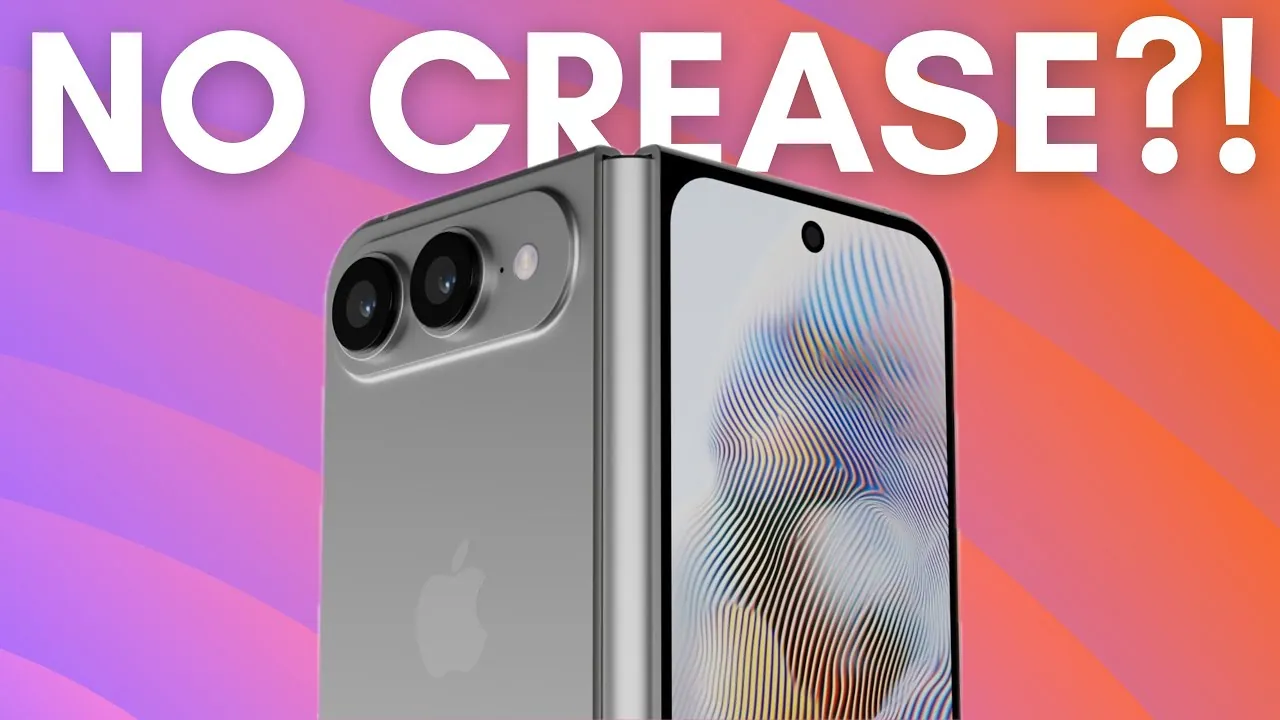
Apple is poised to make its debut in the foldable smartphone market with the highly anticipated iPhone Fold, projected to launch between late 2026 and early 2027. This device is expected to push the boundaries of foldable technology, featuring a creaseless OLED display, a hybrid design, and advanced multitasking capabilities. However, its success may hinge on overcoming challenges such as high pricing, production complexities, and potential compromises in certain features like camera performance. The iPhone Fold represents Apple’s bold step into a growing segment, aiming to merge innovation with practicality. The video below from SaranByte gives us more details about the new folding iPhone.

Creaseless Display: A Leap Forward in Visual Experience
One of the most striking aspects of the iPhone Fold is its innovative display technology, which seeks to address a major drawback of current foldable devices: the visible crease. Apple plans to incorporate a creaseless OLED panel supplied by Samsung Display, offering a seamless visual experience. The inner display, measuring between 7.5 and 7.8 inches with a 4:3 aspect ratio, provides a tablet-like interface ideal for multitasking and immersive media consumption. The outer display, compact at 5.3 to 5.5 inches, ensures convenience and usability when the device is folded. Both screens will feature 120 Hz LTPO ProMotion technology, delivering smooth visuals and adaptive refresh rates that enhance usability across various applications.
This dual-display setup not only enhances functionality but also positions the iPhone Fold as a versatile device capable of transitioning effortlessly between smartphone and tablet modes. By addressing the crease issue, Apple aims to set a new standard for foldable screens, offering users a more polished and premium experience.
Design: Balancing Portability, Durability, and Functionality
The iPhone Fold’s design reflects Apple’s commitment to combining aesthetics with practicality. Featuring a book-style inward folding mechanism, the device prioritizes portability and durability. When unfolded, the iPhone Fold features an ultra-slim profile of just 4.5 mm, made possible by a titanium-aluminum hybrid frame. This material strikes a balance between being lightweight and structurally robust, making sure the device remains durable without compromising on portability.
Apple’s design philosophy aligns with usability-focused foldables like the Oppo Find N and Google Pixel Fold, emphasizing a seamless transition between smartphone and tablet functionalities. This approach caters to a wide range of user needs, from productivity tasks to entertainment. The slim and durable design not only enhances the device’s practicality but also reinforces its premium positioning in the foldable market.
Camera: Innovation Meets Practical Constraints
The iPhone Fold’s camera system reflects a balance between technological innovation and design limitations. The device will feature a 24 MP under-display front camera, allowing a full-screen experience free from notches or cutouts. On the rear, it will house dual 40 MP cameras, designed to deliver high-quality photography and videography.
However, the slim design imposes certain constraints. Advanced features found in other flagship iPhones, such as LiDAR and optical image stabilization (OIS), may be absent. While the camera setup is competitive, it may not fully satisfy users seeking the innovative photography capabilities typically associated with Apple’s Pro-level devices. This trade-off highlights the challenges of integrating advanced hardware into a foldable form factor without compromising on design.
Performance and Battery: Powering the Foldable Experience
At the core of the iPhone Fold is Apple’s A20 Pro chipset, designed to deliver top-tier performance. This powerful processor ensures smooth multitasking, efficient app handling, and a seamless user experience. Complementing the chipset is a 16 nm display driver, which enhances power efficiency, a critical factor for foldable devices with dual displays.
The iPhone Fold will also feature a dual-cell battery with a capacity estimated between 5,400 and 5,800 mAh. This configuration is designed to support extended usage, even with the demands of a foldable display. Whether for productivity, gaming, or media consumption, the combination of the A20 Pro chipset and the dual-cell battery ensures that the iPhone Fold delivers a reliable and efficient performance.
Software: Bridging iOS and iPadOS for Enhanced Usability
The iPhone Fold’s software represents a hybrid approach, integrating features from both iOS and iPadOS. This combination allows the device to offer advanced multitasking capabilities, such as split view, floating windows, and optimized app scaling. These features make the iPhone Fold a versatile tool, capable of adapting to a variety of scenarios.
For users, this hybrid software approach means the iPhone Fold could potentially replace both an iPhone and an iPad Mini. Whether for productivity tasks like document editing or immersive activities like streaming and gaming, the software is designed to maximize the device’s potential. By bridging the gap between iOS and iPadOS, Apple positions the iPhone Fold as a multifunctional device that caters to diverse user needs.
Production and Pricing: Navigating Challenges in Innovation
Apple’s entry into the foldable market is not without its challenges. Reports indicate that the company has ordered 22 million OLED panels for the iPhone Fold, but scaling up production while maintaining Apple’s stringent quality standards remains a significant hurdle. Initial supply may be limited, with availability potentially delayed until 2027. These production challenges underscore the complexities of manufacturing foldable devices at scale.
In terms of pricing, the iPhone Fold is expected to carry a premium price tag, ranging from $2,000 to $2,500. Positioned as a “halo” device, it showcases Apple’s technological innovation rather than targeting mass-market adoption. While the high price may deter some consumers, it reflects the advanced engineering and features inherent in foldable technology. For early adopters and tech enthusiasts, the iPhone Fold represents a innovative investment that combines innovation with exclusivity.
Additional Features: Enhancing the User Experience
The iPhone Fold will include several notable features designed to enhance usability. These include Touch ID integrated into the side button and an eSIM-only design in select regions. These additions optimize internal space, improve security, and align with Apple’s broader push toward a more streamlined and modern smartphone experience.
However, the slim form factor may lead to compromises in certain hardware capabilities, particularly in areas like camera performance. Despite these trade-offs, the iPhone Fold’s additional features contribute to its overall appeal, offering users a device that is both functional and forward-thinking.
Shaping the Future of Foldable Technology
The iPhone Fold represents Apple’s ambitious entry into the foldable smartphone market, aiming to redefine the category with innovative technology and a focus on usability. Its creaseless OLED display, hybrid software integration, and sleek design set it apart from competitors. While challenges such as high pricing, production hurdles, and feature trade-offs may limit its initial appeal, the iPhone Fold has the potential to pave the way for more accessible and refined foldable devices in the future. By combining innovative engineering with Apple’s signature design philosophy, the iPhone Fold could play a pivotal role in shaping the evolution of mobile technology.
Take a look at other insightful guides from our broad collection that might capture your interest in Creaseless OLED panel.
- Creaseless Display on the Galaxy Z Fold 8 is A Fantastic option
- Everything We Know About the 2026 OLED MacBook Pro
- Pixel Mini Smart Arduino OLED Display (video)
- Apple’s OLED Rollout: How It Impacts the M4 iPad Air
- M5 MacBook Pro with OLED: Release Date, Specs, and Rumors
Source & Image Credit: SaranByte
Disclosure: Some of our articles include affiliate links. If you buy something through one of these links, Geeky Gadgets may earn an affiliate commission. Learn about our Disclosure Policy.
