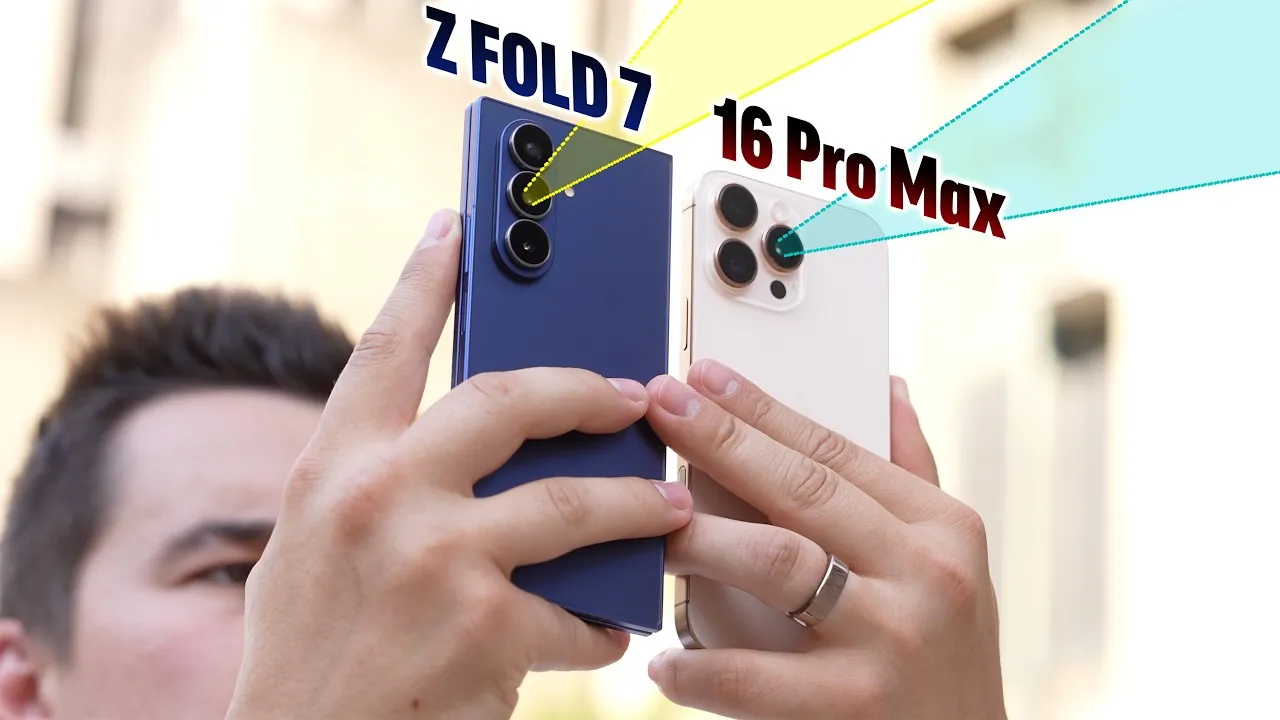
Smartphone cameras have become a cornerstone of modern photography, with flagship devices like the Galaxy Z Fold 7 and iPhone 16 Pro Max pushing the boundaries of what mobile photography can achieve. These two models represent the pinnacle of innovation, offering advanced features designed to cater to both casual users and photography enthusiasts. This detailed comparison from Max Tech evaluates their performance across critical areas such as ultrawide shots, portrait photography, zoom, night mode, video stabilization, and more, helping you determine which device aligns best with your needs.

Ultrawide Performance: Expanding Your Perspective
Both the Galaxy Z Fold 7 and iPhone 16 Pro Max are equipped with 12MP ultrawide sensors, but their performance diverges in key aspects. The iPhone 16 Pro Max stands out with its advanced HDR processing and a wider field of view, delivering vibrant colors and intricate details that make it ideal for capturing landscapes and group photos. Its ability to maintain consistency across various lighting conditions gives it an edge in ultrawide photography.
The Galaxy Z Fold 7, while capable of producing impressive dynamic range in certain scenarios, often struggles with consistency, particularly in challenging lighting. For users who prioritize reliability and vivid ultrawide shots, the iPhone proves to be the stronger contender.
Portraits and Selfies: Precision vs. Innovation
Portrait photography is another area where the iPhone 16 Pro Max excels. Its natural background blur, accurate HDR, and lifelike skin tone rendering create professional-quality portraits that appeal to photography enthusiasts. Whether capturing selfies or traditional portraits, the iPhone consistently delivers results that feel polished and realistic.
The Galaxy Z Fold 7 introduces a unique 3x portrait video mode, which adds a creative dimension to its capabilities. However, its still portrait performance often lacks the depth accuracy and fine detail seen in the iPhone. For those seeking lifelike results and dependable portrait photography, the iPhone remains the superior choice.
Main Camera and Stabilization: Balancing Power and Precision
The Galaxy Z Fold 7 features a 200MP main sensor, which allows it to capture sharp, detailed images in optimal conditions. However, its performance falters in areas such as HDR processing and exposure transitions, especially in challenging lighting environments.
The iPhone 16 Pro Max, by contrast, offers a more balanced approach. Its superior HDR capabilities and advanced stabilization ensure consistent results across both photos and videos. Whether shooting in bright daylight or dimly lit interiors, the iPhone delivers a polished and reliable performance that caters to a wide range of scenarios.
Zoom Capabilities: Bringing Distant Subjects Closer
Zoom performance is a critical factor for many users, and the iPhone 16 Pro Max takes the lead with its 5x tetra prism lens. This technology enables exceptional clarity and detail, even at higher magnifications like 12x or 25x. The iPhone’s optical zoom capabilities make it a standout choice for capturing distant subjects with precision.
The Galaxy Z Fold 7 performs admirably at 3x zoom, thanks to its dedicated telephoto lens. However, it struggles to maintain image quality at longer distances, making it less versatile for users who frequently rely on zoom functionality. For those who value clarity at a distance, the iPhone offers a more robust solution.
Low-Light Photography: Mastering Night Mode
Low-light conditions present a significant challenge for any smartphone camera, and the iPhone 16 Pro Max rises to the occasion with its cleaner, more detailed images. Its night mode consistently delivers accurate colors, sharp contrast, and minimal noise, making it a reliable choice for nighttime photography.
The Galaxy Z Fold 7, while capable of capturing low-light scenes, often produces images that appear washed out or suffer from motion blur. For users who frequently shoot in dim environments, the iPhone’s night mode provides a clear advantage, making sure high-quality results even in the most challenging conditions.
AI and Editing Tools: Enhancing Your Photos
Both devices use artificial intelligence to enhance their photography capabilities, but their approaches differ. The Galaxy Z Fold 7 incorporates generative AI for photo cleanup, offering precise edits that appeal to users who prioritize post-processing flexibility. This feature is particularly useful for those who enjoy fine-tuning their images after capture.
Apple’s editing tools, while less advanced in terms of AI-driven features, remain intuitive and effective for quick adjustments. The iPhone’s seamless integration of editing tools ensures a user-friendly experience, making it an excellent choice for casual users who want to enhance their photos without extensive effort.
Audio and Video: Performance in Challenging Conditions
In environments with excessive noise or instability, the iPhone 16 Pro Max demonstrates its strength with advanced audio processing and video stabilization. These features ensure smooth footage and clear sound, even in demanding scenarios. Whether recording in a crowded space or on the move, the iPhone consistently delivers reliable results.
The Galaxy Z Fold 7, while offering better dynamic range in nighttime video, struggles with white balance accuracy and audio clarity. For users who prioritize dependable performance in challenging conditions, the iPhone emerges as the more capable option.
Design and Usability: Innovation Meets Practicality
The Galaxy Z Fold 7’s foldable design represents a bold step forward in smartphone innovation, offering enhanced multitasking capabilities and a unique user experience. However, this design introduces compromises in certain camera features, such as telephoto and selfie performance, which may deter photography-focused users.
The iPhone 16 Pro Max, with its traditional design, prioritizes consistency and reliability across all camera functionalities. For users who value a dependable and straightforward photography experience, the iPhone’s design proves to be a practical choice.
Final Thoughts: Choosing the Right Camera for Your Needs
Both the Galaxy Z Fold 7 and iPhone 16 Pro Max showcase impressive advancements in smartphone photography, catering to different user preferences. The iPhone stands out with its superior image quality, HDR performance, and zoom capabilities, making it the ideal choice for those seeking a reliable and versatile camera experience.
The Galaxy Z Fold 7, with its innovative foldable design and unique features, offers a compelling alternative for users who value creativity and multitasking. However, its inconsistencies in key areas like low-light performance and zoom limit its appeal for photography enthusiasts. Ultimately, your decision will depend on whether you prioritize new design or dependable camera functionality.
Master the Galaxy Z Fold 7 with the help of our in-depth articles and helpful guides.
- Samsung Galaxy Z Fold 7: The 6 Biggest Expected Changes
- Samsung Galaxy Z Fold 7: Features, Pricing, and Release Date
- Samsung Galaxy Z Fold 7 Launch Details, Design, and Battery
- Samsung Galaxy Z Fold 7: Features, Leaks, and What to Expect
- Samsung Galaxy Z Fold 7 Ultra 5G: Specs, Features, and More
Source & Image Credit: Max Tech
Disclosure: Some of our articles include affiliate links. If you buy something through one of these links, Geeky Gadgets may earn an affiliate commission. Learn about our Disclosure Policy.
