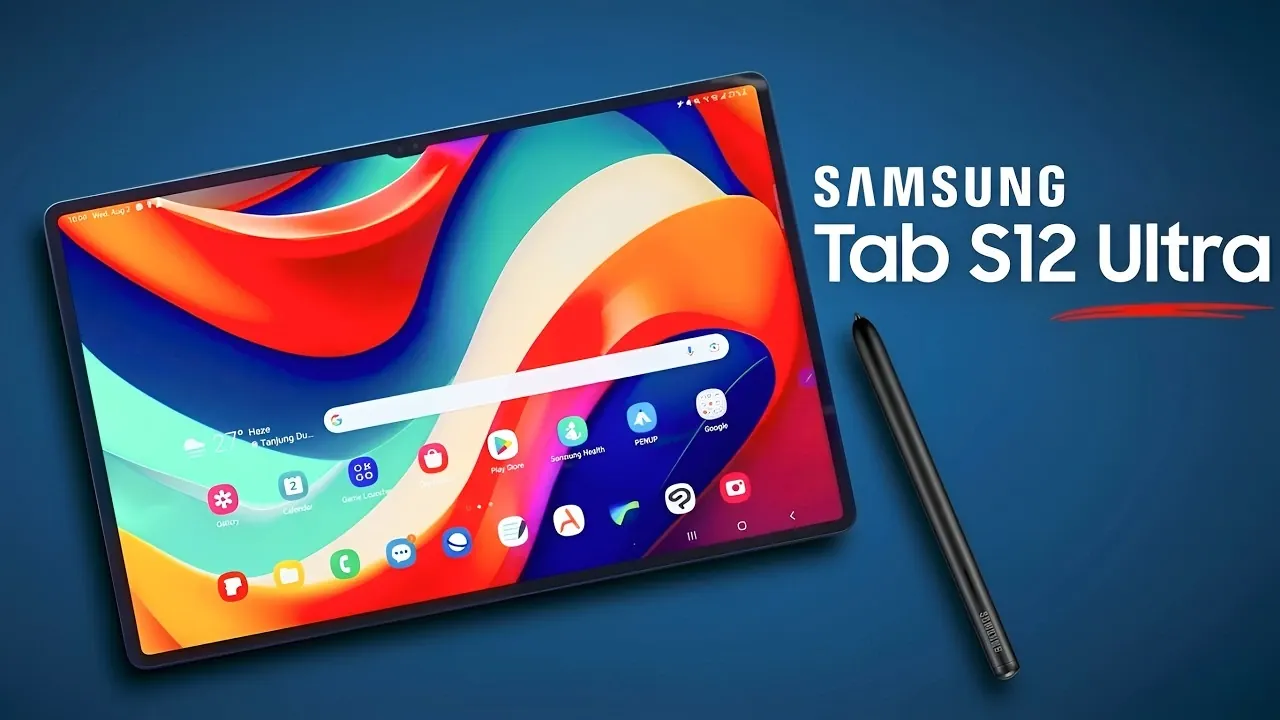
Samsung is preparing to unveil its latest flagship tablets, the Galaxy Tab S12 Ultra and S12 Plus, on October 7th, 2026. These devices are designed to reinforce Samsung’s position in the premium tablet market, but early impressions suggest they may face challenges in meeting consumer expectations. With steep pricing and only incremental improvements over their predecessors, the Galaxy Tab S12 series enters a competitive market where value and innovation are critical to success.

Launch Date and Pricing: Positioned at the High End
The Galaxy Tab S12 Ultra and S12 Plus are slated for release on October 7th, although Samsung has yet to officially confirm this date. What is certain, however, is their pricing, which places them firmly in the premium category. The Galaxy Tab S12 Ultra will start at $1,399, while the S12 Plus will begin at $1,199. These price points signal Samsung’s intent to compete with high-end tablets like Apple’s iPad Pro series, but they also raise questions about whether the devices offer enough to justify such a significant investment.
For many potential buyers, the high cost will prompt a closer examination of the features and benefits these tablets bring to the table. In a market where mid-range devices are becoming increasingly capable, Samsung’s pricing strategy may limit the appeal of the S12 series to a niche audience.
Key Features and Specifications: Incremental Improvements
Both the Galaxy Tab S12 Ultra and S12 Plus are powered by the new MediaTek Dimensity 950 processor, which promises improved performance and energy efficiency. However, beyond this processor upgrade, the changes in the S12 series appear modest, leaving some consumers questioning whether these devices represent a meaningful step forward.
- Galaxy Tab S12 Ultra: Maintains its ultra-slim 5.1mm profile, a large 11,600mAh battery and a display with a notch. These features are nearly identical to those of the Galaxy Tab S11 Ultra, offering little in terms of design evolution.
- Galaxy Tab S12 Plus: Features a 12.4-inch display, 12GB of RAM and 256GB of storage. While these specifications are solid, they do not significantly differentiate the S12 Plus from older models like the Galaxy Tab S10 Plus.
While these specifications are respectable, they lack the kind of new advancements that might compel users of previous-generation devices to upgrade. For instance, the retention of the same design language and battery capacity as the S11 Ultra suggests a missed opportunity to innovate in areas such as display technology, camera capabilities, or software integration.
Minimal Upgrades: Falling Short of Expectations
The Galaxy Tab S12 series has faced criticism for its lack of substantial innovation. While the inclusion of the MediaTek Dimensity 950 processor is a welcome improvement, it may not be enough to persuade users to transition from the Galaxy Tab S11 Ultra or even the older S10 Plus. The absence of significant design or feature enhancements further diminishes the appeal of these new models.
For example, the S12 Ultra’s ultra-slim profile and large battery capacity, while impressive on paper, are features that have already been seen in its predecessor. Similarly, the S12 Plus, despite its solid specifications, does little to stand out in a crowded market. In an era where consumers expect premium devices to push boundaries, the S12 series risks being perceived as a minor iteration rather than a bold step forward.
Value Proposition: A Competitive Market Challenge
The high price tags of the Galaxy Tab S12 Ultra and S12 Plus have sparked debate about their value, particularly when compared to older models and competing devices. For instance, the Galaxy Tab S10 Plus, which offers a similar display size and storage capacity, is now available at a fraction of the price of the S12 Plus. This makes it an attractive option for budget-conscious buyers who prioritize value over the latest features.
In addition, the premium tablet market is becoming increasingly competitive, with mid-range and budget devices offering impressive performance and features at lower price points. This raises a critical question: do the Galaxy Tab S12 models offer enough added value to justify their premium cost? For many consumers, the answer may depend on how much they prioritize incremental improvements in processing power and efficiency over more tangible advancements in design and functionality.
Samsung’s challenge lies in convincing potential buyers that the S12 series represents a worthwhile investment. Without significant differentiators, the new tablets may struggle to stand out in a market where older models and competing brands offer compelling alternatives.
Outlook: Navigating a Crowded Premium Market
The Galaxy Tab S12 Ultra and S12 Plus face an uphill battle in proving their worth to consumers. While the inclusion of the MediaTek Dimensity 950 processor and other minor enhancements are positive steps, the lack of substantial upgrades and the high price tags may limit their appeal. In a market where innovation and value are paramount, the S12 series risks being overshadowed by its predecessors and more affordable competitors.
For Samsung, the success of the Galaxy Tab S12 series will depend on its ability to effectively communicate the benefits of these devices to a discerning audience. Without clear and compelling reasons to upgrade, many consumers may opt to stick with older models or explore alternatives, leaving the S12 series to navigate a challenging path in the premium tablet market.
Find more information on Samsung Galaxy Tab S12 Ultra by browsing our extensive range of articles, guides and tutorials.
- The Problem With Samsung’s Upcoming Galaxy Tab S12 Ultra
- Samsung’s Galaxy Tab S12 Ultra Has a Massive Upgrade Nobody Expected
- Leaked: First Look at the Samsung Galaxy Tab S12 Ultra Design
- First Alleged Real Look at the Samsung Galaxy Tab S12 Ultra
- Same Design May Hide Huge Samsung Galaxy Tab S12 Ultra IUpgrades
Source & Image Credit: Demon’s Tech
Disclosure: Some of our articles include affiliate links. If you buy something through one of these links, Geeky Gadgets may earn an affiliate commission. Learn about our Disclosure Policy.
